
Last updated October 9, 2026
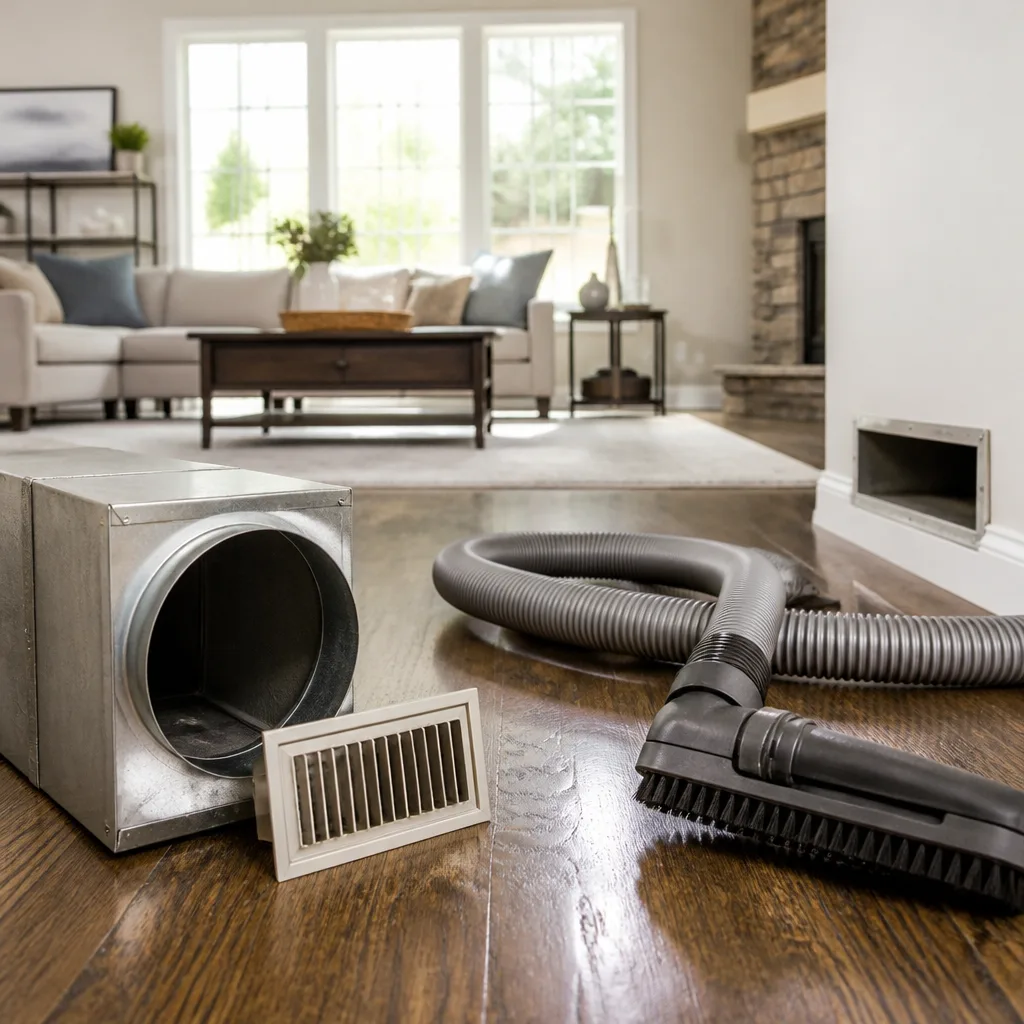
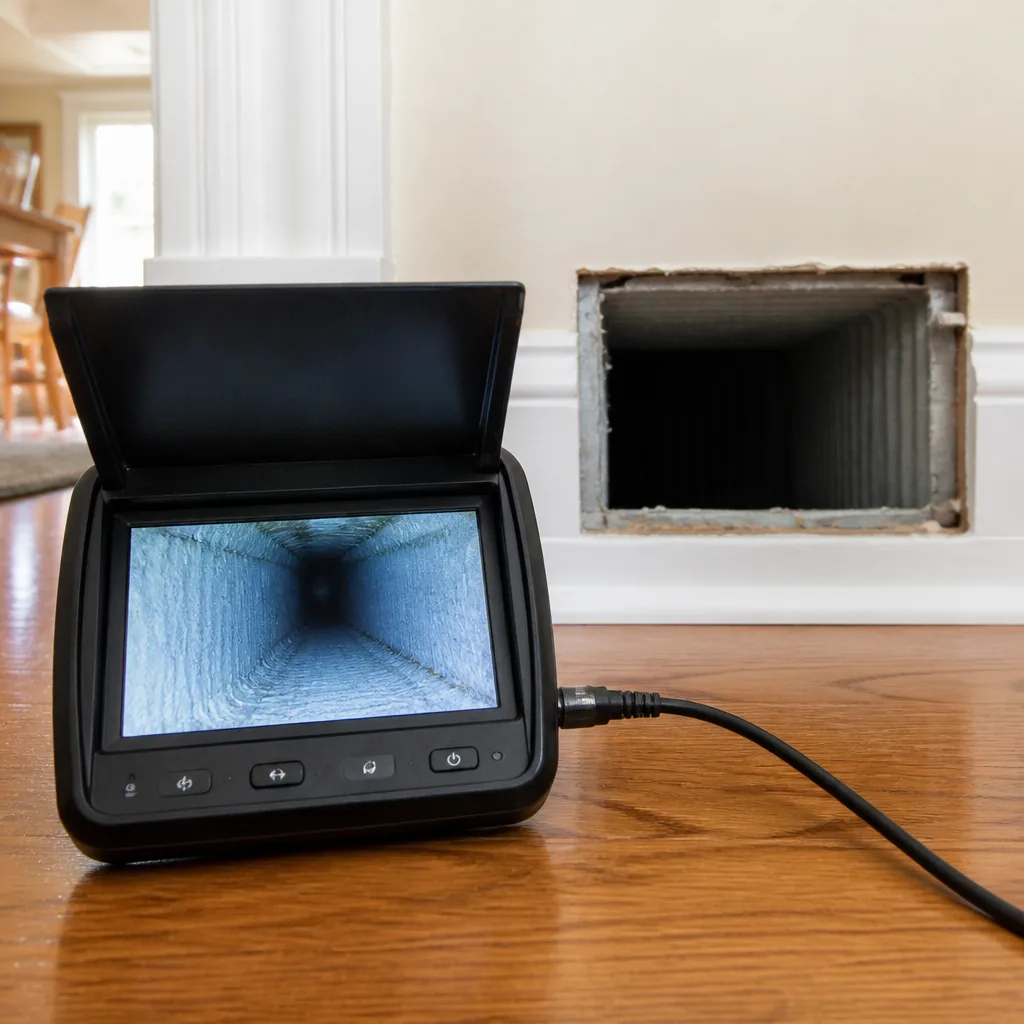
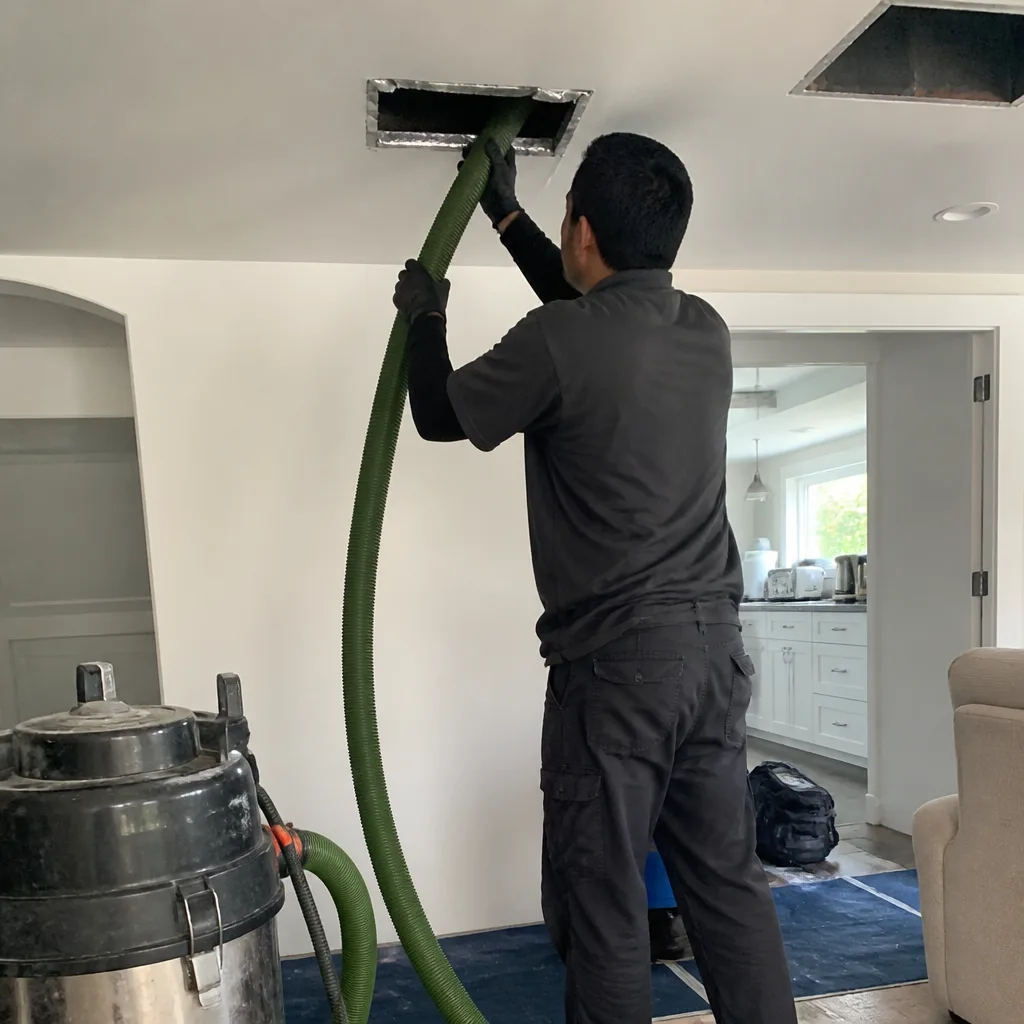
Whole-system duct and dryer vent check with before-and-after photos - you see exactly what came out of your vents
That "$99 whole-house special" is a bait ad - the real number appears once they are in your hallway, or the "clean" is a shop-vac at the register. We photograph the inside of your ducts before and after instead.

 Before
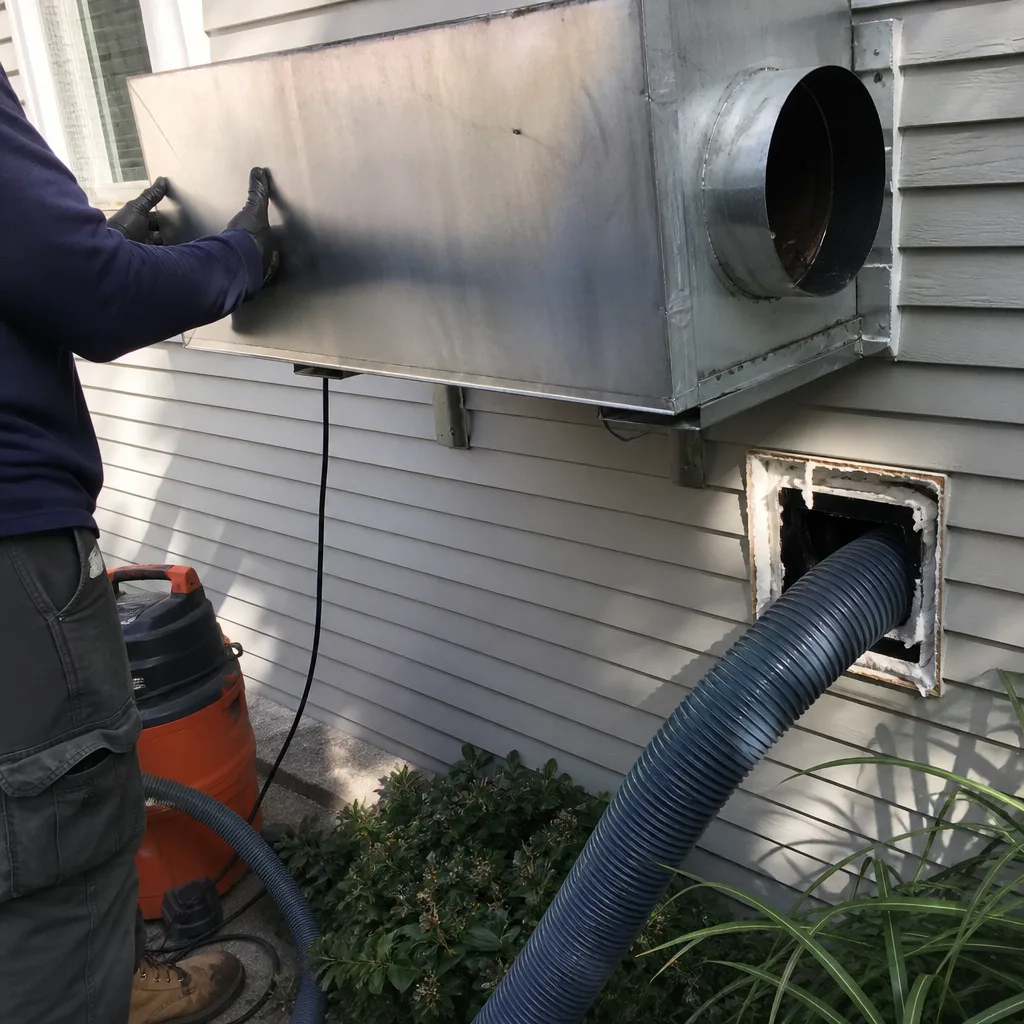 After
After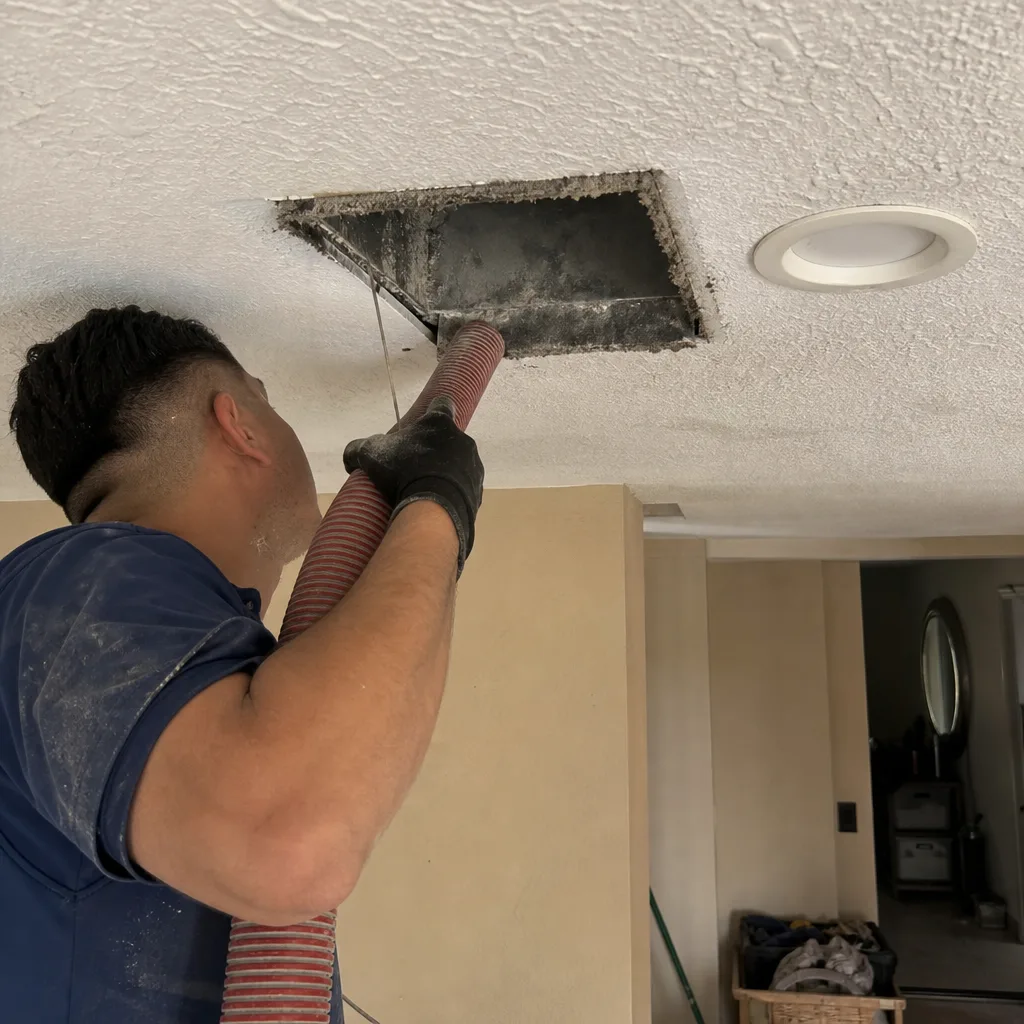 Before
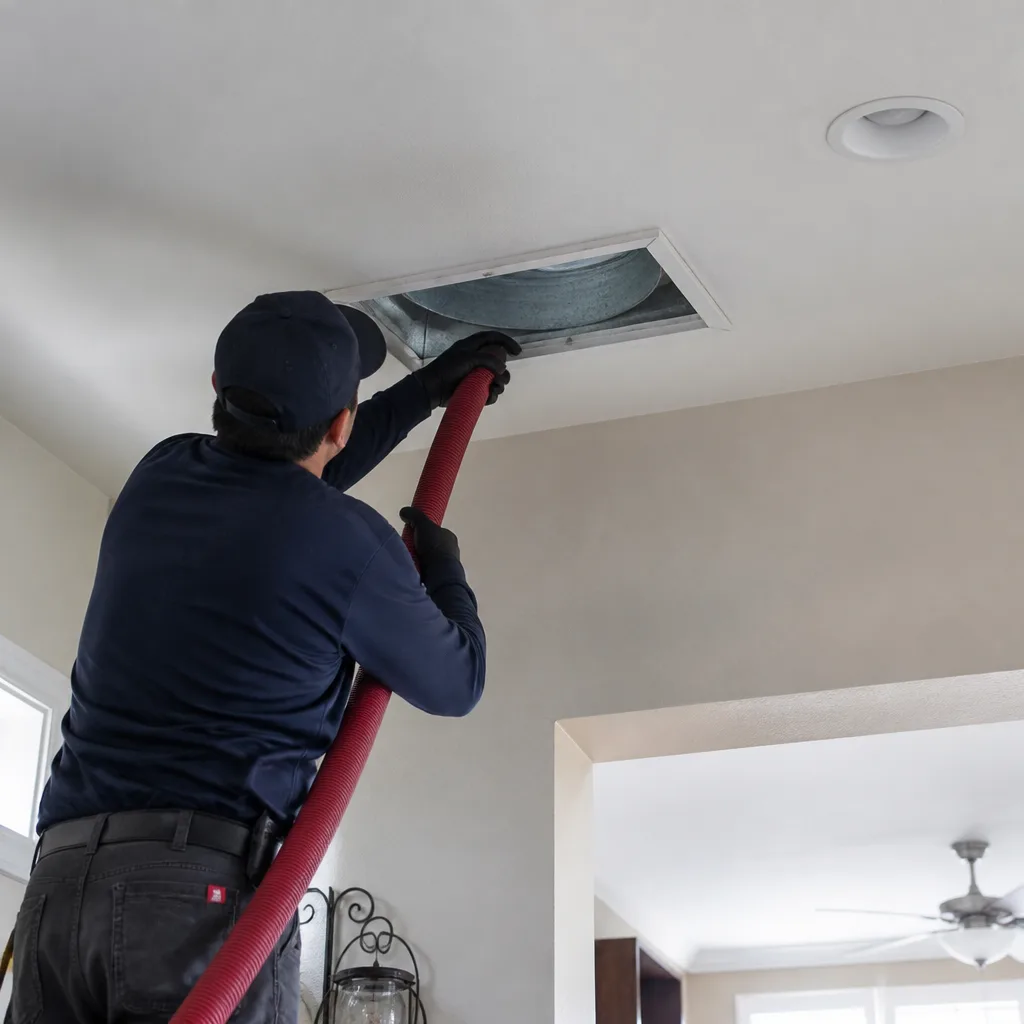 After
After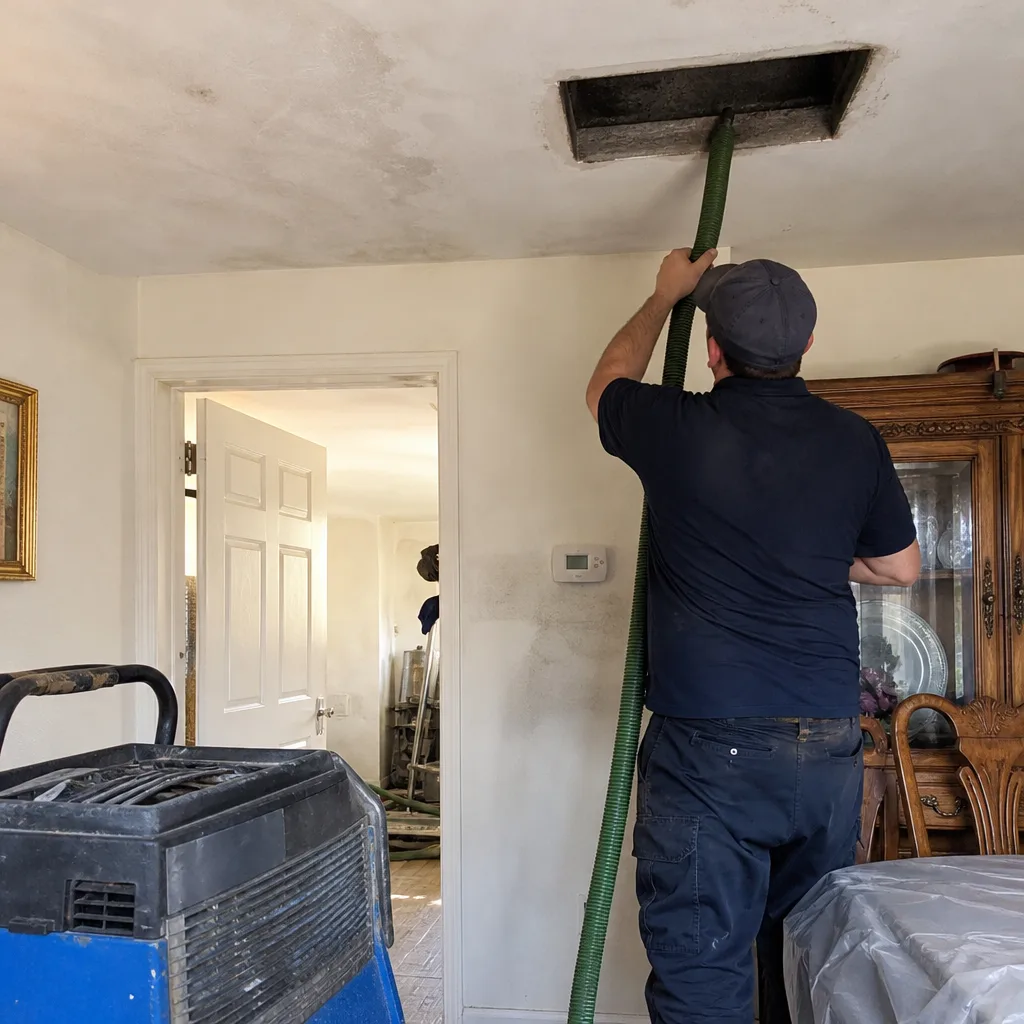 Before
 After
AfterThe Complete Dryer Vent Cleaning Guide for Los Angeles Homeowners
FEMA reports that dryers start an average of 2,900 residential fires per year nationally, and the leading factor isn’t a defective dryer. It’s a vent that hasn’t been cleaned, with failure to clean cited in 34% of those fires. Here’s what most national guides won’t tell you: dryer vent cleaning in Los Angeles is a different job than it is in suburban Dallas or Phoenix. Our housing stock runs to stucco exteriors, Spanish-style roofs with clay tile, condos with long horizontal vent runs that snake through shared walls, and single-story homes where the vent terminates somewhere the homeowner has never actually looked. This Dryer Vent Cleaning guide covers the LA-specific realities: where your vent actually goes, what it costs to clean it here, what building codes say about how it should be terminated, and what a blocked vent looks like before it becomes a fire.
Quick Answer
Dryer vent cleaning in Los Angeles typically costs $89 to $175 for most single-family homes, with higher prices for long runs, roof terminations, or condo configurations that require specialized equipment. The job takes 45 to 90 minutes, and it should be done every 12 to 18 months depending on household size and how often you run the dryer. If you can’t remember the last time the vent was cleaned, or you’ve noticed clothes taking longer to dry, schedule it now: the leading cause of dryer fires in LA homes is a lint-clogged vent nobody inspected.
Table of Contents
- Why LA Homes Are Different When It Comes to Dryer Vents
- How Much Does Dryer Vent Cleaning Actually Cost in Los Angeles?
- How to Locate Your Dryer Vent Termination
- LA Building Code and Dryer Vent Requirements
- The Exterior Inspection You Can Do Before Scheduling Service
- What Professional Dryer Vent Cleaning Actually Involves
- Signs Your Dryer Vent Needs Cleaning Now
- Common Mistakes to Avoid
- When to Call a Professional
- Frequently Asked Questions
Why LA Homes Are Different When It Comes to Dryer Vents
Most dryer vent guides, unlike The Complete Guide to Air Duct Cleaning in Los Angeles, are written for a house that doesn’t exist in Los Angeles: a single-story ranch with a laundry room on an exterior wall and a straight 6-foot vent run to a side-wall louver. That’s not LA. We clean vents in Mount Washington hillside homes where the laundry is in a converted garage and the vent runs 20 feet up through a stucco wall. We clean vents in Santa Monica condos where the dryer ties into a shared vertical chase that serves multiple units. We clean vents in Pasadena Spanish-style houses where the termination is a roof cap hidden behind a clay tile parapet. Each configuration changes how you clean the vent, what equipment you use, and what it costs.
Extended horizontal runs are the biggest LA-specific problem. When a vent exceeds 25 feet, building code requires a booster fan, but most were built before the requirement was enforced. A 30-foot horizontal run through a condo wall accumulates lint faster because the air moves slower and loses the velocity needed to push lint out the termination. Lint settles in the bends, layers on screws and seams, and eventually chokes the passage. In our experience, condos with runs over 25 feet need cleaning every 9 to 12 months, not the 12 to 18 months a standard single-family home can wait.
Stucco exteriors create another complication. A side-wall termination on a stucco house has a louver or cap that’s embedded in the stucco. Over time, paint, stucco repair, or settling can partially obstruct the opening or prevent the flap from opening fully. We regularly find terminations that look fine from the ground but are half-sealed behind a coat of paint that was never cut back. Roof terminations on Spanish tile roofs are even easier to overlook: the cap sits behind a tile, gets covered by debris from Santa Ana winds, and nobody sees it until the dryer starts taking two cycles to dry a load.
This is also why our dryer vent cleaning service in Los Angeles starts with locating and inspecting the termination before we ever run a brush through the vent. You can’t clean what you can’t find, and in LA you often can’t find it from the ground.
How Much Does Dryer Vent Cleaning Actually Cost in Los Angeles?
For a standard single-family home in Los Angeles with a straight or mildly offset vent run under 15 feet and an accessible side-wall termination, expect to pay $89 to $175. That price includes the full cleaning: brushing the complete run, blowing out the termination cap, checking airflow at the dryer, and leaving the laundry area clean. The price is the price, written down before we start, and it does not move once the technician is inside.
What drives the price higher:
- Run length over 25 feet: requires additional brush sections, more time, and often a second person on the roof or at the termination. Add $50 to $100.
- Roof terminations: require ladder work on tile or asphalt shingle roofs, which takes more time and costs more. Add $75 to $150 depending on roof pitch and access.
- Condo configurations with shared chases: the vent may be inaccessible from both ends without coordination or specialized camera inspection. Add $50 to $125.
- Heavy blockages or bird nests: if a bird screen is missing and a nest has to be removed, or if the lint has compacted so hard that standard brushes won’t pull it, add $50 to $100.
- Disconnected or damaged vent sections: if we find foil flex vent that needs replacement with rigid metal, or a section that has separated behind a wall, materials and repair time add cost.
If a quote comes in at $49 or $59 for the whole job, ask what it covers. In this trade, low teaser prices are often for a “basic inspection” that turns into an upcharge the moment the technician sees the actual vent. The honest range in LA is the range above. We write the price before we start, and it covers the whole vent from dryer to termination. No per-foot add-ons, no surprise material fees.
Call (361) 326-5060 for an exact quote. Estimates are free, and you’ll get the number in writing before any work begins.
How to Locate Your Dryer Vent Termination
This sounds simple, but a surprising number of Los Angeles homeowners have never actually looked at where their dryer vent exits the house. Knowing the termination type matters because it affects cleaning method, access difficulty, and price. Here’s how to find yours:
- Start at the dryer: look behind the dryer and find the vent pipe coming out of the back. It’s usually a 4-inch round pipe. Follow its direction with your eyes: does it go straight back through the wall, up toward the ceiling, or down into the floor?
- Go outside and look at the corresponding wall: if the dryer is on an exterior wall, the termination is likely a small square or round louver with a flap, mounted at about the same height as the vent pipe. Walk the exterior and look.
- Check the roof: if the laundry room is in the center of the house or on a second floor with no exterior wall behind it, the vent likely runs up through the attic and terminates on the roof. Look for a small metal cap with a round base, often near the bathroom fan caps.
- Check the soffit: in some homes, the vent runs through the attic and terminates in the soffit, the horizontal underside of the roof overhang. Look for a small louver or screen.
- If it’s a condo or apartment: the vent may terminate on an upper floor gallery, a shared mechanical chase, or in a location you can’t see from your unit. This is where a professional inspection is worth the call, because you may not have physical access to the termination.
Once you find it, note the type. Side-wall louver, roof cap, and soffit termination each require different cleaning approaches. A roof cap needs ladder or roof access. A soffit termination needs a different brush angle. A side-wall louver is usually the easiest and least expensive to clean.
LA Building Code and Dryer Vent Requirements
The California Mechanical Code, which Los Angeles enforces with local amendments and which we cover in The Complete Duct Sealing Guide for Los Angeles Homeowners, has very specific requirements for dryer exhaust systems. Most LA homes violate at least one of them, usually because the home was built before current code or because a previous owner hired a handyman who didn’t know the rules.
The key requirements that matter for homeowners:
- Vent material must be rigid metal: smooth-wall rigid aluminum or galvanized steel. Foil flex vent, the white or silver accordion tube you can buy at any hardware store, is a code violation in most configurations. It sags, traps lint in every ridge, and can be crushed behind the dryer. It’s also a known fire fuel source. If you have foil flex vent, replace it.
- Semi-rigid aluminum flex is allowed only as a connector: the short section between the dryer and the wall. Maximum 8 feet, and it must be listed for the purpose. It cannot run inside walls, floors, or ceilings.
- Maximum vent length is 35 feet: measured from the dryer connection to the termination, minus 5 feet for each 90-degree elbow and 2.5 feet for each 45-degree elbow. A 35-foot max sounds generous until you account for elbows: two 90s and a 45 reduce the allowed length to 22.5 feet. Many LA condos and remodeled homes exceed this, which is why booster fans exist.
- Terminations must exhaust to the exterior: not into an attic, not into a crawl space, not into a garage, not into a wall cavity. You’d be surprised how often we find vents that terminate in an attic, filling it with warm, moist lint-laden air.
- Termination must have a backdraft damper: a flap that opens when the dryer runs and closes when it stops. This keeps outside air, pests, and embers from entering the vent when the dryer is off.
- No screens on the termination: building code prohibits screens because lint builds up on them and creates a blockage. The tension here is real: you want to keep birds out, but a screen that traps lint becomes a fire hazard. If you have a screened termination, it needs cleaning more often, or it needs replacement with a louvered cap and a separate bird guard that’s easier to clean.
None of this is regulatory trivia. A vent that violates code is a vent that’s accumulating lint faster, restricting airflow, or creating a fire pathway. The fix is often simple: replace foil flex with rigid metal, add a booster fan to an over-long run, or re-terminate a vent that’s dumping into the attic. We find these issues during routine cleanings and flag them plainly, with the code reference and the practical consequence.
The Exterior Inspection You Can Do Before Scheduling Service
Before you call anyone, walk outside and look at your vent termination. Thirty seconds at the termination tells you most of what you need to know. Here’s what to check:
- Is the flap opening when the dryer runs? Have someone turn the dryer on while you watch the termination. The backdraft damper flap should visibly open. If it doesn’t open, or only partially opens, the vent is blocked or the flap is stuck.
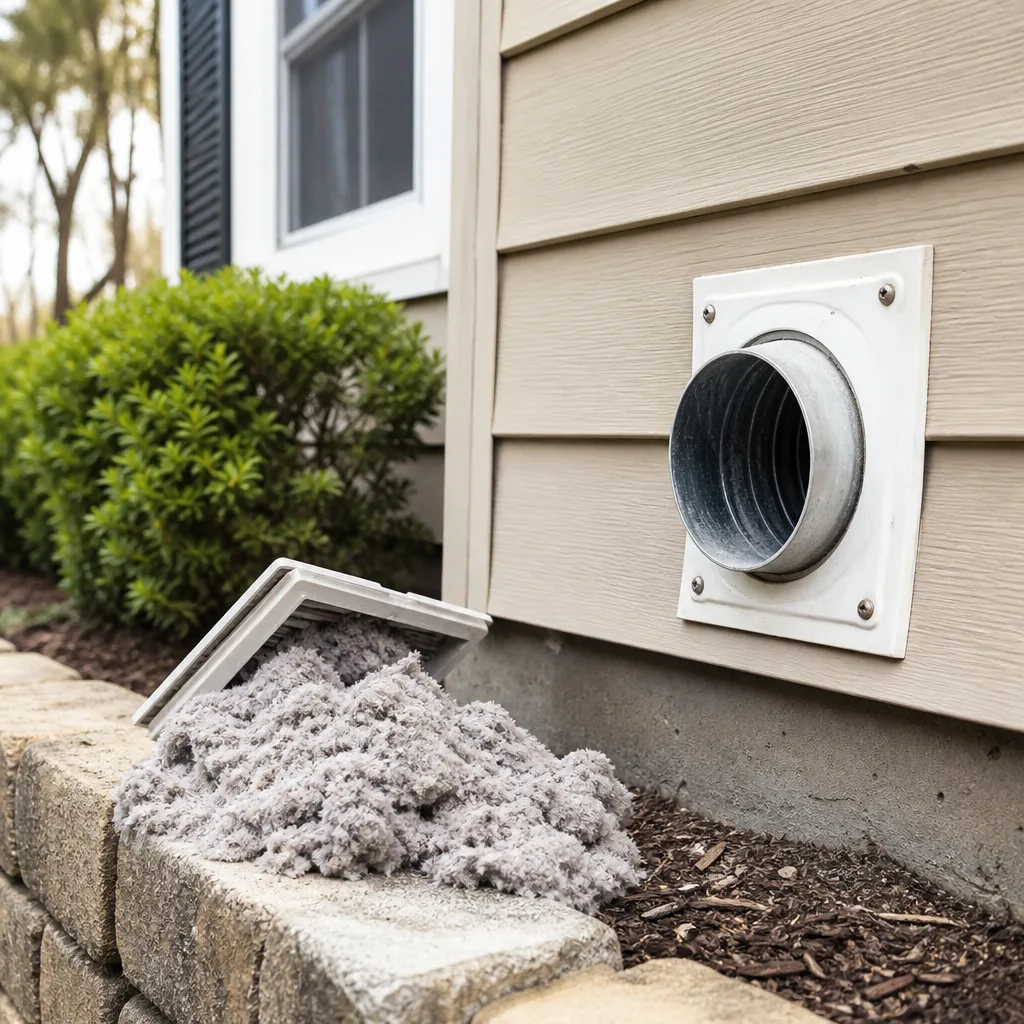
- Can you see lint accumulating on the louver or around the edges? Lint visible on the outside means lint is building up on the inside, and the vent needs cleaning.
- Is the flap missing or broken? A missing flap lets birds, rodents, and outside air enter the vent. A bird nest in a dryer vent is not rare in Los Angeles, especially in spring. A broken flap that hangs open also lets rain water enter, which mixes with lint and creates a paste that hardens and blocks the vent permanently unless it’s brushed out.
- Is there a screen on the termination, and is it clogged? If the screen is more than half covered with lint, clean it now and schedule a full vent cleaning. Do not spray water into the vent to clean it; you’ll pack the lint deeper into the pipe.
- Is the termination painted over or embedded in stucco? A flap that’s been painted shut, or a cap that’s been partially covered by stucco work, won’t open properly. The vent can’t exhaust even if the interior is clean.
If any of these checks fail, the vent needs professional attention. The exterior inspection also tells us what equipment the job needs: roof cap means roof access, soffit termination means a different brush angle, side-wall louver means a straightforward cleaning unless it’s painted over.
What Professional Dryer Vent Cleaning Actually Involves
A proper dryer vent cleaning is not running a vacuum hose into the wall and calling it done. It’s a mechanical process that cleans the entire run, from the back of the dryer to the termination cap. Here’s what the job looks like when it’s done right:
- Dryer is pulled out and disconnected: the technician carefully moves the dryer away from the wall, disconnects the vent connector, and inspects the connection point. This is where most lint escapes into the laundry room: a loose connection dumps moist lint behind the dryer where it accumulates against the wall.
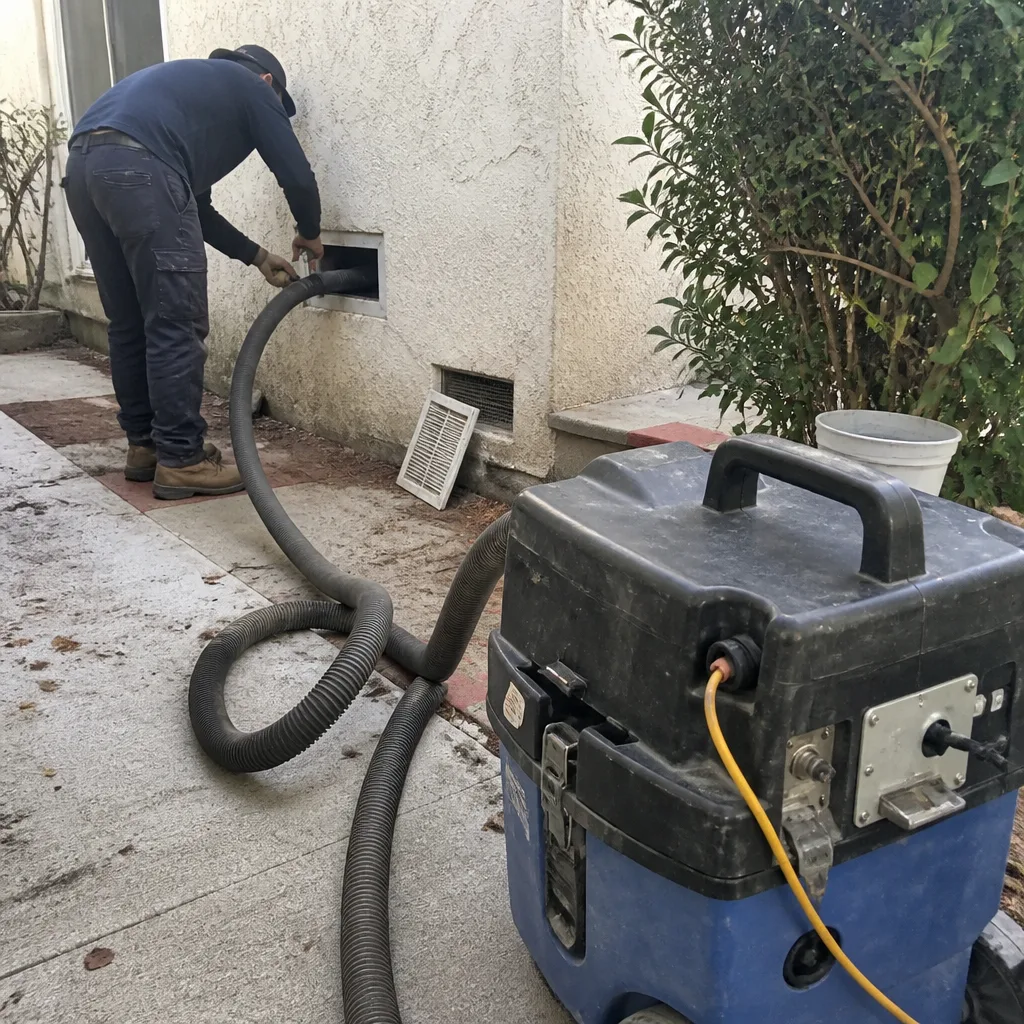
- The entire run is brushed: using a rotary brush system on flexible rods, the technician feeds a brush through the entire vent run, from either the dryer side or the termination side depending on access. The rotating brush scrubs the walls of the vent, breaking loose lint that has adhered to seams and screws.
- Debris is removed with negative air: the loosened lint is pulled out with a professional vacuum that creates negative pressure in the vent, not an ordinary shop vac. This is the same principle used by the air duct cleaning industry, and it’s the difference between moving lint around and actually removing it.
- Termination cap is cleaned and inspected: the louver, roof cap, or soffit termination is cleaned by hand, and the backdraft damper is checked for proper operation. If the flap is broken or the screen is missing, the technician notes it and explains options.
- Airflow is tested: the dryer is reconnected, run on the air-only cycle, and airflow is measured at the termination. A clean vent should move air forcefully enough to hold the flap wide open. If airflow is still weak, the technician looks for a blockage that the brush didn’t reach or a vent run that exceeds code length.
- The work area is left clean: lint is vacuumed from behind the dryer and the surrounding floor, the dryer is pushed back into place carefully, and the exhaust connection is checked one final time.
This process takes 45 to 90 minutes for most Los Angeles homes. If the technician is done in 15 minutes, the vent wasn’t cleaned. If the total run exceeds 25 feet or the termination is on a roof, it takes longer.
Hollis Air Duct Cleaning uses professional-grade equipment including Rotobrush rotary brush systems and Nikro negative-air machines. These are not hardware-store attachments; they’re the same tools used by commercial duct cleaning crews, sized for residential vents. Every cleaning receives a written price before we begin and is covered by the 365-Day Done Right Promise: if the job isn’t done right, we come back and make it right at no charge.
Signs Your Dryer Vent Needs Cleaning Now
Some signs are obvious. Others are subtle, and homeowners miss them for months. Here’s what we tell Los Angeles customers to watch for:
- Clothes take longer than one cycle to dry: the most common early warning. If a medium load used to dry in 45 minutes and now takes 70, the air isn’t moving through the vent. This isn’t a dryer problem; it’s a vent problem. Fixing it saves energy and reduces wear on the dryer.
- The dryer is hot to the touch or the laundry room gets humid while it runs: heat that should be exiting through the vent is staying in the room. This is a fire risk and a sign that the vent is severely restricted.
- The flap on the termination doesn’t open when the dryer runs: covered in the inspection section above. This is a direct visual confirmation of a blockage.
- You can smell a burning odor when the dryer runs: lint trapped near the heating element can scorch, and a scorched lint smell is the precursor to ignition. Stop using the dryer and get the vent cleaned immediately.
- Lint is visible around the dryer, behind it, or on the floor near the vent connection: a loose or disconnected vent is dumping lint into the room instead of carrying it outside. The connection needs to be secured and the vent cleaned.
- It’s been more than 18 months since the last cleaning: even without any symptoms, the lint is building. A household of three or four that does 8 to 10 loads a week should clean every 12 months.
None of these signs are trivial. For more guides & resources, see our blog; the FEMA statistic from the top of this guide bears repeating: 34% of residential dryer fires are caused by failure to clean. The vent is the simplest fire prevention measure in your house, and it’s the one most people never think about.
Common Mistakes to Avoid
- Using foil flex vent: it’s cheap and readily available, but it’s a code violation in most LA configurations and a known lint trap and fire hazard. Replace it with rigid metal or a listed semi-rigid connector.
- Installing a screen over the termination to keep birds out: building code prohibits screens because they collect lint and block exhaust. Use a louvered cap and clean it regularly instead.
- Venting the dryer into an attic, crawl space, or garage: this violates the California Mechanical Code and fills the space with moist, lint-heavy air. It’s a fire hazard and a moisture problem in one.
- Ignoring a long vent run because “it’s always worked fine”: vent runs over 25 feet need a booster fan per code. Without one, lint accumulates every time the dryer runs, and the blockage grows slowly until the dryer stops drying.
- Believing a $49 vent cleaning quote: if the number is too low, the job either doesn’t cover the whole vent or it’s a loss leader designed to create upcharge pressure at the door. Get the full scope and full price in writing before scheduling.
- Putting off cleaning because the dryer is ventless: ventless dryers still have lint filters and internal condensation systems that need maintenance, and a ventless dryer in an LA condo may still have a ducted booster exhaust that needs cleaning.
When to Call a Professional
Call a professional when the termination is on a roof you can’t safely access, when the vent run exceeds 25 feet, when the termination is inside a shared condo chase you can’t reach, or when any of the warning signs above have been present for more than a few weeks. Also call if you’ve never located the termination, or if the exterior inspection reveals a painted-shut flap, a missing damper, or a foil flex vent that needs replacement. These are mechanical jobs that require the right brushes, the right vacuum, and the right access equipment. Guessing is how vents get half-cleaned and fires get started. Hollis Air Duct Cleaning offers free estimates in Los Angeles, with a written price before any work starts. Call (361) 326-5060 to schedule an inspection.
Frequently Asked Questions
Every 12 months for a typical household of three or four doing 8 to 10 loads per week, and every 9 to 12 months if you have a long vent run over 25 feet, a roof termination, or a condo configuration with a shared chase. Los Angeles homes with extended horizontal runs accumulate lint faster than the national average because the vent air moves slower through long, offset runs. Call (361) 326-5060 for an assessment of your specific configuration.
Cheap quotes are usually for a partial job: a basic inspection, a cleaning of only the first few feet, or a low teaser price that creates upcharge opportunities once the technician is at your house. A full vent cleaning covers the entire run from dryer to termination, includes the termination cap, and leaves the work area clean. The honest range in Los Angeles is $89 to $175 for most homes. If the number is below that, ask exactly what’s included in writing.
Yes. The California Mechanical Code requires rigid metal duct for dryer exhaust, with semi-rigid aluminum flex allowed only as an 8-foot maximum connector between the dryer and the wall. Foil flex vent, the accordion-style white or silver tube, is not approved for dryer exhaust in most configurations because it sags, traps lint in every ridge, crushes easily, and is a known fire fuel. If a technician says foil flex is fine, get a second opinion.
Ask for before-and-after photos of the vent interior, which any professional cleaning crew with a camera-equipped inspection tool can provide. Check that the termination flap opens fully when the dryer runs. Verify that the lint visible around the termination is gone. A reputable company will also explain what they found, what they cleaned, and what condition the vent is in. The 365-Day Done Right Promise from Hollis Air Duct Cleaning covers exactly this: if the job isn’t done right, we return and make it right at no charge.
You can clean the lint screen after every load, and you can vacuum the lint from around the dryer connection and the first few feet of visible vent. Beyond that, a proper cleaning requires a rotary brush that can reach the full run, negative air to pull the loosened lint out, and access to the termination, which in Los Angeles often means a roof or a condo chase. The risk of a partial DIY job is a false sense of security: the vent looks clean from the dryer side, but the blockage is 15 feet in where you can’t reach.
The Hollis Air Duct Cleaning 365-Day Done Right Promise is written into every job: if the work fails within a full year, we return and make it right at no charge, including a free second visit. For dryer vent cleaning, that means if you experience symptoms of a blocked vent within 12 months of our cleaning and the cause traces back to our work, we re-clean the vent at no cost. The promise is in writing, not a verbal assurance.
The Bottom Line
Dryer vent cleaning in Los Angeles is not a luxury service and it’s not a scam-prone upsell. It’s a mechanical maintenance task with a direct line to fire prevention, and it’s complicated by the housing stock we actually live in: long condo runs, roof terminations on Spanish tile, stucco exteriors, and foil flex vent that should have been replaced years ago. The job costs $89 to $175 for most homes, should be done every 12 months for a typical household, and requires a rotary brush and negative-air vacuum to do properly. If you’ve never looked at your termination, start with the exterior inspection in this guide. If any check fails, call a professional. Hollis Air Duct Cleaning serves Los Angeles with written pricing, background-checked uniformed technicians, and the 365-Day Done Right Promise. Call (361) 326-5060 for a free estimate.
Written by Roy Castellanos, Owner at Hollis Air Duct Cleaning, serving Los Angeles since 2004.