
Last updated October 9, 2026
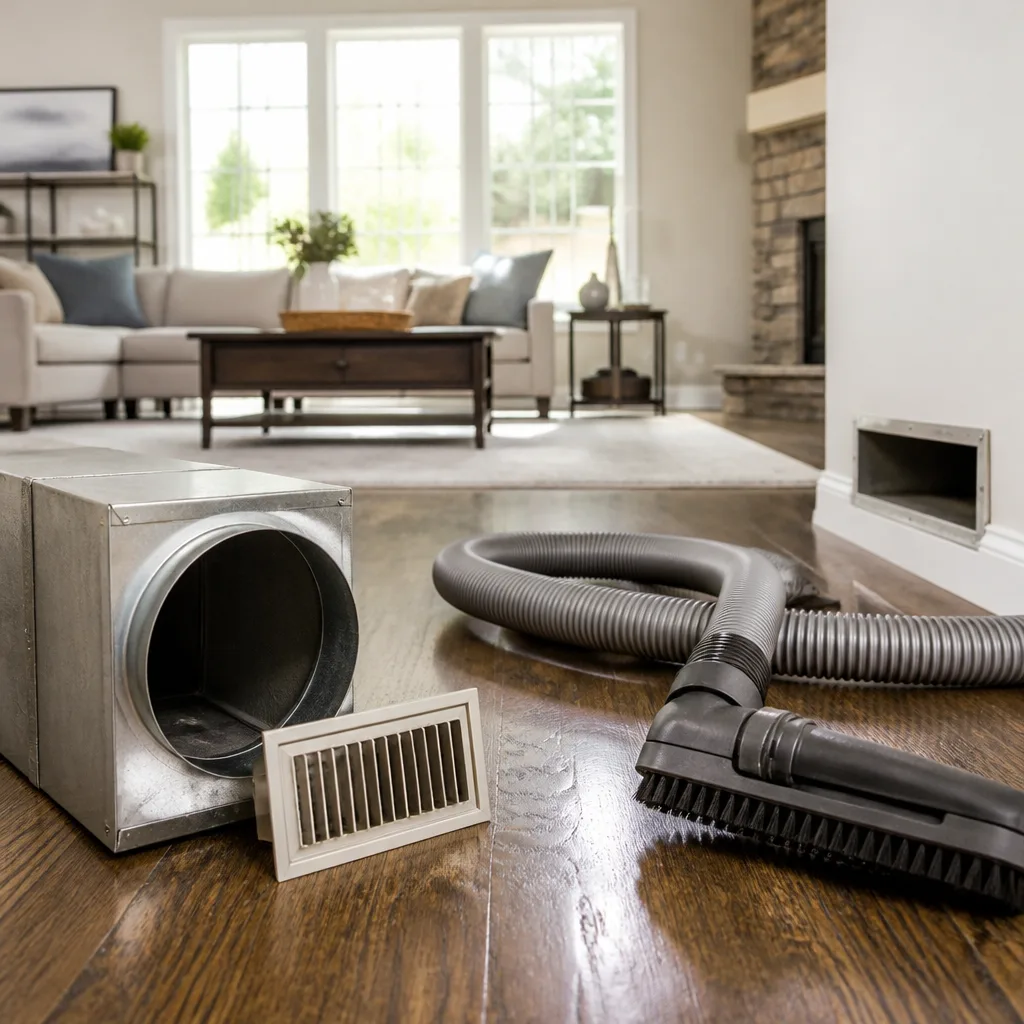
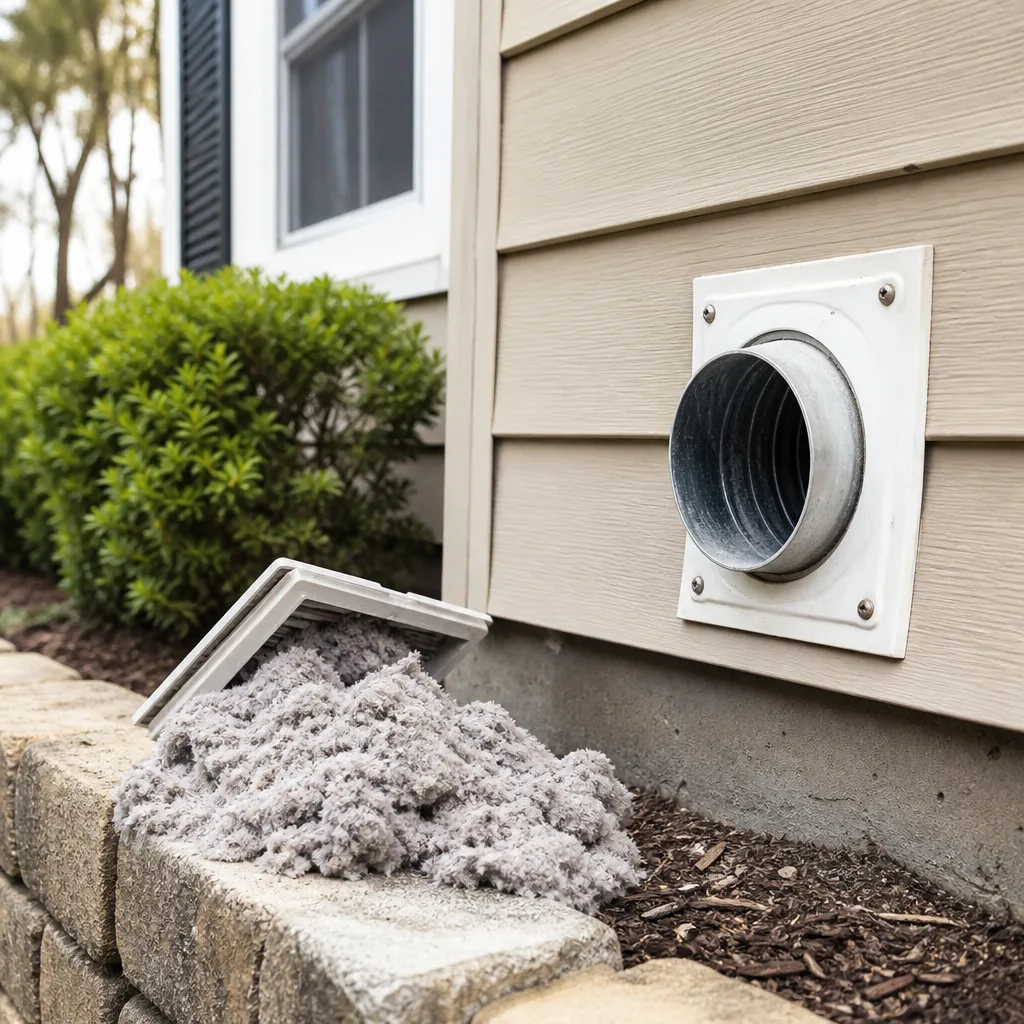
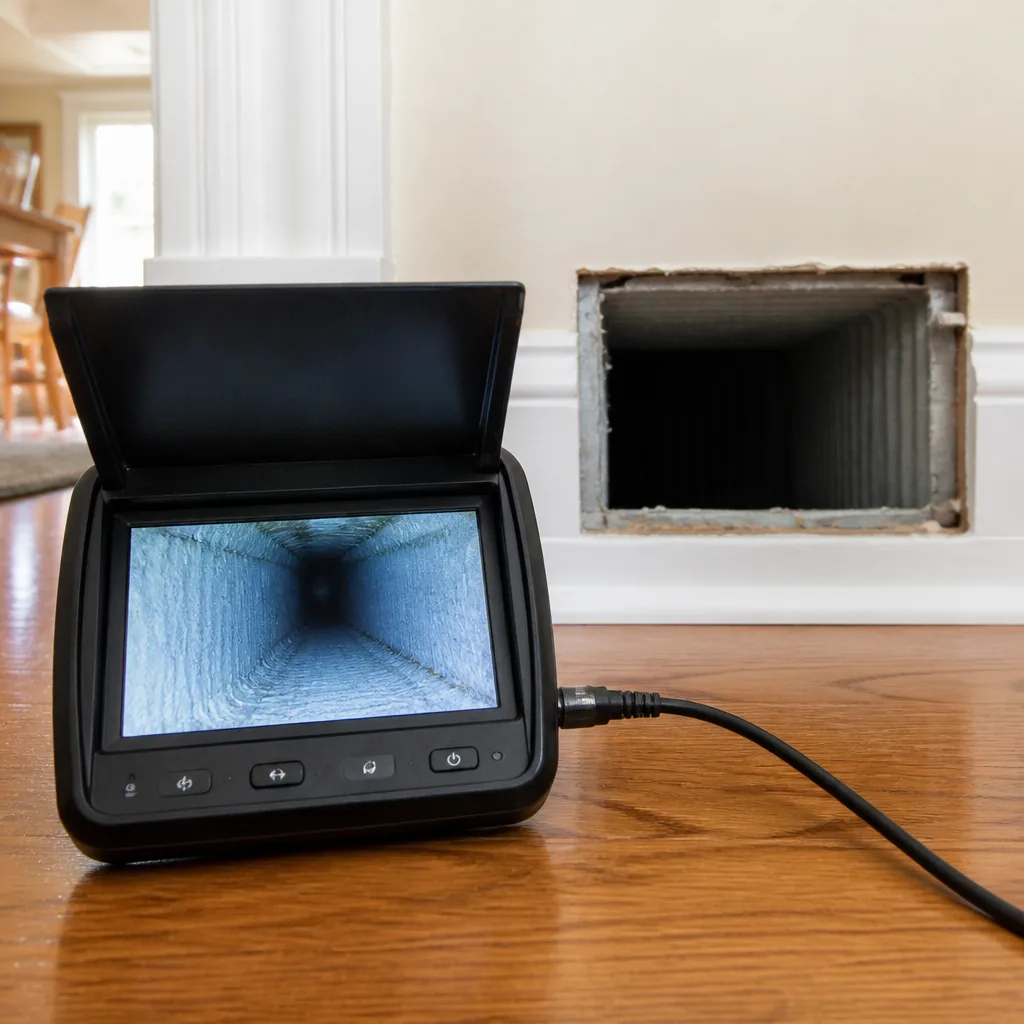
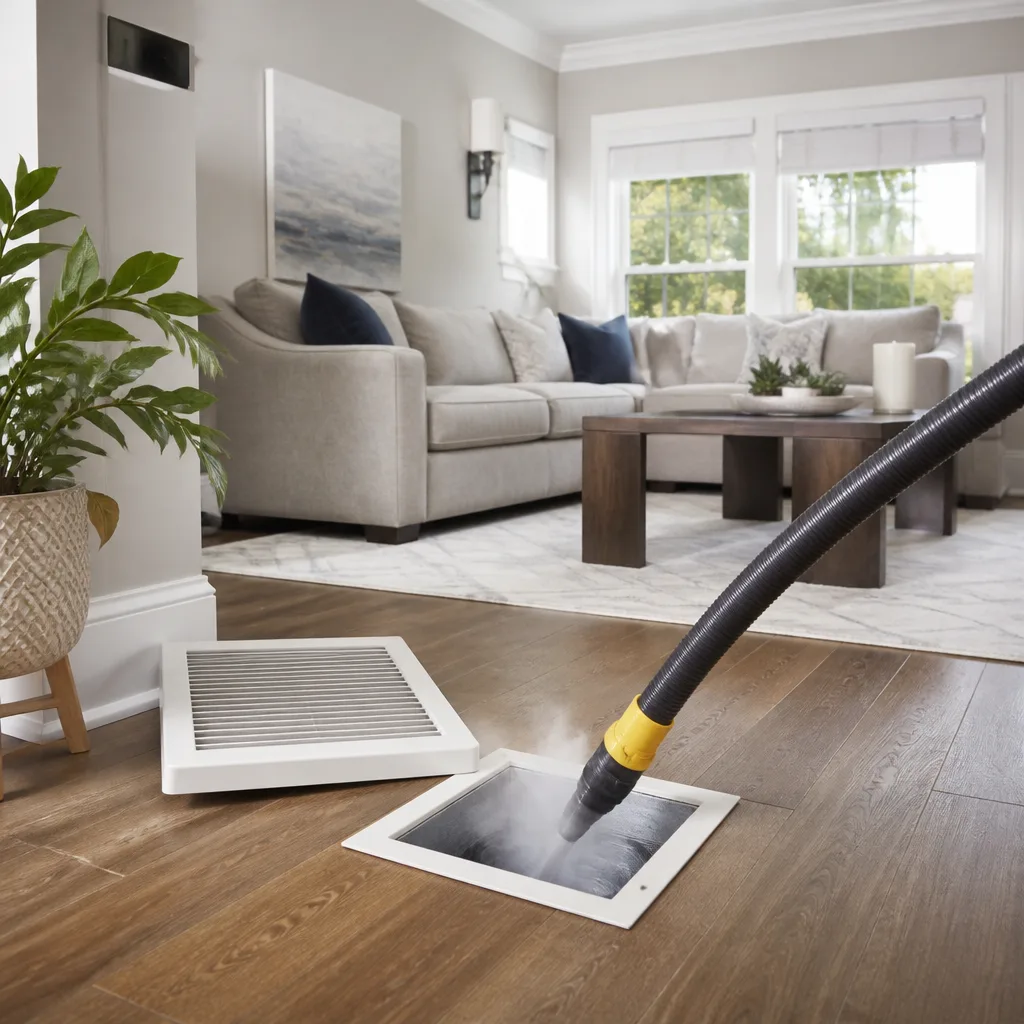
Whole-system duct and dryer vent check with before-and-after photos - you see exactly what came out of your vents
That "$99 whole-house special" is a bait ad - the real number appears once they are in your hallway, or the "clean" is a shop-vac at the register. We photograph the inside of your ducts before and after instead.
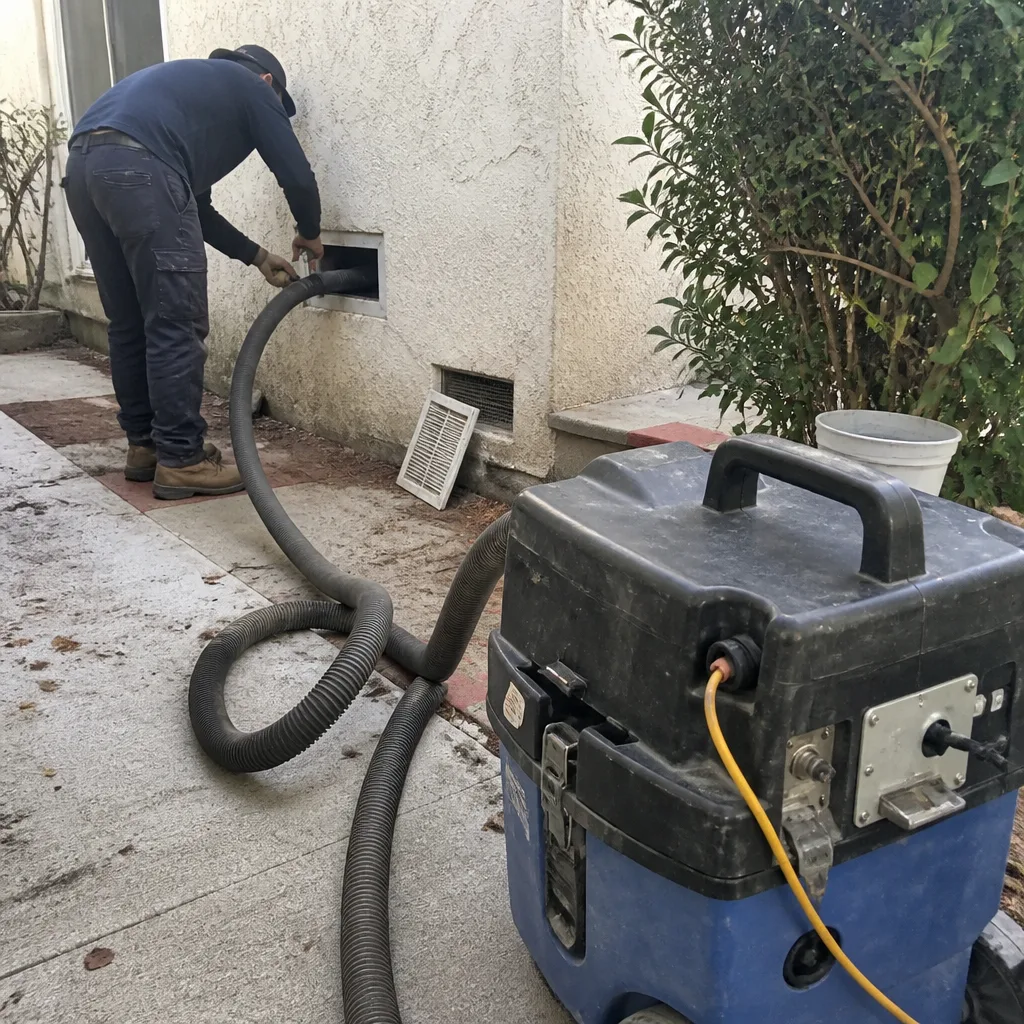 Before
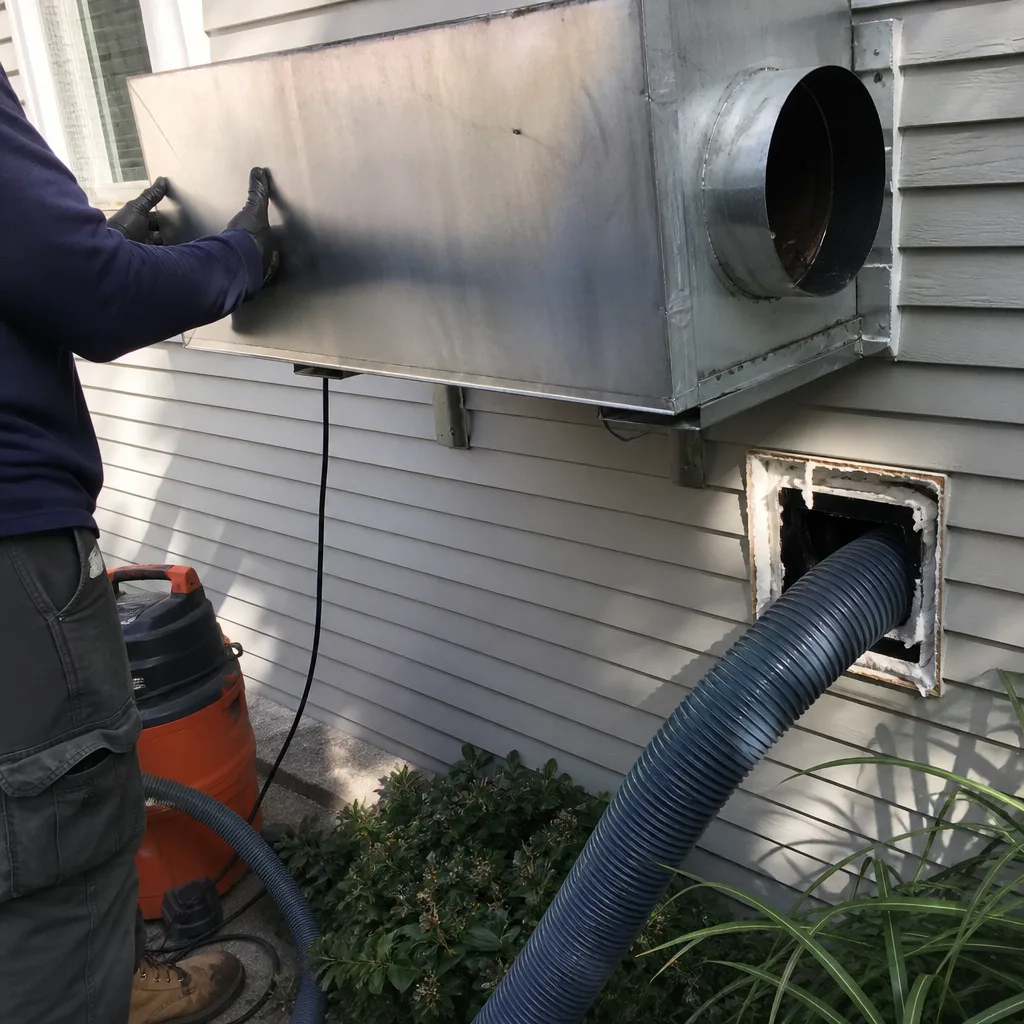 After
After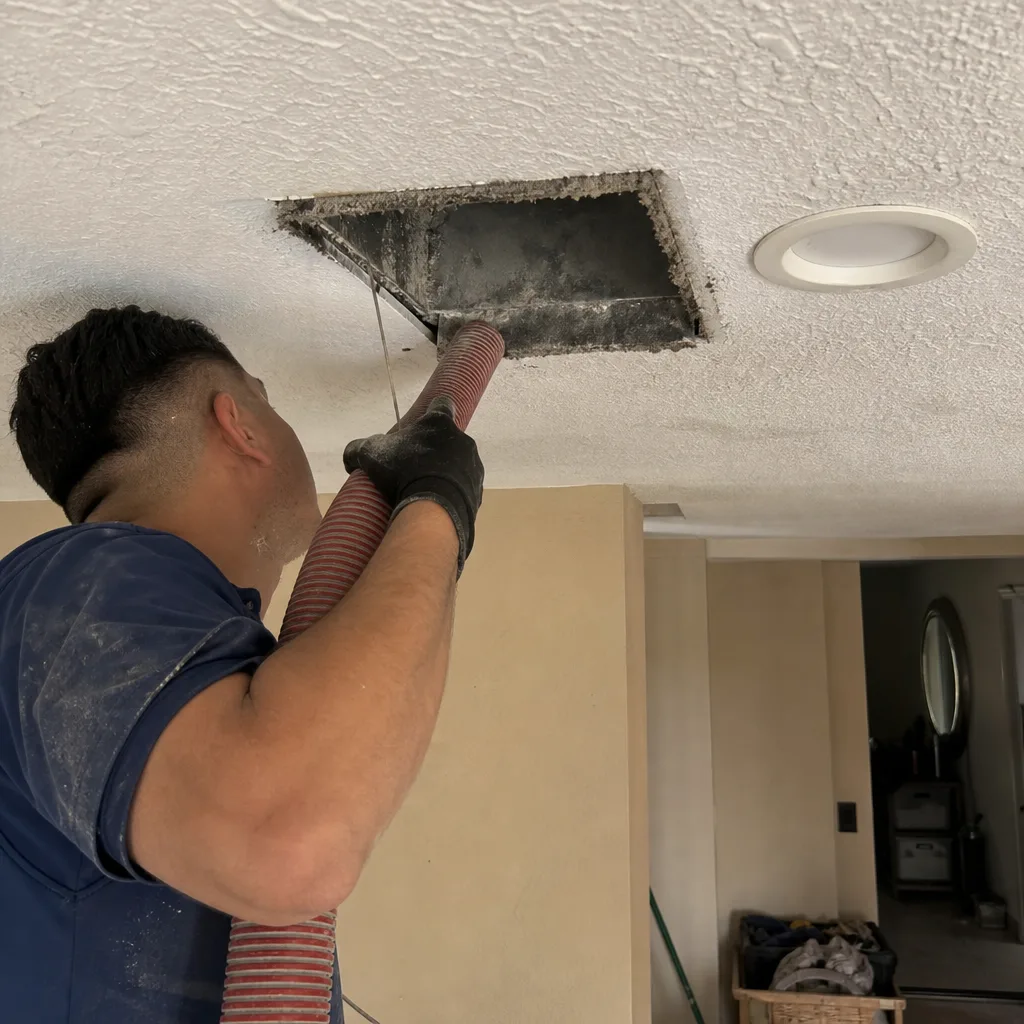 Before
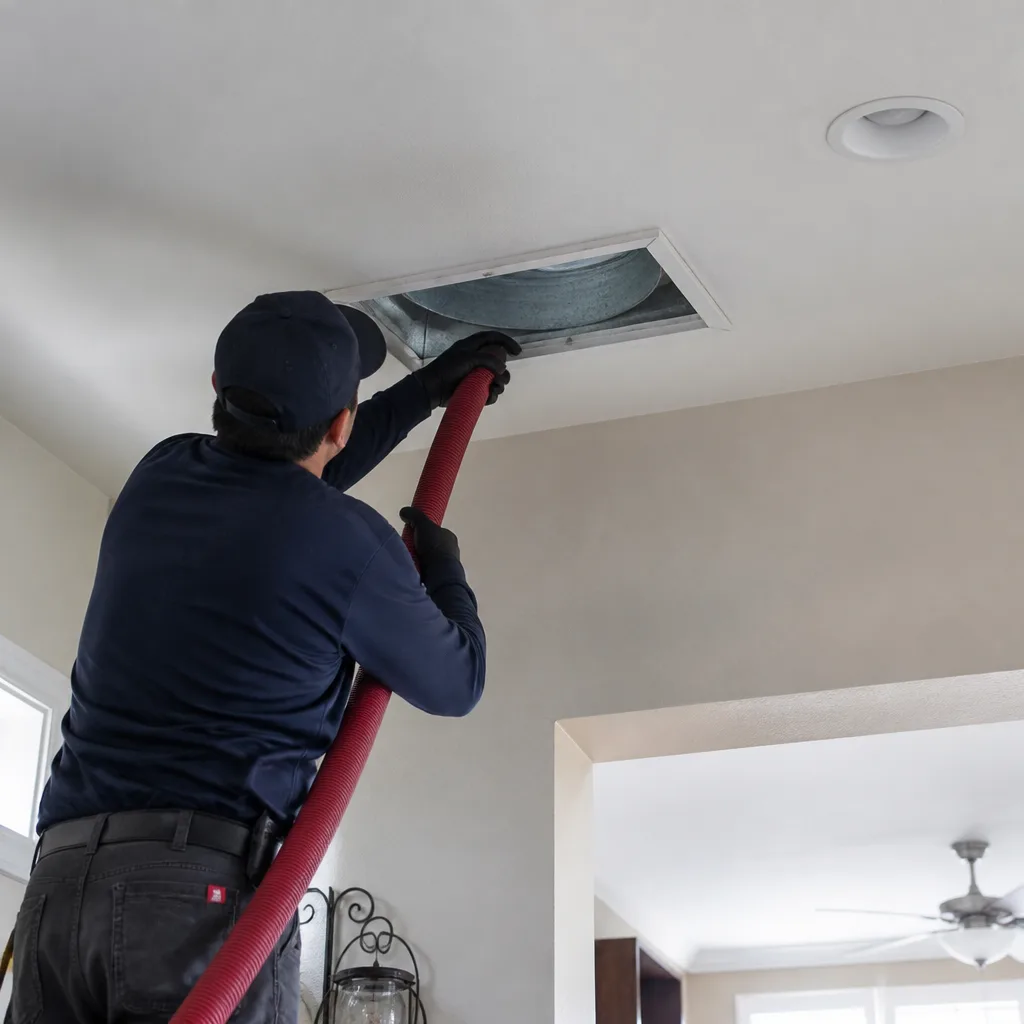 After
After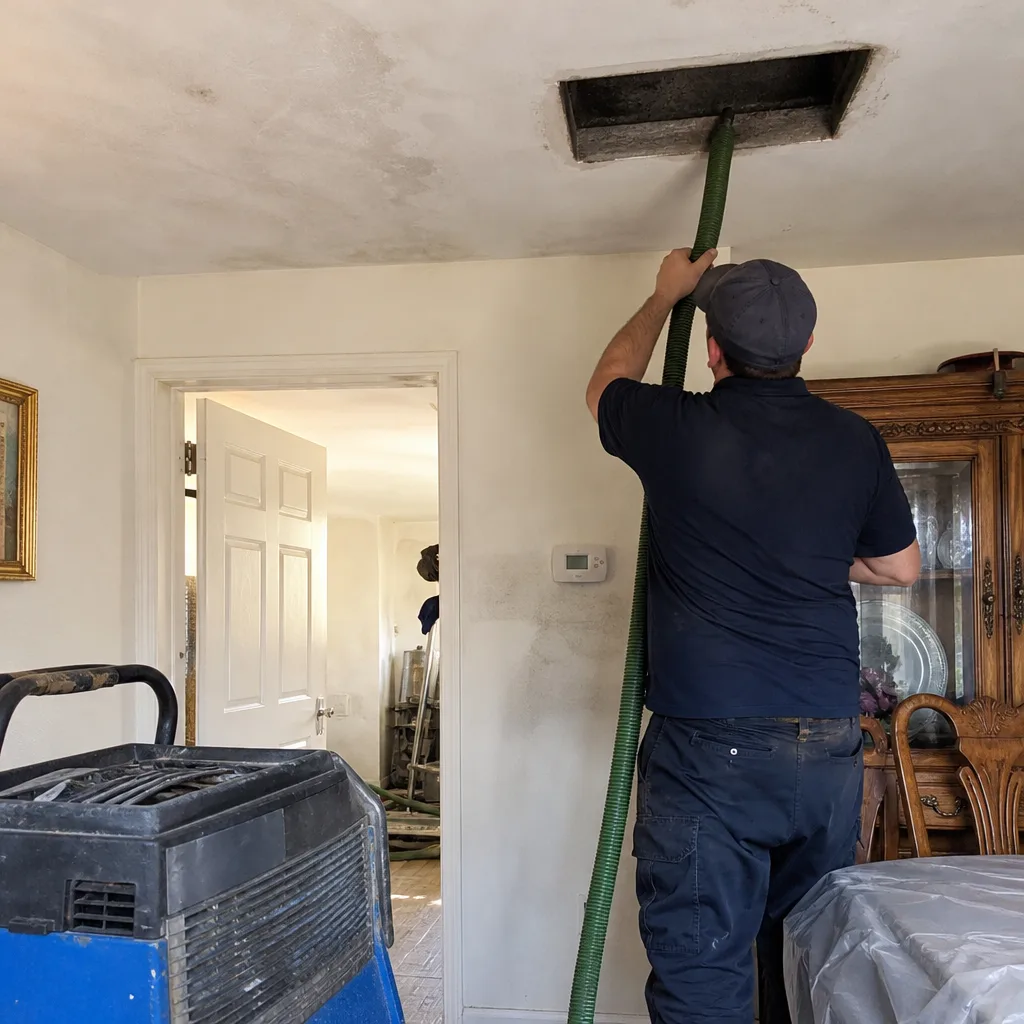 Before
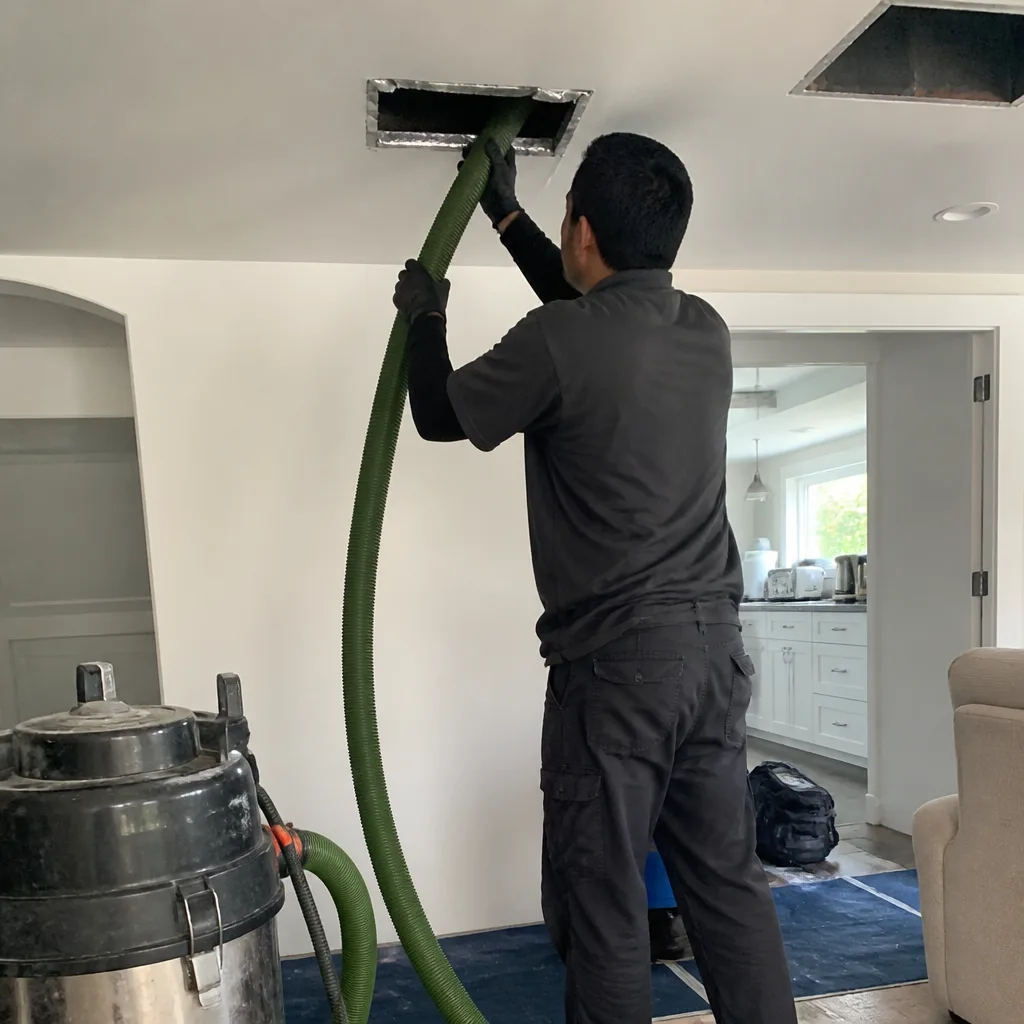 After
AfterDIY vs Professional Air Duct Cleaning: What’s Safe to Do Yourself
Vacuuming your supply registers without sealing off return vents first doesn’t clean your ducts. It loosens the dust film, sends it churning back through the air handler, and redistributes it across your living room floor. Homeowners in Los Angeles call us after trying this every week, surprised that their house feels dustier after the attempt than before. Our DIY vs Professional Air Duct Cleaning: The Los Angeles Homeowner’s Decision Guide draws a hard line between the ductwork you can service yourself with a $30 brush kit and a shop vac, and the work that genuinely needs professional negative-pressure equipment. You’ll learn what’s safe to do this weekend, what isn’t, and how to verify the work was actually done if you hire it out.
Quick Answer
Homeowners can safely clean accessible register boots, return grilles, and the first 12 to 18 inches of visible duct trunk using a brush and a sealed shop vac, as long as return vents are covered and the HVAC fan is off. Whole-system duct cleaning, and any job involving mold, rodent droppings, or loose insulation debris, should be left to our Air Duct Cleaning services in Los Angeles because consumer vacuums lack the CFM to capture dislodged contamination from branch runs and can spread it instead.
Table of Contents
- What You Can Safely Clean Yourself
- Why Whole-System DIY Fails Without Negative Pressure
- The Three Contamination Types That Make DIY Unsafe
- What Professional Equipment Actually Does Differently
- How to Inspect Your Ducts Before Deciding
- What a Proper Air Duct Cleaning Costs in Los Angeles
- How to Verify a Professional Job Was Done Right
- Common Mistakes to Avoid
- When to Call a Professional
- Frequently Asked Questions
- The Bottom Line
What You Can Safely Clean Yourself
There’s real maintenance a homeowner can do with a $30 brush kit, a can of coil cleaner, and a shop vac with a HEPA bag. The key is knowing where your ductwork stops being accessible and starts being a sealed system. In most Los Angeles homes, which run central HVAC year-round through attic drop-downs and slab foundations, the accessible points are the same: the register boots at each supply outlet, the return grille on the wall or ceiling, and the first foot and a half of trunk line you can see when you pull a register off.
Here’s what’s safe, step by step:
- Turn the HVAC fan off at the thermostat. You don’t want the blower pulling dust deeper into the system while you’re working.
- Cover every return grille in the house with a sheet of plastic or a damp cloth. This prevents the vacuum from pulling loosened debris back through the return path and into the air handler.
- Remove each supply register and vacuum the boot. The boot is the metal collar that connects the register to the duct run. Use the brush attachment to knock dust off the boot walls, then vacuum it out.
- Clean the visible duct trunk. Where the boot meets the main trunk, you can usually reach 12 to 18 inches into the duct before it bends out of sight. A flexible brush with a long handle works here.
- Wash and dry the register grilles before reinstalling. Warm water and dish soap handles most buildup. Don’t soak them if they’re painted wood.
- Vacuum the return grille and the cavity behind it. The return side is where the majority of airborne dust enters the system, so this has the biggest impact on air quality.
This work takes a homeowner about 90 minutes for a three-bedroom house in Los Angeles, and it genuinely improves airflow and cuts visible dust. It does not replace a full cleaning, and we’re upfront about that. What it does is keep the accessible parts of the system serviceable between professional cleanings.
Why Whole-System DIY Fails Without Negative Pressure
The difference between a shop vac and professional duct cleaning equipment is not suction power. It’s what happens to the debris after it’s dislodged from the duct wall. A consumer shop vac pulls maybe 100 to 200 cubic feet per minute of air through a 2-inch hose. That’s enough to capture dust from a boot, but not enough to create negative pressure through a 6-inch duct branch run that extends 20 feet to the other side of the house. When a homeowner pushes a brush into a branch run, the loosened dust does not follow the brush back out. It floats, settles further down the run, and waits for the next time the blower kicks on.
Professional cleaning uses a collection unit at the far end of the system. A high-CFM portable vacuum, or a truck-mounted unit, connects to the main return plenum and pulls 2,000 to 4,000 CFM through the ducts. The entire system is put under negative pressure. When a rotary brush agitates the duct walls, the dislodged material is pulled downstream toward the collection unit, not back into the house. That’s the core mechanic, and no YouTube video can substitute for it.
We run into this a lot in Los Angeles, especially in mid-century ranch homes in the Valley where duct runs stretch 30 feet or more from a central air handler. A homeowner cleans the first few feet, sees the improvement, assumes the whole system is clean, and doesn’t realize the majority of the duct length hasn’t been touched. The problem isn’t effort. It’s airflow physics.
The Three Contamination Types That Make DIY Unsafe
Some contamination in a duct system isn’t a cleaning job. It’s a containment job. Trying to remove it without sealed collection equipment spreads it through the house, and in some cases makes it airborne in concentrations that are actively dangerous. Here are the three we tell Los Angeles homeowners to leave alone:
- Visible mold growth. If you see dark, irregular patches on the inside of a duct or on the air handler coil, do not brush it. Mold releases spores when disturbed, and a homeowner with a shop vac does not have the HEPA filtration and containment barriers to prevent those spores from entering the living space. Mold in a duct typically indicates a moisture problem that must be addressed at the source, usually an oversized AC unit short-cycling in humid coastal Los Angeles neighborhoods like Playa del Rey or San Pedro.
- Rodent droppings. Rat and mouse feces in ductwork carries hantavirus risk, and it’s common in older Los Angeles homes with unsealed crawl space vents. Hantavirus particles can become airborne when droppings are disturbed. Professional cleaning requires sealed collection, sometimes full duct replacement in severe cases, and disinfection with approved agents. This is not a brush-and-vacuum situation.
- Vermiculite or loose insulation debris. Homes built before the mid-1980s in Los Angeles may have vermiculite insulation, which can contain asbestos fibers. If insulation debris has fallen into open duct seams or is visible inside the return plenum, do not disturb it. The correct response is to have the material tested and, if asbestos is present, removed under containment by a qualified contractor. We’ve referred these cases to asbestos abatement specialists when we’ve found them during inspections.
What Professional Equipment Actually Does Differently
A professional cleaning isn’t a bigger version of a DIY job. It’s a different method entirely. The negative-air approach works by sealing the supply registers, connecting a high-CFM vacuum to the return side, and creating enough suction that air moves through every branch run toward the collection unit. Only then does agitation begin.
The equipment we run on Los Angeles jobs includes Rotobrush rotary brush systems for supply branch agitation, and Nikro negative-air machines for collection and containment. These are the same tools used on commercial HVAC systems, not hardware-store gear. The rotary brush reaches the full length of a branch run, and the negative pressure carries loosened material to the collection filter rather than leaving it suspended in the duct. After the supply side is done, the return side is cleaned in reverse, with the suction unit moved so the whole system sees negative pressure at least once.
For homeowners with persistent dust allergies or respiratory concerns, the filtration products make a difference too. We install high-efficiency media filters from Honeywell and Aprilaire during cleanings when the existing filter slot allows it. For older systems where the ductwork was never sealed properly, Guardsman duct sealing mastic closes the cracks where attic dust and crawl space air enter the system. These upgrades are not part of a DIY kit, and they’re often the reason a professionally cleaned system stays clean longer.
One thing we tell every customer in Los Angeles: if a company shows up with a shop vac on wheels and a drill-driven brush, that’s not negative-air cleaning. That’s what you can do yourself, and you should not pay professional rates for it. A real cleaning uses a collection unit that stays outside the house or is vented outside, and the technician should be able to explain what negative pressure means before they start.
How to Inspect Your Ducts Before Deciding
Before you decide between DIY and professional, look at what’s actually in your ducts. This inspection is safe to do yourself, and it’s the same walk-through we perform on a free estimate visit. You’re not making a purchase decision yet. You’re gathering information.
- Shut the system down. Turn off the thermostat and the breaker to the air handler if you can reach it safely.
- Pull a supply register in the room farthest from the air handler. Use a flashlight to look down the boot and into the visible duct run. You’re looking for dust accumulation thicker than a light film, construction debris, or anything that shouldn’t be there.
- Pull the main return grille. This is the largest grille in the house, usually in a hallway. Look into the return plenum and the filter slot. Check the condition of the current filter.
- Inspect the air handler cabinet, if located in an interior closet. Coil condition is a strong indicator of overall system hygiene. A coil caked in gray fuzz means the system has been circulating unfiltered air for a long time.
- Look for moisture staining or white growth on the duct liner or insulation. Any staining means a moisture problem that needs to be found before cleaning happens.
Our rule of thumb: if you can see dust buildup thicker than a coin along the boot walls or the first few inches of the duct, the rest of the system likely carries similar loading, and you’re past the threshold where register cleaning alone moves the needle. If the boots and visible trunk are relatively clean but the house feels dusty, the issue may be a failing filter seal or ducts that were never sealed properly, not a dirty system. That’s where Duct Sealing in Los Angeles becomes relevant. A professional inspection answers the question without guesswork, and Hollis offers free estimates.
What a Proper Air Duct Cleaning Costs in Los Angeles
You should know the price range before you pick up the phone. In Los Angeles, a legitimate negative-air cleaning of a single-family home with one air handler and 8 to 14 registers generally runs between $450 and $1,200. Smaller condos or townhouses with limited duct runs fall on the lower end, $300 to $600. Larger systems with dual air handlers, multiple returns, or extensive attic ductwork can exceed $1,500, especially if the home has never been cleaned or shows significant contamination.
- Single air handler, up to 10 registers: $450 to $800
- Two-story home, 10 to 16 registers: $800 to $1,200
- Dual systems or extensive contamination: $1,200 to $1,800+
- Dryer vent cleaning add-on: $99 to $175
- Duct sealing add-on, per system: $300 to $600 depending on access
When a quote comes in under $300 for a whole system, something is missing, usually the negative pressure or the full branch-run cleaning. That’s the model where a crew spends 45 minutes vacuuming the registers you could have cleaned yourself and calls the job done. Hollis writes the price down before any work starts, and it does not move at the door. That’s the Hollis Air Duct Cleaning home standard, applied to every job in the Los Angeles area. For a full breakdown of what factors move the price, see our Air Duct Cleaning in Los Angeles page.
How to Verify a Professional Job Was Done Right
The duct cleaning industry has a credibility problem, and Los Angeles has its share of crews that arrive with a coupon price and a shop vac. Here’s how to verify the work was actually done correctly, whether you hire us or someone else. A real cleaning leaves evidence.
- Before-and-after photos. Every professional crew should photograph the interior of the main trunk and at least two branch runs before and after cleaning. If a company can’t show you photos of your own ducts, ask why not.
- The access point. Professional cleaning often requires cutting an access port into the main trunk or return plenum if one doesn’t already exist. A proper crew will cut a clean port, install a removable access cover, and seal it with mastic or metal tape. If no access was cut and no collection unit was connected, the system did not receive a full cleaning.
- The collection unit is visible. You should be able to see the equipment. A truck-mounted unit will have a large vacuum hose running to the house. A portable negative-air machine sits outside the door or in a window. If the technician never brings a hose thicker than a shop vac attachment into the house, the cleaning did not happen.
- The filter is inspected. A technician who doesn’t open the filter slot and check the existing filter is not doing the job. The filter is the first thing we check on every job.
- Supply registers are opened and cleaned. All of them, not just the ones in the living room. The registers in the back bedroom and the hallway bathroom matter just as much.
Hollis stands behind this with a guarantee in writing. If the cleaning fails within a year, which means visible dust recurs in the ducts or the system wasn’t cleaned to the standard we promised, we come back at no charge. That’s the 365-Day Done Right Promise, and it includes a free second visit. It’s why we show homeowners the before-and-after photos before we pack up the truck.
Common Mistakes to Avoid
- Vacuuming registers without sealing returns. You redistribute dust back into the air stream and coat your living room with whatever was sitting in the boots. Always cover returns before you start.
- Using a leaf blower to blow out ducts from the register side. This pushes loosened dust deeper into the system and out through every other register in the house. We’ve responded to Los Angeles homes where a leaf blower cleaning left a film of gray dust on every surface.
- Brushing visible mold. Disturbing mold without containment spreads spores. If you see growth inside a duct, stop and call someone qualified.
- Believing a $49 whole-house cleaning special. There is no legitimate negative-air cleaning for $49 in Los Angeles. That price buys a register vacuuming you could do yourself, plus a hard-sell upgrade pitch once the tech is inside.
- Cleaning only the supply side. The return side carries the highest dust load because that’s where all the unfiltered air enters the system. Skip the return and the system recontaminates within weeks.
- Ignoring the filter slot. A loose or incorrectly sized filter lets unfiltered air bypass the media entirely. If your filter doesn’t seal in the slot, cleaning the ducts is temporary.
- Waiting until the ducts look dirty to inspect them. Duct contamination builds invisibly for years. Inspect during the annual smoke detector battery change, and you’ll catch problems before they become visible.
When to Call a Professional
Call a professional when the inspection finds contamination beyond light dust, when anyone in the household has persistent allergy or asthma symptoms that track with HVAC runtime, when you’ve just completed renovations that generated drywall or flooring dust, or when you’ve bought a Los Angeles home with an unknown maintenance history and the ducts have never been cleaned. Rodents, mold, or insulation debris in the system are immediate calls. Hollis Air Duct Cleaning offers free estimates in Los Angeles, with the price written down before any work begins. Call (361) 326-5060 to schedule an inspection, and you’ll know exactly what’s in your ducts and what it costs to clean them.
Frequently Asked Questions
Professional negative-air duct cleaning in Los Angeles typically costs $450 to $1,200 for a single-family home with one air handler and 8 to 14 registers, with smaller condos running $300 to $600 and larger or heavily contaminated systems exceeding $1,500. Quotes under $300 usually mean the technician is only cleaning register boots, not the full duct runs. Call (361) 326-5060 for a written estimate specific to your home, with the price locked before any work starts.
Cheap quotes use different methods. A $49 to $99 whole-home special typically means the crew vacuums the register boots, spends 45 minutes in the house, and does not clean the branch runs or the return side. Negative-pressure cleaning requires a high-CFM collection unit, rotary brush agitation, and 3 to 5 hours of work, which is why legitimate pricing starts around $450 in Los Angeles. The price difference is the difference between cleaning the visible parts and cleaning the actual system.
Every 3 to 5 years for most Los Angeles homes, sooner if you have pets that shed heavily, have completed renovations, or live near a freeway or construction zone where particulate load is higher. Homes with occupants who have severe allergies or respiratory conditions may benefit from cleaning every 2 to 3 years. The best way to know is an inspection of the boots and filter slot, not a calendar.
Ask for before-and-after photos of the main trunk and at least two branch runs, confirm a negative-air collection unit was connected to the system, and check that supply registers and return grilles were all opened and cleaned. A legitimate cleaning also leaves a properly sealed access port if one had to be cut. Hollis provides photographs of your own ducts on every job, so you can see the difference before we leave.
You can effectively clean register boots, return grilles, and the first 12 to 18 inches of visible duct trunk with a shop vac and brush, as long as you cover return vents to prevent debris redistribution. You cannot clean branch runs beyond that reach, because a consumer vacuum lacks the CFM to create negative pressure in the full duct system. Attempting whole-system cleaning without professional equipment spreads the debris rather than removing it.
Yes, if your system loads up with the fine particulate common in Los Angeles, which gets pulled into returns from open windows, pet traffic, nearby freeways, and renovation work. Homes in neighborhoods close to the 405, the 110, or the 10 see filter loading and duct accumulation faster than homes in quieter residential pockets. Cleaning restores airflow, cuts the visible dust settling on furniture, and gives allergy sufferers a measurable improvement. We also handle Dryer Vent Cleaning in Los Angeles, which addresses a different but related airflow and safety concern.
The Bottom Line
You can maintain the accessible parts of your HVAC system yourself: boots, returns, visible trunk, and filter slot. You cannot clean the full system without negative-pressure equipment, and attempting it pushes contamination deeper into the ducts. The practical path for Los Angeles homeowners is to do the register and return maintenance two or three times a year, replace the filter regularly, and schedule a professional negative-air cleaning every 3 to 5 years, or when an inspection shows buildup beyond what you can reach. For more guides & resources, visit our blog. When you hire, get the price in writing first, ask for photographs, and hold the company to a guarantee that means something.
Written by Roy Castellanos, Owner at Hollis Air Duct Cleaning, serving Los Angeles since 2004.