
Last updated October 9, 2026
Whole-system duct and dryer vent check with before-and-after photos - you see exactly what came out of your vents
That "$99 whole-house special" is a bait ad - the real number appears once they are in your hallway, or the "clean" is a shop-vac at the register. We photograph the inside of your ducts before and after instead.
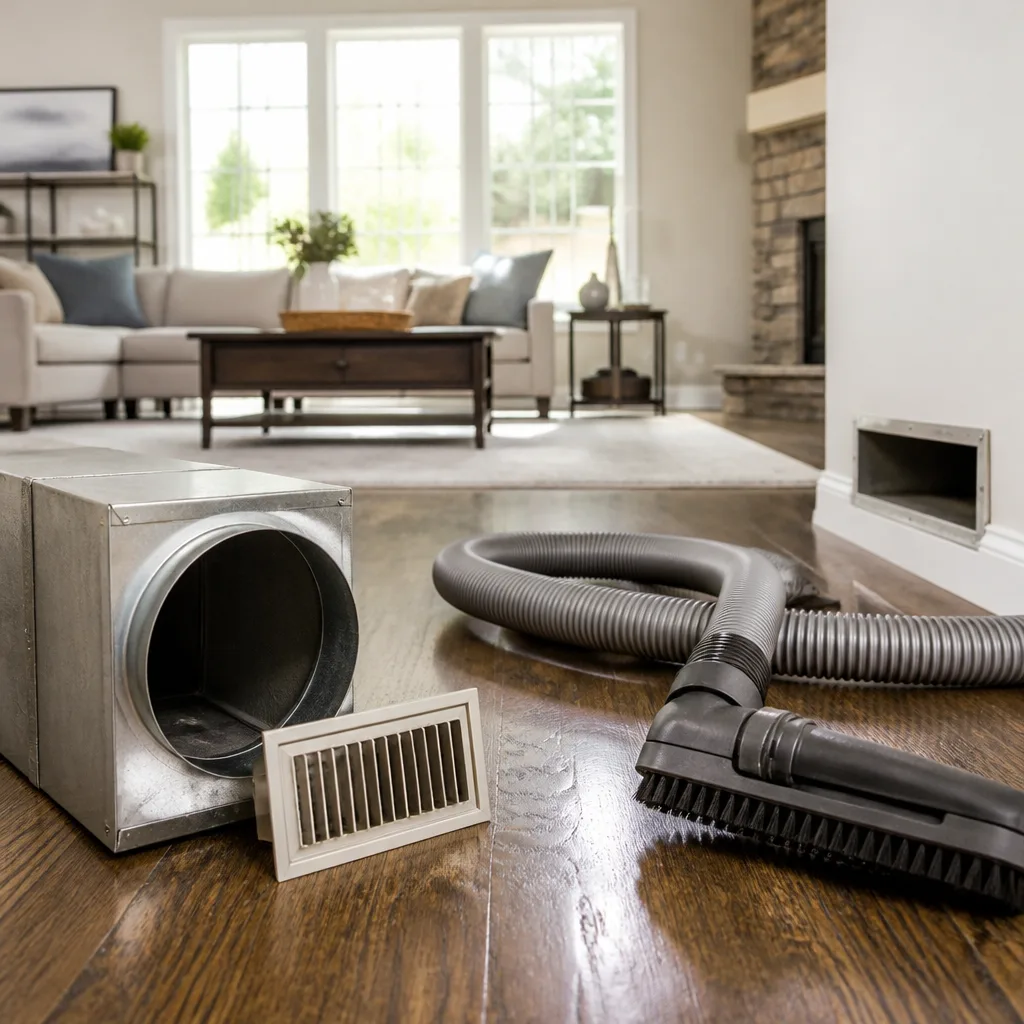
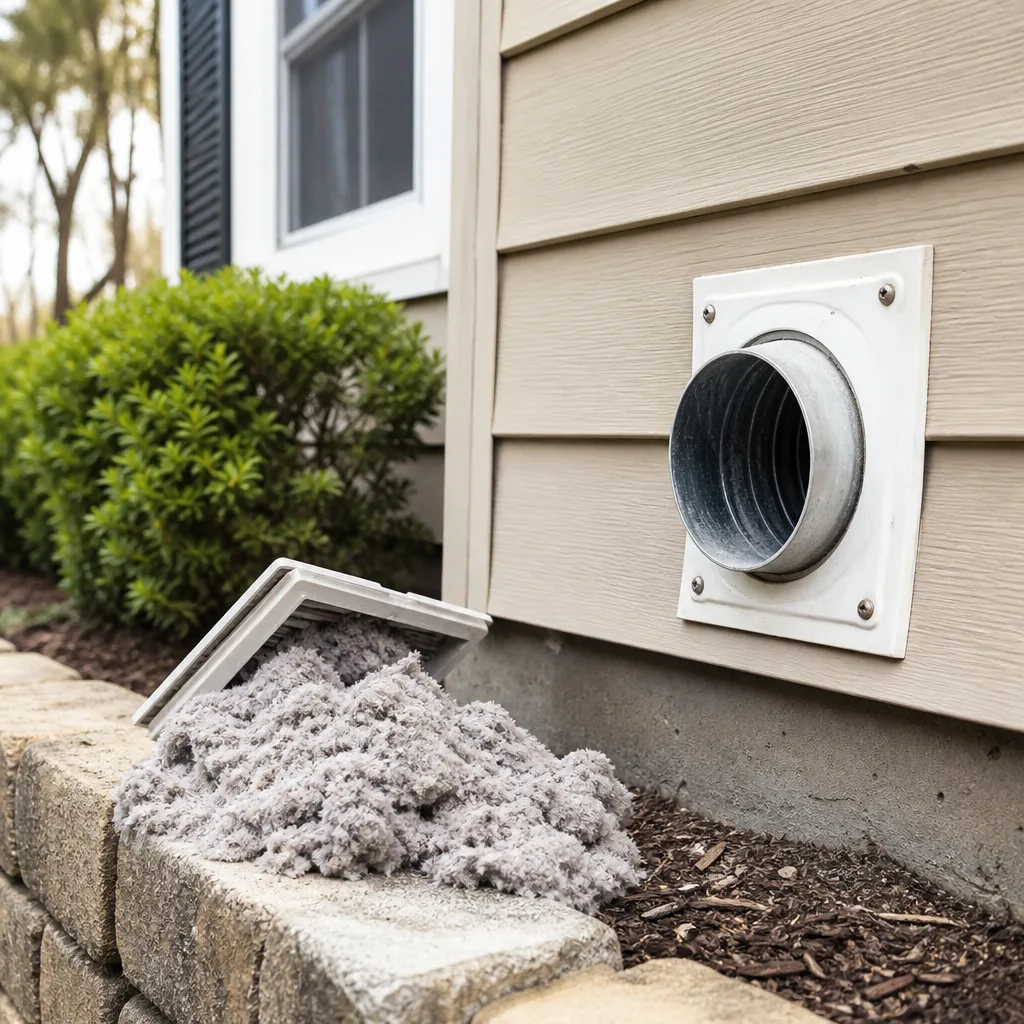
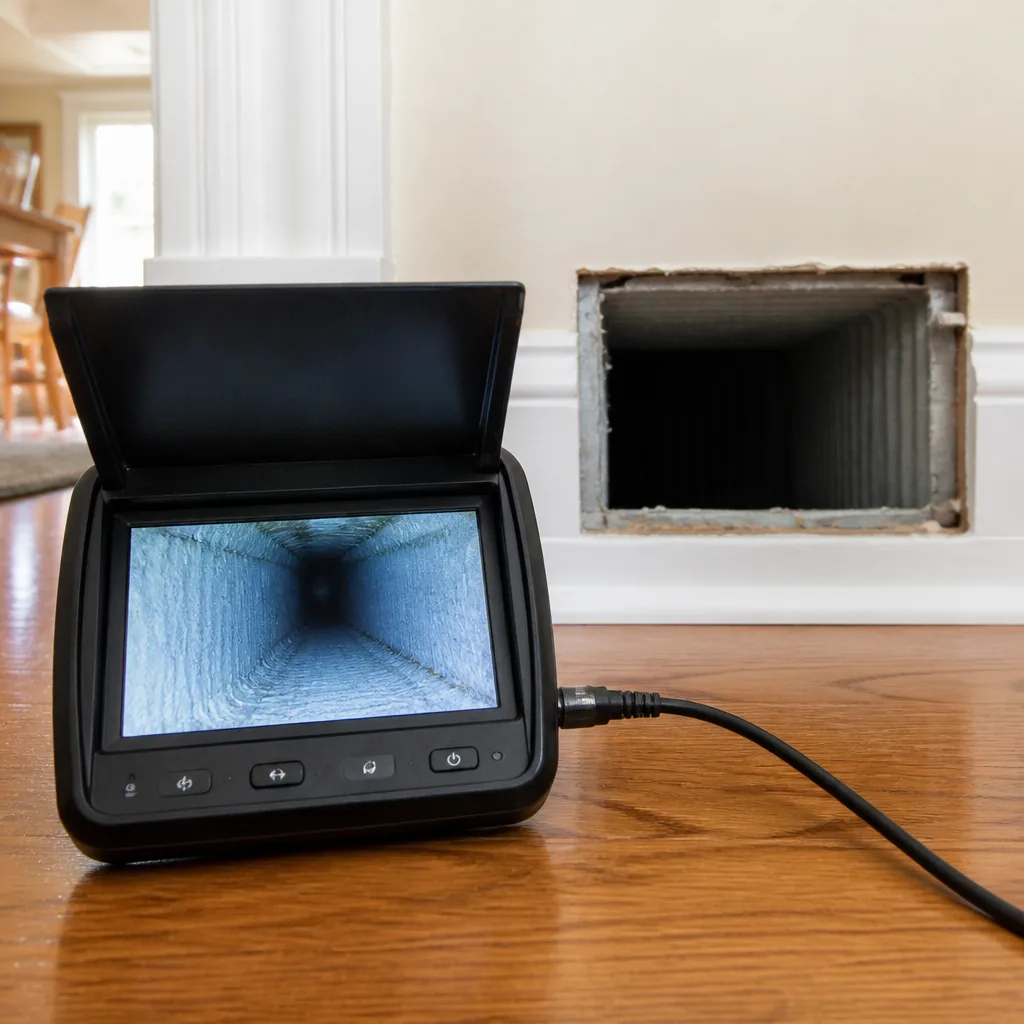
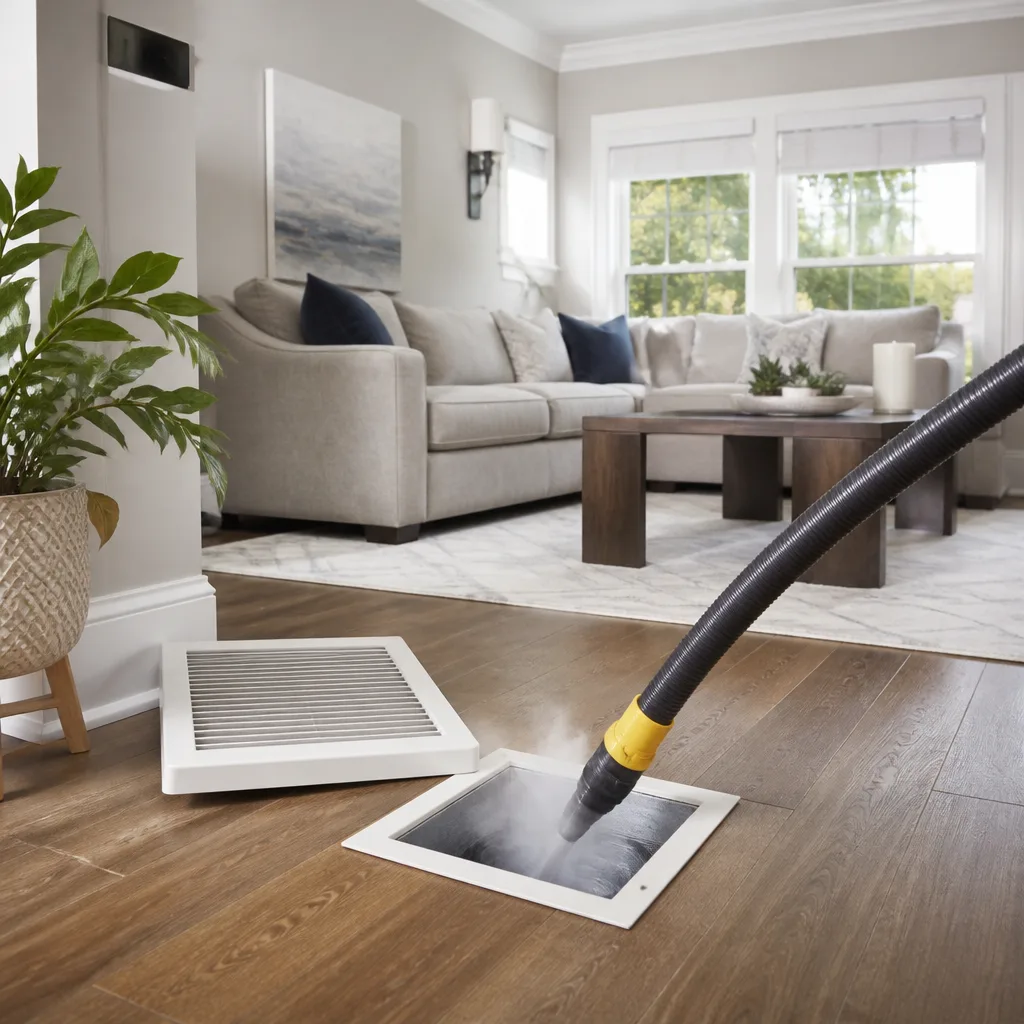
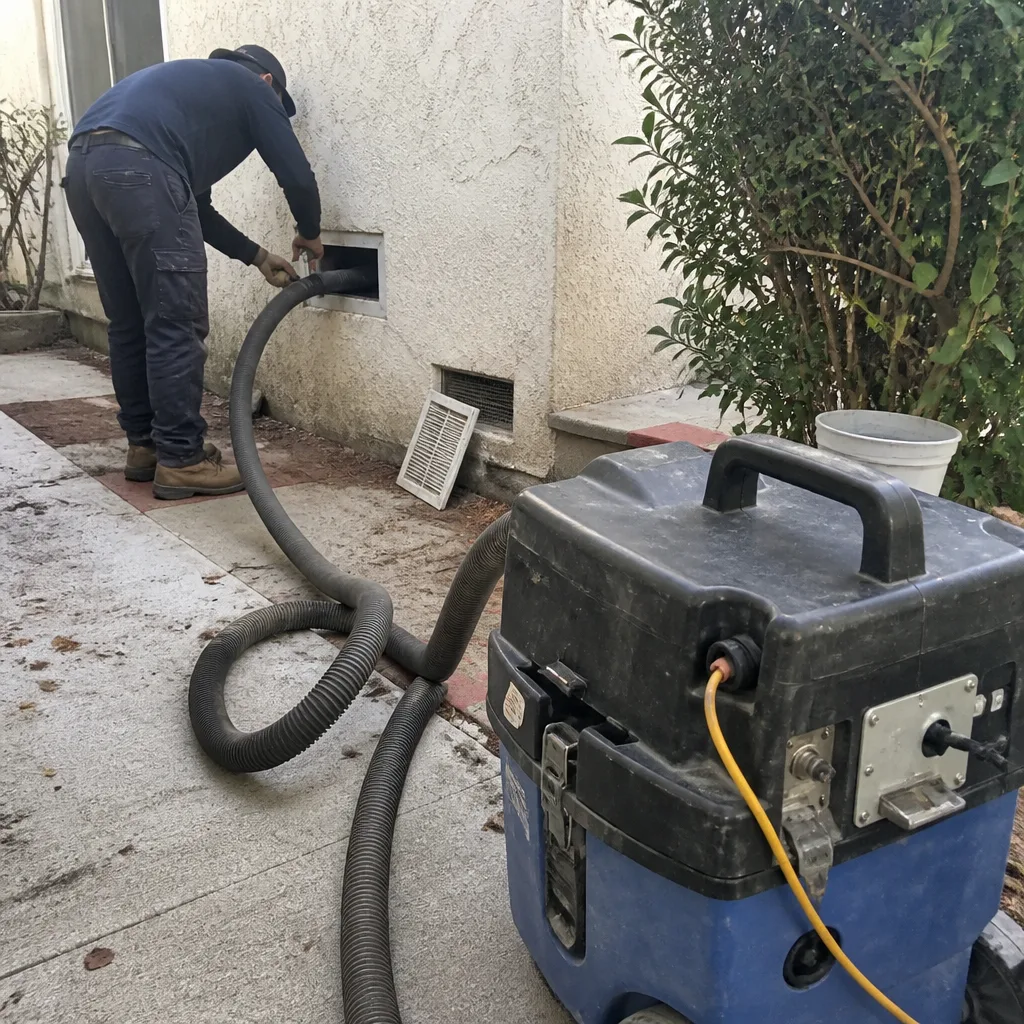 Before
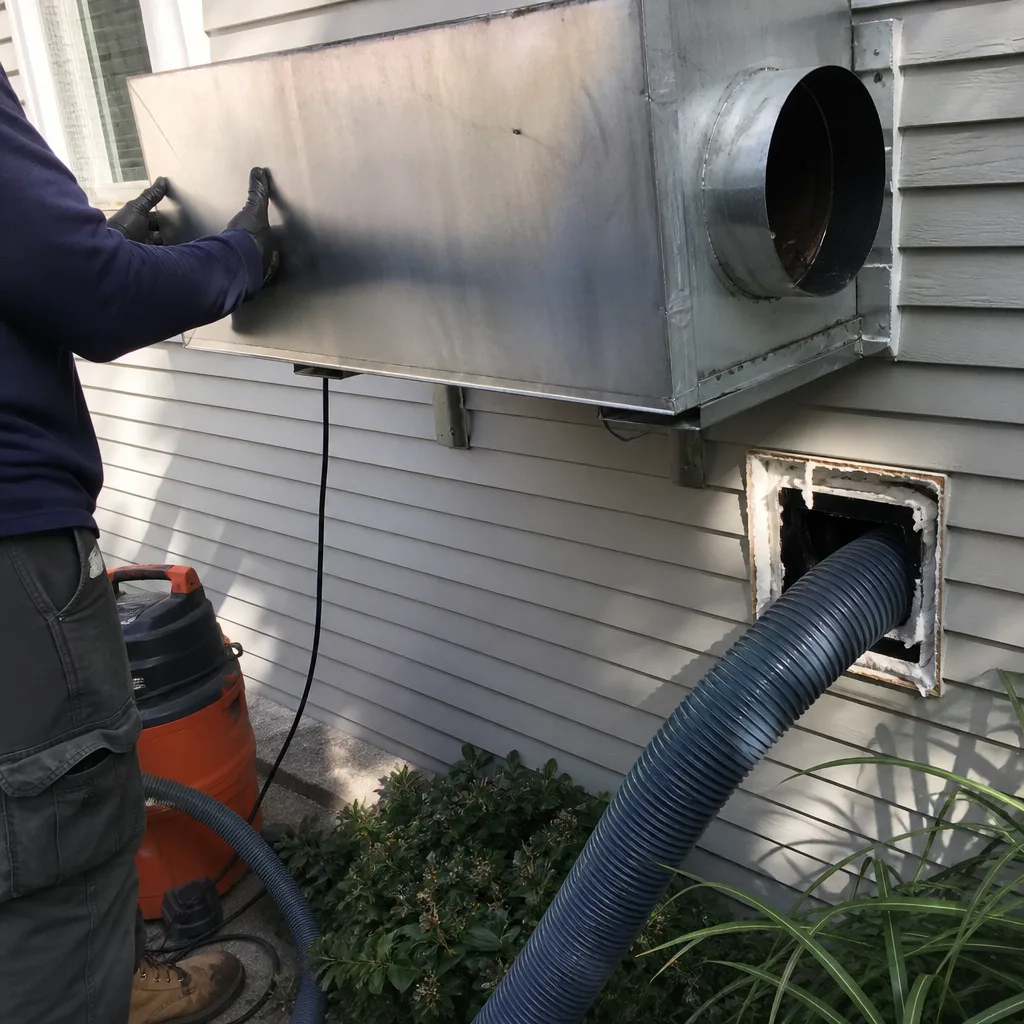 After
After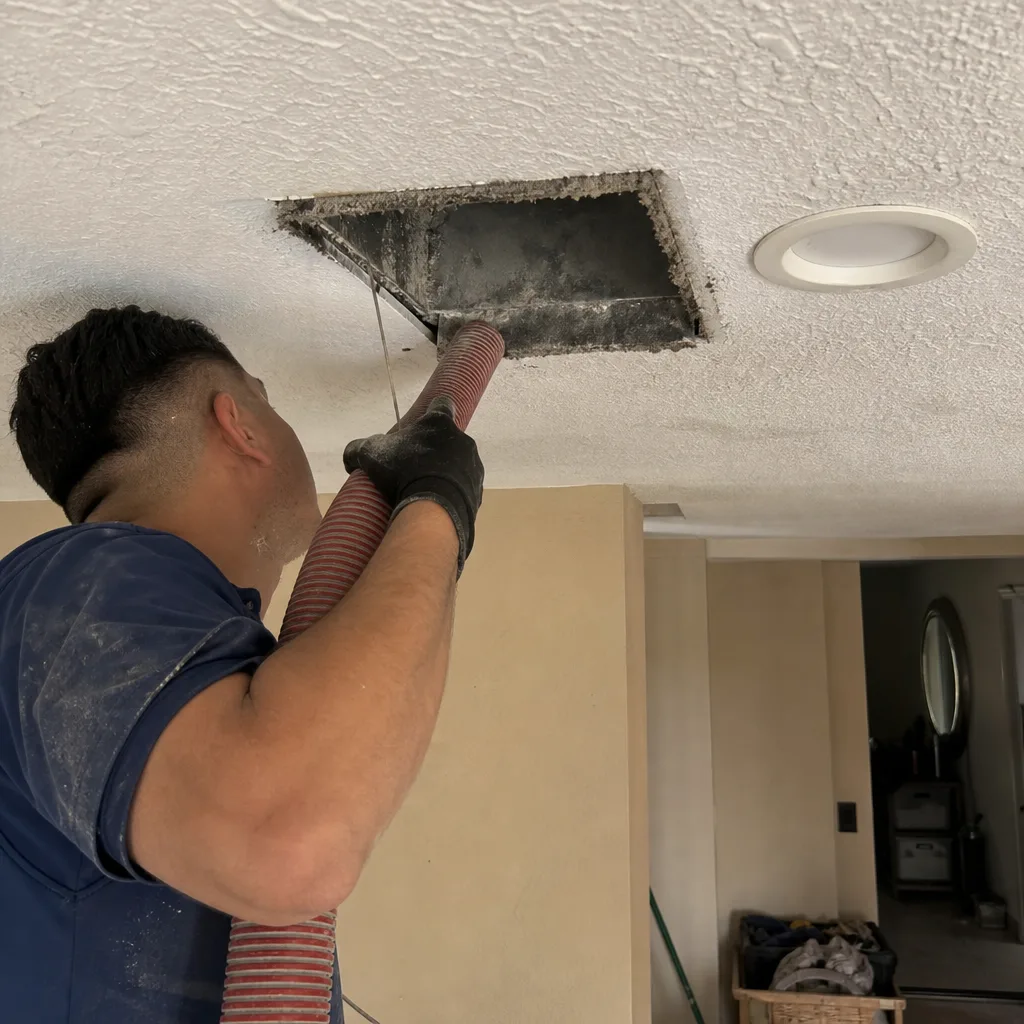 Before
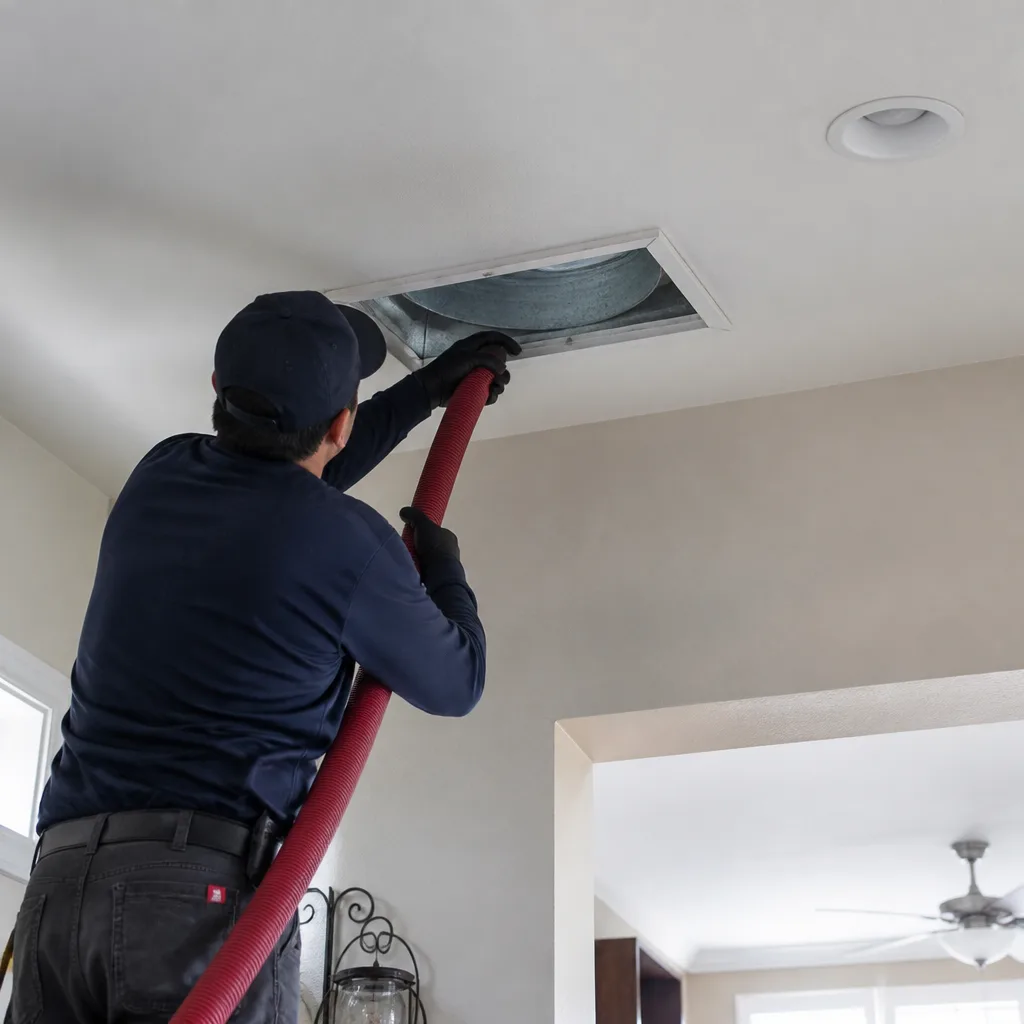 After
After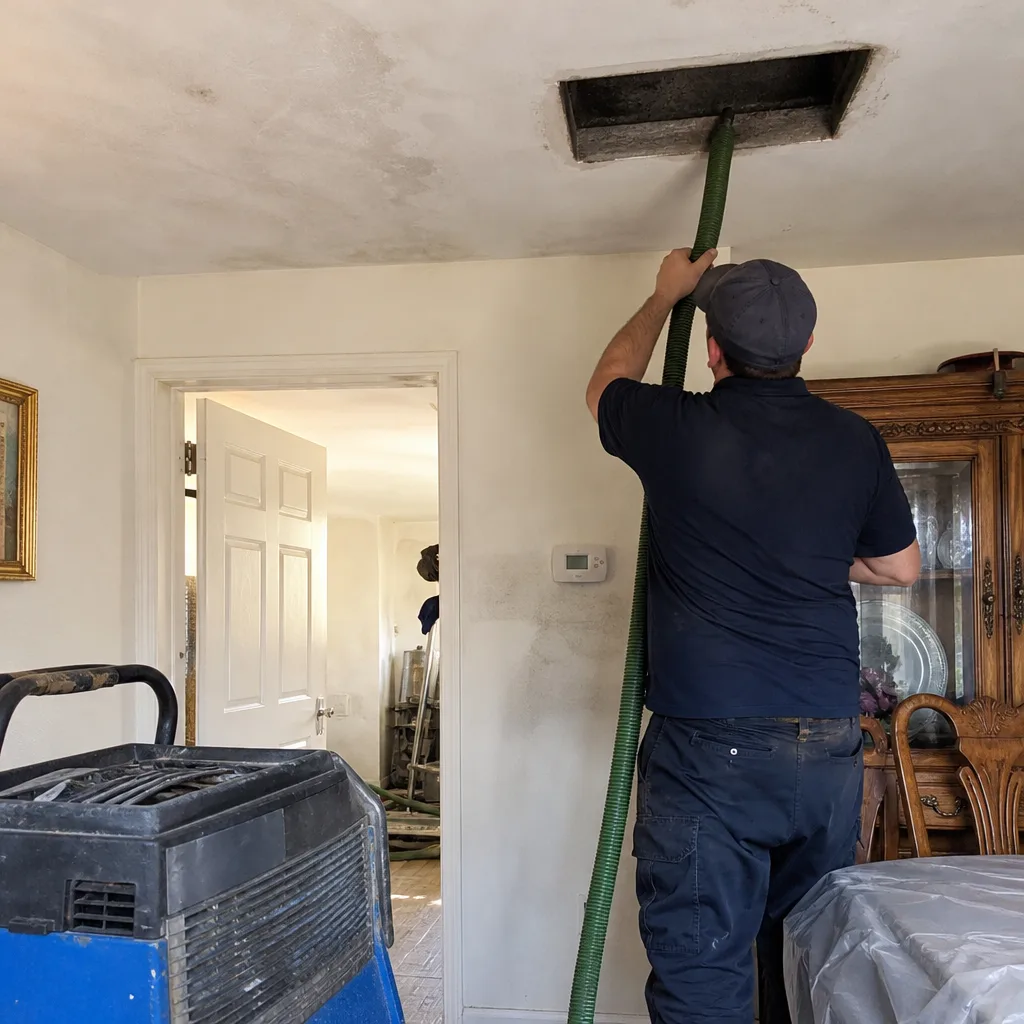 Before
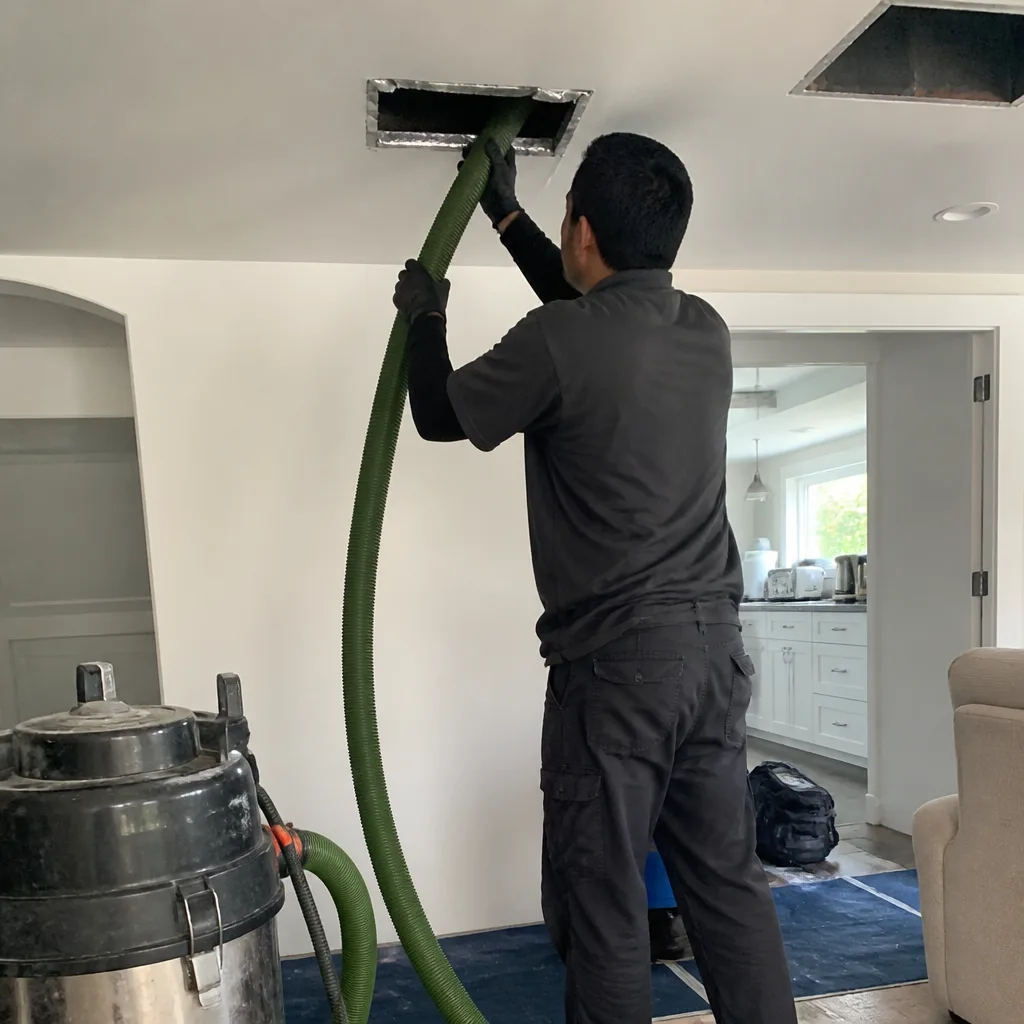 After
AfterThe Complete Guide to Air Duct Cleaning in Los Angeles
Los Angeles has more than 1.4 million single-family homes, and a meaningful share of them were built before 1980 with duct systems that have never been professionally cleaned. Walk into most of those homes and you’ll find thirty or forty years of dust, pet dander, construction debris, and sometimes vermin droppings moving through the vents every time the HVAC cycles on. The frustrating part for homeowners is that the average search for Air Duct Cleaning in Los Angeles leads straight to a $49 coupon from a company no one has heard of, with no written guarantee and no way to verify the work was actually done. This guide exists to fix that information gap. You’ll learn what the job actually involves, what it should cost without gimmicks, how Los Angeles housing stock and climate shape the work, and what a real guarantee looks like when it’s put in writing.
Quick Answer
Air duct cleaning in Los Angeles typically costs between $450 and $1,200 for a whole-home system, depending on square footage, number of vents, duct material, and access difficulty. The job should follow NADCA’s ACR standard, which requires a negative-air machine, agitation of the duct walls, and a before/after inspection you can see with your own eyes. Any company quoting below that range without explaining why is almost certainly running a bait-and-switch, and any company that can’t show you a written guarantee for the work is one to avoid.
Table of Contents
- What Air Duct Cleaning Actually Involves
- How Los Angeles Climate and Geography Shape Duct Debris
- Los Angeles Housing Stock: What Your Home’s Era Means for Your Ducts
- What Air Duct Cleaning Costs in Los Angeles: An Honest Breakdown
- The NADCA Standard and Why Most Discount Operators Skip It
- What a Written Guarantee Should Say, Word for Word
- What to Ask Before You Book: A Pre-Call Checklist
- Common Mistakes to Avoid
- When to Call a Professional
- Frequently Asked Questions
- The Bottom Line
What Air Duct Cleaning Actually Involves
Air duct cleaning is not a guy with a shop vac waving a hose into your register for twenty minutes. A legitimate job follows a defined sequence, and it takes a two-person crew between three and six hours for a typical Los Angeles house, depending on system size and access. Here’s the sequence, step by step:
- System inspection and access planning. The technician locates the supply and return trunks, identifies the main access point, and checks for any disconnects or damage in the duct runs before work starts.
- Equipment setup and containment. A negative-air machine is connected to the system. This is a HEPA-filtered vacuum that pulls air backward through the ducts, creating suction that keeps loosened debris from blowing into your living space during cleaning.
- Agitation of duct walls. A rotary brush system or compressed-air whip is fed through each duct run. This is what actually dislodges the caked dust and debris from the duct walls. The negative-air machine then pulls that loosened material out of the system. At Hollis Air Duct Cleaning, we run Rotobrush and Nikro equipment for this step because it’s the same gear commercial building maintenance crews use.
- Register and grille cleaning. Every supply register and return grille is removed and cleaned. This part gets skipped by a lot of discount operators, and it shows.
- Component cleaning. The blower motor, evaporator coil, and drain pan should be inspected and cleaned if needed. If the coil is caked, the system runs harder and your energy bill climbs.
- Before/after photo documentation. This is the key step in the NADCA ACR standard and the one most competitors skip entirely. You should see photos of the inside of your ducts before the job, and photos of the same sections after. That’s how you know the work was actually done. At Hollis, every job includes this documentation.
- Final walkthrough. The technician shows you the before/after photos, confirms the access points are re-sealed, and leaves the site clean.
If a Los Angeles company quotes you an hour for a full-house job, they are skipping most of these steps. That’s not a cheaper way to clean ducts. That’s a cheaper job, and it leaves the bulk of the debris exactly where it was.
How Los Angeles Climate and Geography Shape Duct Debris
Los Angeles has what climatologists call a Mediterranean climate: dry, hot summers from roughly June through September, a winter rainy season that’s modest compared to most of the country, and the famous marine layer that rolls in off the Pacific from late spring through early summer. Those conditions create a specific debris profile in LA duct systems that differs from what you’d find in Houston, Minneapolis, or Atlanta.
Here’s what we’ve seen in thousands of Los Angeles duct inspections:
- Fine particulate dust from dry-season soil. With so many months of zero rainfall, LA’s topsoil dries out and becomes airborne. That fine silt gets pulled into return ducts and settles along the bottom of horizontal runs. Homes within a mile of the 405, the 101, or the 10 freeways accumulate vehicle brake dust and tire particulate, which is finer and harder to remove without real agitation.
- Santa Ana wind debris. The dry offshore winds that blow from the desert toward the coast in fall and winter push dust, pollen, and sometimes ash from wildfires into home ventilation systems. Homes in the San Fernando Valley, Pasadena, and the foothill communities see heavier Santa Ana-driven debris than coastal areas like Santa Monica or Long Beach.
- Marine-layer moisture and microbial growth. The June Gloom marine layer raises relative humidity near the coast. When that moist air hits cold metal ducts in unconditioned attics, condensation forms. That damp film catches dust, and over time you get a caked paste on the duct walls that can support mold growth. Westside homes in Santa Monica, Venice, and Playa del Rey see this more often than inland homes in Burbank or Glendale.
- Pet dander and hair, year-round. Los Angeles has one of the highest pet-ownership rates in the state. A single large dog sheds enough hair to reduce airflow through a return grille within a season. Add two cats and a 1970s ranch house with original ducting, and the system is working against itself.
The point is that generic duct cleaning advice from a national website doesn’t account for any of this. Your air ducts in Echo Park don’t accumulate the same material the same way a house in Chicago does. The job is the same in principle, but a crew that understands local conditions will know where to look for the worst buildup before they even open the access panel.
Los Angeles Housing Stock: What Your Home’s Era Means for Your Ducts
Los Angeles grew in distinct building booms, and each era left behind a characteristic housing style with characteristic duct problems. Knowing which archetype your home falls into helps you understand what a cleaning crew is likely to find and what the job should entail.
Craftsman Bungalows (roughly 1905-1930)
Neighborhoods like Highland Park, Eagle Rock, Angelino Heights, and parts of South LA are dense with Craftsman bungalows. Many of these homes were built before forced-air heating was standard, so the ducting was retrofitted later, often in the 1950s or 1960s. Retrofitted systems mean small ducts, tight crawlspaces, and access panels in awkward locations. A significant number of these homes still have asbestos wrap on older duct sections. If your bungalow has not been remediated, do not let anyone open those ducts until the wrap has been assessed. The cleaning itself is safe, but disturbing asbestos wrap is not, and it requires a separate abatement process.
Mid-Century Ranch Homes (roughly 1945-1970)
The San Fernando Valley is the epicenter of mid-century ranch construction: Sherman Oaks, Encino, Tarzana, Northridge, and Woodland Hills. These homes commonly have galvanized steel ducting, which is durable but has now been in place for 50 to 80 years. We regularly find separated joints, detached hangers, and leaks at the plenum connections in these systems. Flexible duct sections installed during later remodels are often collapsed or kinked. A good cleaning crew will flag these problems during the job. A discount crew will blow past them, clean around the damage, and leave you with a system that still leaks 20% of its conditioned air into the attic.
1970s Condos and Townhomes
Condo and townhome construction boomed in Los Angeles during the 1970s, particularly on the Westside and in the South Bay. These buildings often used flexible ducting from day one. Flex duct has a plastic liner over a wire coil, and that liner degrades over decades. We see flex duct in 1970s condos in Culver City and Torrance that has developed tears, pinholes, and collapsed sections. Cleaning old flex duct requires lower air pressure and careful agitation, because aggressive brushing will tear the liner. If the liner is already compromised, the right answer is not cleaning at all; it’s duct replacement or sealing. A company that doesn’t tell you that is selling a service, not a solution. For context on when to handle issues yourself versus calling a pro, see our DIY vs Professional Air Duct Cleaning: The Los Angeles Homeowner’s Decision Guide.
1980s-2000s Suburban Production Homes
Tract housing from this era, found across the Santa Clarita Valley, Antelope Valley, and parts of Orange County, typically used a mix of sheet metal trunks and flex duct branches. These homes are now 25 to 40 years old, which is past the lifespan of most flex duct. The most common issue we find is disconnected flex runs in attics, usually caused by heat degradation of the plastic zip ties that hold the connections. That means conditioned air blowing into the attic, not your living room. A thorough cleaning inspection should catch this.
The through-line here: your home’s era determines what’s in your attic, and what’s in your attic determines what the cleaning should cost and whether cleaning is even the right first step. Any Los Angeles duct cleaning company that quotes a flat price without asking about your home’s age and construction is guessing, not estimating.
What Air Duct Cleaning Costs in Los Angeles: An Honest Breakdown
Whole-home air duct cleaning in Los Angeles ranges from $450 to $1,200 for a single-family residence. That’s the real market range in 2025, not the teaser price on a postcard. Here are the four variables that actually determine where your job falls in that range:
- Square footage. A 1,200-square-foot bungalow simply has less ductwork than a 3,400-square-foot Valley ranch. More square footage means more linear feet of duct runs, more registers, and more time.
- Number of vents. The vent count drives labor time. A typical 3-bedroom, 2-bath home has 10 to 14 supply registers and 2 to 3 returns. Each register must be removed, cleaned, and re-installed. More vents means more time means more cost.
- Duct material. Rigid galvanized steel can take aggressive rotary brush agitation. Flex duct requires slower, gentler work with different tooling. If your home has old, brittle flex duct, the technician needs to be careful, and careful takes longer.
- Access difficulty. Attic access with standing headroom is fast. Crawlspace access under a 1920s bungalow is not. The difficulty of reaching the main trunk and each branch run directly affects labor hours.
Here’s a practical price table for Los Angeles homes, based on the work we do at Hollis Air Duct Cleaning:
| Home Size | Typical Vent Count | Typical Price Range (LA Metro) |
|---|---|---|
| Up to 1,500 sq ft | 8-12 | $450 – $650 |
| 1,500 – 2,500 sq ft | 12-18 | $550 – $850 |
| 2,500 – 3,500 sq ft | 18-25 | $750 – $1,000 |
| 3,500+ sq ft | 25+ | $900 – $1,200 |
What you should not pay is a per-vent price. The industry’s worst actors quote a small per-vent number, say $29, then hit you with a bill based on some inflated vent count plus add-ons for “sanitizing” and “deodorizing” that were never requested. At Hollis, the price is written down before any work starts, and it is one flat price per system. Not per vent. Not plus surprise fees at the door. The price we write is the price you pay, and if the work isn’t done right, the 365-Day Done Right Promise means we return and make it right at no charge. You can see our standard approach on the Air Duct Cleaning in Los Angeles page.
If you’re comparing quotes, get the number in writing and make sure it states what’s included: all supply runs, all return runs, the main trunk, the plenum, the blower housing, and before/after photos. If a quote doesn’t itemize those, it isn’t a comparable quote.
The NADCA Standard and Why Most Discount Operators Skip It
NADCA, the National Air Duct Cleaners Association, publishes the ACR standard: Assessment, Cleaning, and Restoration of HVAC Systems. It’s the closest thing this industry has to a rulebook, and it spells out exactly what a complete cleaning must include. You don’t need to read the whole standard to know what matters. Here are the parts that affect whether your Los Angeles duct cleaning job is actually worth paying for:
- Access openings must be cut. The standard requires creating proper access into the main trunk and return lines. You cannot clean a duct system through the register openings alone. Companies that refuse to cut access are not doing a legitimate job.
- Negative air pressure is mandatory. A HEPA-filtered negative-air machine must be attached to the system during cleaning. This creates suction inside the ducts, containing the debris that’s being dislodged. Without it, the dust being brushed off the duct walls is free to drift back into your home.
- Mechanical agitation is mandatory. The standard requires some form of mechanical agitation of the duct walls, whether rotary brush or air whip. Vacuuming alone doesn’t remove caked debris. This is the step that separates real cleaning from glorified suction.
- All system components must be addressed. Coils, blower, drain pan, and registers are part of the system. A complete cleaning includes them. A partial cleaning leaves the biggest airflow restriction, the coil, untouched.
- Visual verification is mandatory. The standard requires a visual inspection after cleaning to confirm the ducts are clean. This is where before/after photos come in. If a company cannot show you the inside of your ducts after the job, you’re taking their word on the most expensive part of the work.
Most discount operators in Los Angeles skip every one of these steps except the vacuum, and some skip even that. They flash a coupon price, spend thirty minutes doing a surface pass, and leave. The ACR standard isn’t a suggestion. It’s the difference between a job done and a job that only looks done from the register opening.
Roy Castellanos, who runs Hollis Air Duct Cleaning, puts it simply: every Hollis job follows the ACR standard because the alternative is charging a homeowner for work we didn’t do. That’s a standard we enforce on ourselves, and the before/after photos are the proof. The equipment we use, including Rotobrush rotary brush systems and Nikro negative-air machines, exists to meet that standard on every single job.
What a Written Guarantee Should Say, Word for Word
Most air duct cleaning companies in Los Angeles have no written guarantee at all. A few will tell you verbally that they’re “satisfaction guaranteed.” The number that puts anything in writing, with a defined term and a defined remedy, is vanishingly small. Here’s what a legitimate written guarantee should say, and the words matter:
“If any portion of the duct cleaning work performed at this property fails to meet the NADCA ACR standard within 365 days of the completion date, the company will return and re-clean the affected portion of the system at no charge to the homeowner. This promise is valid in writing and requires no additional payment, no trip fee, and no negotiation. If the re-clean is required, the company will also schedule a second visit within 14 days of notification.”
That’s what a real guarantee looks like. Notice what it does: it names the standard (NADCA ACR), names the term (365 days), names the remedy (re-clean at no charge), and names the logistics (second visit within 14 days, no fee). No vague “we’ll make it right.” No “within reason.” No fine print excluding the parts of the job most likely to fail.
This is exactly what the 365-Day Done Right Promise at Hollis Air Duct Cleaning covers. It’s a one-year guarantee, in writing, on every job. If something fails, we come back and fix it. That includes a free second visit. It’s not a marketing phrase. It’s the same standard The Garrison Code applies across every Hollis location: arrive inside the quoted window, put prices in writing, complete the job by the book, and leave the site clean. If the work doesn’t hold up, the promise does.
When you’re calling around Los Angeles for duct cleaning quotes, ask this question directly: “Will you put the guarantee in writing, and can I see a copy before you start?” Watch how the conversation goes. The companies with real guarantees will say yes without hesitation. The rest will find a reason to talk about something else.
What to Ask Before You Book: A Pre-Call Checklist
The best time to protect yourself from a bad duct cleaning experience is before anyone shows up at your door. Here’s the five-question checklist we recommend every Los Angeles homeowner work through on the phone:
- “Will the price be written down before you start, and is it the final price?” If they hesitate, move on. The bait-and-switch starts with a verbal quote.
- “Do you follow the NADCA ACR standard, including mechanical agitation and negative air?” If they don’t know what those terms mean, they’re not cleaning ducts professionally.
- “Will you show me before and after photos of my own ducts?” If the answer is no, they have a reason the answer is no.
- “Is there a written guarantee, and what does it cover?” Ask to hear the term and the remedy. Vague answers are a red flag.
- “Do you do a full system cleaning, including the coil and blower?” A lot of cheap jobs stop at the register covers. That’s a surface wipe, not a cleaning.
Five questions, two minutes on the phone. They will tell you more about the company you’re dealing with than any review site will.
Common Mistakes to Avoid
- Biting on the $49 coupon. Los Angeles mailboxes fill up with these postcards, especially in the spring. The $49 price covers maybe a “system inspection” and a few register covers. The actual cleaning will be pitched at the door for $800 or more. A real company doesn’t need a teaser price to get in your door.
- Hiring a company with no physical Los Angeles address. Plenty of duct cleaning “companies” are call centers that subcontract to whoever answers the dispatch app that day. You have no idea who’s coming to your house. Ask for a local address and a supervising owner’s name.
- Skipping the before/after photos. Without photo documentation, there’s no way to verify the work was done any further than the register opening. You’re paying for a promise you can’t check.
- Accepting a verbal guarantee. If it isn’t written down, it doesn’t exist. A one-year written promise is the benchmark. Anything less than that is the company telling you they don’t expect the work to hold up.
- Ignoring ducts that predate your ownership. If you bought a Los Angeles house and don’t know the last time the ducts were cleaned, the answer is probably never. Ignoring them doesn’t make them cleaner, and the buildup compounds year over year.
- Using duct cleaning as a substitute for duct sealing. Cleaning removes debris. It doesn’t close gaps at joints or seal disconnected flex runs. If your system leaks, cleaning it will improve flow slightly and then the leaks will keep costing you energy. We cover this distinction on our Duct Sealing in Los Angeles page.
When to Call a Professional
You should call a professional for a duct inspection and quote if you’ve lived in your Los Angeles home for more than five years and have never had the ducts cleaned; if anyone in the house has persistent allergies or respiratory issues that worsen when the HVAC runs; if you can see dust buildup on the register covers; if you’ve renovated and drywall dust or construction debris went through the system; or if your energy bills have climbed without a matching change in usage. You should also call if you simply don’t know the condition of your ducts, which is most homeowners. An inspection will tell you what you’re dealing with, and the quote is free. Hollis Air Duct Cleaning offers free estimates in Los Angeles; call (361) 326-5060 and you’ll get a live person on the line, day or night, with a written price before any work begins.
Frequently Asked Questions
Whole-home air duct cleaning in Los Angeles ranges from $450 to $1,200 depending on square footage, vent count, duct material, and access difficulty. Be wary of quotes below that range, which typically signal a bait-and-switch operation. Call (361) 326-5060 for a free estimate with a written price before any work starts.
Most Los Angeles homes benefit from professional air duct cleaning every three to five years, though homes with multiple pets, wildfire smoke exposure, or freeway-adjacent locations may need it more frequently. If you’re unsure whether your ducts need attention now, a visual inspection will tell you. Call (361) 326-5060 and we’ll help you assess your system’s condition.
Cheaper quotes usually mean fewer steps: no negative-air containment, no mechanical agitation, no coil cleaning, and no before/after documentation. The operator is selling a surface-level pass, and they’ll either upsell the real work at the door or leave debris behind in your ducts. A legitimate Los Angeles cleaning follows the NADCA ACR standard, which takes hours, not minutes, and that’s what the honest price reflects. Get your quote in writing before you commit; call (361) 326-5060 for a flat, written price.
Ask for before and after photos of the inside of your ducts, specifically the main trunk and return lines. The NADCA ACR standard requires visual verification of the cleaned system, and any reputable Los Angeles company will provide photo documentation as a matter of course. If a company refuses or offers excuses, that’s your answer.
For most Los Angeles homeowners, yes. Decades-old duct systems in LA’s dry climate accumulate fine dust, pet dander, and construction debris that restrict airflow and recirculate through your living space every day. Cleaning restores airflow, reduces the load on your HVAC equipment, and removes the material that’s been building up since the previous owner moved in. Pair it with Dryer Vent Cleaning in Los Angeles if you’re also dealing with a slow-drying laundry cycle.
Yes. Every Hollis job is covered by the 365-Day Done Right Promise: if the work fails within a year, we return and re-clean at no charge, including a free second visit. The promise is in writing on every job. That’s the standard The Garrison Code sets for every Hollis Air Duct Cleaning home location, and it’s why we don’t compete on teaser coupons.
The Bottom Line
Air duct cleaning in Los Angeles is worth doing when it’s done to the NADCA ACR standard, priced in writing before the work starts, and backed by a guarantee with real teeth. The city’s housing stock, from Craftsman bungalows in Highland Park to mid-century ranches in the Valley to 1970s condos on the Westside, creates specific duct challenges that generic advice ignores. The right company will explain those challenges plainly, show you before and after photos of your own ducts, and give you a written price that doesn’t move at the door. That’s the discipline The Garrison Standard demands, and it’s what the 365-Day Done Right Promise enforces. If your ducts haven’t been inspected, start there. The quote is free, and the information will tell you exactly what you’re dealing with. For more guides & resources on maintaining your HVAC system, visit our blog.
Frequently Asked Questions
Written by Roy Castellanos, Owner at Hollis Air Duct Cleaning, serving Los Angeles since 2004.