
Last updated October 9, 2026
Whole-system duct and dryer vent check with before-and-after photos - you see exactly what came out of your vents
That "$99 whole-house special" is a bait ad - the real number appears once they are in your hallway, or the "clean" is a shop-vac at the register. We photograph the inside of your ducts before and after instead.
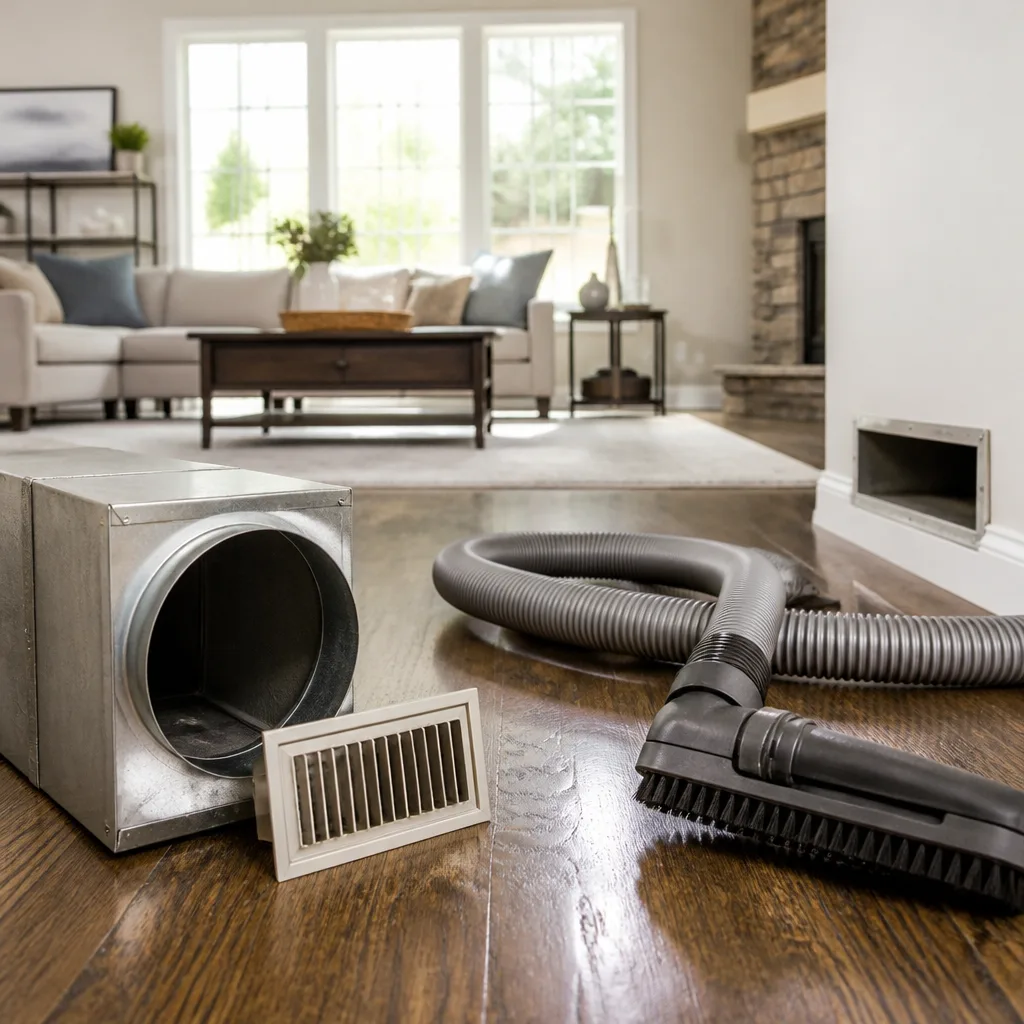
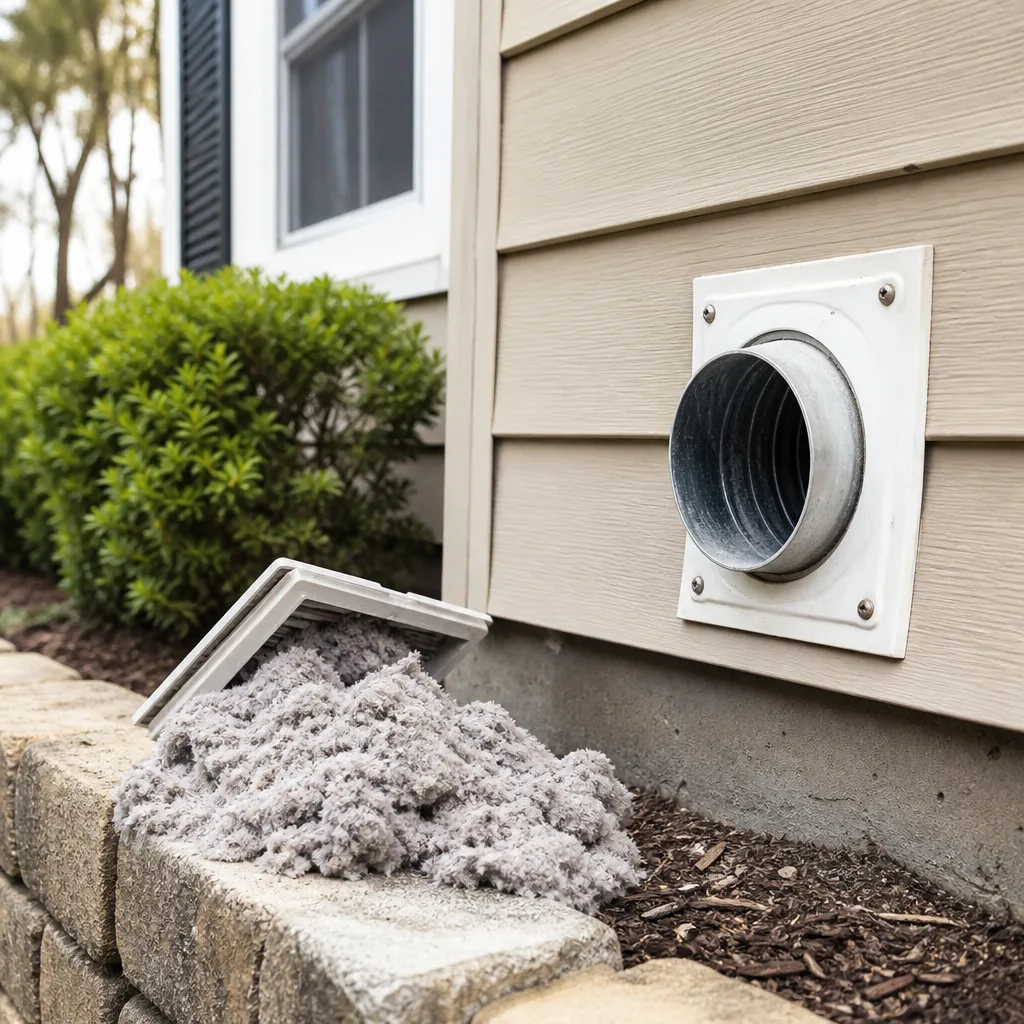
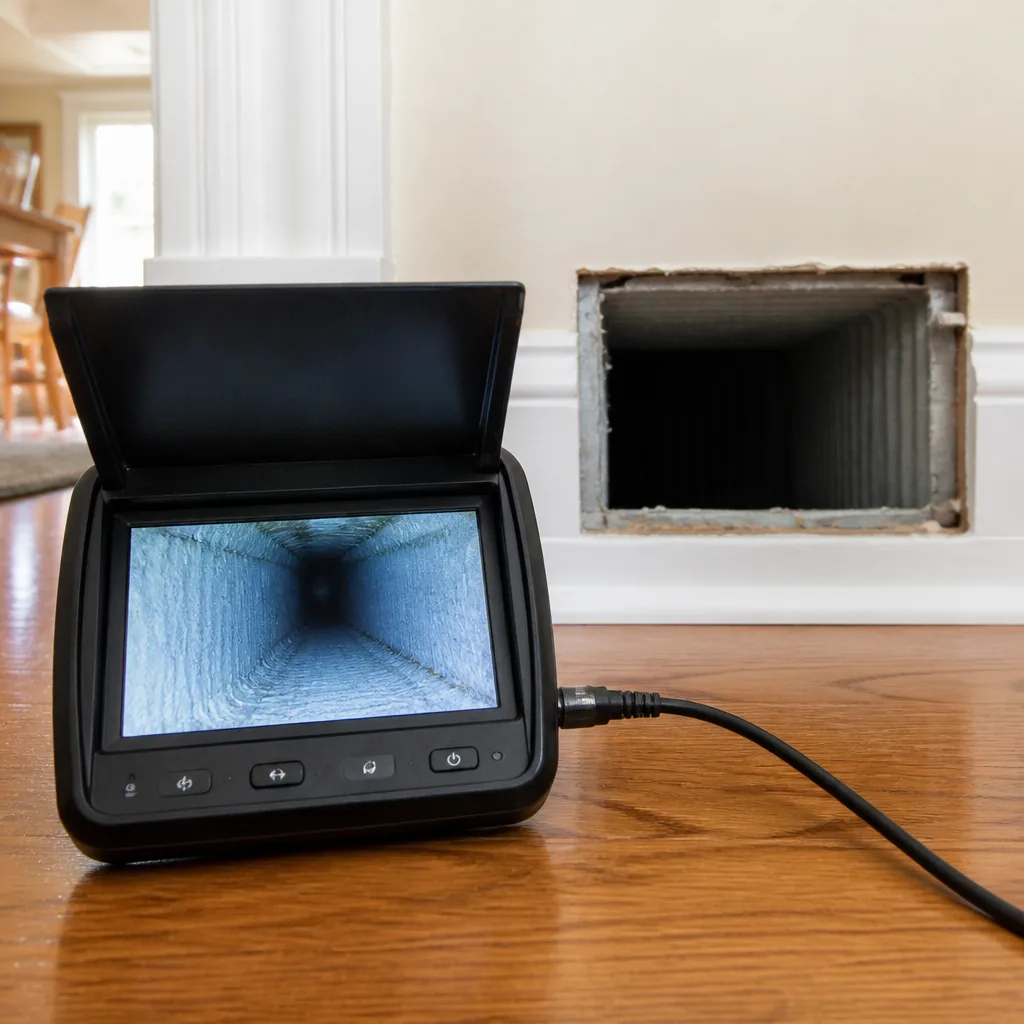
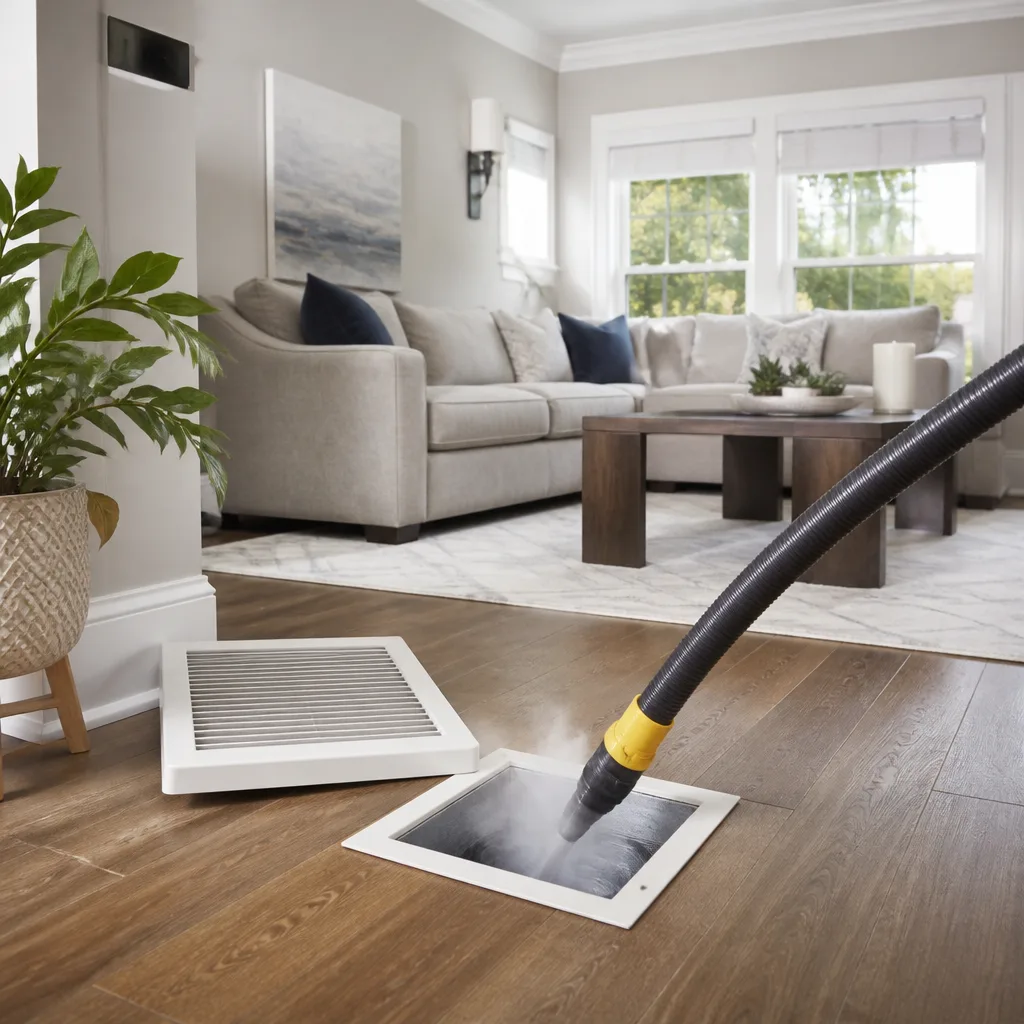
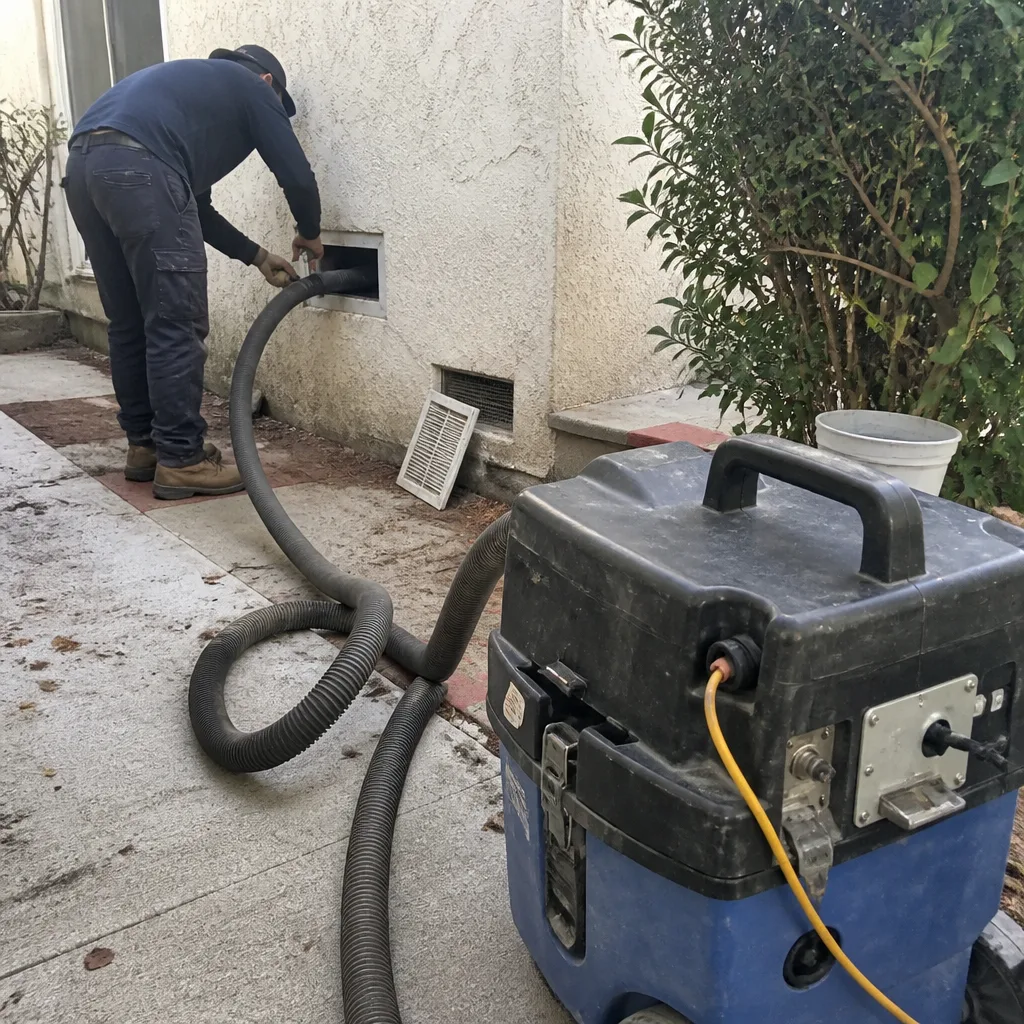 Before
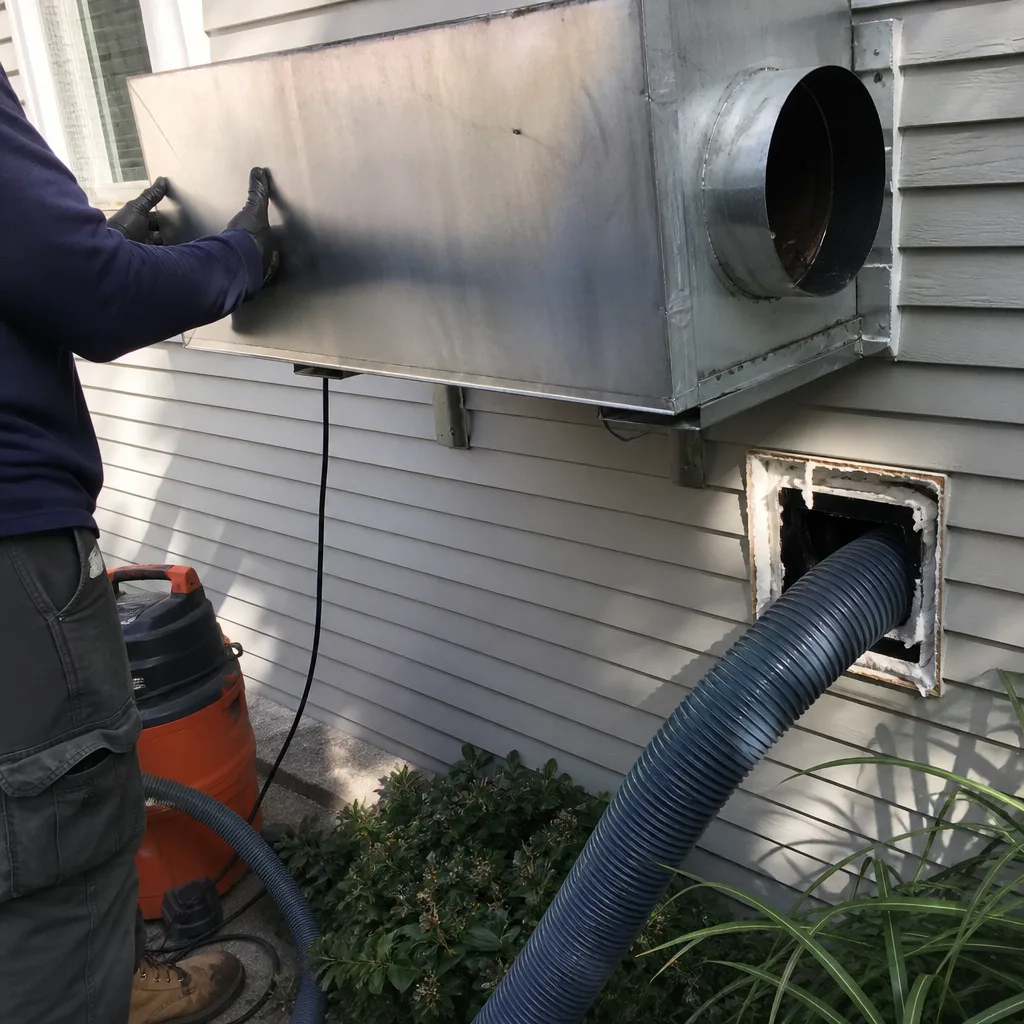 After
After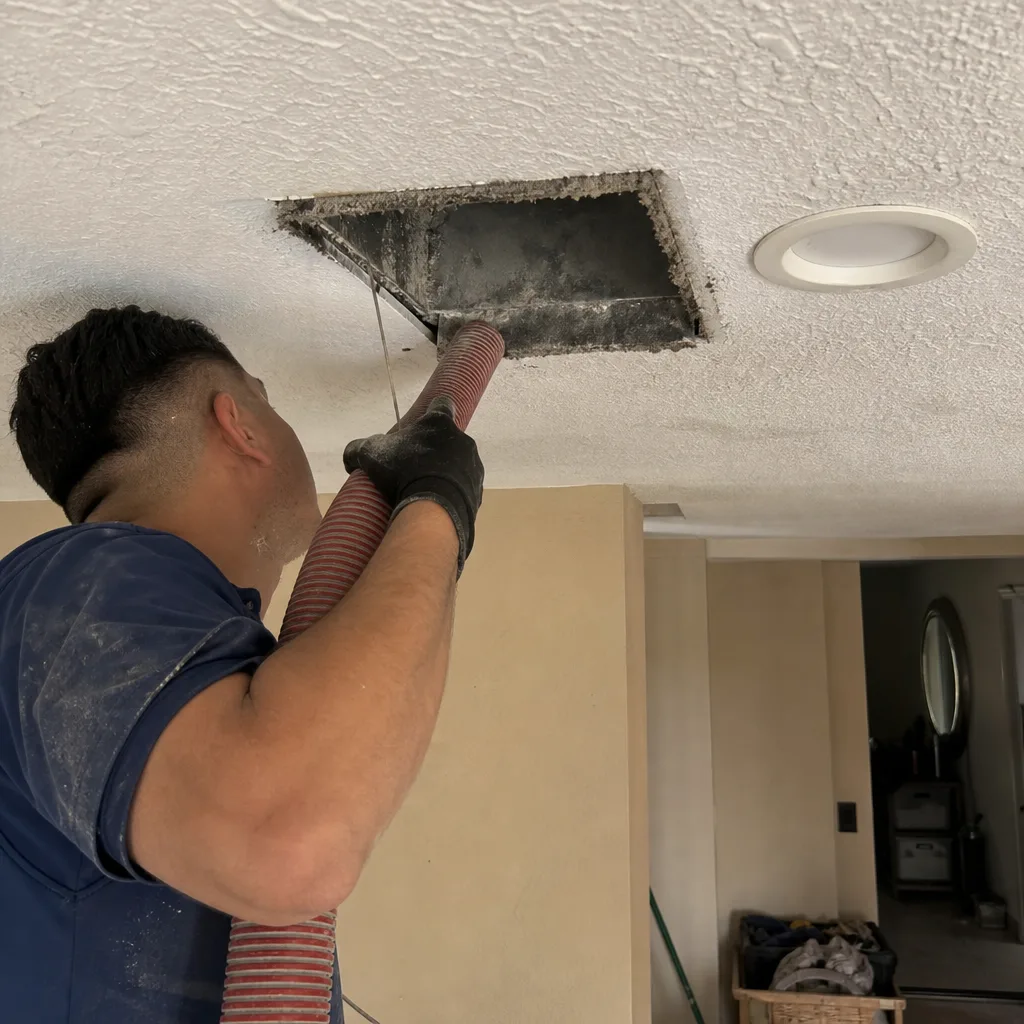 Before
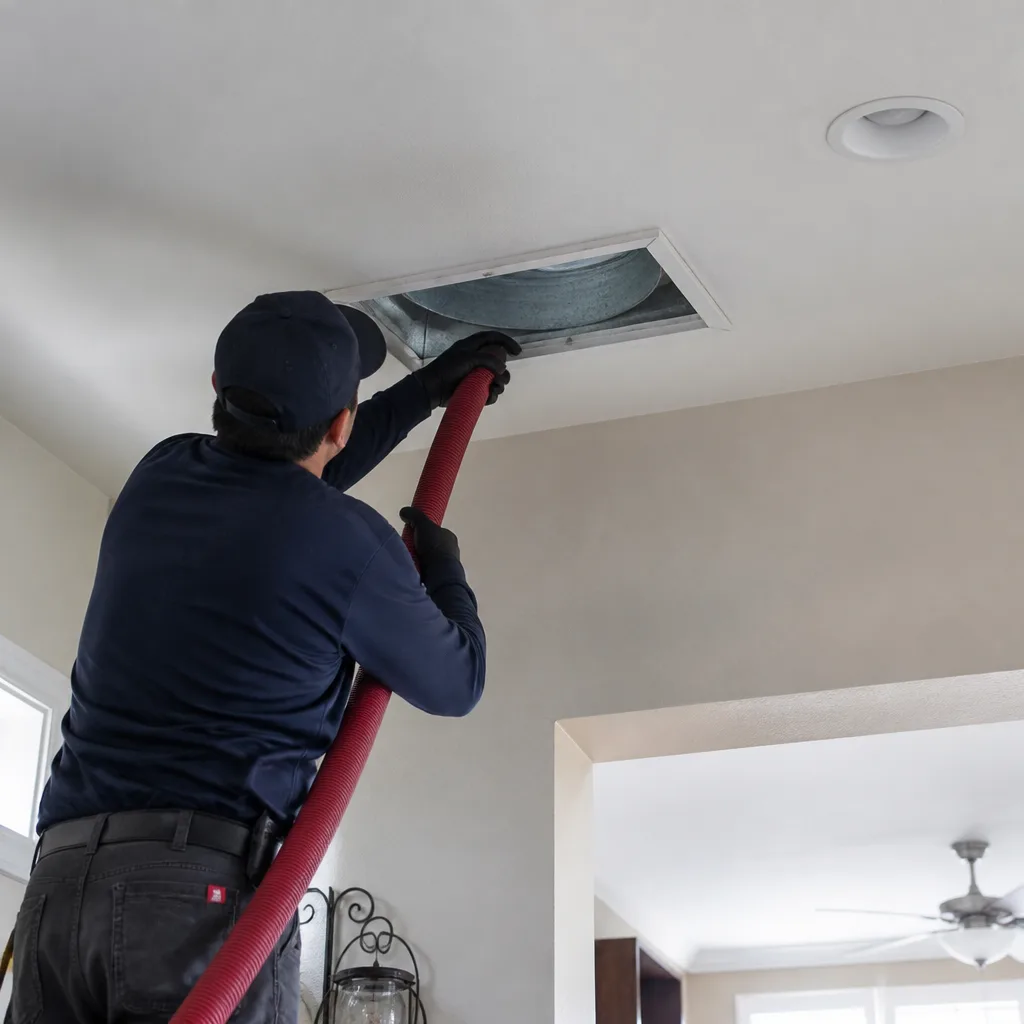 After
After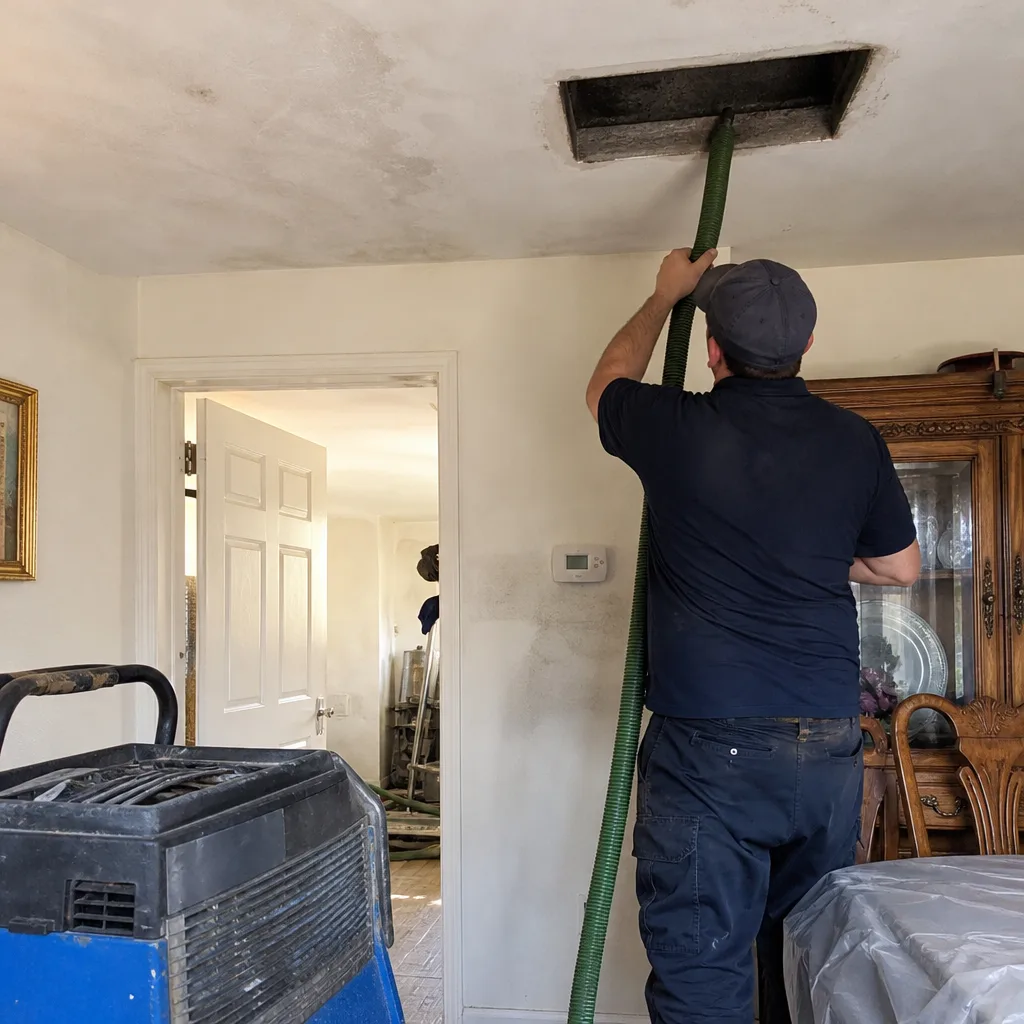 Before
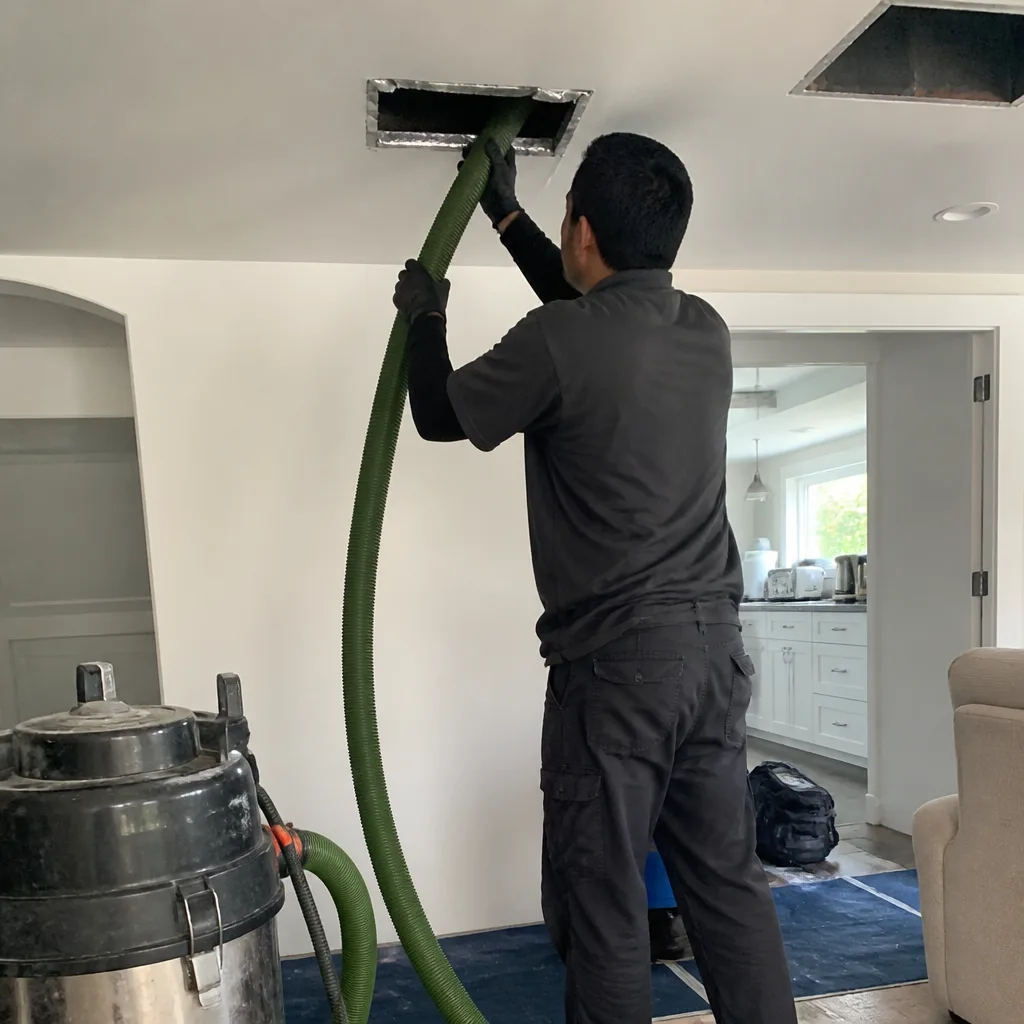 After
AfterThe Complete Air Duct Cleaning Guide for Los Angeles Homeowners
After Santa Ana winds push wildfire ash across the basin, independent air quality monitors in the San Fernando Valley have recorded indoor particulate levels that exceed outdoor AQI readings. The reason is counterintuitive: your ducts are not filtering that ash out. They’re trapping it, then re-releasing it into the air you breathe every time your HVAC system cycles on. This guide explains why Los Angeles homes face a different set of duct problems than houses in Phoenix, Dallas, or Atlanta, what a properly scoped cleaning should actually cost, and how to tell the difference between a legitimate cleaning and the $49 special that ends up costing $900. Written from the perspective of our Air Duct Cleaning services, it covers the specific variables that matter here: wildfire smoke seasons, coastal humidity, slab foundations, and a local market saturated with bait-and-switch operators.
Quick Answer
Air duct cleaning in Los Angeles typically costs between $300 and $700 for a properly scoped single-family home, using negative-air equipment that meets NADCA standards. LA homes need cleaning more frequently than the national average due to wildfire ash intrusion, and owners should insist on a written price and written guarantee before scheduling. The job takes 2 to 5 hours and should include a visual before-and-after inspection.
Table of Contents
- What Air Duct Cleaning Actually Does
- Why Los Angeles Ducts Are Different
- How Often Should LA Homeowners Clean Their Ducts?
- What a Proper Cleaning Includes
- The Real Cost of Duct Cleaning in Los Angeles
- The $49 Bait-and-Switch Explained
- How to Verify the Work Was Actually Done
- How to Evaluate a Duct Cleaning Company in Los Angeles
What Air Duct Cleaning Actually Does
Air duct cleaning removes the accumulated material from your supply and return ductwork: dust, pet dander, construction debris, insect matter, and in Los Angeles specifically, a fine gray-black film of wildfire ash and brake dust. A legitimate cleaning uses a negative-air machine, which creates suction throughout the duct system while rotary brushes or compressed air agitation dislodge debris from the duct walls. The dislodged material is pulled into a HEPA-filtered collection unit, not blown into your living room.
The plain-English version: a powerful vacuum is connected to your duct system, and agitation tools scrub the interior surfaces so that vacuum can pull everything out. The process treats the entire system, not just the vents you can see from the hallway. Properly done, it removes the majority of accumulated particulate from the full length of every duct run.
What it does not do is prevent future dust accumulation. Ducts are air pathways, and anything in your air eventually settles somewhere. What cleaning does accomplish is removing the backlog, which matters in Los Angeles because the backlog here contains material you would not choose to breathe: fine particulate from wildfire smoke that can include PM2.5 and PM10, both of which are linked to respiratory irritation.
The work should be done with professional-grade tools. We run Rotobrush rotary brush systems and Nikro negative-air machines, which are the same brands commercial crews use on high-rise buildings in downtown Los Angeles. Hardware-store equipment cannot generate the suction volume required to pull debris from a full residential duct system.
Why Los Angeles Ducts Are Different
National duct cleaning guides treat every house the same. That approach misses what actually happens in Los Angeles, where three local factors combine to create a contamination profile you will not find in most of the country.
Wildfire ash and basin air quality. Los Angeles sits in a bowl, and the Santa Anas push fine particulate from fires in the Angeles National Forest, the San Gabriel Mountains, and beyond directly into the basin. Fire season now runs roughly May through October, and during those months, the particulate load in outdoor air spikes repeatedly. Your HVAC system pulls that air in, and the ducts become a collection trap. After a smoke event, the interior duct walls in homes from Studio City to Pasadena show a visible gray film that homeowners in less affected regions never see.
Coastal humidity in western neighborhoods. Homes in Santa Monica, Venice, Playa del Rey, and Marina del Rey deal with persistent marine-layer humidity. When moisture meets that ash-and-dust accumulation inside ductwork, the result is a caked-on layer that adheres to duct walls. It resists simple vacuuming and requires mechanical agitation to remove. That same humidity also accelerates corrosion in older galvanized duct sections, which is why coastal LA homes often show rust-colored dust around supply registers even when the rest of the house seems clean. For a deeper look at sealing solutions, see The Complete Duct Sealing Guide for Los Angeles Homeowners.
Slab foundation construction. A large share of Los Angeles single-family homes, especially those built between 1950 and 1980, sit on concrete slab foundations. In crawlspace homes, the ducts run through accessible space below the floor. In slab homes, duct runs are often embedded in or routed through the concrete, which changes access points, inspection methods, and contamination patterns. Slab ducts are more vulnerable to fine sediment accumulation because any moisture intrusion from plumbing leaks or ground contact stays trapped in the run, creating a paste-like residue. Access often requires going through floor registers rather than from below, which is why a proper cleaning of a slab-foundation home in the San Gabriel Valley or South Bay takes longer than a comparable crawlspace job.
These are not hypothetical concerns. We see them in the field every week across Los Angeles. A home in Sherman Oaks six miles from the nearest fire will show fire-ash deposits in its return ducts after a heavy smoke season, because the HVAC system has been pulling smoky air through the return grille for weeks. A home in Redondo Beach will show moisture-combined buildup that a dry-climate home in Riverside County will not.
How Often Should LA Homeowners Clean Their Ducts?
The national recommendation is every 3 to 5 years. For Los Angeles homeowners, that range tightens based on location and circumstances.
Clean every 3 to 4 years if:
- Your home is within 10 miles of any area that experiences seasonal wildfire activity, which includes most of Los Angeles County.
- You live in a coastal neighborhood where marine-layer humidity is a daily factor.
- Your home has a slab foundation with embedded ductwork.
- Anyone in the household has asthma, allergies, or another respiratory condition.
- You have pets that shed, especially if you have more than one dog or cat.
- You have done any remodeling or construction work that generated drywall dust or sawdust.
You may be able to stretch to 5 years if:
- Your home is in a newer development with a sealed attic duct system.
- You run high-efficiency filtration and change filters monthly during fire season.
- You have no pets and no occupants with respiratory issues.
- Your neighborhood has not experienced a significant smoke event in the past several years.
The most reliable indicator is visual. Remove a supply register and look inside with a flashlight. If you see accumulation on the duct walls greater than the thickness of a credit card, or if you see gray-black film that smears when wiped, the system needs cleaning regardless of the calendar. After a significant Santa Ana-driven smoke event, we recommend at least inspecting your return duct interiors, because return registers pull air from your living space, and that air includes whatever the smoke brought with it.
One point worth stating clearly: duct cleaning is not an annual maintenance item for most Los Angeles homes. If a company is pressuring you to clean every year, they are selling frequency, not results. What does need frequent attention is your filter. During fire season in Los Angeles, check your filter every two weeks. A filter loaded with ash reduces airflow and forces your system to work harder, which shortens equipment life.
What a Proper Cleaning Includes
A legitimate air duct cleaning in Los Angeles follows a defined sequence. Here is what should happen, step by step:
- Pre-inspection and written price. The technician inspects your system, identifies the number of supply and return vents, locates the main trunk lines, and gives you a written price. If the price is not on paper before work starts, end the appointment.
- System setup. The technician connects a negative-air collection unit to the duct system, typically at the return side. This unit pulls the entire system under continuous suction during the cleaning.
- Register sealing and agitation. Supply registers are sealed or covered sequentially. Agitation tools, either rotary brushes or compressed air systems, are introduced through each opening to dislodge material from duct walls.
- Return side cleaning. The return ducts, which are usually the dirtiest part of the system, are cleaned with the same method. In slab-foundation Los Angeles homes, this often requires working through floor registers.
- Post-cleaning inspection. The technician should show you before-and-after photos of your own ducts, taken with a camera scope, so you can verify the walls are clean. If they cannot or will not show you this, the job is not verifiable.
- Site cleanup. The work area is left as it was found. No debris, no equipment left in the living room, no dust blown into the house.
The full process takes between 2 and 5 hours for a typical single-family Los Angeles home, depending on the number of vents, the age of the system, and whether the home is slab-on-grade or raised-foundation. A company that finishes in 45 minutes with a portable vacuum did not clean your ducts.
The Real Cost of Duct Cleaning in Los Angeles
For a properly scoped single-family home in Los Angeles, expect to pay between $300 and $700. The range accounts for variables including square footage, number of vents, system accessibility, and contamination level.
A useful breakdown of what affects the price:
- Number of vents. A 1,200-square-foot condo in West LA might have 8 to 10 vents, putting it at the lower end of the range. A 2,800-square-foot home in Encino with 16 to 20 vents lands at the upper end.
- Foundation type. Slab foundation homes, common throughout Los Angeles, require longer working time and more specialized access, pushing the price higher than a comparable crawlspace home.
- Contamination level. A system with heavy wildfire ash buildup or post-construction debris takes longer to clean thoroughly.
- Return duct accessibility. In some older Los Angeles homes, the return plenum is in an awkward location that slows the process.
When we scope a job, we quote a single flat price for the entire system before any work begins. That price does not move at the door. No per-vent pricing, no surprise add-ons for “extra rooms” that were visible from the start, no “system sanitizing” upsell tacked on after the fact. The written price is the price.
This matters in Los Angeles because the market here is saturated with companies that quote one number by phone and present a different number in person. A written estimate is not a formality. It is the only document that holds the company to what they said.
The $49 Bait-and-Switch Explained
Search for air duct cleaning in Los Angeles and you will find offers for $49, $59, or even $39 whole-house cleanings. These offers are not legitimate. They are a marketing mechanism designed to get a technician into your home, at which point the real price appears.
Here is how the script typically plays out in Los Angeles:
- The company advertises a flat rate, usually $49 to $99, for “unlimited vents” or “whole house special.”
- The technician arrives, performs a quick visual inspection, and announces that your system has a problem the special does not cover. The most common claims are mold, “extra-contaminated” ducts, or the need for sanitizing in addition to cleaning.
- The bill recalculates. The final invoice commonly lands between $600 and $1,200 for work that was originally sold for less than $100.
- If you decline the upsell, the technician may refuse to perform the advertised service, citing “safety” or “company policy.”
This pattern is so common in the Los Angeles market that the California Department of Consumer Affairs and various county-level agencies have issued warnings about it. The operators behind these ads often rotate company names to stay ahead of complaints, which is why you will see the same phone number advertising under three different names on Craigslist in the same week.
The tell is the price itself. A legitimate cleaning requires professional equipment, a trained technician, insurance, and 2 to 5 hours of labor. No legitimate business can deliver that for $49. When the price is below the cost of doing the work, the business model is the upsell.
We quote a real price for the actual scope of work. That means the number is higher than the teaser, but it is the number you will actually pay. In our experience, Los Angeles homeowners who have been burned once by the bait-and-switch understand this distinction immediately.
How to Verify the Work Was Actually Done
The single most common question we hear from Los Angeles homeowners who have had a bad experience is: “How do I know they actually cleaned anything?” It is a fair question, because duct interiors are not visible without equipment.
There are four verification methods that separate real work from theater:
- Before-and-after photos of your own ducts. Any legitimate company runs a camera scope through the duct system during inspection and documents the interior condition. You should be able to see the before state, the after state, and be able to verify that the photos are of your system, not stock images. The register openings, layout, and access points should match your home.
- Visible debris in the collection unit. The negative-air machine traps removed material. At the end of the job, a legitimate technician can show you the collection canister and you can see what came out of your ducts. If the canister is clean and the technician cannot show any recovered material, ask questions.
- Your own flashlight check. After the cleaning, pull a supply register and look down the duct run with a flashlight. You should be able to see a visible difference in the first several feet. Duct walls should look like clean sheet metal, not furred with gray film.
- Written documentation of what was done. The invoice should state the number of vents cleaned, the method used, and carry a written guarantee. If the company will not put the scope of work and the guarantee in writing, the work is not verifiable.
We show Los Angeles homeowners their own duct photos on every job, because verification is the only way a cleaning has meaning. If you cannot prove the work happened, the price you paid was for a story.
How to Evaluate a Duct Cleaning Company in Los Angeles
The Los Angeles duct cleaning market has no meaningful barrier to entry. Anyone with a van and a portable vacuum can print business cards and start taking appointments. That is why evaluation matters more here than in smaller markets where word of mouth filters operators quickly.
Here is what to check before you book:
- Written pricing policy. Ask directly: “Will you put the price in writing before any work starts?” If the answer is anything other than an immediate yes, do not book.
- Written guarantee. Ask what happens if you find the work was not done properly. A specific answer, like “we return and re-clean at no charge for a full year,” signals a real commitment. A vague answer about “customer satisfaction” signals nothing.
- Technician accountability. Ask whether technicians are background-checked and whether they arrive in uniform. In Los Angeles, where door-to-door duct cleaning solicitations are common, knowing who is coming into your home matters. Our technicians are background-checked, uniformed, and identified before they arrive.
- Equipment. Ask what equipment they run. The answer should include negative-air machinery. If they describe a “powerful truck-mounted vacuum” that will be connected to a floor register, you are talking to a company using an inadequate method. We use Rotobrush rotary brushes and Nikro negative-air units, the same professional-grade brands used in commercial buildings.
- Response to your questions. If you call and reach a voicemail that promises a callback “within one business day,” consider whether that is the standard you want. Our phones are answered by a live person 24 hours a day, 7 days a week, because Los Angeles homeowners should not have to wait until Monday to schedule a cleaning or ask about a quote.
One additional point that applies specifically to Los Angeles: this market has a persistent problem with door-to-door duct cleaning solicitations, often accompanied by high-pressure same-day discounts. A legitimate company does not need to show up uninvited to find work. If someone is at your door selling duct cleaning, the pressure is a feature of the pitch, not a reflection of demand.
Duct Cleaning and Your HVAC System: What Changes
Homeowners often ask what difference a proper cleaning actually makes. The answer depends on the condition of the system before the work. In a heavily contaminated system, cleaning produces measurable changes: improved airflow at the registers, reduced visible dust settling on furniture, less odor from the vents when the system cycles on, and in homes where the return side was heavily loaded, a noticeable reduction in HVAC run time to reach the set temperature.
In a system that was already relatively clean, the differences will be less dramatic, and an honest company will tell you that before taking your money. If a cleaning is marketed as a cure for allergies, lower energy bills of a specific percentage, or disease prevention, walk away. Duct cleaning improves the air pathway. It does not change the laws of physics or replace proper filtration.
What does change meaningfully in Los Angeles after a heavy smoke season is the particulate load inside the return ducts. When we clean systems in neighborhoods like Tarzana, Woodland Hills, or La Cañada after fire season, the amount of fine gray material pulled from the returns is substantial. That material was in the ducts, and every cycle was pushing some fraction of it back into the living space. Removing it has a direct, observable effect on indoor air quality. We recommend pairing a cleaning with a quality media filter such as those from Aprilaire or Honeywell, which are designed to capture finer particulate than standard fiberglass filters. The two work together: the cleaning removes the backlog, and the filter prevents rapid re-accumulation.
Common Mistakes to Avoid
- Booking based on the teaser price. In the Los Angeles market, the lowest advertised price is almost never the price you will pay. A legitimate cleaning has a cost floor driven by labor, equipment, and insurance.
- Accepting a verbal quote. If the price is not written down before work starts, the company has left itself room to adjust it. Insist on a written price that covers the full system.
- Skipping the post-cleaning verification. If you do not see before-and-after photos of your own ducts, you have no evidence the work happened. Do not accept “we cleaned everything” on faith.
- Waiting until after fire season to inspect return ducts. In Los Angeles, the wildfire smoke that enters your home settles in the return ducts first. After a heavy smoke event in your area, check your return registers with a flashlight before assuming the system is fine.
- Treating duct cleaning as a filter replacement. Cleaning removes accumulated material. It does not prevent new material from entering. A high-efficiency filter changed regularly is the prevention mechanism. Cleaning is the removal mechanism. You need both.
- Hiring a company without a written guarantee. In a market with as many operators as Los Angeles, the written guarantee is the most reliable signal that the company will stand behind its work. Ask what happens if the job is not done right, and get the answer in writing.
When to Call a Professional
You should call a professional air duct cleaning company when you see visible dust or film inside your ducts, when you have had a significant wildfire smoke event in your neighborhood, when you have completed remodeling work that generated dust, when you notice a musty or stale odor from your vents on system startup, or when anyone in your household has unexplained respiratory irritation that worsens indoors. These are not problems that resolve on their own. They require professional equipment and a verifiable cleaning process. Hollis Air Duct Cleaning offers free estimates in Los Angeles. Call (361) 326-5060 to schedule an inspection and get a written price before any work begins.
Frequently Asked Questions
A properly scoped air duct cleaning in Los Angeles costs between $300 and $700 for most single-family homes. The price depends on square footage, number of vents, foundation type, and contamination level. Be wary of quotes below $150; in the Los Angeles market, teaser pricing is almost always followed by upsell pressure once the technician is inside. Call (361) 326-5060 for a free written estimate that will not change at the door.
Cheaper quotes reflect a different business model, one built on getting a technician into your home and then expanding the scope with add-ons. A legitimate cleaning requires professional negative-air equipment, trained labor, insurance, and 2 to 5 hours of time. No company can deliver that for $49. The low price is a door opener, not a real quote.
Insist on before-and-after photos of your own ducts taken with a camera scope, and check that the collection unit contains visible debris at the end of the job. You should also be able to see a visible difference with a flashlight when you remove a register and look down the duct run. If the company cannot provide verification, the work is not verifiable.
Yes. Your HVAC system pulls return air from the living space, and during Los Angeles wildfire smoke events, that air contains elevated particulate. The ducts collect a percentage of that particulate, especially on the return side. After a significant smoke event, the interior duct walls in affected neighborhoods in Los Angeles show visible gray-black film that requires mechanical agitation to remove.
Most Los Angeles homeowners should clean every 3 to 4 years, more frequently if they live near wildfire-prone areas, in coastal neighborhoods with high humidity, or in slab-foundation homes with embedded ducts. Homes with pets, occupants with respiratory conditions, or recent remodeling work may also need more frequent service. Visual inspection is the most reliable guide; if accumulation is visible at the register openings, cleaning is due regardless of timing.
They serve different functions. Filters prevent new particulate from entering the system. Cleaning removes what has already accumulated over years, including material like wildfire ash and construction dust that settled before your current filter routine existed. If your duct interiors are clean and your filtration is excellent, you may not need cleaning as frequently. But if accumulated material is present, no filter change removes it. Call (361) 326-5060 to schedule an inspection and find out what is actually inside your ducts.
The Bottom Line
Los Angeles homeowners face a specific set of duct contamination challenges that generic national advice does not address. Wildfire ash, coastal humidity, and slab-foundation construction combine to create systems that need more attention, more careful cleaning, and more rigorous verification than homes in other regions. A legitimate cleaning costs $300 to $700, takes 2 to 5 hours, includes before-and-after photo documentation, and comes with a written price and a written guarantee. The $49 offers that dominate Los Angeles online marketplaces are not real quotes; they are sales tactics. When you are evaluating a company, the three questions that matter are: Will the price be written before work starts? Will the guarantee be in writing? Will I be able to see proof the work was done? If the answer to any of those questions is not a clear yes, keep looking. For a free written estimate on air duct cleaning in Los Angeles, dryer vent cleaning in Los Angeles, or duct sealing in Los Angeles, call (361) 326-5060. Learn more about Hollis Air Duct Cleaning home standards and the 365-Day Done Right Promise we put in writing on every job.
Written by Roy Castellanos, Owner at Hollis Air Duct Cleaning, serving Los Angeles since 2004. Explore more guides & resources on indoor air quality.