
Last updated October 9, 2026
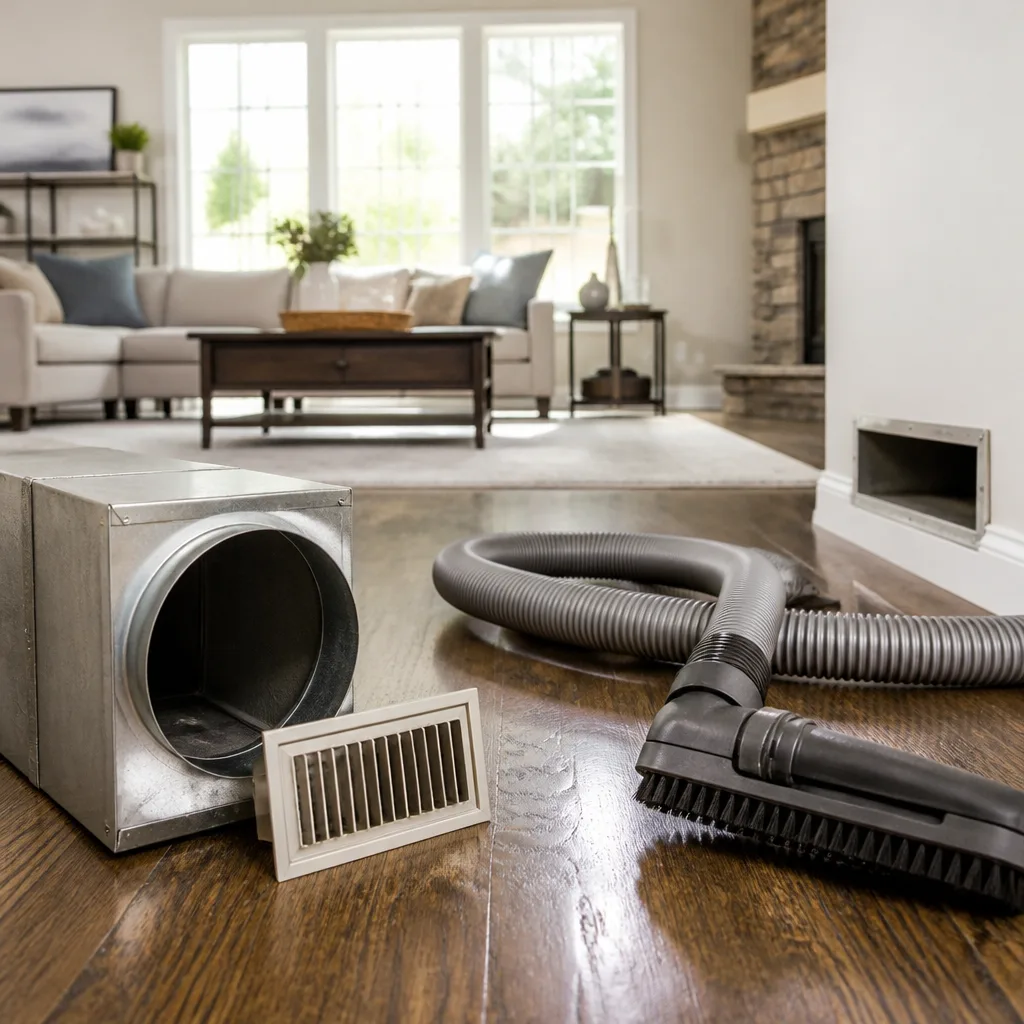
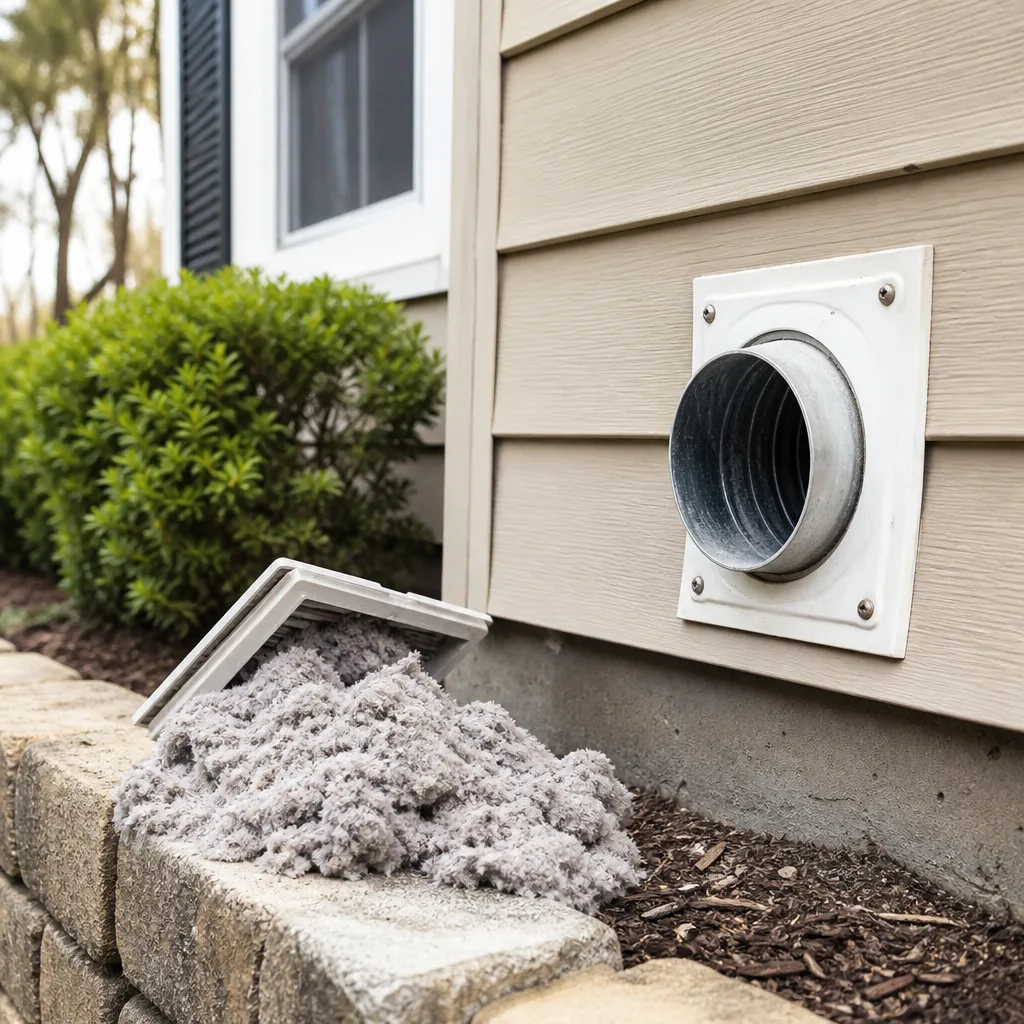
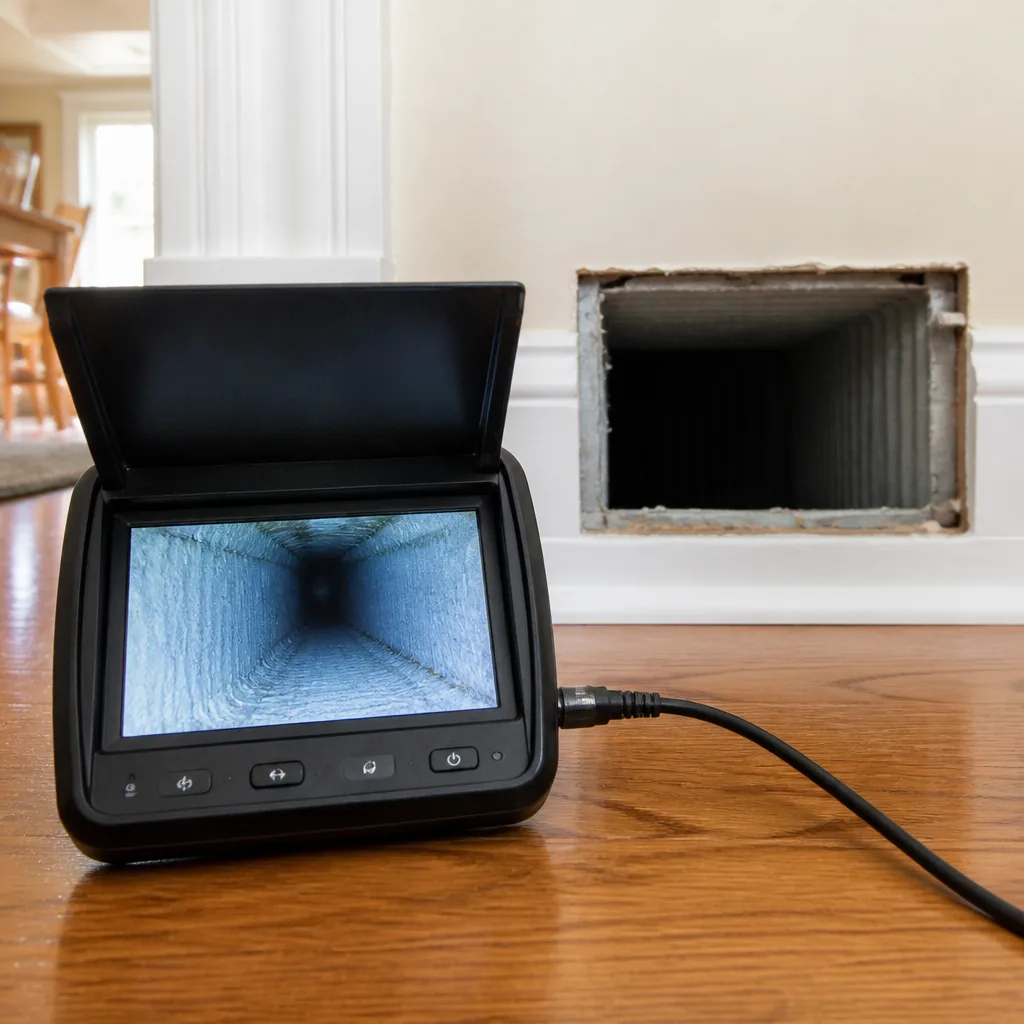
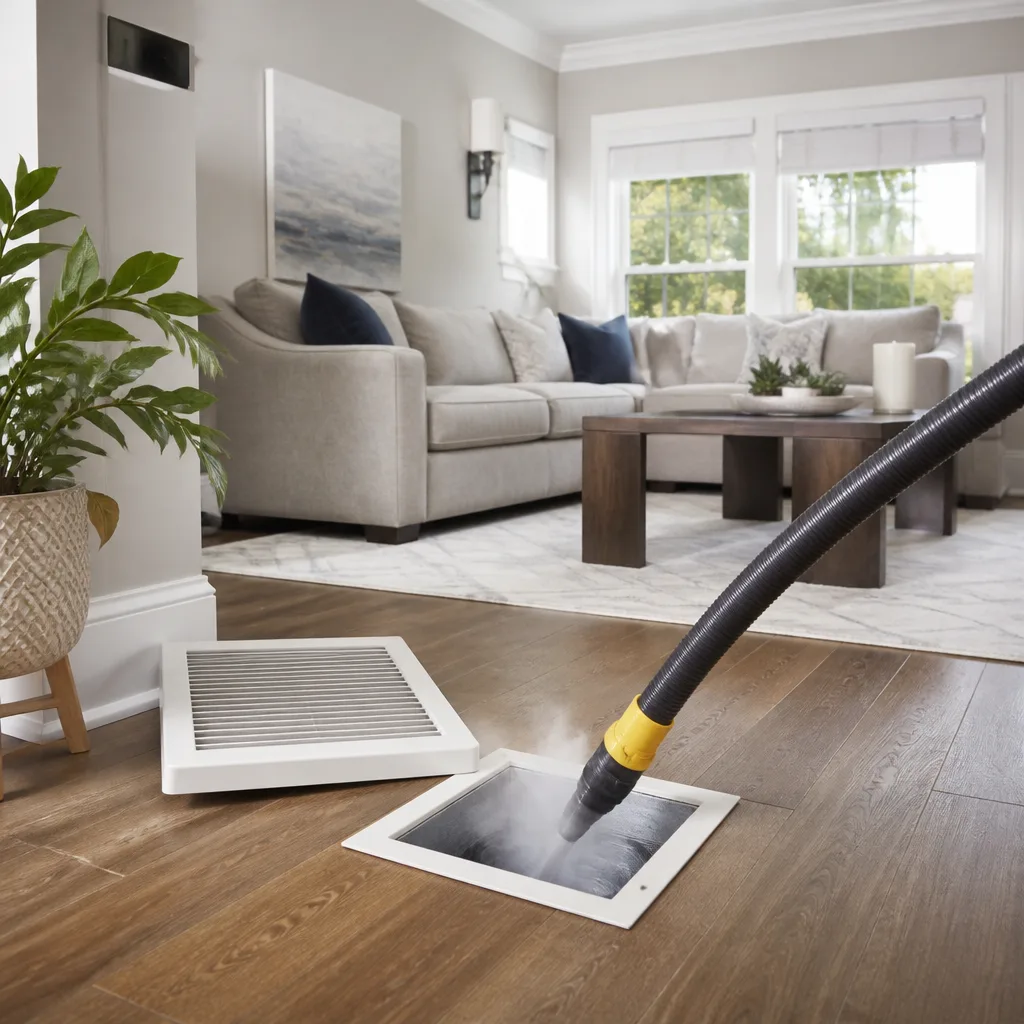
Whole-system duct and dryer vent check with before-and-after photos - you see exactly what came out of your vents
That "$99 whole-house special" is a bait ad - the real number appears once they are in your hallway, or the "clean" is a shop-vac at the register. We photograph the inside of your ducts before and after instead.
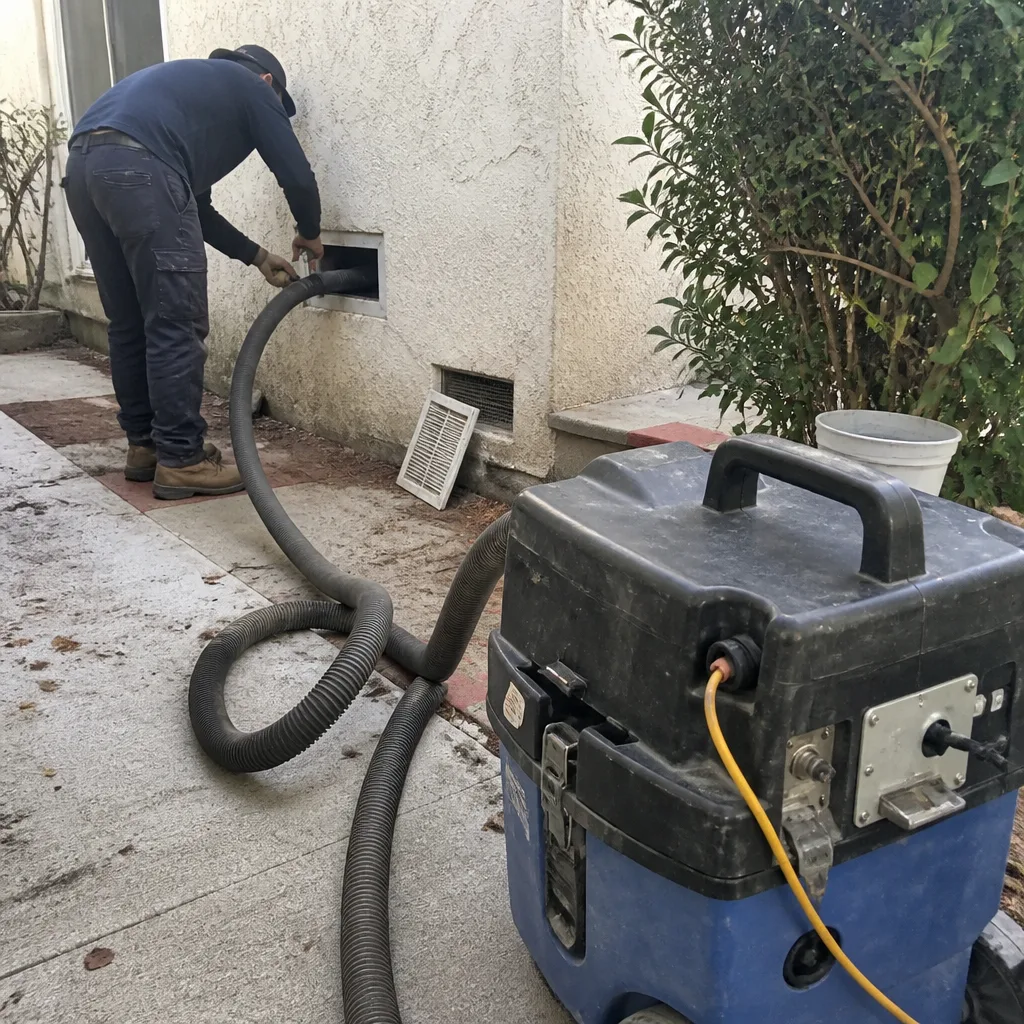 Before
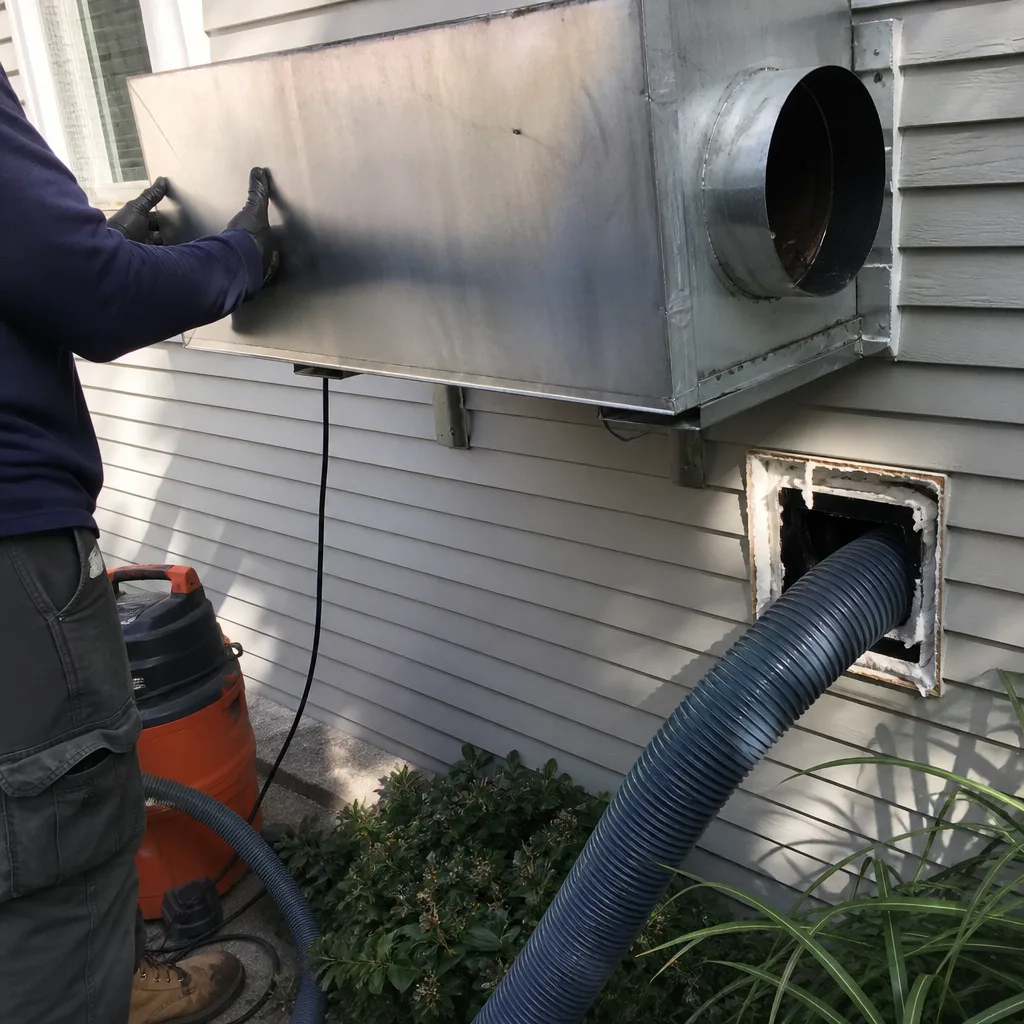 After
After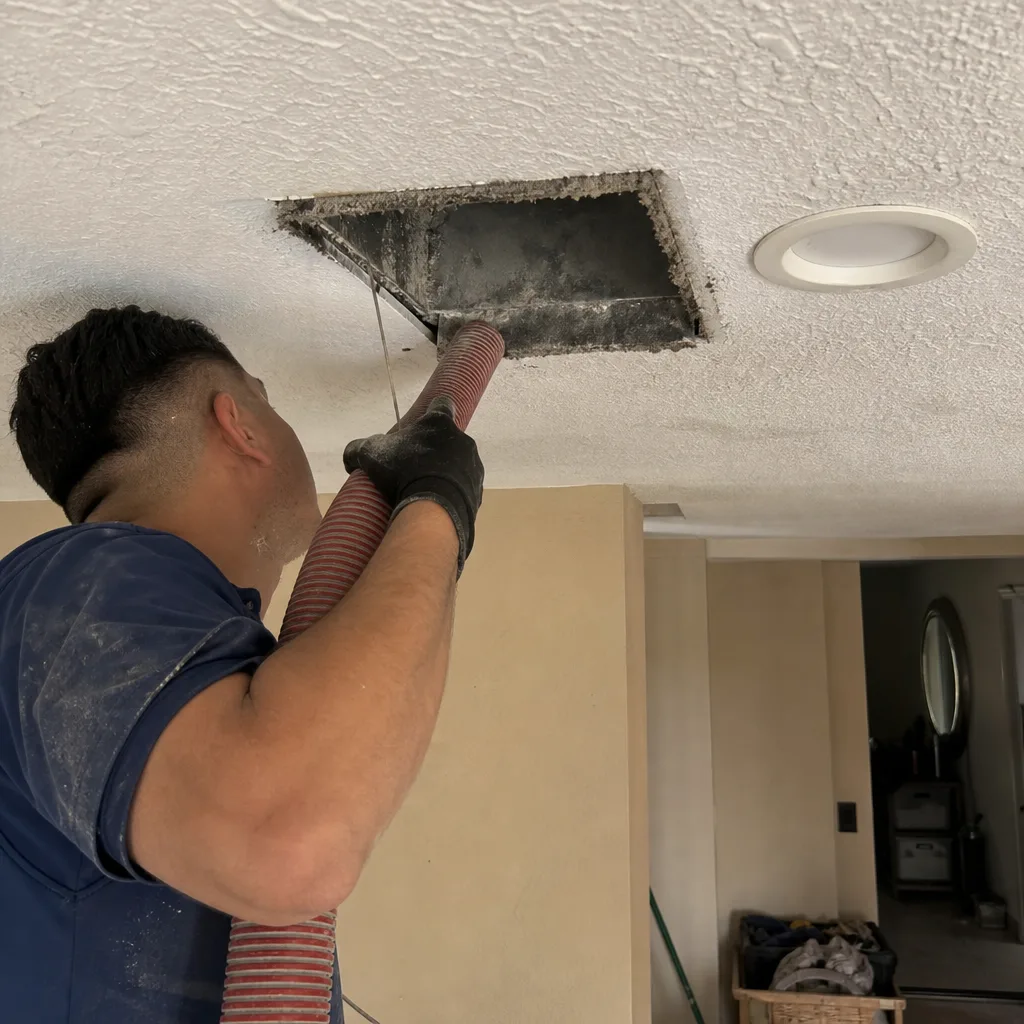 Before
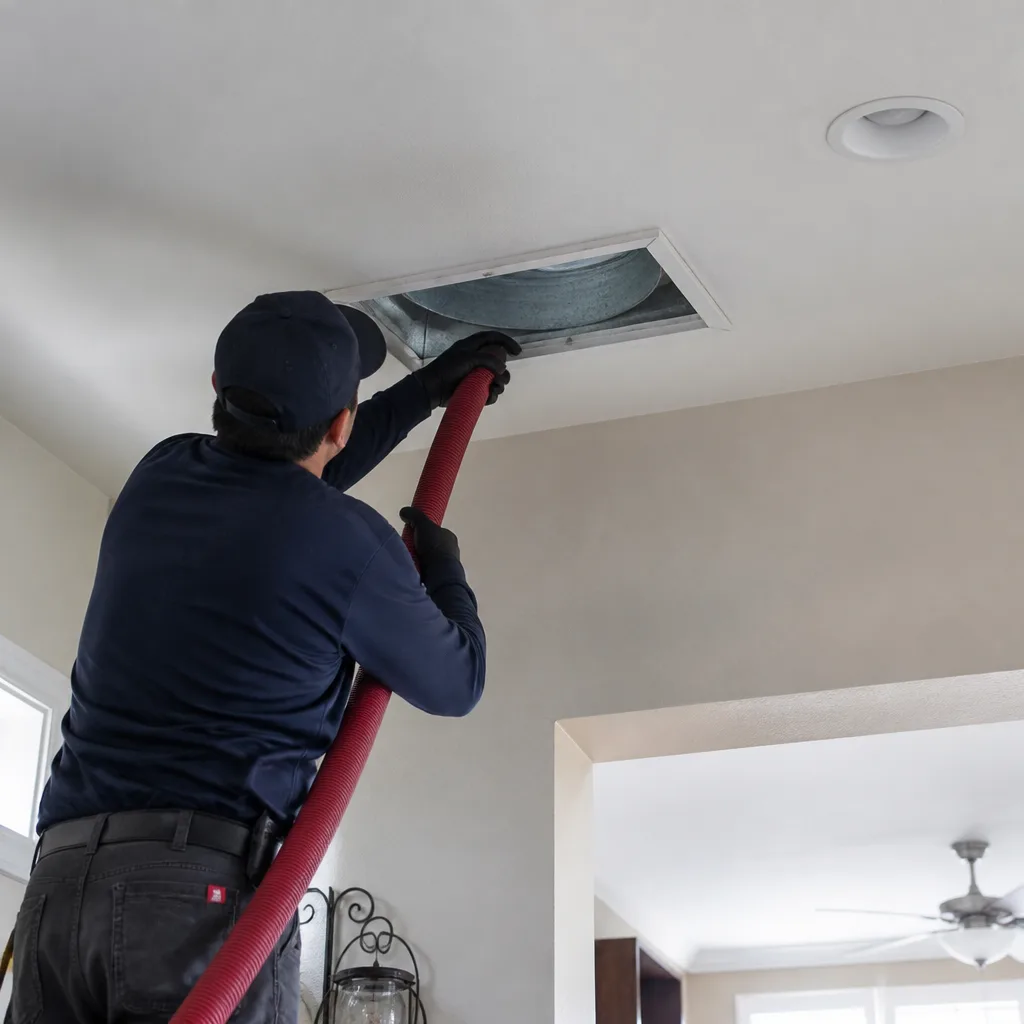 After
After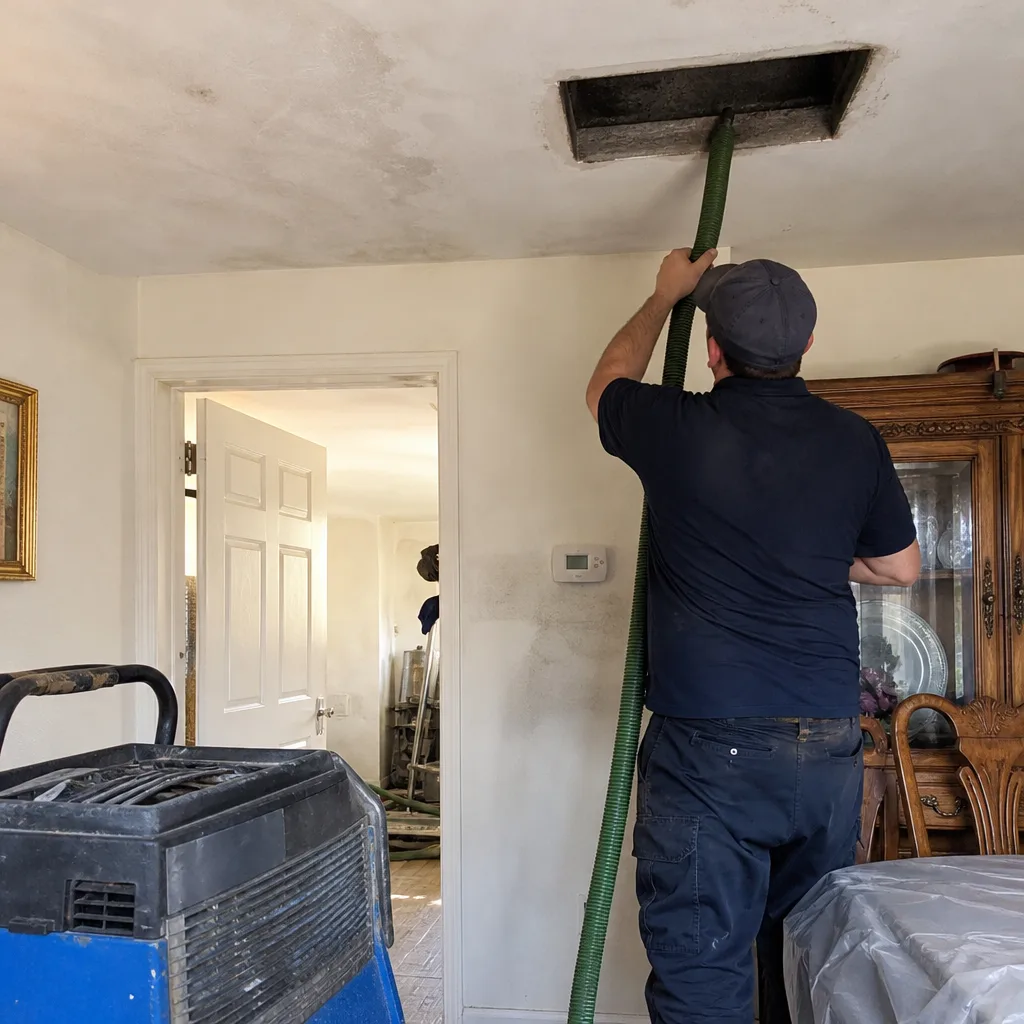 Before
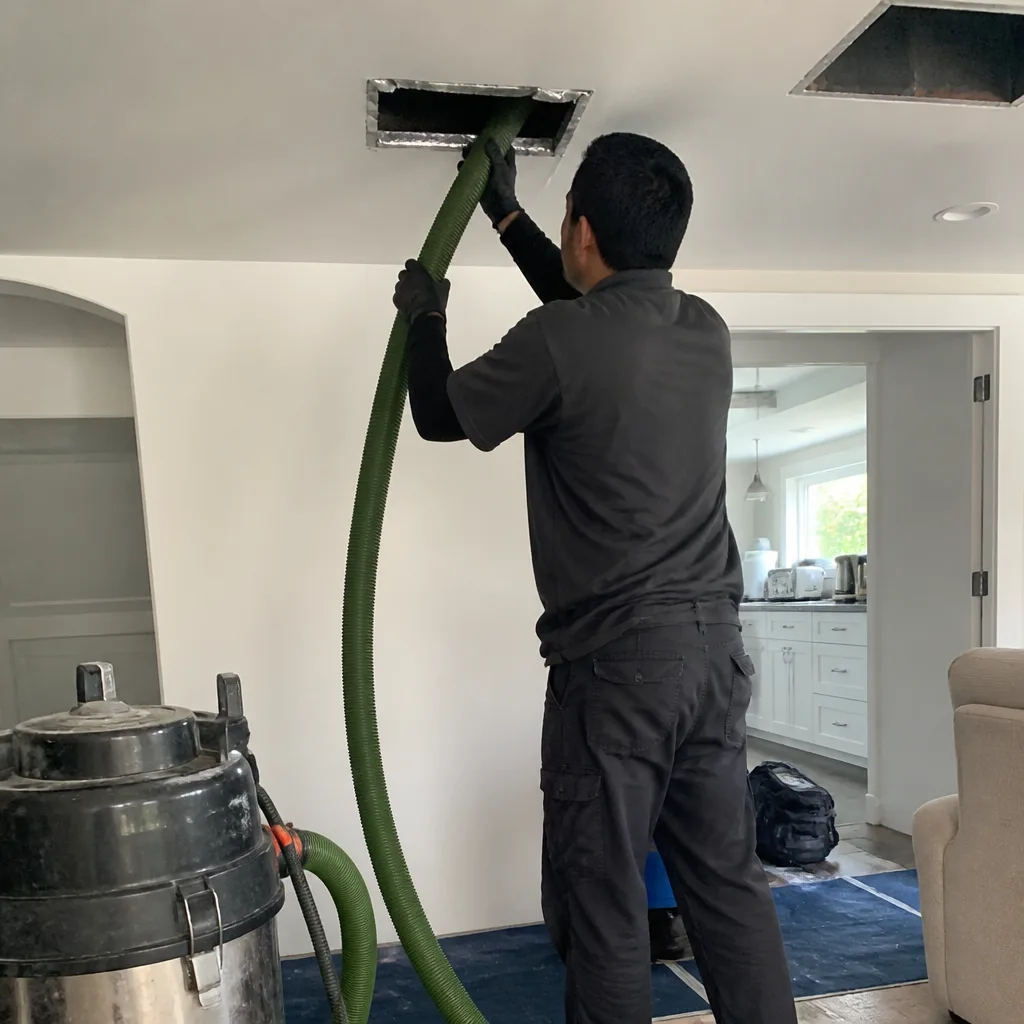 After
AfterAir Duct Cleaning Warning Signs Every Homeowner Should Know
Here’s a counterintuitive fact: the ductwork in a typical Los Angeles home moves roughly 1.5 million cubic feet of air every month. That air carries more than temperature. It carries whatever is already inside your ducts. Most homeowners in Los Angeles wait until they see dust blowing out of a supply register or smell something that makes them flinch. But the duct system sends earlier, quieter signals weeks or even months before that point. This Air Duct Cleaning Warning Signs: A Los Angeles Homeowner’s Reference Guide walks through those early indicators, explains the mechanism behind each one, and gives you a clear-eyed way to decide whether the issue is duct contamination, an HVAC performance problem, or both. You’ll learn what to look for at every register, what normal debris looks like versus what warrants a phone call, and how a renovation project changes the math entirely. By the end, you’ll know the difference between a routine cleaning and an urgent one, and you’ll know exactly what questions to ask a contractor in Los Angeles.
Quick Answer
The clearest early warning signs your air ducts need cleaning are: dust settling on furniture faster than it used to, room temperatures that don’t match the thermostat setting, a furnace filter loading up well before its rated interval, a musty odor that appears only when the system runs, and indoor allergy symptoms that ease when you leave the house. Any one of these is worth investigating. Two or more occurring together usually means the duct interior is carrying a contaminant load that the filter cannot catch, and a professional inspection is the fastest way to confirm it.
Table of Contents
- Dust Settling Faster Than It Used To: The Return-Side Signal
- Inconsistent Room Temperatures and What They Actually Mean
- Filter Loading Faster Than Its Rated Interval
- Musty Odor Only When the System Runs
- Increased Allergy Symptoms Indoors
- The Post-Renovation Trigger: Why Drywall Dust Changes Everything
- The Flashlight Test: A Visual Inspection at Every Register
- Urgency Signs: When Routine Scheduling Becomes a Priority Call
Dust Settling Faster Than It Used To: The Return-Side Signal
Dust settling on furniture faster than it used to isn’t a housekeeping problem. It’s a recirculation signal, and in our experience across Los Angeles homes, it often means the return side is overdue for cleaning, not the supply runs. Here’s the mechanism. Your system pulls air back to the furnace through return ducts, then pushes conditioned air out through supply ducts. When the return side carries a layer of accumulated dust, every cycle loosens some of that dust and sends it back into the living space. The filter catches a portion of it, but not all of it, especially the finer particulate that hangs in the air long enough to settle on your coffee table, bookshelves, and television screen.
What to watch for in a Los Angeles context: homes near the 405, the 10, or any heavy-traffic corridor accumulate road dust and brake-pad particulate faster than homes in quieter foothill neighborhoods like La Cañada or parts of Pasadena. If you dust on Sunday and see a visible film by Wednesday, and your windows have been closed, that’s a strong signal the duct interior itself is shedding particulate into the airstream.
The return side matters more than most people realize. Supply ducts can accumulate dust too, but supply air moves under positive pressure. Return ducts operate under negative pressure, pulling air from the home’s living spaces through any gap, crack, or poorly sealed joint in the duct run. In older Los Angeles homes with sheet-metal ducts and taped seams that dried out years ago, return ducting often draws unfiltered attic or crawlspace air directly into the system. What settles on your end tables, then, may not be dust you brought into the house. It may be attic dust that entered the return side behind the wall and found its way into your living room. A professional inspection will check both supply and return runs, because cleaning only the supply side while the return side remains loaded simply refeeds the problem within weeks.
Inconsistent Room Temperatures and What They Actually Mean
One bedroom in your Los Angeles house runs five degrees warmer than the rest of the home. The thermostat reads 72, but the upstairs office feels like 78. Before assuming the air conditioner is failing, consider the duct interior. Inconsistent room temperatures can be a duct contamination sign, but they can also be a mechanical airflow problem, and distinguishing between the two matters because the fixes are entirely different.
When a duct branch serving a specific room accumulates enough debris, the effective cross-sectional area of that duct shrinks. The same blower pushing the same volume of air through a narrowed duct gets less airflow to that room. The room warms up. The thermostat, located elsewhere, keeps the system cycling normally. The result is a persistent temperature differential that you feel as a warm room. Air Duct Cleaning restores the designed diameter. If the room returns to normal after cleaning, the problem was contamination, not the HVAC system.
But here is the distinction worth knowing: weak airflow at a single vent, a system that short cycles, or a blower that runs constantly without moving much air often points to a mechanical issue – a failing blower motor, a refrigerant charge problem, a clogged evaporator coil, or a disconnected duct branch somewhere in the attic. These are not duct-cleaning problems, and no amount of duct cleaning will fix a broken blower. The honest way to approach it: if temperature imbalance is accompanied by visible debris at the register or a filter that clogs too fast, the duct interior is the likely culprit. If airflow is weak at every register and the system runs but the house does not cool, call an HVAC technician first. We have seen too many Los Angeles homeowners pay for a duct cleaning when the actual issue was a failed run capacitor. The Garrison Code we work under requires us to tell you when your ductwork is not the problem. A disciplined contractor will do the same.
Filter Loading Faster Than Its Rated Interval
A furnace filter is the canary in the duct system. Every filter has a rated interval, usually 90 days for a standard one-inch pleated filter, sometimes longer for media cabinets. If a filter that should last three months is visibly loaded at six weeks, the system is moving more particulate than the filter manufacturer’s rating anticipated. That particulate has to come from somewhere. In a closed home, the two prime sources are the duct interior itself and the return-side leakage path pulling attic or crawlspace air into the system.
In Los Angeles, we see this pattern frequently in homes built before energy codes tightened up. Attic spaces in the San Fernando Valley reach 130 degrees or more in summer, and that heat accelerates the drying and breakdown of any organic material in the attic: insulation fibers, dust from disintegrating duct wrap, rodent droppings, and decades of construction debris. When return ducting leaks, even slightly, the negative pressure pulls that hot, particulate-laden attic air into the return side. The filter loads fast. The homeowner sees a clean filter, then a clogged one, and wonders what changed. What changed is that the duct system is now conveying attic contamination into the home at a higher rate than the filter can handle.
Here is a practical test: run your system with a fresh filter in place. Check the filter after 30 days. If it has a visible gray or brown coating across the entire face, the duct run is the prime suspect. If the coating is localized to one side, or the filter is clogged with pet hair, the issue may be simpler. But a fast-loading filter across the whole surface area combined with faster-than-normal dust resettlement in the rooms is a two-signal pattern that strongly suggests duct interior contamination. A professional cleaning using a negative-air machine from Nikro or a rotary brush system from Rotobrush removes the accumulated load rather than just swapping the filter faster. Cleaning the filter more often addresses the symptom. Cleaning the ducts addresses the source.
Musty Odor Only When the System Runs
A musty odor that appears only when the system runs is a signature duct signal, not a general housekeeping issue. Here is why the “only when running” qualifier matters. A musty smell that hangs in the air all the time often points to a moisture source in the structure: a wall cavity leak, a damp crawlspace, a bathroom without adequate ventilation. But an odor that arrives only when the blower kicks on and disappears when the system cycles off means the odor is being generated inside the air stream or pushed into the living space from inside the ductwork.
The mechanism is almost always moisture plus organic material. In Los Angeles, humidity levels are moderate for most of the year, but condensation forms inside ducts under two specific conditions. First, when the evaporator coil is located in an unconditioned attic and the condensate drain is partially clogged, water can back up into the supply plenum? No, more commonly water vapor condenses on the interior walls of supply ducts that run through hot attics. Second, during the marine layer season, May through August in neighborhoods like Santa Monica, Playa del Rey, and Pacific Palisades, the outdoor humidity is high enough that cool supply ducts in hot attic spaces become dewpoint surfaces. Condensation forms on the inside of the duct. That moisture combines with the fine organic dust already coating the interior, and the result is a musty odor delivered to the living space every time the fan runs.
A professional inspection will look for moisture sources first, because cleaning a wet duct without addressing why it is wet simply resets the problem. Duct sealing can be part of the fix when the issue is condensation from hot attic air contacting a cold duct wall. In some Los Angeles homes, the correct sequence is: identify the moisture source, repair it, clean the affected duct runs, then seal the system to prevent recurrence. If a contractor proposes cleaning without asking about condensation, moisture, or drain pan condition, that’s a red flag. The 365-Day Done Right Promise we put in writing covers exactly this sequence: find the cause, clean the duct, seal where sealing is indicated, and stand behind the work for a full year.
Increased Allergy Symptoms Indoors
Allergy symptoms that worsen when you are home and ease when you leave are among the least visible but most telling duct contamination indicators. The medical mechanism is straightforward: a duct system carrying accumulated particulate acts as a distribution network for whatever that particulate contains. Dust mite debris, pollen tracked in from outside and pulled into the return side, pet dander embedded in the duct interior, and mold spores from condensation events all get recirculated throughout the house every time the system runs.
Los Angeles presents a particular challenge here because of its pollen calendar. Grass pollen peaks in spring, weed pollen in late summer and early fall, and in some years the Santa Ana winds in September and October push enormous amounts of particulate across the basin in a matter of hours. When Santa Anas blow, fine dust works into the home through soffit vents, window gaps, and the natural draft of the building envelope. The return side of the duct system vacuums that dust up and deposits a portion of it on the interior walls of the duct. Over years, the layer builds. What started as seasonal outdoor pollen becomes a year-round indoor allergen source because the duct system is storing and re-delivering it.
Here is the telltale sign we look for. If you wake up congested every morning regardless of season, and the congestion fades within an hour or two of leaving the house, the bedroom’s supply register is likely delivering an allergen load into your sleeping space. That register is downstream of whatever is coating the duct interior. Cleaning the ducts removes the accumulated allergen reservoir. We also recommend a filtration upgrade as part of the conversation. A media filter from Honeywell or Aprilaire installed at the furnace catches far more fine particulate than a standard one-inch filter, and in homes where allergies are the driving concern, that combination, duct cleaning plus improved filtration, addresses both the source and the ongoing load. The air duct cleaning process we use in Los Angeles includes a close look at the entire return path precisely because allergens concentrate there first.
The Post-Renovation Trigger: Why Drywall Dust Changes Everything
Of all the duct contamination scenarios we encounter in Los Angeles, post-renovation is the single highest-certainty trigger. The reason is simple physics. Drywall dust is extremely fine, largely composed of gypsum and silica particles small enough to pass through standard furnace filters. During any renovation involving drywall work, sanding produces clouds of this dust. The dust hangs in the air, settles on every horizontal surface, and gets pulled into the return side of the duct system whenever the HVAC runs, or even when it doesn’t, if the ducts are open at the register level. Once inside, the dust coats the interior walls of the duct. Every time the renovation crew fires up a sander or a saw, a new batch enters the system. Within days of drywall work, the interior of the duct run carries a measurable layer of gypsum dust that the filter was never designed to catch.
This is not a hypothetical. In remodels across neighborhoods like Silver Lake, Highland Park, and the Westside, we see the same pattern: a homeowner completes a kitchen or bath renovation, and within weeks they notice dust on surfaces throughout rooms that had no work done in them, rooms at the opposite end of the house. The dust is not drifting there. It is being delivered there by the HVAC system through supply ducts that are now carrying gypsum particulate from the renovation zone.
The correct order of operations matters here. The time to clean the ducts is after the drywall work is complete and the renovation zone has been given a thorough cleanup, not before and not during. If you clean before the drywall crew finishes, the next sanding pass re-contaminates the system. If you wait, the gypsum dust sits in the ducts and continues to circulate and re-deposit throughout the house. The standard we recommend: complete all drywall work, have the renovation crew do their final dust cleanup, replace the furnace filter, and schedule the duct cleaning within the following week. In a city where renovation activity is constant, from ADU construction in the Valley to kitchen remodels in Mid-City, this sequence saves homeowners the cost of a second cleaning and prevents months of unnecessary dust exposure.
The Flashlight Test: A Visual Inspection at Every Register
A homeowner can do a meaningful duct inspection in fifteen minutes with a flashlight and a phone camera. The goal is not to diagnose every possible condition. The goal is to distinguish between normal accumulation and what warrants a professional call. Here is the step-by-step process we recommend, and it applies to every home in Los Angeles, from 1920s Spanish bungalows in Los Feliz to late-century ranches in Granada Hills.
- Turn the system off. Wait for the blower to come to a full stop. You want to inspect the duct interior without airflow moving dust toward the register.
- Remove the supply register cover. Two screws in most cases. Set the screws aside where they won’t roll away.
- Shine the flashlight into the duct boot. Angle the light so it rakes across the interior surface rather than pointing straight down. Raking light reveals texture and accumulation that direct light hides.
- Look for the following. A light, uniform dust film is normal and does not by itself indicate a problem. What warrants attention: a thick, fibrous coating that looks like dryer lint; visible clumps or flakes of debris; any gray powdery layer that puffs when you tap the duct gently; or any dark, discolored patches that look different from the surrounding metal.
- Take a photo for reference. Then repeat the process at each supply and return register in the home. Pay closest attention to the return registers, since return-side accumulation drives most of the recirculation dust problems described earlier.
- Compare what you see at different registers. If one register shows heavy accumulation and the others are clean, that single branch may be the issue. If every register shows the same fibrous coating, the whole system needs attention.
What normal debris looks like: a fine, light-gray film, evenly distributed, less than an eighth of an inch thick, no visible fibers or clumps. What warrants a call: any accumulation you can scrape with a fingernail and see material cling to the nail edge; any visible strands or fibers that look like dryer lint or insulation; any dark staining that could indicate moisture contact; or any register where you can see debris resting on the register louvers themselves. The register louvers are downstream of the filter, so debris visible there means the filter is either undersized, improperly seated, or bypassed. If that’s what you’re seeing, call a professional. A visual inspection is exactly what our technicians do on every job, and if your flashlight test turns up something concerning, a trained eye can tell the difference between a routine accumulation and a condition that needs attention sooner.
Urgency Signs: When Routine Scheduling Becomes a Priority Call
Most of the indicators in this guide point to a system that needs cleaning on a scheduled basis, not an emergency. But three signs shift the timeline from routine to urgent, and any homeowner in Los Angeles who sees them should act on them before the next heating or cooling season. These signs indicate conditions that affect not just comfort or dust levels, but potential health and safety.
Visible black growth at registers or inside duct boots. Black, green, or brown growth that has a velvety or slimy texture is not dust. It is biological growth, and it requires a professional assessment immediately. In Los Angeles, the conditions are most likely to occur during the marine layer months in coastal neighborhoods, or in any home where condensation forms inside ducts due to attic heat and humidity. Do not attempt to scrape it off yourself. Disturbing biological growth without proper containment can release spores into the living space. A professional negative-air cleaning contains the contamination and removes it rather than spreading it.
Evidence of pests in the ductwork. Sounds of scurrying in the attic at night, visible droppings at register openings, or a dead-animal odor that appears when the system runs all point to a pest intrusion. Rodents and birds can nest in duct runs, and their presence means the duct system is carrying contaminants on two levels: the droppings and nesting material themselves, and the urine-tainted dust that accumulates around them. This is a health issue, not just a nuisance. The duct cleaning process in these situations involves removal of the contamination, inspection for entry points, and often a follow-up recommendation for sealing entry gaps in the building envelope. In a city with as much attic-adjacent wildlife as Los Angeles, from roof rats to pigeons, this is more common than most homeowners expect.
A burning smell on system startup. A burning smell the first time the heat runs in the fall can be normal: dust on the heat exchanger burns off within a few minutes. But a burning smell that persists, or one that has a sharp electrical or acrid quality, is not dust burn-off. It can indicate a failing blower motor, an overheating component, or a wiring issue. If the smell persists beyond the first few cycles or is accompanied by any visible smoke, call an HVAC technician. This is a mechanical issue, not a duct-cleaning issue, and no amount of duct cleaning will address it. The honest division of labor matters here: our job is the duct system, and when the problem is electrical or mechanical, the right move is to say so directly. A contractor who tells you duct cleaning will fix a burning smell is not doing you a favor.
Common Mistakes to Avoid
- Changing the filter faster instead of inspecting the duct interior. A fast-loading filter is a signal, not the problem itself. Replacing it more often treats the symptom while the duct system continues to deliver contamination to the living space.
- Cleaning only the supply side. The return side is where most recirculation problems originate. If a contractor quotes a supply-only cleaning, the job is incomplete before it starts.
- Waiting for visible debris at the registers. By the time debris is visible on the register louvers, the system has been recirculating that particulate for months. The early indicators described above appear long before the obvious ones.
- Assuming a temperature imbalance is always a duct problem. Persistent temperature differences can be caused by duct contamination, but they can also be mechanical: a failing blower, an undersized system, a disconnected branch, or a refrigerant issue. A disciplined contractor will tell you which one you’re dealing with before quoting any work.
- Using a cheap camera inspection as a substitute for on-site evaluation. Long, snake-like camera inspections of duct interiors look impressive but often do not provide the contextual information a trained technician gets from airflow measurements, filter inspection, and a look at the return path. In Los Angeles, where duct systems vary widely by construction era, local knowledge of how specific home types were built matters more than camera footage.
- Ignoring the post-renovation window. Drywall dust bypasses filters and coats duct interiors within days. After any project involving drywall, the duct cleaning should happen after the dust settles, not before, and not months later. The window matters.
- Treating duct cleaning as a standalone fix for every home comfort issue. In many Los Angeles homes, duct leakage is as big a contributor to poor comfort and high utility bills as duct contamination. A proper evaluation looks at both, and often the right service mix includes duct sealing in Los Angeles alongside cleaning, particularly in older homes with original sheet-metal ducting.
When to Call a Professional
Call a professional when you observe two or more of the early indicators simultaneously; when you see visible black or green growth at any register; when you hear or smell evidence of pests in the duct system; when a renovation project involving drywall has wrapped up in the last two weeks; or when your flashlight inspection reveals fibrous accumulation, clumping, or debris you could scrape off with a fingernail. In each of these scenarios, a trained inspection answers the question faster and more accurately than continued observation. You should also call if any of these signals appear in a home you just moved into. Los Angeles real estate transactions move quickly, and the duct system is rarely part of the standard pre-purchase evaluation. A post-move-in inspection establishes a baseline and catches what the previous owner may never have noticed.
Hollis Air Duct Cleaning offers free estimates in Los Angeles. Call (361) 326-5060 and a live person answers, day or night. The estimate is written down before any work begins, and every job is covered in writing by the 365-Day Done Right Promise. If the work isn’t done right, we return and make it right at no charge. That’s the standard, and it’s in writing on every job.
Frequently Asked Questions
In the Los Angeles market, a whole-home air duct cleaning for a typical single-family residence generally runs between $400 and $900, depending on the number of systems, the accessibility of the duct runs, the level of contamination, and whether the home has one return or multiple returns. Homes with two HVAC systems, or with extensive return ducting in hard-to-reach attic spaces, fall toward the higher end of that range. The price Hollis gives is a written flat price per system before any work starts, not a per-vent calculation that moves once the crew arrives. That matters in a trade where the bait-and-switch model is common: a low teaser price that becomes a much larger invoice by the time the van is parked outside. Our approach is The Garrison Standard: the price is written down, it does not move at the door, and the job is done to the written scope. Call (361) 326-5060 for a free estimate and an exact written quote for your home.
You know the work was actually done when the contractor shows you before-and-after photos of your own ducts taken inside the same register openings, and when the methodology is verified rather than described. We document every job with photos taken at the registers before and after cleaning, and those photos are part of the job record we leave with the homeowner. The equipment matters too: a proper cleaning uses a negative-air machine, which puts the duct system under vacuum so that loosened debris is pulled out of the home rather than blown into it, not a shop vac attached to a flexible hose. If a contractor cannot show you post-cleaning visual evidence of the duct interior, treat the job as incomplete. Ask for the photos before you pay, and call (361) 326-5060 if you want a cleaning that includes photo documentation as standard practice.
Cheaper duct cleaning quotes in Los Angeles are typically built on a compressed scope: supply-side cleaning only, a fixed time cap of an hour or two, no negative-air containment, no photo documentation, and a crew that is incentivized to upsell once they are inside. The per-vent pricing model is one of the common traps: a low per-vent rate that sounds reasonable until the contractor counts thirty vents and the total far exceeds the “estimate.” A whole-system flat price, written in advance, removes that dynamic. The honest way to evaluate a quote is to ask three questions: Does the price cover the return side as well as the supply side? Is the price written and fixed before work begins? What equipment does the crew use? If the answers are vague, the quote is cheap for a reason.
For most Los Angeles homes, air duct cleaning is not an annual service. A reasonable interval is every three to five years, adjusted for specific conditions: homes with pets that shed heavily, homes in high-dust corridors near freeways or construction zones, homes where occupants have significant allergies or respiratory conditions, and homes that have undergone renovation since the last cleaning. The post-renovation trigger is the one event that shortens the interval to “immediately after the project,” regardless of when the system was last cleaned. If you just want a baseline, check our more guides & resources and start with an inspection rather than assuming a cleaning is needed. The inspection tells you whether the interval should be two years or six.
Dirty air ducts can make indoor allergy symptoms worse by serving as a reservoir and distribution network for allergens. Dust mite debris, pollen, pet dander, and mold spores accumulate in the duct interior over time and are released into the living space every time the system runs. In Los Angeles, the combination of outdoor pollen seasons and Santa Ana wind events pushes significant particulate into homes, and the return side of the duct system captures a portion of it. That stored allergen load then recirculates long after the outdoor pollen count drops. Duct cleaning removes the reservoir, and pairing it with improved filtration from a brand like Honeywell or Aprilaire reduces the ongoing load. If allergies ease when you leave the house and flare when you return, the indoor environment, including the duct system, is a primary suspect.
It can be normal for a heating system to produce a brief dusty or musty smell the first time it fires up after sitting idle through the Los Angeles summer or fall. That odor is typically dust that settled on the heat exchanger during the off-season burning off, and it should dissipate within a few minutes of the first full heating cycle. If the smell persists across multiple cycles, gets stronger, or returns every time the system starts, that is not normal burn-off. It indicates either a duct interior with significant accumulated debris that is being heated and recirculated, or a mechanical issue that needs an HVAC technician’s attention. The distinction matters: a one-time startup smell is benign, a persistent one is a signal.
The Bottom Line
The duct system in your home moves air you cannot see, through spaces you rarely inspect, carrying particulate you breathe every day. The early warning signs of duct contamination are subtle: dust that returns to your furniture too fast, rooms that hold heat, filters that load early, odors that appear only when the fan runs, and allergies that follow you indoors. None of these is dramatic on its own. Together, they form a pattern that points to the duct interior as the source. Los Angeles homes face particular pressures from freeway dust, Santa Ana events, marine-layer humidity, and constant renovation activity, and those pressures work their way into the duct system silently. The useful response is not to panic and not to ignore the signals. It is to look, take note, and call a professional when the pattern holds. A written price, a documented job, and a guarantee in writing turn what could be a chronic nuisance into a solved problem. The same discipline applies to dryer vent cleaning in Los Angeles, and the whole Hollis Air Duct Cleaning home is built on that standard: show up on time, write the price down, do the job by the book, and leave the place clean.
Written by Roy Castellanos, Owner at Hollis Air Duct Cleaning, serving Los Angeles since 2004.