
Last updated October 9, 2026
Whole-system duct and dryer vent check with before-and-after photos - you see exactly what came out of your vents
That "$99 whole-house special" is a bait ad - the real number appears once they are in your hallway, or the "clean" is a shop-vac at the register. We photograph the inside of your ducts before and after instead.
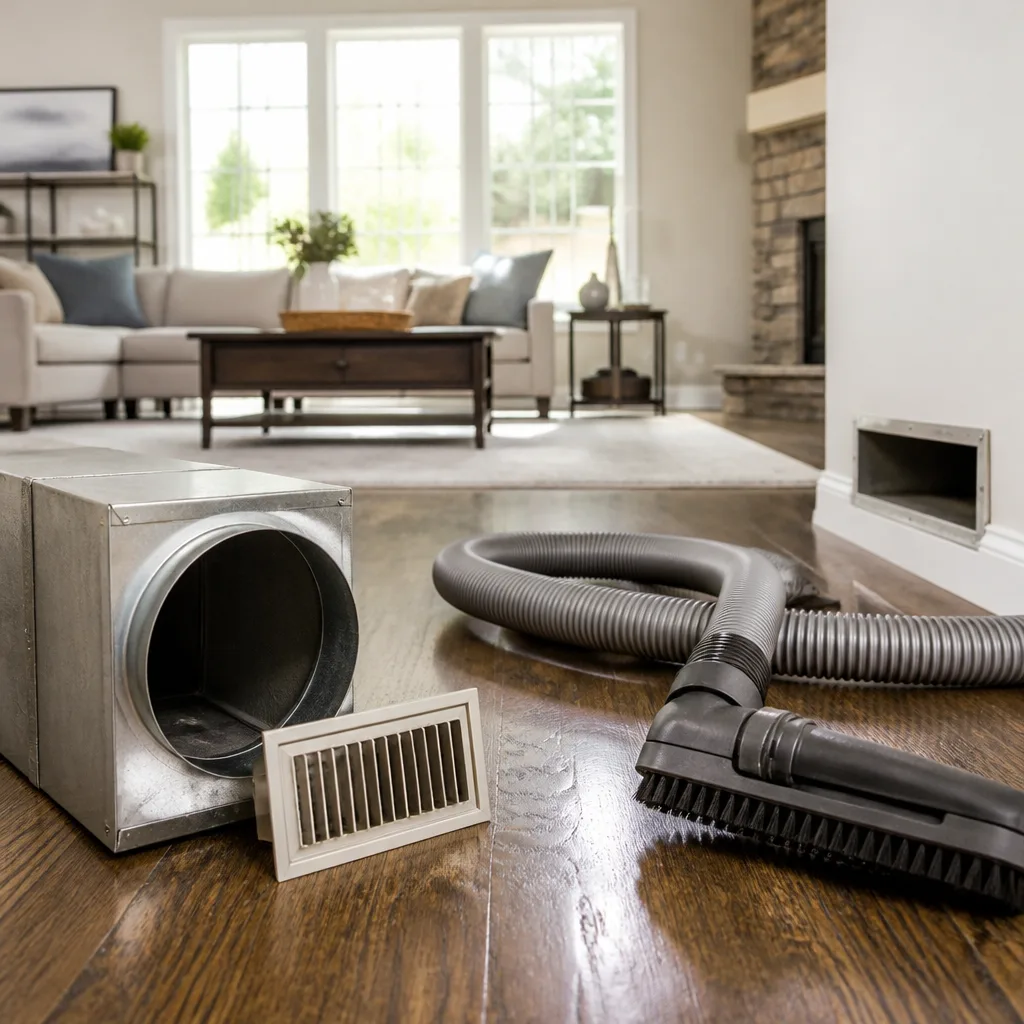
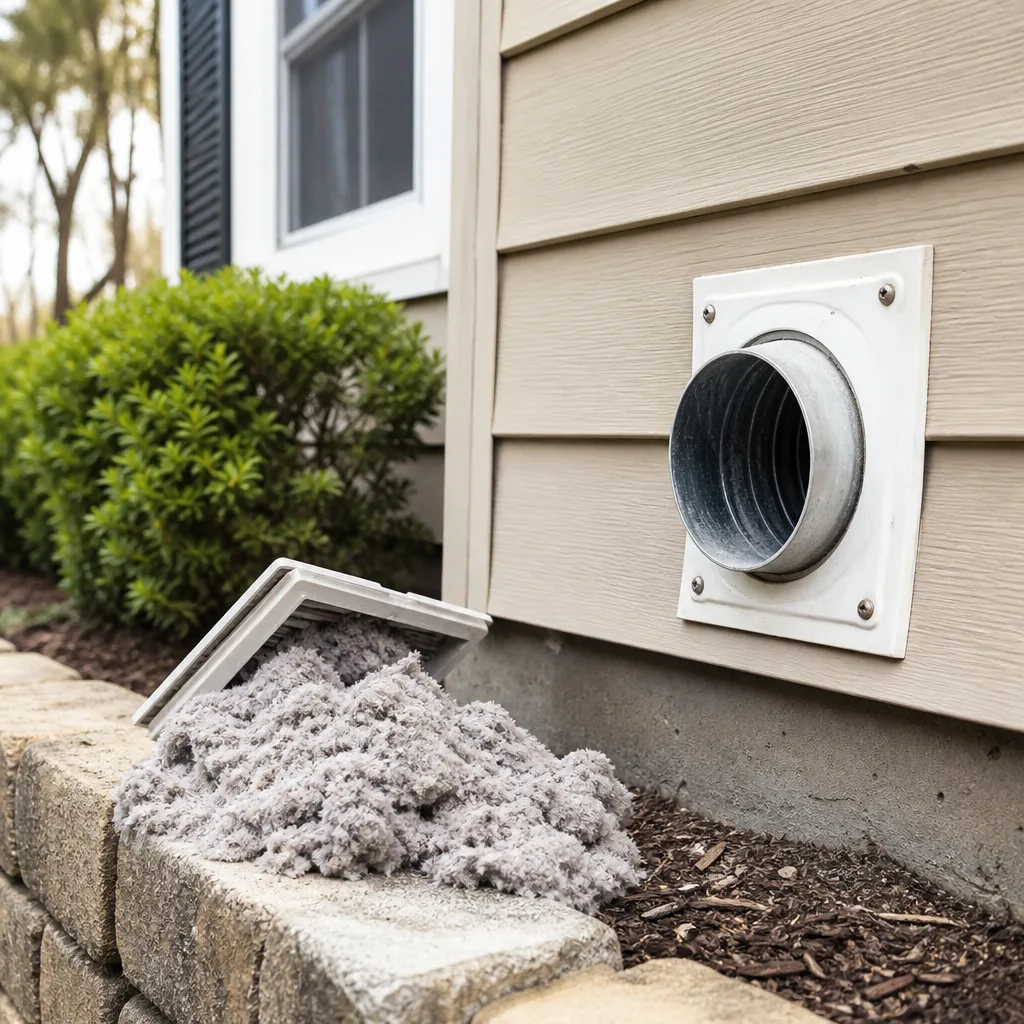
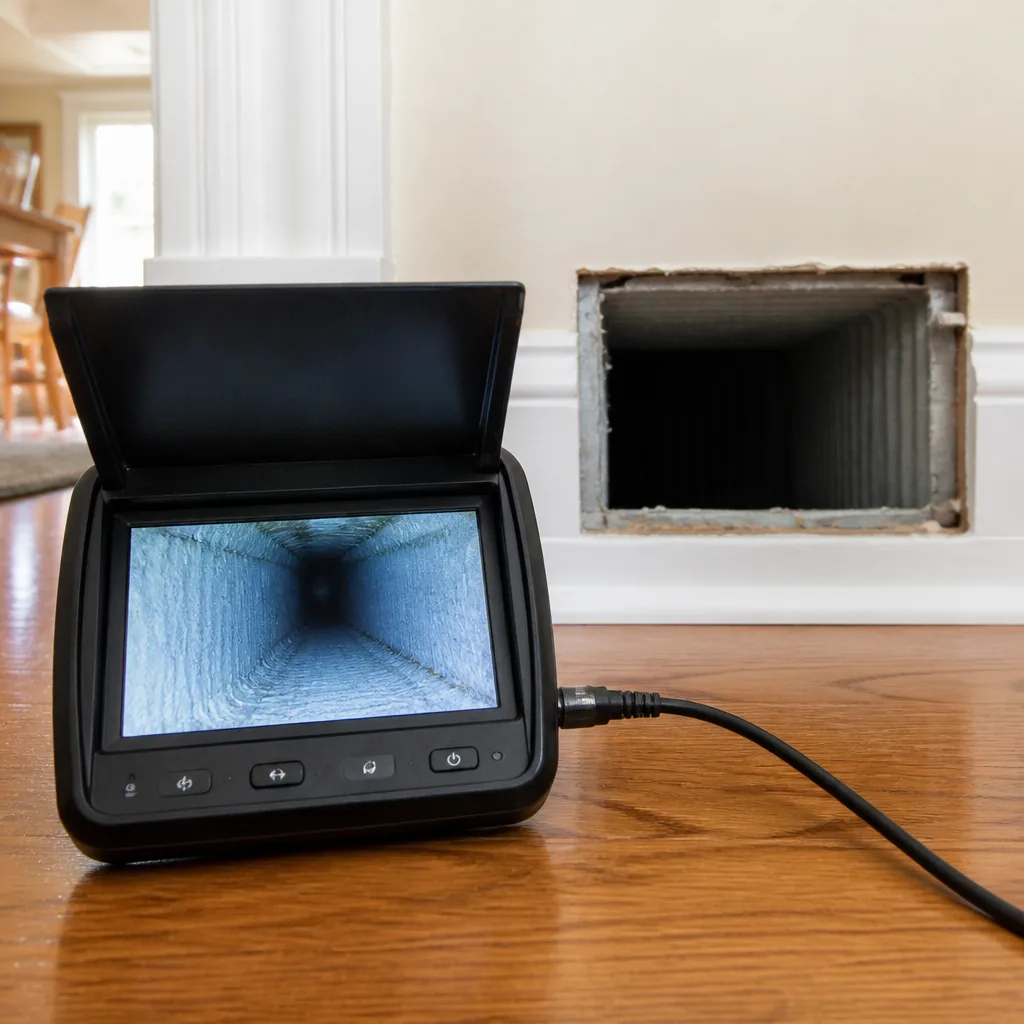
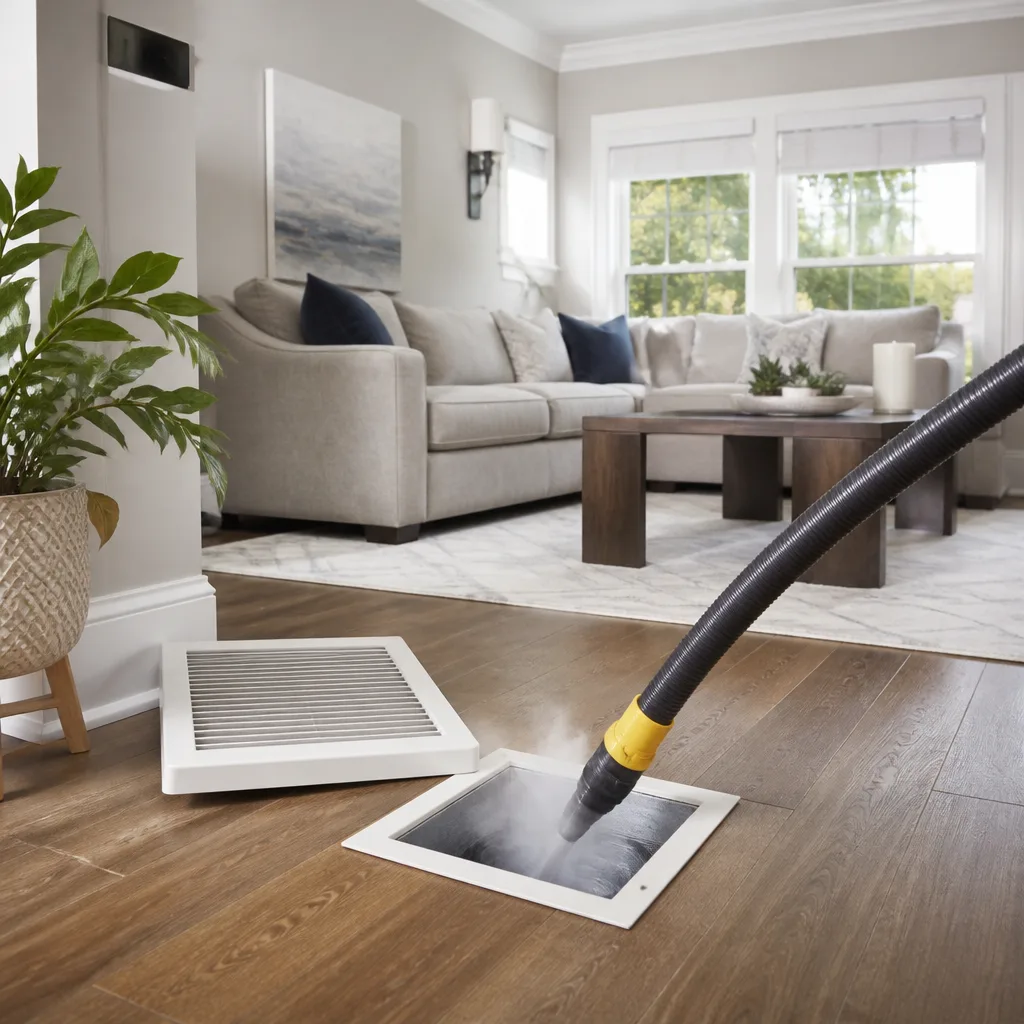
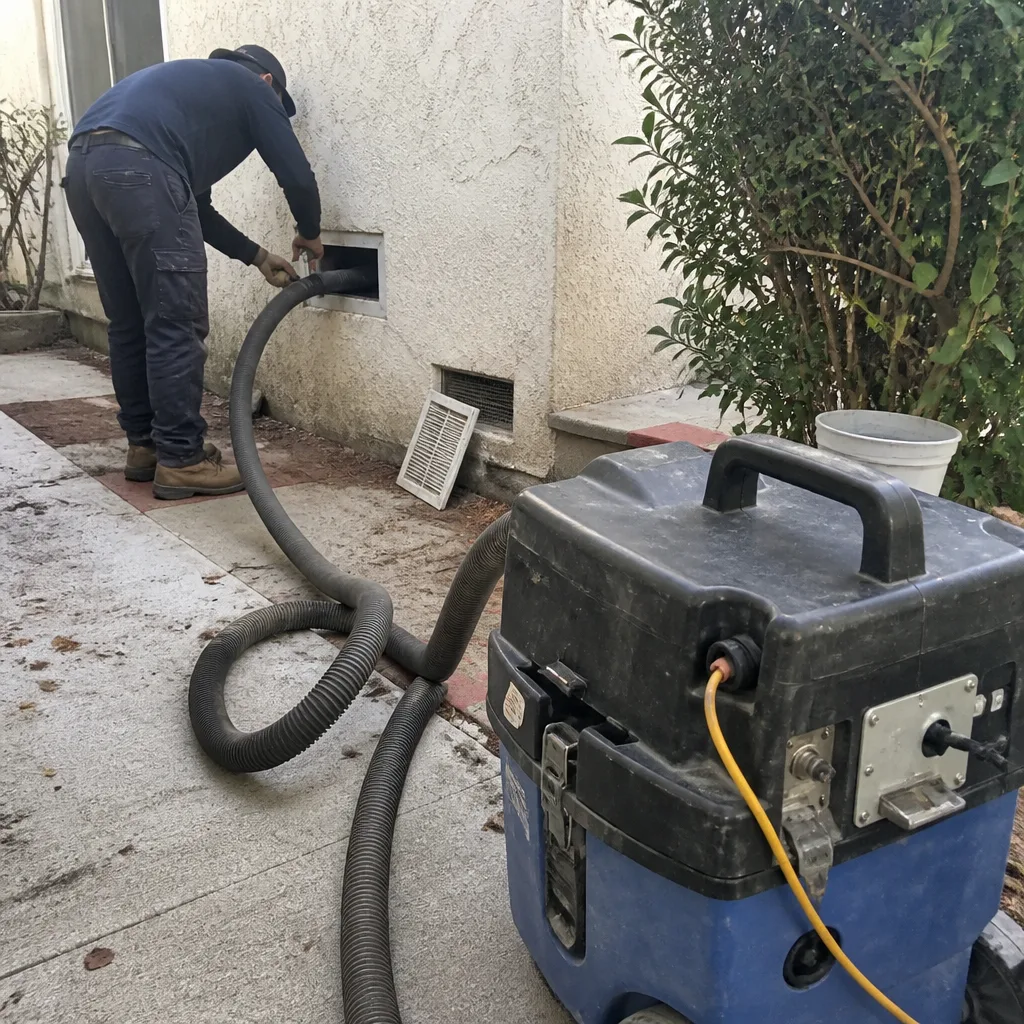 Before
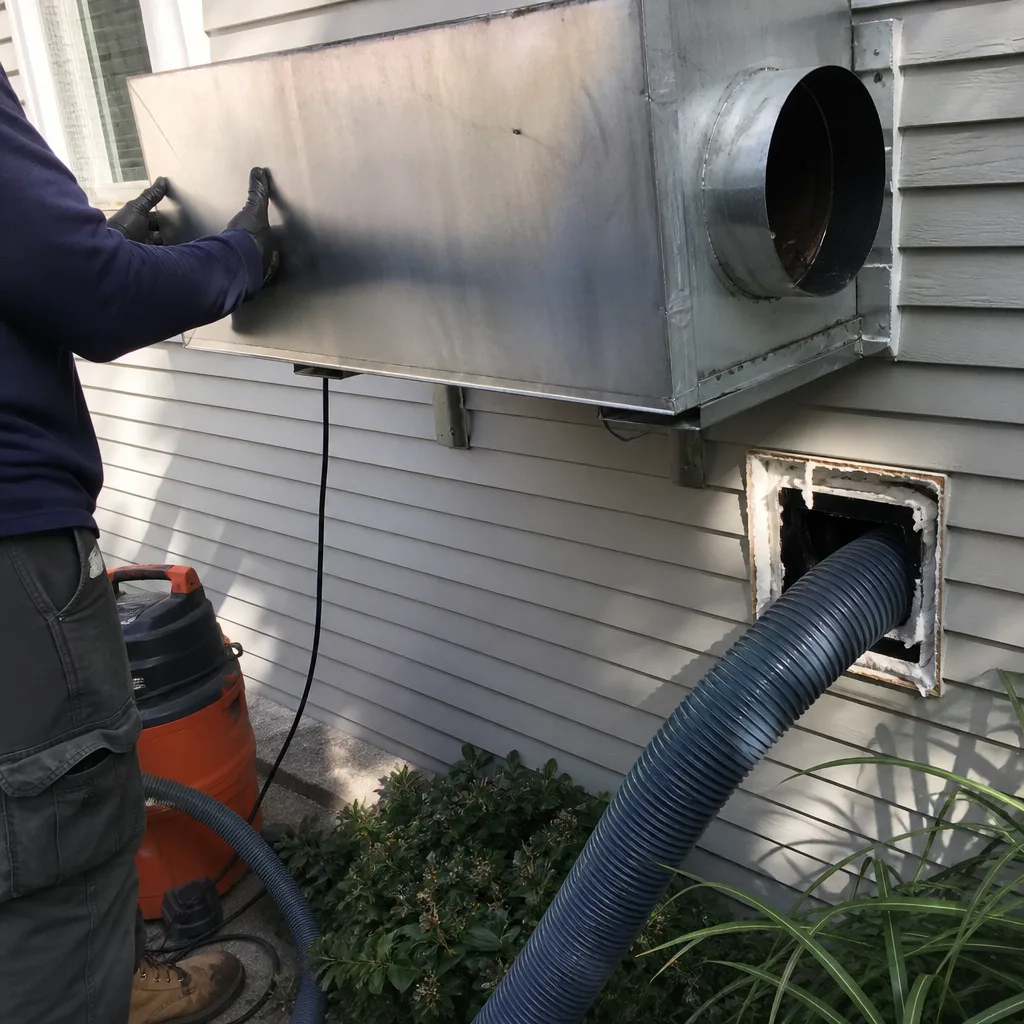 After
After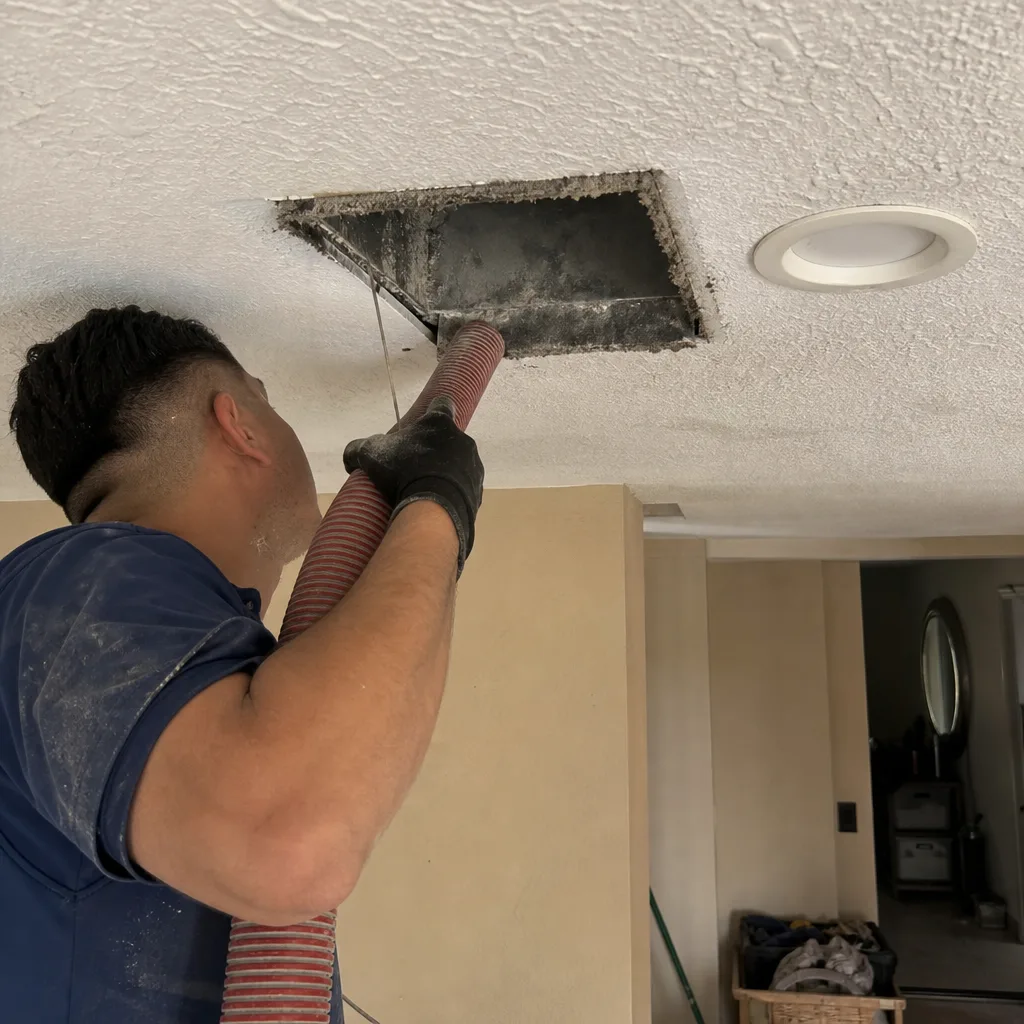 Before
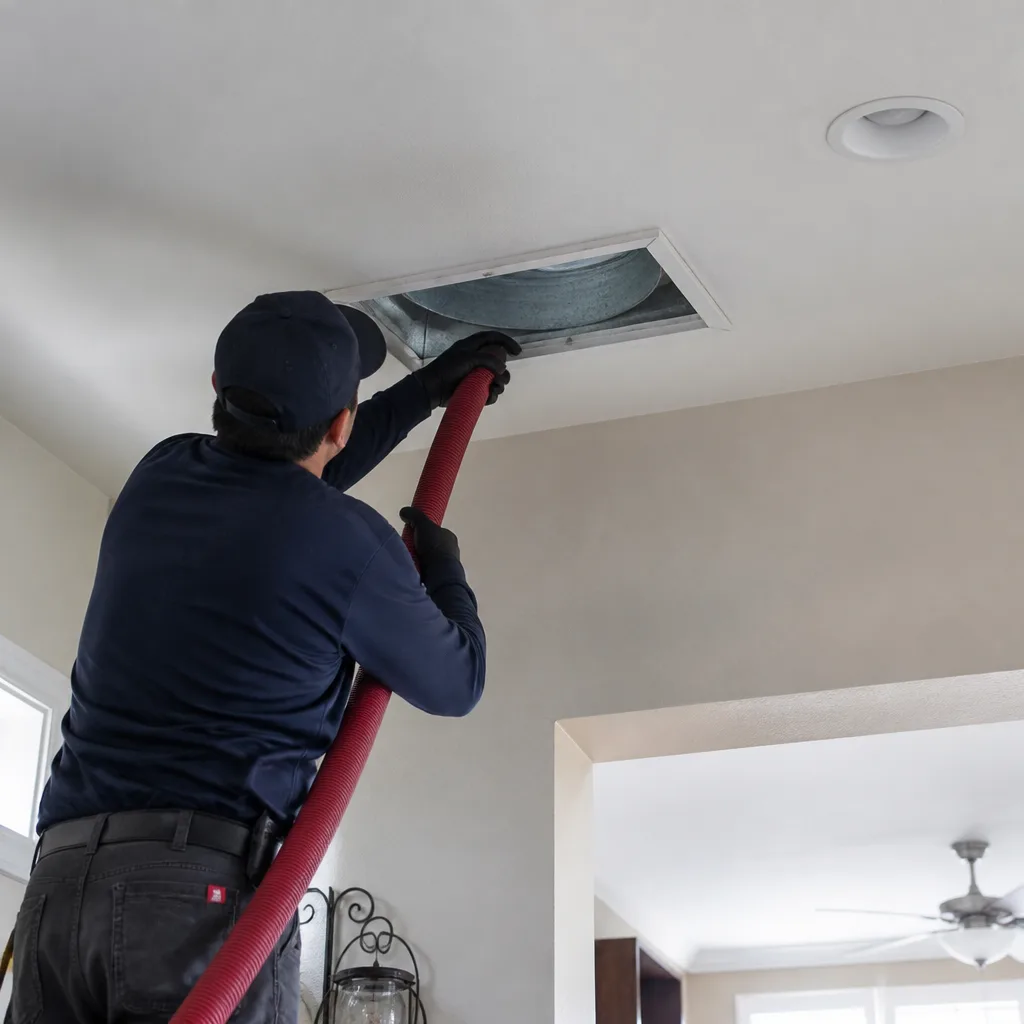 After
After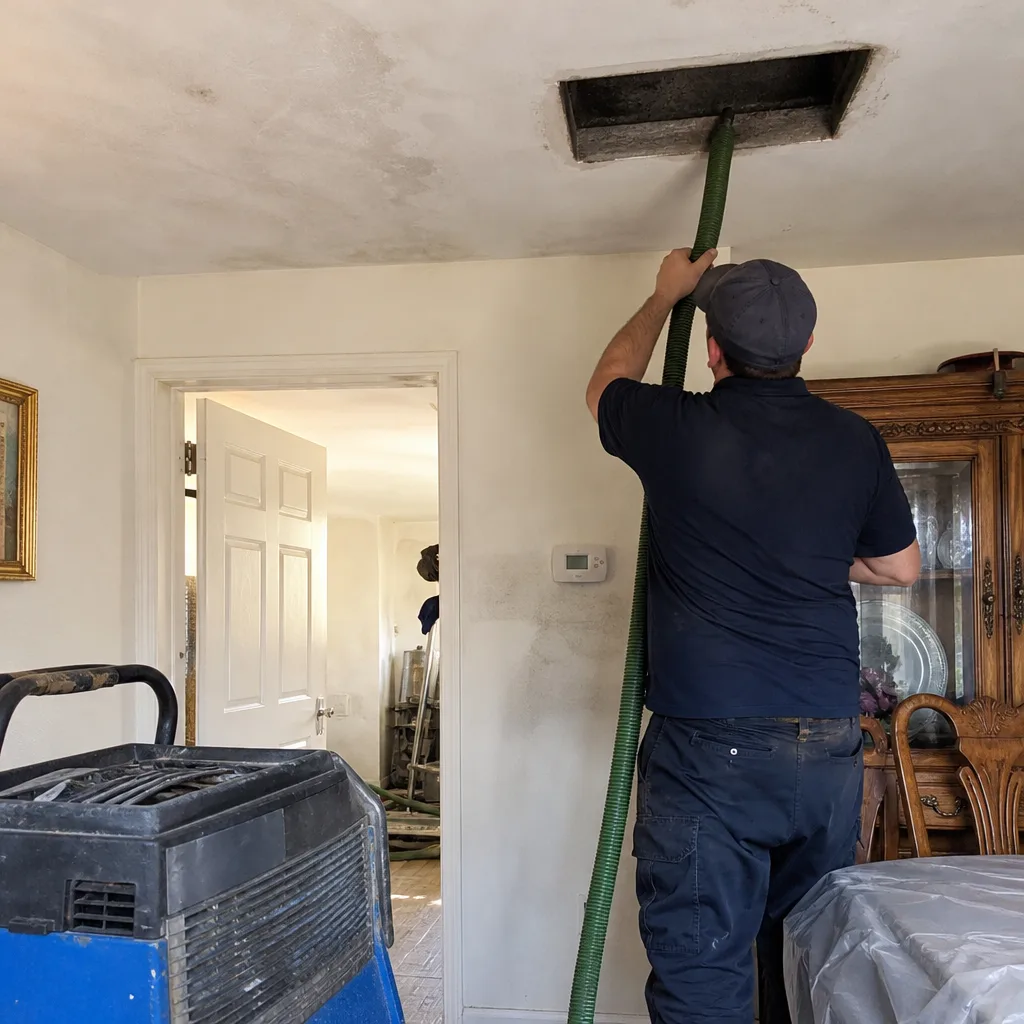 Before
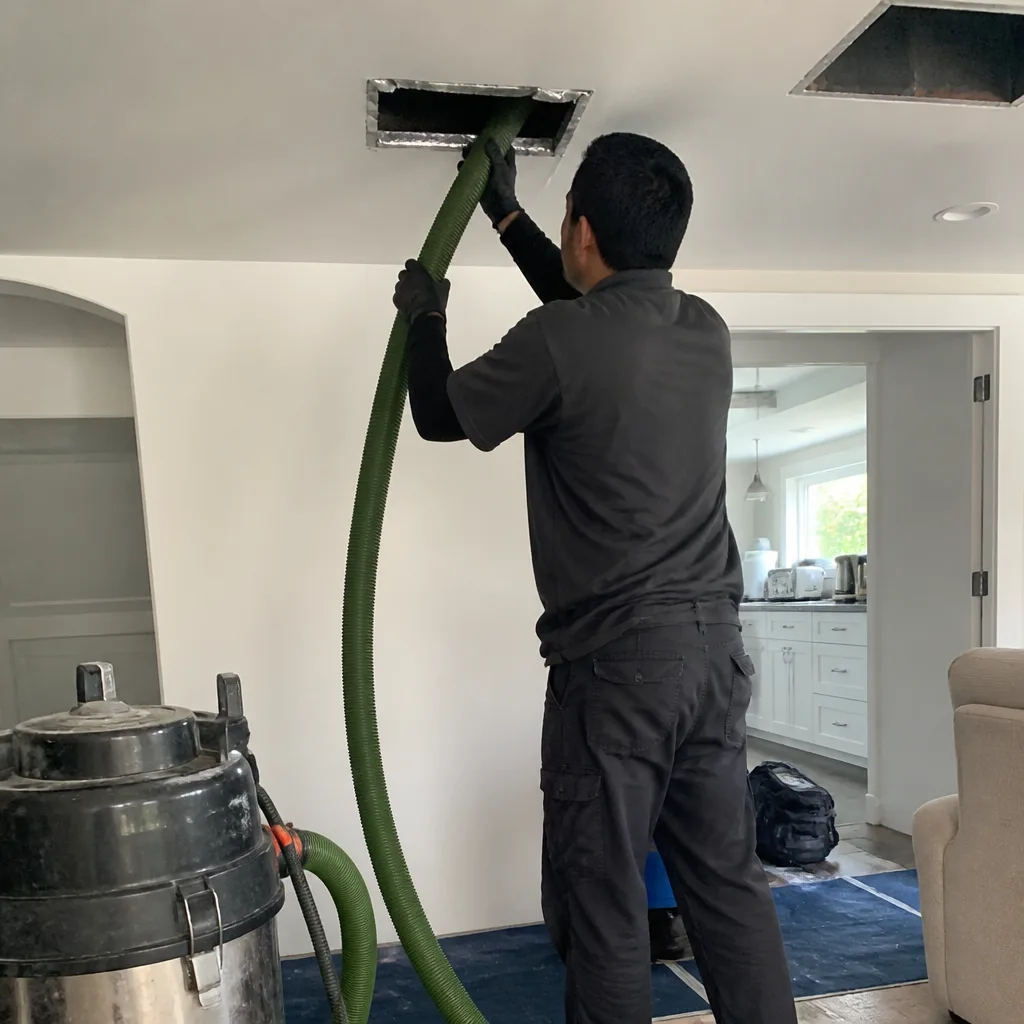 After
AfterChoosing the Right Air Duct Cleaning Brand: A Buyer’s Guide for Los Angeles
There is no Yelp filter for “company that will put its price guarantee in writing before touching your duct system.” So most Los Angeles homeowners default to star ratings and lowest price, which is exactly how bait-and-switch operators are designed to win the initial click. In a city of 3.8 million people and roughly 1.4 million single-family homes, the duct cleaning trade runs on a simple calculation: a $49 teaser price pulls the call, and the van doesn’t leave until the invoice is $900. Our Complete Air Duct Cleaning Guide for Los Angeles Homeowners explains how to read a duct cleaning brand the way a contractor would, so you can separate a written standard from a marketing wrapper before anyone steps inside your home in Los Angeles.
Quick Answer
The right Air Duct Cleaning services brand in Los Angeles is one that puts four things in writing before any work starts: the exact price, the scope of work, the guarantee with a defined remedy, and a named person accountable for disputes. Brand recognition and logo polish mean nothing in a trade where state licensing requirements for duct cleaning are loose and teaser pricing is standard practice. Look for a written price before work begins and a guarantee that spells out what happens if the work fails, not a vague “satisfaction guaranteed” promise with no teeth.
Table of Contents
- The Four Written Commitments That Separate a Real Brand from a Marketing Wrapper
- How to Read a Duct Cleaning Guarantee: Specific Language to Look For and Red Flags
- Why Independently Owned Companies in LA Often Outperform Franchise Brands on Accountability
- NADCA Membership: What It Means, What It Doesn’t Guarantee, and How to Verify It
- What a 365-Day Service Guarantee Actually Means in Practical Terms
- Los Angeles-Specific Factors That Affect Duct Cleaning: Climate, Housing Stock, and Air Quality
- Why Equipment Brands Matter: Rotobrush, Nikro, and What Professional-Grade Means
- Common Mistakes to Avoid
The Four Written Commitments That Separate a Real Brand from a Marketing Wrapper
In the Los Angeles duct cleaning market, “brand” is not about logo recognition. It is about whether a company has put its standards in writing and attached consequences to them. This is the only meaningful differentiator in a trade where licensing requirements are loose and teaser pricing is endemic. A real brand can hand you four documents before the work starts. A marketing wrapper hands you a coupon and a smile.
Here are the four written commitments to insist on when you shop for air duct cleaning in Los Angeles:
- A written price before any work starts. Not a verbal estimate. Not a range. Not “we’ll see what we find once we open it up.” A specific dollar figure on paper, agreed to before the technician unloads the truck. If a company will not commit to a price in writing before work begins, assume the number will move at the door. It usually does.
- A written guarantee with a defined remedy. The guarantee must state what happens if the work fails, for how long, and who pays for the return visit. “Satisfaction guaranteed” is not a guarantee. It is four words with no trigger, no remedy, and no deadline. A defined remedy sounds like: “If the repair fails within 365 days, we return and make it right at no charge.”
- A written scope of work. The document should list every vent, every register, the main trunk line, the return air side, the plenum, and whether the blower motor and coil will be included or excluded. If the scope does not say what gets cleaned, the crew decides what gets cleaned. And crews under pressure to upsell will decide in their own favor.
- A named point of contact for disputes. Someone with a name, who answers a phone, and who has the authority to send a crew back. Not a national call center. Not a chatbot. A person. In Los Angeles, the companies that stand behind their work are almost always structured so that the owner’s name is on the paperwork and the owner’s number rings at a desk, not a menu tree.
We’ve seen what happens when homeowners skip these four documents. The job gets quoted at $79, the technician finds “mold” (usually ordinary dust and construction debris common in LA’s older housing stock), and the final invoice lands north of $1,200 with no written scope to challenge it. The four written commitments close that door completely.
How to Read a Duct Cleaning Guarantee: Specific Language to Look For and Red Flags
Most duct cleaning companies in Los Angeles will say they offer a guarantee. Almost none will hand you one in writing that survives five minutes of questioning. Learning to read guarantee language is the single highest-leverage skill in choosing a brand. Here’s what to look for, and what should make you hang up.
Language that signals a real guarantee:
- A defined trigger. The guarantee should state what condition counts as a failure: visible dust reaccumulation within a stated period, a duct seal failure, a return visit because the agreed scope was incomplete. If the trigger is not named, the company decides case by case, which means the guarantee covers whatever the company says it covers.
- A defined remedy. What exactly happens when the trigger fires? A real remedy is a specific action: “We return and re-clean the affected runs at no charge.” “We re-apply duct sealing mastic to the failed joint at no charge.” “We refund the portion of the job that did not meet the written scope.” Vague remedies like “we’ll make it right” are not remedies.
- A defined term. The guarantee must say for how long it applies. Thirty days is common and nearly worthless for duct cleaning, because dust reaccumulation from a bad job typically takes months to show. A 365-day guarantee is a different statement entirely. It means the company has priced the cost of returning into how it runs jobs, which is precisely the confidence signal you want.
- A written document. If the guarantee is only spoken, it does not exist. Get it on the estimate, on the invoice, or in a standalone document. Written guarantees are enforceable in a Los Angeles small claims court. Verbal ones are not.
Red flags that signal a marketing department, not a guarantee:
- “100% satisfaction guaranteed” with no defined process, timeline, or contact person for invoking it.
- Guarantees that expire once the technician drives away, or cover only the day of the job.
- Guarantees that require you to purchase “maintenance packages” or annual inspections to keep them active.
- Any guarantee language that says “normal wear and tear” is excluded, with no definition of what normal wear and tear means in a duct system.
- A company that refuses to put the guarantee terms on the written estimate before work starts.
The Garrison Standard, which governs how Hollis Air Duct Cleaning operates, requires a written guarantee on every job. The 365-Day Done Right Promise states plainly: if the work fails within a year, we return and make it right at no charge, including a free second visit. That is a defined trigger (work fails within 365 days), a defined remedy (return and make it right, free second visit), a defined term (one year), and it is always in writing on the job paperwork. That’s the template. Hold every other company in Los Angeles to the same bar.
Why Independently Owned Companies in LA Often Outperform Franchise Brands on Accountability
Franchise duct cleaning brands are built on name recognition, which works beautifully for selling through national advertising. It works considerably less well for accountability. A franchise licensee in Los Angeles answers to a corporate operations manual in another state. An independent owner answers to the neighbors who know their name.
This distinction matters more in Los Angeles than in most markets because of how the city’s housing stock is distributed. LA’s neighborhoods sit between 25 and 48 miles apart across basins, hills, and coastal zones. A franchise with ten locations spreads its reputation across thousands of square miles. A single named owner in the San Fernando Valley, the Westside, or the San Gabriel Valley has every incentive to keep one specific zip code happy, because referral business in a dense, word-of-mouth market like Los Angeles is how independent shops survive.
An independently owned company also has a single point of financial accountability. When you hire a named owner, you know who pays for the mistake. When you hire a franchise licensee, the person who sold you the job may not have the authority to authorize a free return visit without corporate approval, which can take days and multiple phone calls. Roy Castellanos has been running Hollis Air Duct Cleaning since 2004, and every Hollis location is independently owned and operated under The Garrison Standard. That structure matters: it means the person accountable for the guarantee has the authority to honor it without a corporate approval loop.
The franchise model is not inherently bad at cleaning ducts. It is structurally worse at accountability. And in a trade where the core risk is a bait-and-switch price or a sloppy job that shows up months later as dust film on every surface in your bedroom, structural accountability is the thing you are actually buying.
NADCA Membership: What It Means, What It Doesn’t Guarantee, and How to Verify It
NADCA, the National Air Duct Cleaners Association, is the closest thing the duct cleaning trade has to a professional credentialing body. NADCA membership signals that a company has committed to a published standard of practice, specifically the ACR (Assessment, Cleaning, and Restoration) standard that governs how a proper duct cleaning job should be scoped and executed. Membership is not a legal requirement, and plenty of legitimate companies operate without it. But in Los Angeles, where the trade attracts a steady stream of transient operators, NADCA membership is a useful minimum credibility signal.
What NADCA membership means:
- The company has agreed to follow a defined technical standard for cleaning duct systems, including the negative-air method that most NADCA-compliant companies use.
- The company has access to NADCA’s technical training and certification programs.
- The company can be verified through NADCA’s public directory.
What NADCA membership does not guarantee:
- It does not guarantee that the specific technician sent to your home holds a current NADCA certification. Membership is a company-level credential, not a per-technician license.
- It does not guarantee pricing behavior. A NADCA member can still run a teaser-price sales pitch.
- It does not guarantee the quality of work on any individual job. Standards are only as good as the crew’s willingness to follow them.
- It does not guarantee the company will stand behind its work if you are unhappy. That’s what a written guarantee is for.
How to verify: visit NADCA’s website and use the “Find a Professional” directory. Search by the company’s legal name, not the marketing name. Confirm the membership is current, not lapsed. And remember that NADCA membership is a floor, not a ceiling. The companies that treat it as a point of pride rather than a line item on a sales sheet are the companies that tend to honor it. Hollis Air Duct Cleaning uses the negative-air method with equipment from professional-grade manufacturers including Rotobrush and Nikro, and we are glad to walk any Los Angeles homeowner through how our process maps to the NADCA standard before we ever schedule the job.
What a 365-Day Service Guarantee Actually Means in Practical Terms
Guarantee length is a proxy for how confident a contractor is in the quality of the work. A company that offers a 30-day guarantee is telling you, mathematically, that it is not confident enough in its work to absorb the cost of returning after 31 days. A company that offers a 365-day guarantee has priced the risk of returning into every job, which is an operational statement, not a marketing one.
Here is what a 365-day guarantee should mean in practical terms, step by step:
- The trigger. You notice a problem that is covered by the written scope: dust reaccumulating within months, a visible leak at a duct seal, or evidence that portions of the system that were supposed to be cleaned were skipped (visible debris behind a return grille, for example).
- The call. You contact the company and reference the guarantee. A real guarantee company answers the phone with a live person. This is where the operational structure of an independent company pays off: you’re not navigating a call center for a local issue.
- The remedy. The company schedules a return visit at no charge, sends a technician to inspect, and either fixes the issue on the spot or performs the covered rework. Under the 365-Day Done Right Promise at Hollis Air Duct Cleaning, the return visit itself is free, and the rework is free.
- The paper trail. The return visit and the rework should be documented on a new invoice showing a zero balance. That document becomes your proof if the issue ever recurs.
The reason the 365-day term is the right line in the sand is that duct problems rarely show up the day after the truck leaves. Dust reaccumulation from an incomplete job takes a full heating or cooling season to become visible on furniture and registers. A duct seal failure from an improperly applied mastic often takes months of thermal cycling to crack open. A 30-day guarantee expires before the evidence arrives. A 365-day guarantee is long enough to actually test the work through a full Los Angeles summer of AC use and a full winter of whatever heating your home runs. That is the practical reason the term length matters, and it’s why we use one year as our standard rather than a teaser period.
Los Angeles-Specific Factors That Affect Duct Cleaning: Climate, Housing Stock, and Air Quality
Duct cleaning in Los Angeles is not the same job as duct cleaning in Minneapolis or Phoenix, and any company that treats it that way is not paying attention. Three local factors change the equation.
First, the climate. LA runs air conditioning hard for six or seven months a year, especially in the San Fernando Valley where summer temperatures regularly cross 100°F in neighborhoods like Woodland Hills and Northridge. That means long hours of conditioned air moving through the system, which means more fine particulate accumulation on duct walls and coils. A system that runs hard accumulates debris faster. That’s an LA reality, not a sales line.
Second, the housing stock. Much of Los Angeles was built between the 1940s and the 1970s, and a significant portion of the original ductwork in those homes is still in service. That’s 50 to 80 years of construction debris, prior renovations, pet dander, and sometimes vermin damage inside metal or flex duct runs. Older LA homes in neighborhoods from West Adams to the San Gabriel Valley frequently have duct systems that were never properly sealed, meaning they pull attic air and whatever lives in the attic directly into the living space. Duct sealing is a separate service from duct cleaning, by the way, and it is often the more important one in older LA housing stock. You can read more about duct sealing in Los Angeles on our dedicated page.
Third, the air quality. Los Angeles sits in a basin with a marine inversion layer that traps particulate matter for much of the year. When outdoor conditions push PM2.5 and PM10 levels up, especially during wildfire season and high-ozone days, the air your home pulls in carries more fine particulate load. That air then passes through a filter and into the duct system, depositing a share of that particulate on duct surfaces. The practical implication is that LA homeowners should check their return-air filter housing and supply registers more often than the generic “once a year” advice suggests, and should treat duct cleaning as a real maintenance item, not a once-per-decade event.
Why Equipment Brands Matter: Rotobrush, Nikro, and What Professional-Grade Means
Most homeowners never ask what equipment a duct cleaning company uses, which is a mistake. The equipment determines what the job can actually accomplish, and whether the crew is running a professional system or a hardware-store setup.
The standard professional method in the trade is called the negative-air method, also known as source removal. A negative-air machine creates a strong vacuum within the duct system while the technician simultaneously agitates the duct interiors with mechanical tools, typically a rotary brush, compressed air whips, or both. The vacuum pulls loosened debris out of the system rather than allowing it to blow back into the living space. Nikro is one of the leading manufacturers of negative-air machines in the commercial duct cleaning industry, and Rotobrush manufactures the rotary brush systems that many professional crews use for the agitation side of the job. Abatement Technologies also builds HEPA-filtered negative-air systems that are common on commercial and restoration jobs.
Why this matters to a Los Angeles homeowner: a company that runs the negative-air method with professional-grade equipment from Rotobrush, Nikro, or Abatement Technologies is pulling debris out of your ducts. A company that shows up with a glorified shop vac and a brush on a drill is moving debris around inside your ducts and calling it clean. The difference is visible in the before-and-after documentation a real company can show you. When you call a duct cleaning company in Los Angeles, ask what method they use and what equipment brand they run. If the answer is vague, the job will be vague too.
Filtration brands are a related conversation. If your system needs a better filter after the cleaning, names like Honeywell, Aprilaire, and Guardsman are the credible players in the residential filtration space. A company that can offer you a proper filtration upgrade, rather than just a “better filter” from a big-box store, is running the full professional playbook. Hollis Air Duct Cleaning runs Rotobrush rotary brush systems and Nikro negative-air machines, with filtration products from Honeywell, Aprilaire, and Guardsman available when the system calls for them. We explain exactly what we’re running and why on every job, because you should know what is going into your home.
Common Mistakes to Avoid
- Choosing the lowest advertised price. The $49 and $79 duct cleaning ads that blanket Los Angeles are loss leaders designed to get a technician in the door. The final invoice almost never matches the advertised number. In our experience across LA neighborhoods, the “lowest price” company is usually the highest final invoice.
- Skipping the written guarantee. If the guarantee is not in writing with a defined trigger and remedy, it does not exist. Every year we meet homeowners who were told “we stand behind our work” and later found there was no phone number that would answer for the work.
- Not verifying NADCA membership independently. Companies claim memberships that have lapsed or never existed. Check the directory before you believe the website.
- Accepting a verbal scope of work. “We’ll clean all the vents” is not a scope. A proper scope lists the supply registers, return drops, trunk lines, plenum, and whether the coil or blower are included. If it’s not listed, assume it’s not included.
- Skipping the before-and-after documentation. A legitimate company photographs the duct interiors before and after. If a company says photos are not necessary, they likely do not want a record of what they actually did or did not clean.
- Treating duct cleaning and dryer vent cleaning as the same service. They are entirely different jobs with different equipment and different standards. A company that offers a “$99 whole home cleaning” deal on both is likely shortchanging at least one of them. See our separate page on dryer vent cleaning in Los Angeles for what that service actually involves.
- Ignoring the LA housing age factor. In a 1950s home in the Valley or a 1960s ranch on the Westside, the duct system may have never been properly sealed. Cleaning old ducts without addressing seal integrity is like washing a car with a hole in the fuel line: the symptom gets temporarily better while the underlying problem worsens.
When to Call a Professional
Call a professional when you can see dust accumulation on supply registers within weeks of cleaning them, when a room is consistently warmer or cooler than the rest of the house (a duct leak symptom), when you find visible debris or vermin evidence behind return grilles, when a musty odor persists through filter changes, or when someone in the household has unexplained respiratory irritation that worsens indoors. None of these are DIY situations. A duct system is a closed environment, and root-cause fixes require the negative-air method. Hollis Air Duct Cleaning offers free estimates in Los Angeles – call (361) 326-5060 and we will price the job in writing before any work starts.
Frequently Asked Questions
Check for four written commitments before work starts: a fixed written price, a written scope of work, a written guarantee with a defined remedy and term, and a named person accountable for disputes. Then verify NADCA membership independently on the NADCA directory. In Los Angeles, where duct cleaning licensing is looser than plumbing or electrical licensing, these four documents are the best available credibility signal. Call (361) 326-5060 to see what a written estimate from a disciplined Los Angeles company looks like.
The low quotes are teaser prices designed to get a technician through the door, at which point the invoice moves upward through upsells, “discovered” problems, and scope creep. A company that quotes a fixed written price before work starts has no door to move the number. The cheaper quote is usually the more expensive job. For an exact quote with no moving target, call (361) 326-5060.
In Los Angeles, where air conditioning runs hard for seven months a year and wildfire smoke adds particulate load, most homes need a professional duct cleaning every 3 to 5 years depending on household factors like pets, renovation history, and asthma or allergy sensitivities. Homes in high-particulate zones near freeways or burn areas may need more frequent attention. Have a professional inspect the system and recommend a schedule rather than defaulting to a calendar, or explore our more guides & resources for maintenance tips.
A real guarantee covers rework if the job fails within a defined term, with a specific remedy (free return visit, free re-cleaning or re-sealing) and no vague conditions. It should state the trigger, the remedy, the term, and the contact person. “Satisfaction guaranteed” with no defined process is not a guarantee. A 365-day term is the standard worth holding out for.
No. NADCA membership signals a commitment to industry standards, but it does not guarantee the individual technician’s skill, the company’s pricing behavior, or the quality of any specific job. Verify membership on NADCA’s directory and supplement it with a written guarantee and a defined scope. Membership is a floor, not a ceiling.
Duct cleaning removes accumulated debris from inside the duct system using the negative-air method. Duct sealing repairs the leaks and gaps where conditioned air escapes into attics and crawl spaces. In older Los Angeles homes, both services are often needed together: cleaning removes the debris, and sealing stops the system from pulling in new attic air immediately after.
The Bottom Line
The best air duct cleaning brand in Los Angeles is not the one with the most recognized logo. It’s the one with written standards and consequences attached: a written price before work starts, a written scope of work, a written guarantee with a defined remedy and a 365-day term, and a named owner who answers for the job. In a trade with loose licensing and rampant teaser pricing, written standards are the only meaningful differentiator. Hollis Air Duct Cleaning has operated in Los Angeles since 2004 under The Garrison Standard, with a 365-Day Done Right Promise in writing on every job. Call (361) 326-5060 for a free written estimate, and hold us to everything on this page.
Written by Roy Castellanos, Owner at Hollis Air Duct Cleaning, serving Los Angeles since 2004.