
Last updated October 9, 2026
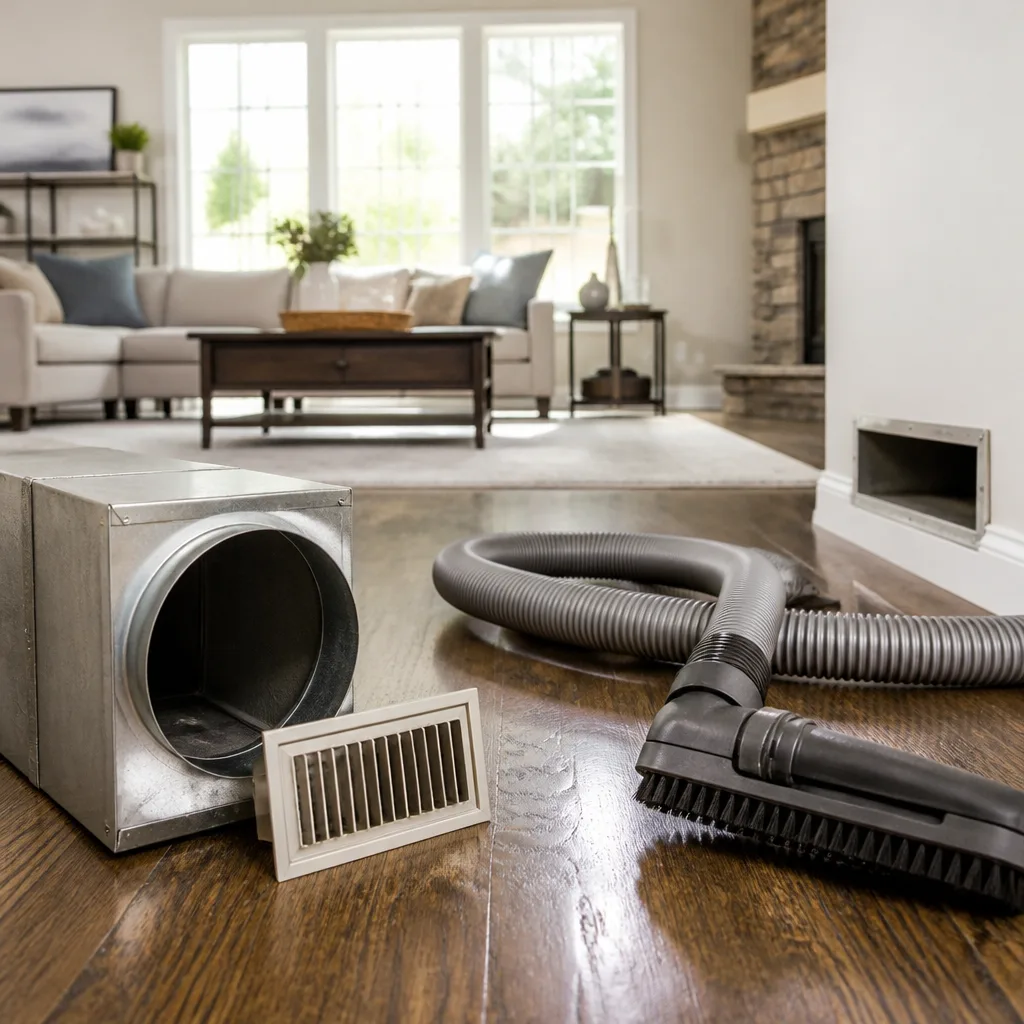
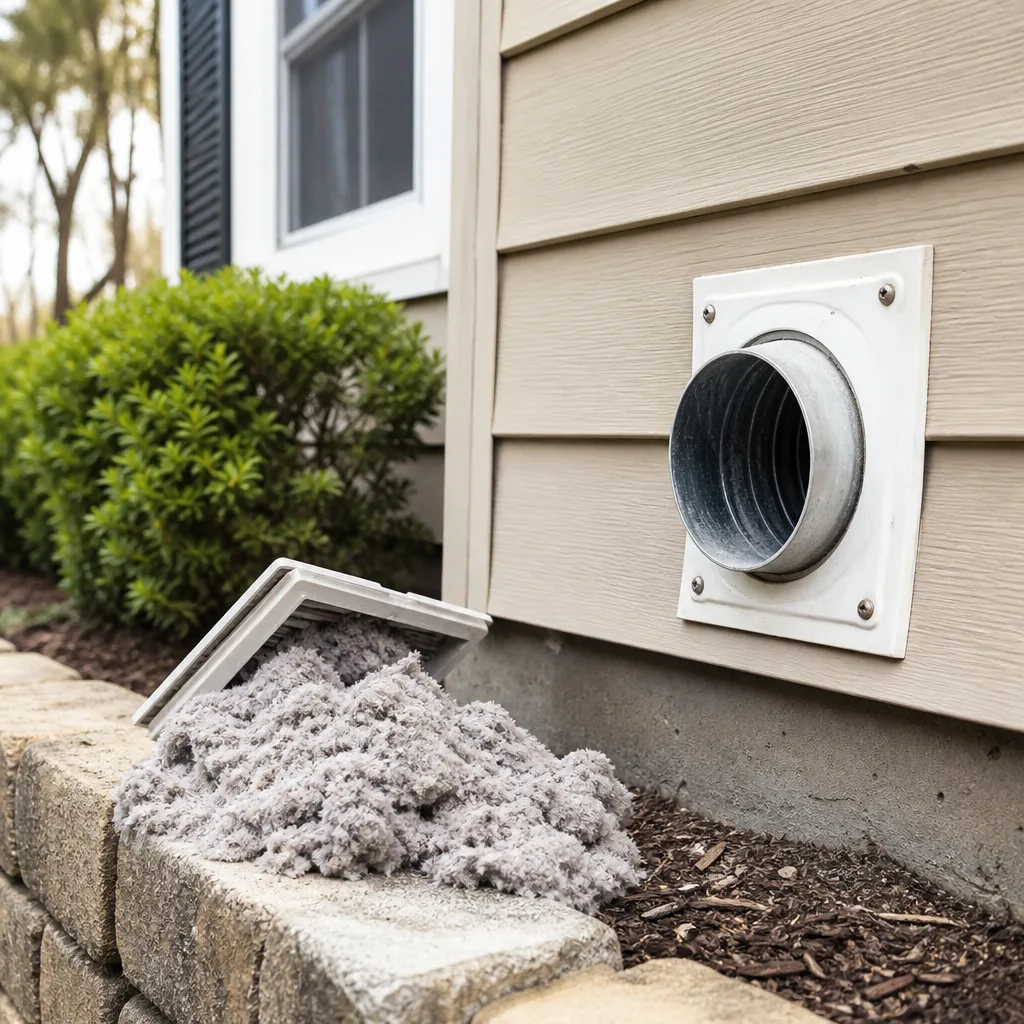
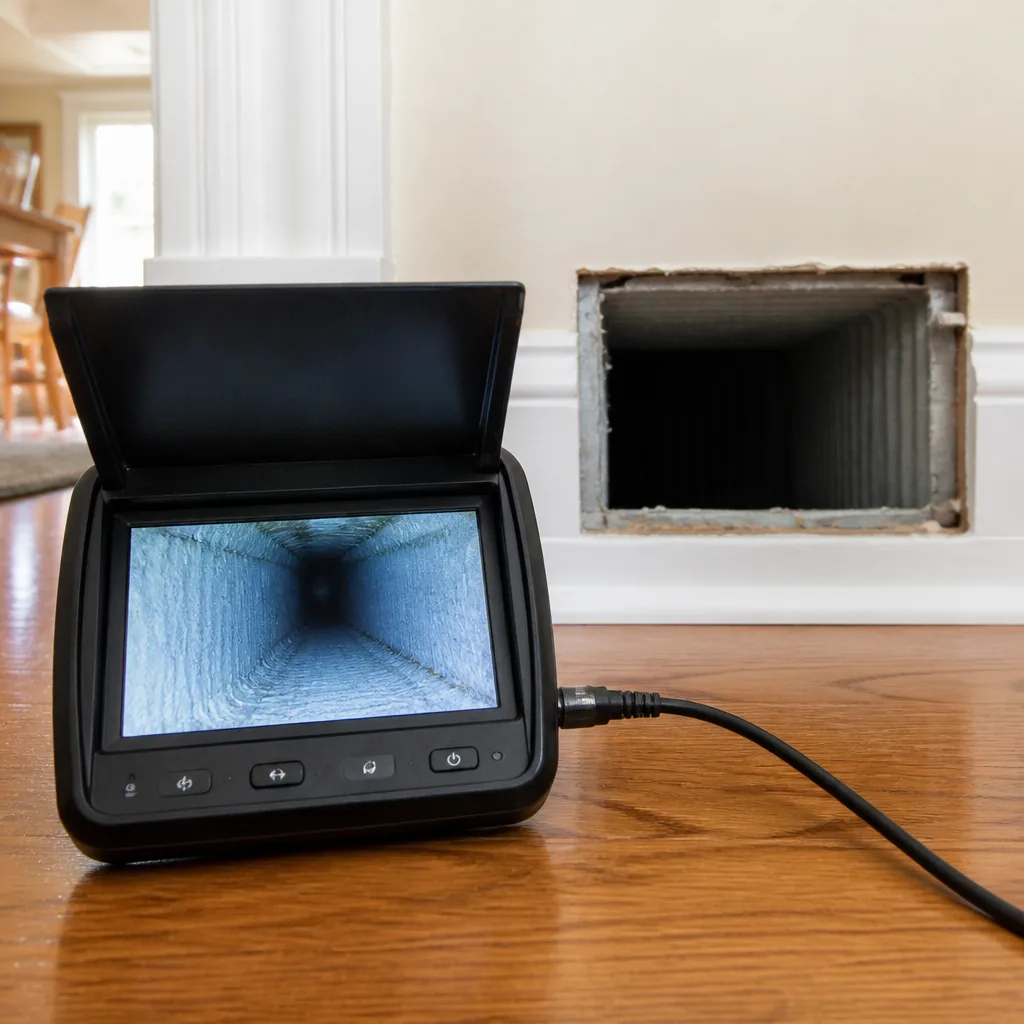
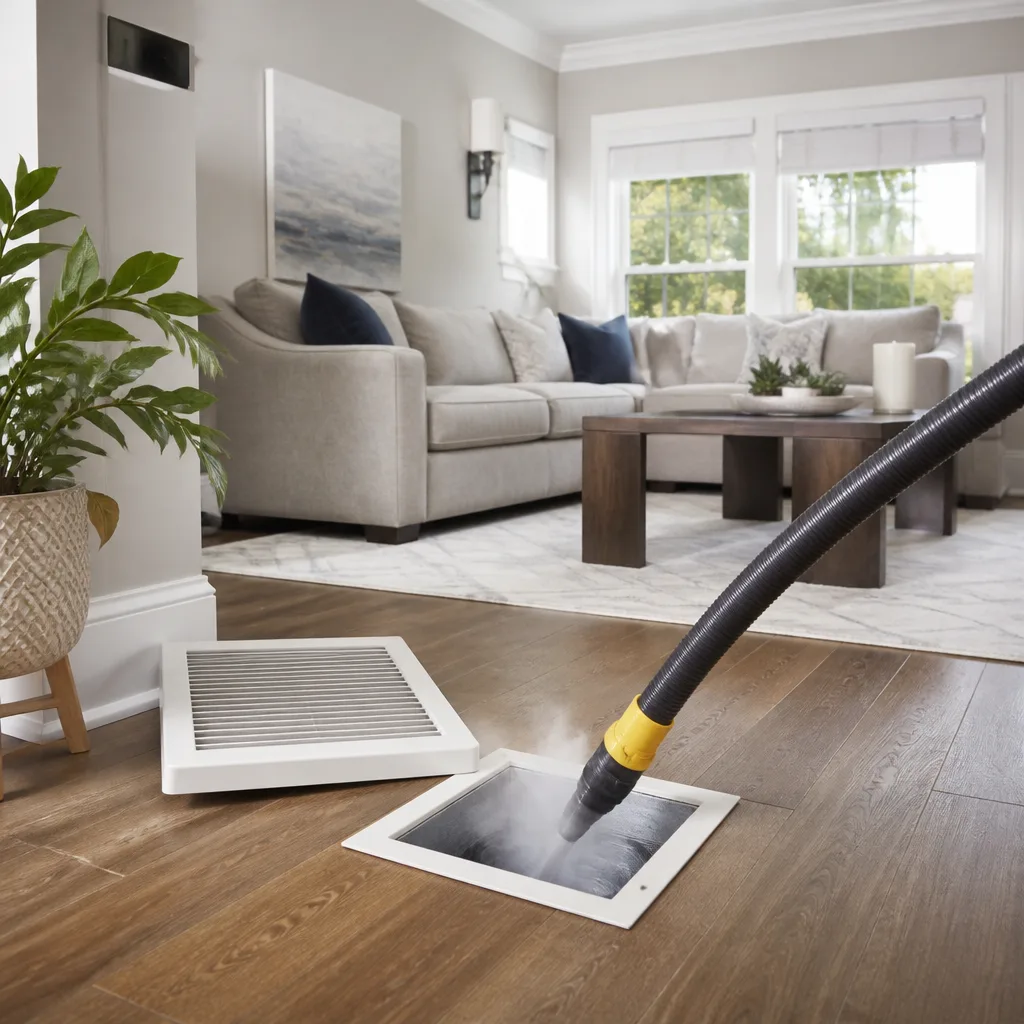
Whole-system duct and dryer vent check with before-and-after photos - you see exactly what came out of your vents
That "$99 whole-house special" is a bait ad - the real number appears once they are in your hallway, or the "clean" is a shop-vac at the register. We photograph the inside of your ducts before and after instead.
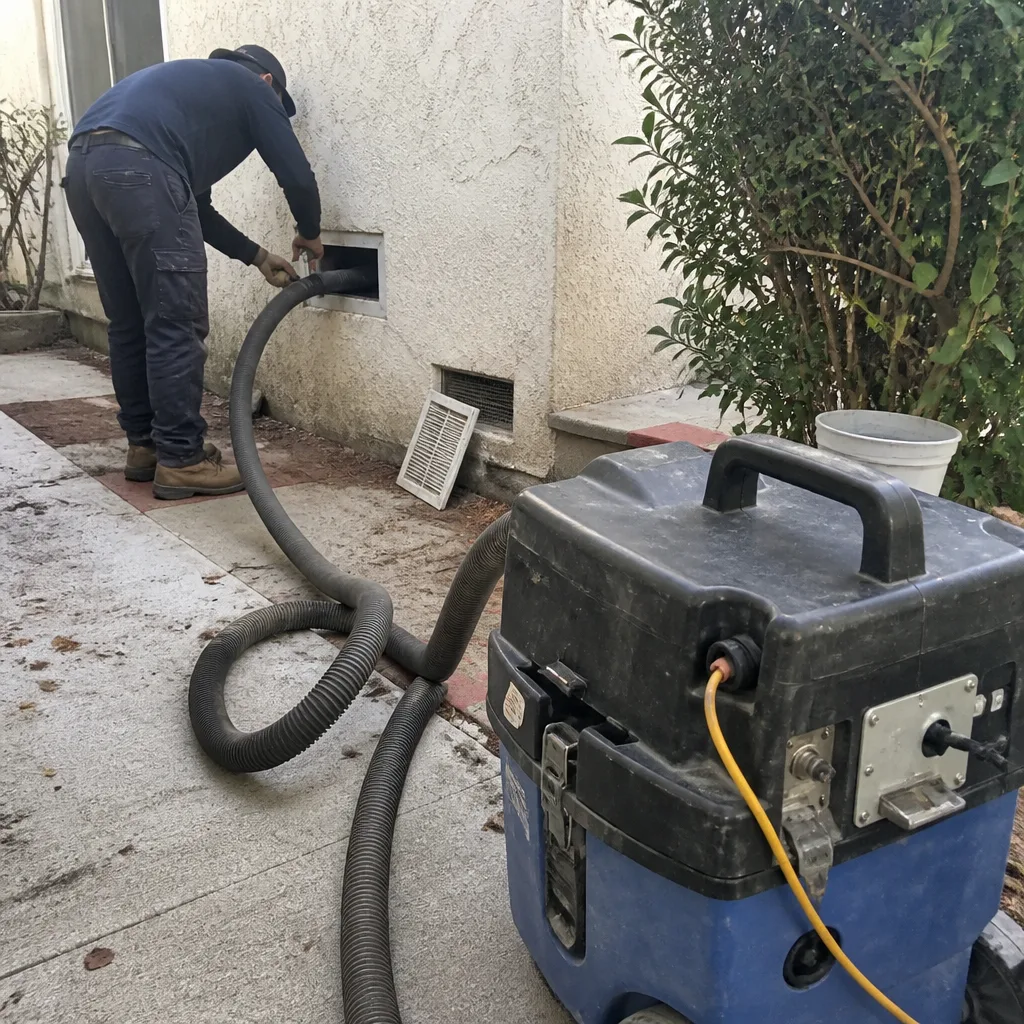 Before
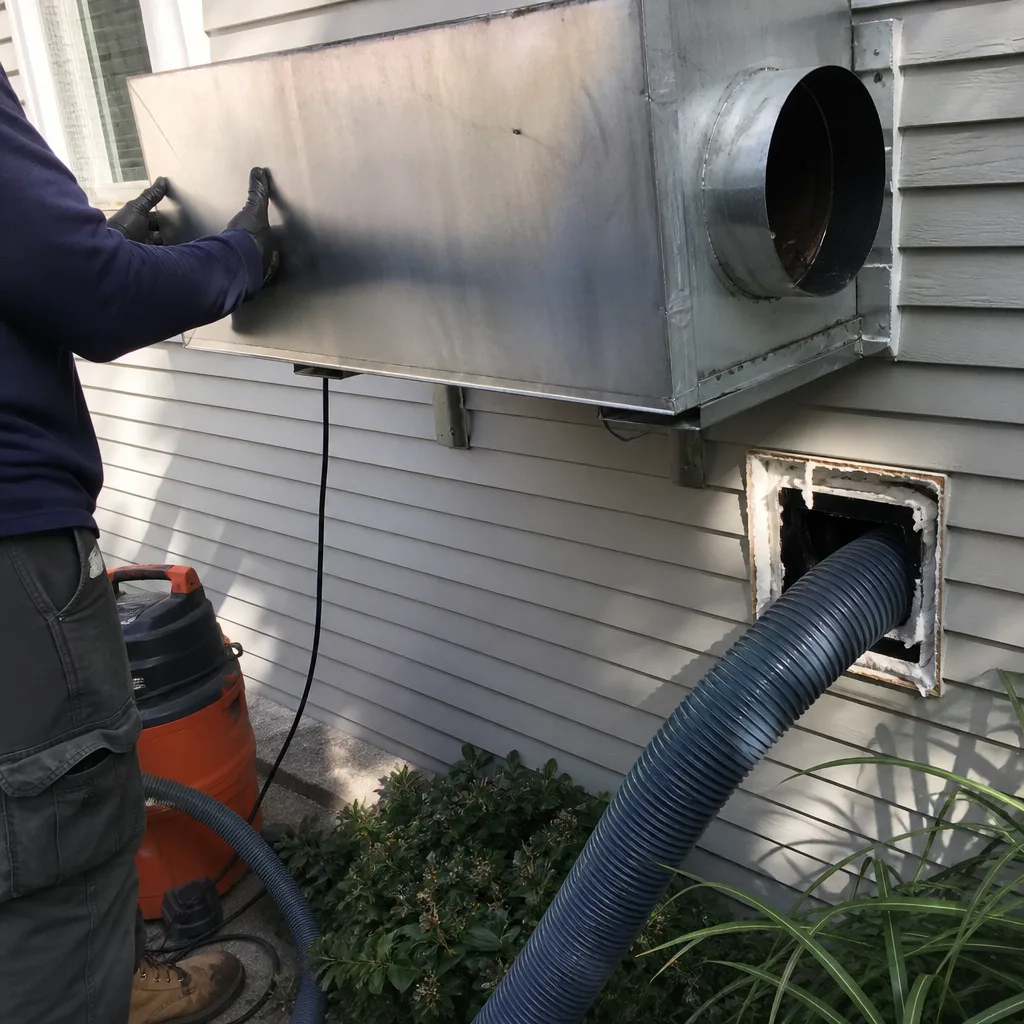 After
After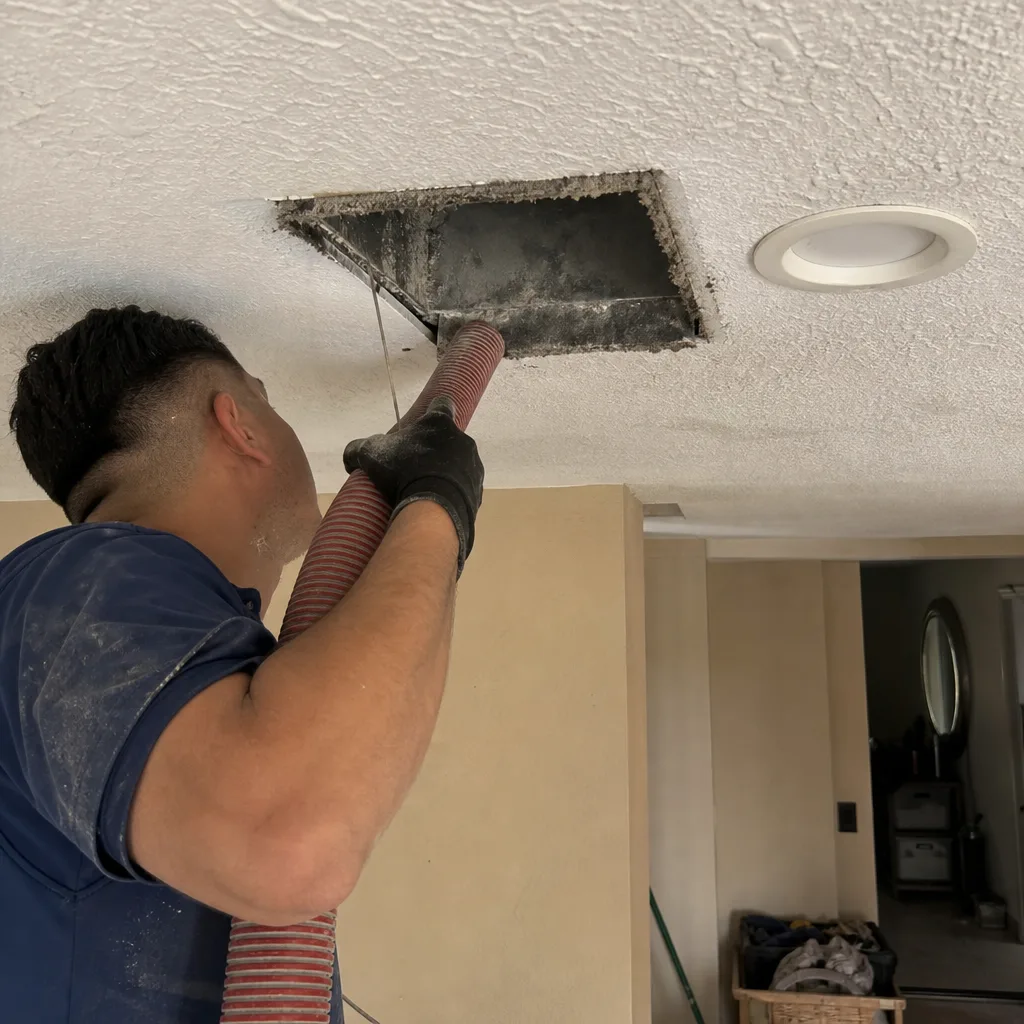 Before
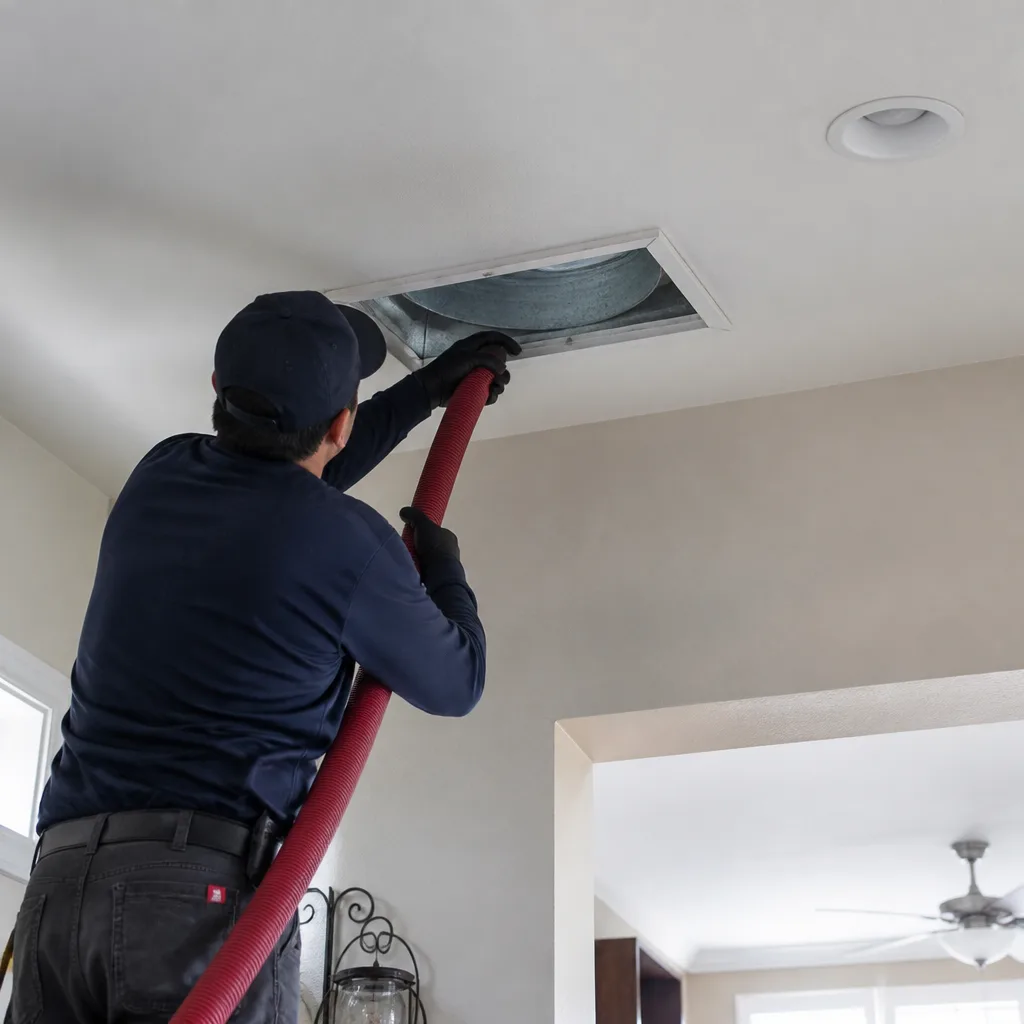 After
After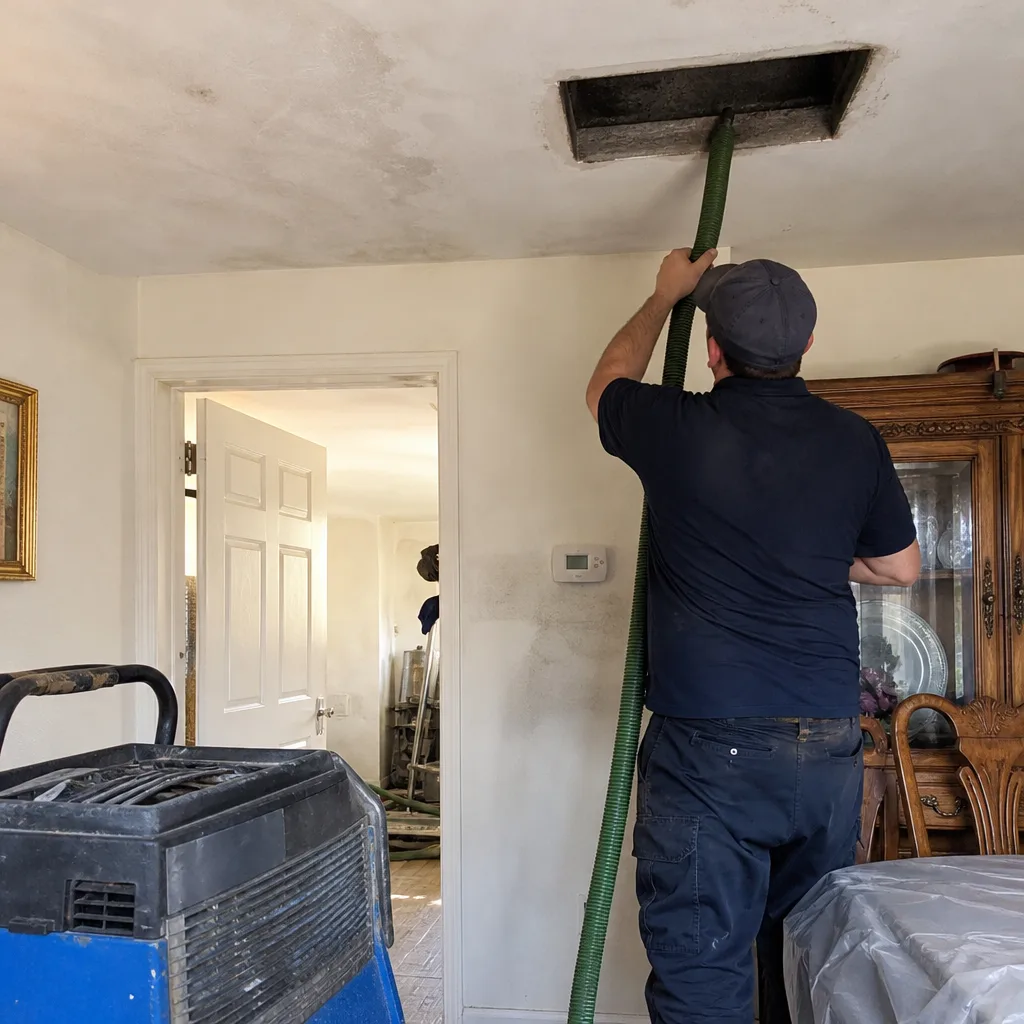 Before
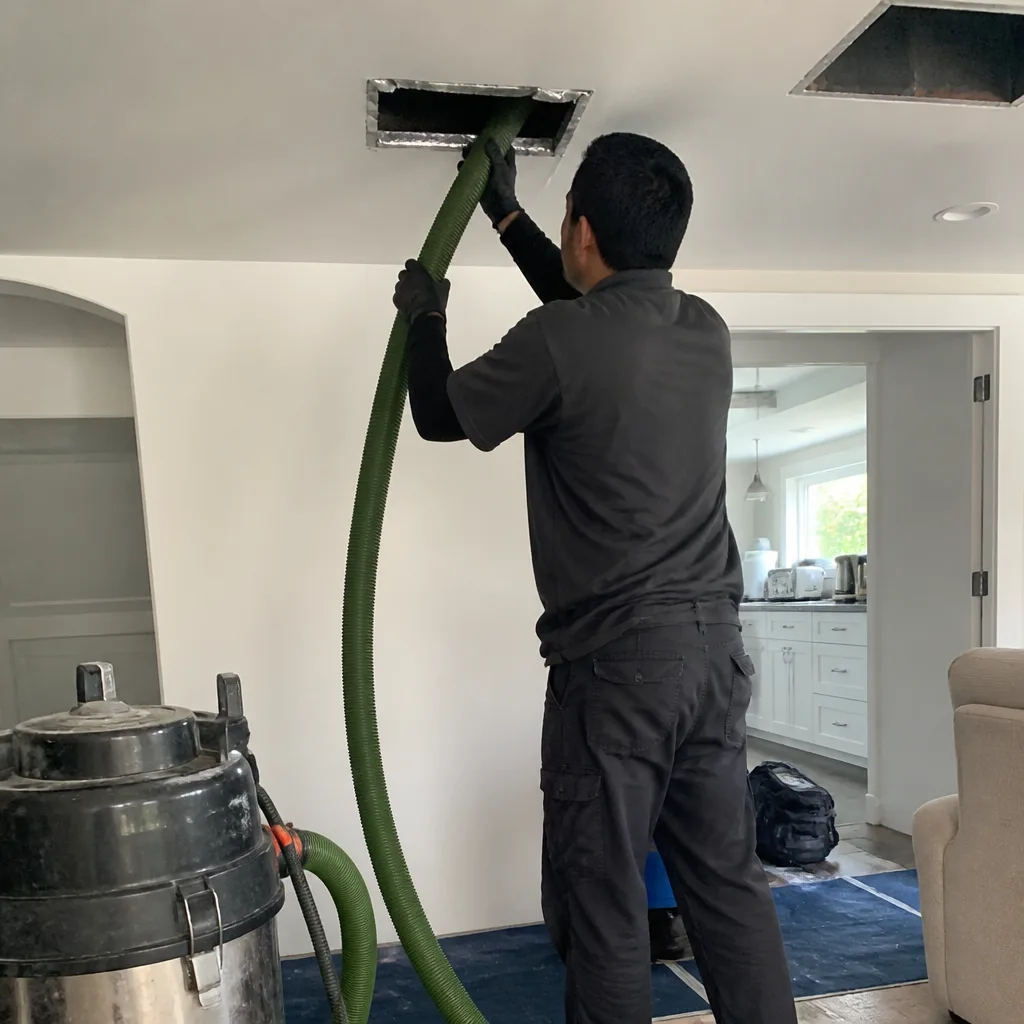 After
AfterHow to Hire a Air Duct Cleaning Contractor in Los Angeles: A Step-by-Step Guide
Here’s a number that should stop you cold: the California Attorney General’s office has issued formal consumer alerts about air duct cleaning operators who advertise a $49 or $69 whole-house special, then hand the homeowner an $800 invoice once the van is in the driveway and the first vent cover is off. This is not an occasional bad actor. It is a documented business model in the Los Angeles market, and it works because most homeowners don’t know which questions to ask before the crew ever rings the bell. This guide walks you through the exact screen that separates a legitimate Los Angeles air duct cleaning contractor from the bait-and-switch operators, step by step, so you know what a trustworthy answer sounds like before you commit.
Quick Answer
Hiring a trustworthy air duct cleaning contractor in Los Angeles comes down to one sequence: verify the California contractor’s license on the CSLB website, get a written scope of work before anyone touches your system, and confirm the price is fixed before the crew arrives. The right contractor will volunteer a written estimate, explain exactly what methods they use, and never ask you to sign a change order after opening the first vent. If a company cannot answer five specific screening questions without deflecting, hang up and call the next one.
Table of Contents
- The Five Questions to Ask Before Scheduling
- Verifying a California Contractor’s License in Under Two Minutes
- What a Written Scope of Work Must Include
- Why the Lowest Bid Is Almost Never the Right Choice
- Red Flags During the Job Itself
- What Los Angeles Homeowners Specifically Need to Know
- Equipment Matters: What Professional-Grade Actually Means
- Common Mistakes to Avoid
- When to Call a Professional
- Frequently Asked Questions
- The Bottom Line
The Five Questions to Ask Before Scheduling
The screening that protects you does not happen when the crew arrives. It happens in the first phone call, and it takes about four minutes. We have answered every one of these questions from anxious Los Angeles homeowners hundreds of times since 2004, and we can tell you exactly what a straight answer sounds like versus a deflection.
- “Will you give me a written price before any work starts?” A trustworthy Los Angeles duct cleaning company says yes without hesitation, and means it. The price is written down, it covers the entire system, and it does not move at the door. A deflection sounds like “we’ll need to see the system first” followed by a much larger number after the first vent is opened. In our experience, a written price before work starts is the single most reliable screen in this trade.
- “What exactly is included in that price?” The answer should include the number of vents, the method being used, and whether sanitizer is included or extra. If the phone rep cannot tell you the vent count or the method, the price is not real.
- “What happens if the job reveals something unexpected?” A straight answer describes the process: the technician stops, documents what they found, shows you the evidence, and gives you a written price for the additional work before anything else happens. A deflection sounds like “we’ll figure it out when we’re in there.”
- “Do you have a written guarantee?” A reputable contractor will tell you exactly what it covers and for how long. At Hollis Air Duct Cleaning, every job is covered by the 365-Day Done Right Promise in writing: if the work fails within a year, we return and make it right at no charge, including a free second visit. That is not a verbal promise. It is on paper.
- “Are your technicians background-checked and uniformed?” The answer should be an unqualified yes. You are letting strangers into your home in Los Angeles, often while you step out to run errands. You should know who is walking through your door before they arrive.
If any of these five questions gets a vague answer, a transferred call, or a promise to “take care of you,” that is your cue to end the conversation. The screening is not about being difficult. It is about discovering whether the company has a standard or a script.
Verifying a California Contractor’s License in Under Two Minutes
Here is the single most overlooked step in hiring any air duct cleaning contractor in Los Angeles: checking the California Contractors State License Board (CSLB) website before you schedule. The process takes less than two minutes and it tells you whether the company has any accountability at all.
The CSLB database is public and free. Go to the CSLB website, click “Check a License,” and enter the company name. You are looking for three things: an active license status, a license number that matches the business name on the invoice, and no open disciplinary actions. Companies operating in Los Angeles without a CSLB license have zero state accountability. If they do a bad job, leave a mess, or walk off mid-job, your recourse is essentially nothing.
One distinction worth knowing: the CSLB does not currently classify air duct cleaning as a specialty contractor classification, so many legitimate duct cleaning companies operate under a different classification or work as subcontractors to licensed HVAC contractors. What matters is that the company can show you a verifiable CA license or a direct affiliation with a licensed contractor, and that the name on the license matches who you are paying. If they cannot show you either, move on.
In our experience, the companies running the $49 bait-and-switch in the Los Angeles market almost never have a verifiable license. That is not a coincidence. A licensed contractor risks losing their license over the kind of consumer complaints these operators rack up. The unlicensed operator risks nothing, which is exactly why they can quote a teaser price and inflate it later.
What a Written Scope of Work Must Include
Before any crew touches your system, you should have a written scope of work in your hand. Not a verbal quote. Not a text message. A written document that spells out exactly what is being done and what it costs. In Los Angeles, where the air duct cleaning market includes national franchises, independent operators, and a steady supply of transient crews, the scope of work is your only real protection against price inflation after the job starts.
A legitimate written scope of work includes these four items:
- Vent count. The document should state how many supply vents and return vents are included. If the company quotes by “system” without telling you the vent count, you cannot verify anything later.
- Method. The scope should name the cleaning method: rotary brush system (a spinning brush that physically scrubs the duct walls) or negative-air method (a powerful vacuum that pulls debris out under negative pressure). Many quality Los Angeles companies use a combination of both, as we do. The document should tell you.
- Sanitizer disclosure. If sanitizer or antimicrobial treatment is included, it should be named and priced on the scope. If it is not included, the scope should say so. This prevents the “your ducts need a $300 sanitizer treatment” upsell that is one of the most common inflators in this trade.
- Final price. The number on the scope is the number you pay. That is the entire point of the document.
At Hollis Air Duct Cleaning home, the written scope is not optional and it is not a courtesy. It is how we work, on every job in Los Angeles, under The Garrison Standard: price it before we touch it, do it by the book, and leave the site clean. The Garrison Code is the operational standard our technicians follow: arrive inside the quoted window, honor the written price, complete the work as scoped, and clean up before leaving. If a company cannot produce a scope of work that includes these four items, you are hiring a gamble, not a contractor.
Why the Lowest Bid Is Almost Never the Right Choice
In most trades, collecting three bids and taking the middle one is reasonable advice. In air duct cleaning, the lowest bid in a three-quote comparison is almost always the wrong choice, and the reason is structural. The low bid exists for one of two reasons: the operator plans to inflate it after arriving, or the operator is cutting corners on equipment, time, or completeness.
Here is what we know from two decades in this Los Angeles market. A proper cleaning of a typical 2,000-square-foot Los Angeles home takes two to four hours with professional-grade equipment. The equipment costs real money: a Rotobrush rotary brush system, a Nikro negative-air machine, HEPA filtration units. The labor is real labor. A legitimate whole-system cleaning in Los Angeles generally runs between $350 and $750, depending on the size of the home, the number of vents, and the condition of the ducts. See our Air Duct Cleaning Cost Breakdown: The Los Angeles Homeowner’s Reference for 2026 for a detailed breakdown. A $49 advertised special cannot cover even a fraction of the cost of doing the job correctly, which means the operator either intends to upsell aggressively, or intends to spend twenty minutes running a shop vac hose into a couple of vents and calling it done.
When you evaluate the middle and high bids, look at what they actually include. A higher bid that specifies all vents, a named cleaning method, sanitizer disclosure, and a written guarantee is worth more than a lower bid that specifies nothing. Ask each bidder what equipment they use. Professional-grade machines from manufacturers like Rotobrush, Nikro, Abatement Technologies, and filtration brands like Aprilaire and Guardsman are what you want to hear. If the company cannot name its equipment, it is probably running a homeowner-grade vacuum and an inflatable marketing budget.
Red Flags During the Job Itself
The screening does not end when the crew arrives. Some Los Angeles duct cleaning operators pass the phone screen and still run the play once they are inside your home. Here are the red flags to watch for once the work begins.
The most important one: a new price quoted after the first vent is opened. This is the moment the bait-and-switch operator has been waiting for. The crew opens a vent, points at a little dust, and tells you the system is “worse than expected” and the price just went up. In our experience, a legitimate technician expects dust. That is the entire reason you called. A professional cleans the system to the written scope and the written price. The only legitimate trigger for an additional charge is a documented, unexpected condition: actual mold growth, a disconnected duct, pest infestation, or significant water damage. And even then, the technician should stop, show you the evidence, and get your written approval before doing anything beyond the scope.
The second red flag: a hard push for a “mold treatment” or “sanitizer treatment” without showing you documented evidence of mold. If the technician cannot point to visible mold growth, show you a photo, or produce a lab report, the treatment is a commission opportunity, not a necessity. In Los Angeles, where beach-adjacent humidity and older homes create real moisture conditions, mold can exist. But the professional standard is to document it first and sell the treatment second, never the reverse.
Other red flags: a crew that arrives without uniforms or identification, a crew that cannot show you the equipment they claimed to use, and a crew that wants payment in cash before the job is finished. None of these are run by reputable Los Angeles duct cleaning companies.
What Los Angeles Homeowners Specifically Need to Know
Los Angeles is not one market. It is roughly two hundred neighborhoods stretched across 500 square miles, and the condition of your ducts depends heavily on where in the city you live. This matters when you are hiring a contractor because a company that understands your neighborhood is more likely to give you an accurate scope on the first visit.
In the Valley, from Studio City to Woodland Hills, we regularly see ducts filled with fine particulate dust that settles fast in the summer when windows stay shut and the AC runs for months straight. In older neighborhoods like Koreatown, Silver Lake, and the flats of Long Beach, the ducts themselves are often decades old, and we see frequent issues with disconnected joints and failing seals. Beach-adjacent areas like Santa Monica, Venice, and the South Bay get salt air and higher humidity, which accelerates corrosion on metal ductwork and creates conditions where microbial growth is more likely. Homes near freeways, particularly along the 405, 101, and 10 corridors, pull in brake dust and exhaust particulate that settles in the system.
The practical takeaway: a Los Angeles duct cleaning contractor should ask where your home is located and factor that into the scope. If the company gives you a quote without asking a single question about your home’s age, location, or system, that quote is not based on anything real. Our Air Duct Cleaning in Los Angeles work always begins with the specific conditions of the home and the neighborhood, because that is what determines the job.
Equipment Matters: What Professional-Grade Actually Means
You would not hire a mechanic who showed up with a single wrench. The same logic applies to air duct cleaning, but most homeowners have no frame of reference for what good equipment looks like because they have never cleaned a duct. Here is the plain-English version of what professional-grade means in this trade.
A legitimate Los Angeles duct cleaning company runs two primary tools. The first is a rotary brush system, like the Rotobrush machines we run, which feeds a spinning brush through the ductwork to physically scrub the walls. Brushing is what removes the layer of dust, pet dander, and debris that a simple vacuum cannot move. The second is a negative-air machine, like the Nikro units we use, which creates a powerful vacuum at one end of the system that pulls loosened debris out of your home entirely instead of recirculating it. The best results come from running both: brush to dislodge, negative air to extract.
Filtration matters too. On jobs where the system warrants it, we use filtration products from Honeywell, Aprilaire, Abatement Technologies, and Guardsman. These are not hardware-store filters. Aprilaire media filters and Guardsman cabinet filters are the same components installed in commercial buildings where indoor air quality is measured and monitored. Abatement Technologies makes negative-air and HEPA equipment used in hospital-grade remediation work. The point is not to name-drop. The point is that you should ask what equipment the company runs, and the answer should be specific, not “commercial-grade equipment.” A company that can name its machines is a company that owns its machines and has trained its technicians to run them.
For Los Angeles homeowners dealing with leaky ducts, the same standard applies to Duct Sealing in Los Angeles. Proper sealing uses mastic, a paste-like sealant that hardens over joints and creates a durable seal that lasts decades. Foil tape is not the same thing. It peels. Mastic, applied correctly, is the trade standard. A written scope for sealing work should specify mastic by name, not “sealing material.”
Common Mistakes to Avoid
- Hiring on price alone. The lowest quote in Los Angeles duct cleaning is usually the most expensive by the time the job is done. A $49 teaser becomes $800 after the “surprises” are found. Screen for written pricing instead of hunting for cheap.
- Skipping the CSLB check. Two minutes on the CSLB website tells you whether you are dealing with an accountable business or a transient operator. Skipping it is hiring with your eyes closed.
- Accepting a verbal quote. A verbal quote is worth the paper it is printed on. If the company will not write down the scope, the vent count, and the final price, the number will change. Write it down or walk away.
- Agreeing to a “mold treatment” without documented evidence. Legitimate mold in ducts is real and does happen in humid parts of Los Angeles. But a professional shows you the mold before selling you the treatment. If they cannot show it, do not buy it.
- Paying the full amount before the work is done. A reputable company invoices after the job is complete and walkable. If the crew wants full payment in cash before the first vent is opened, that is not a payment policy. That is a warning.
- Ignoring the dryer vent. Many homeowners schedule duct cleaning and forget the dryer vent entirely. That is a separate but critical service. A clogged dryer vent is a documented fire hazard, and Los Angeles homes with long vent runs or rooftop terminations are particularly susceptible. Ask about Dryer Vent Cleaning in Los Angeles while you are on the phone.
- Choosing a company that cannot name its equipment. If the phone rep cannot tell you what machines they run or what method they use, the crew you get will be a random assortment. Specifics are a sign of a real operation. Vague is a sign of a call center.
When to Call a Professional
You should call a professional air duct cleaning company in Los Angeles when you see visible dust blowing from your vents, when dust returns to surfaces within days of cleaning, when your energy bills climb without explanation, when you have renovated recently, or when you move into a home and have no record of the ducts ever being cleaned. You should also schedule a professional evaluation if anyone in the home has respiratory sensitivities that seem worse indoors. Air duct cleaning is not a do-it-yourself job. The ducts are not reachable with homeowner tools, and the debris is not extractable with a shop vac. Hollis Air Duct Cleaning offers free estimates in Los Angeles. Call (361) 326-5060 and a live person answers, 24 hours a day, 7 days a week.
Frequently Asked Questions
For a typical Los Angeles home between 1,500 and 2,500 square feet, a legitimate whole-system cleaning generally runs between $350 and $750. The range depends on the number of vents, the condition of the ducts, and whether sanitizer or sealing is included. Any advertised price far below that range, like the $49 and $69 specials common in the Los Angeles market, is a lead generator, not a real price. Real pricing is written down before work starts and does not move at the door. Call (361) 326-5060 for a free written estimate based on your specific system.
Because the cheap quote is not the final price. The $49 and $69 specials advertised across Los Angeles exist to get a crew into your home, at which point the operator finds “unexpected issues” and inflates the invoice to $600 or more. A company with a real written scope of work and a real written guarantee does not need a teaser price. The cost of doing the job correctly, with professional-grade equipment and trained technicians, is what it is. A contractor who quotes well below that cost is planning to make up the difference another way.
Two ways. First, a reputable contractor shows you before-and-after photos of your own ducts, not stock photos. Second, the written scope gives you a checklist: every vent in the count should be visibly clean and the register covers should be replaced correctly. Professional-grade equipment, like the rotary brush and negative-air systems we run, produces visible results you can photograph. If the company will not show you photos of your own system, ask why not.
For most Los Angeles homes, every three to five years. Homes near freeways, homes with pets, homes with smokers, and homes that have had recent construction should lean toward every two to three years. If you moved in recently and have no record of prior cleaning, schedule one now and start your own clock. The answer is not “every year.” Any company telling every customer they need annual cleaning is selling appointments, not giving advice. For a deeper look at timing your service, read our Seasonal Air Duct Cleaning Care for Los Angeles: Year-Round Homeowner’s Guide.
The CSLB does not have a dedicated air duct cleaning classification, but a legitimate Los Angeles duct cleaning company should either hold a CSLB license itself or work directly under a licensed contractor, and should be able to show you verifiable proof. Operating without any license means operating without state accountability. The California Attorney General’s consumer alerts about duct cleaning scams almost always involve unlicensed operators. Checking the CSLB website takes less than two minutes and it is the single highest-value verification you can do before hiring anyone.
Yes, for two reasons beyond allergy relief. First, a clogged system forces your HVAC equipment to work harder, which raises energy costs over time in Los Angeles where AC runs for months of the year. Second, cleaning reveals problems you cannot see: disconnected ducts, failing seals, and pest debris. Finding a disconnected duct during a cleaning can save you from paying to condition a crawlspace. The cleaning is valuable on its own. The inspection that comes with a proper cleaning is often worth more.
The Bottom Line
Hiring an air duct cleaning contractor in Los Angeles is a screening process, not a shopping exercise. Check the CSLB license, demand a written scope of work with a fixed price, ask the five screening questions, and watch for red flags during the job. The reputable companies in this market write their prices down before work starts, name their equipment, and stand behind their work in writing. The operators running documented scams rely on you not knowing the difference until it is too late. Now you know. For more guides & resources, visit our blog. Roy Castellanos and the team at Hollis Air Duct Cleaning have served Los Angeles since 2004 with written pricing, professional-grade equipment, and the 365-Day Done Right Promise on every job.
Written by Roy Castellanos, Owner at Hollis Air Duct Cleaning, serving Los Angeles since 2004.