
Last updated October 9, 2026
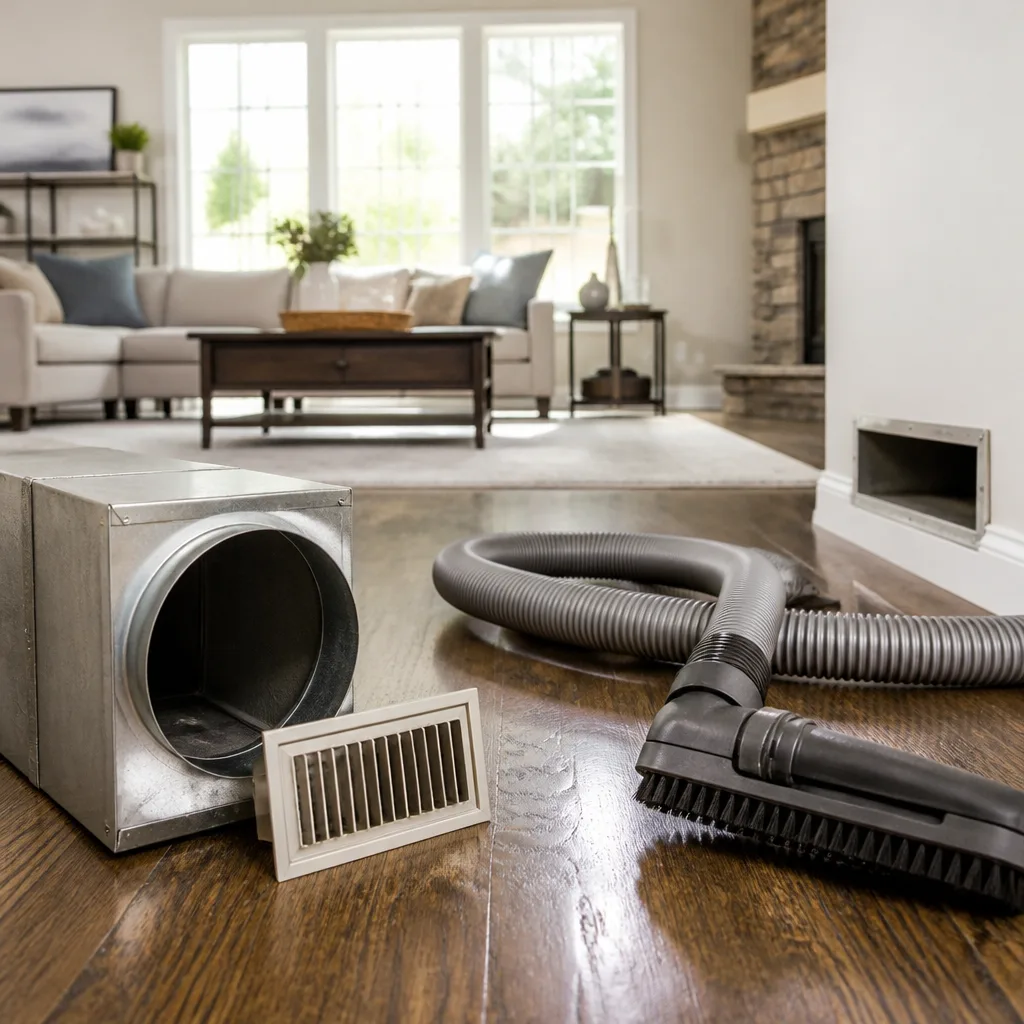
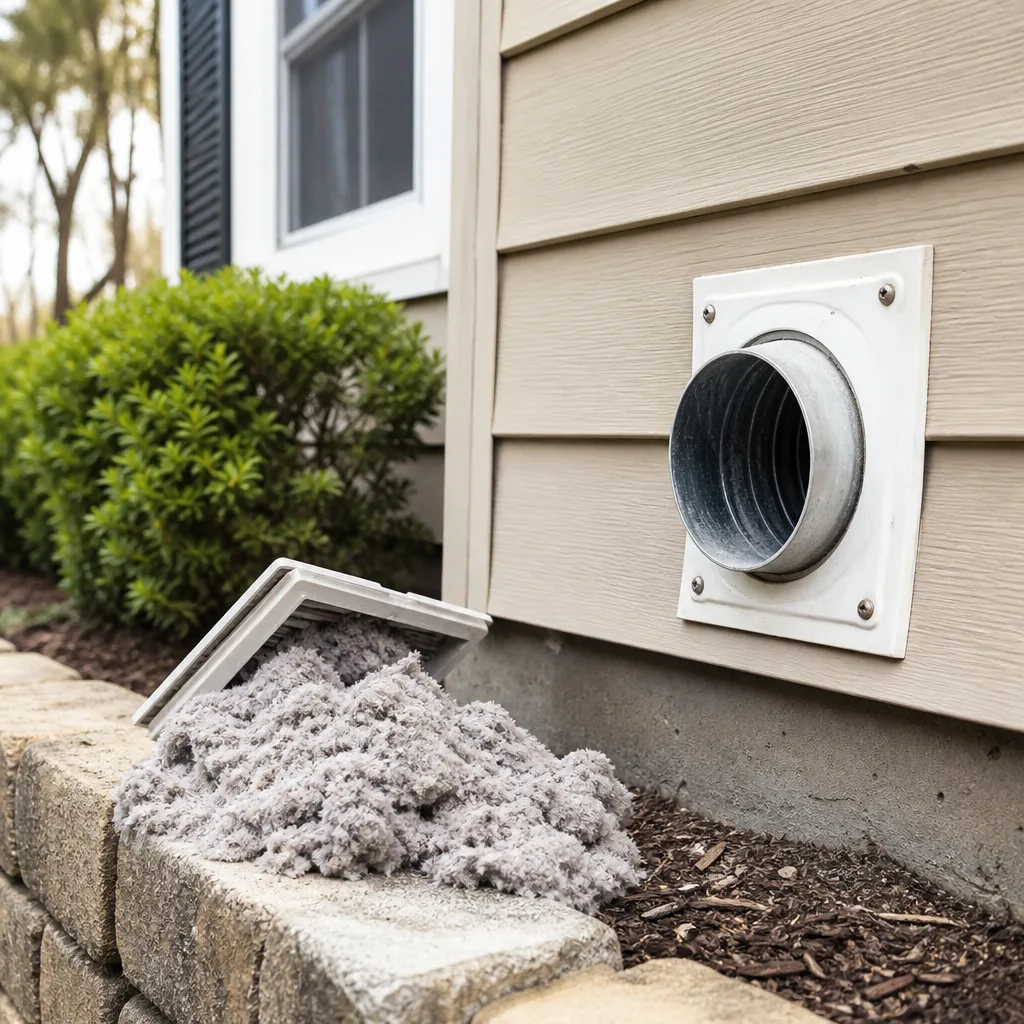
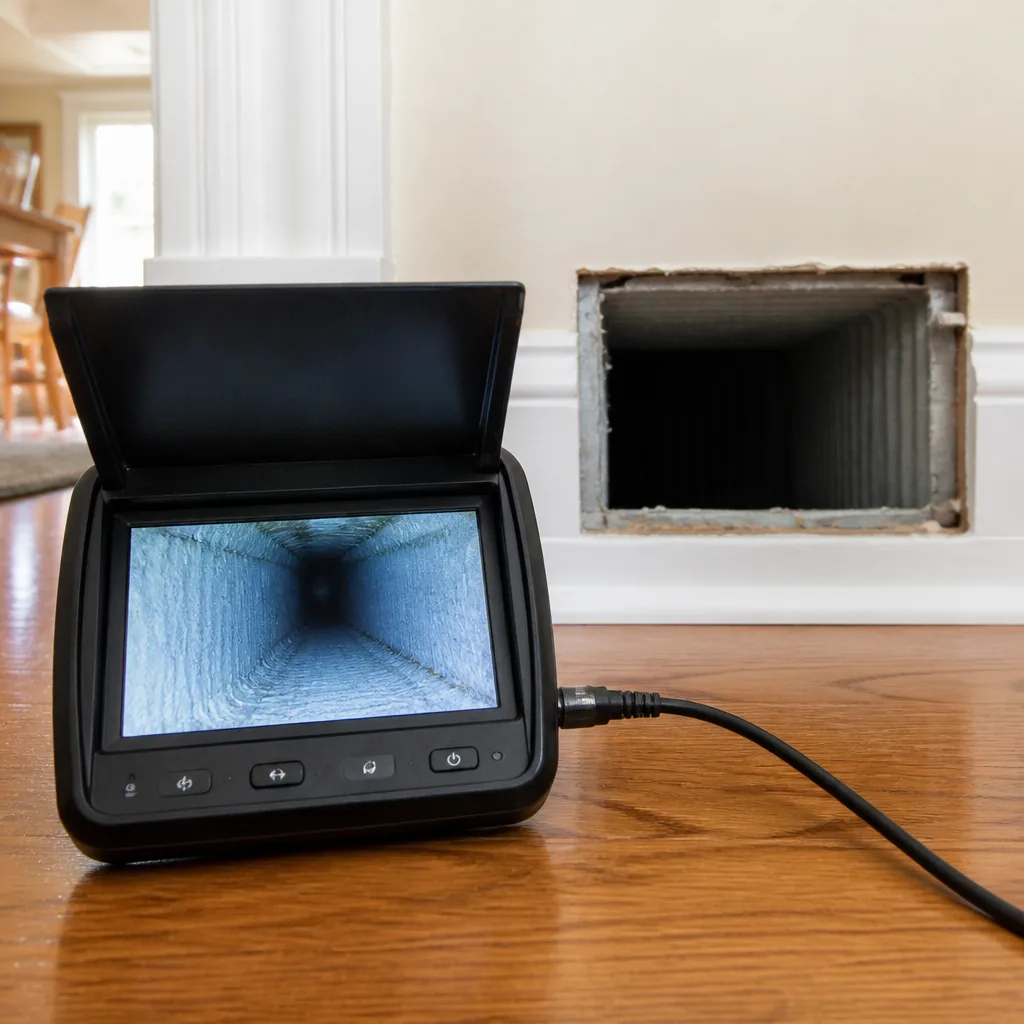
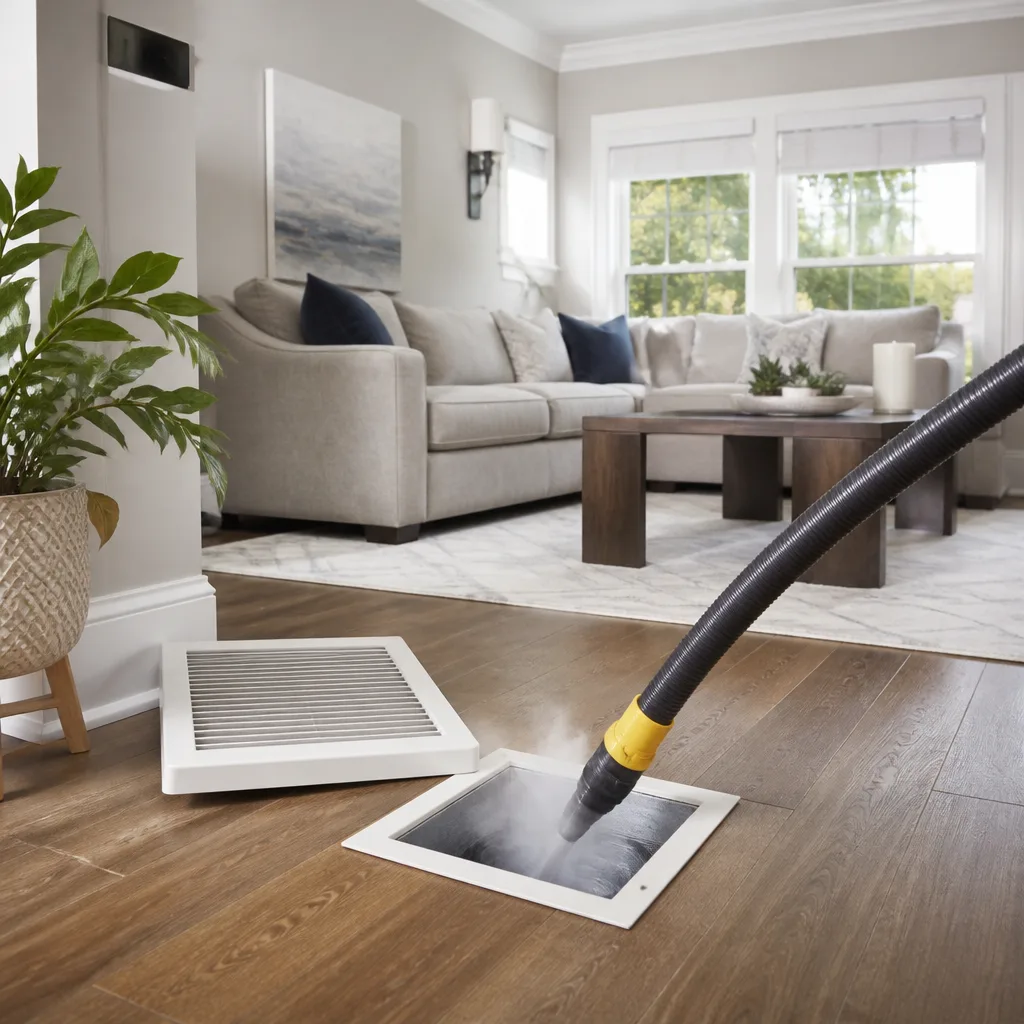
Whole-system duct and dryer vent check with before-and-after photos - you see exactly what came out of your vents
That "$99 whole-house special" is a bait ad - the real number appears once they are in your hallway, or the "clean" is a shop-vac at the register. We photograph the inside of your ducts before and after instead.
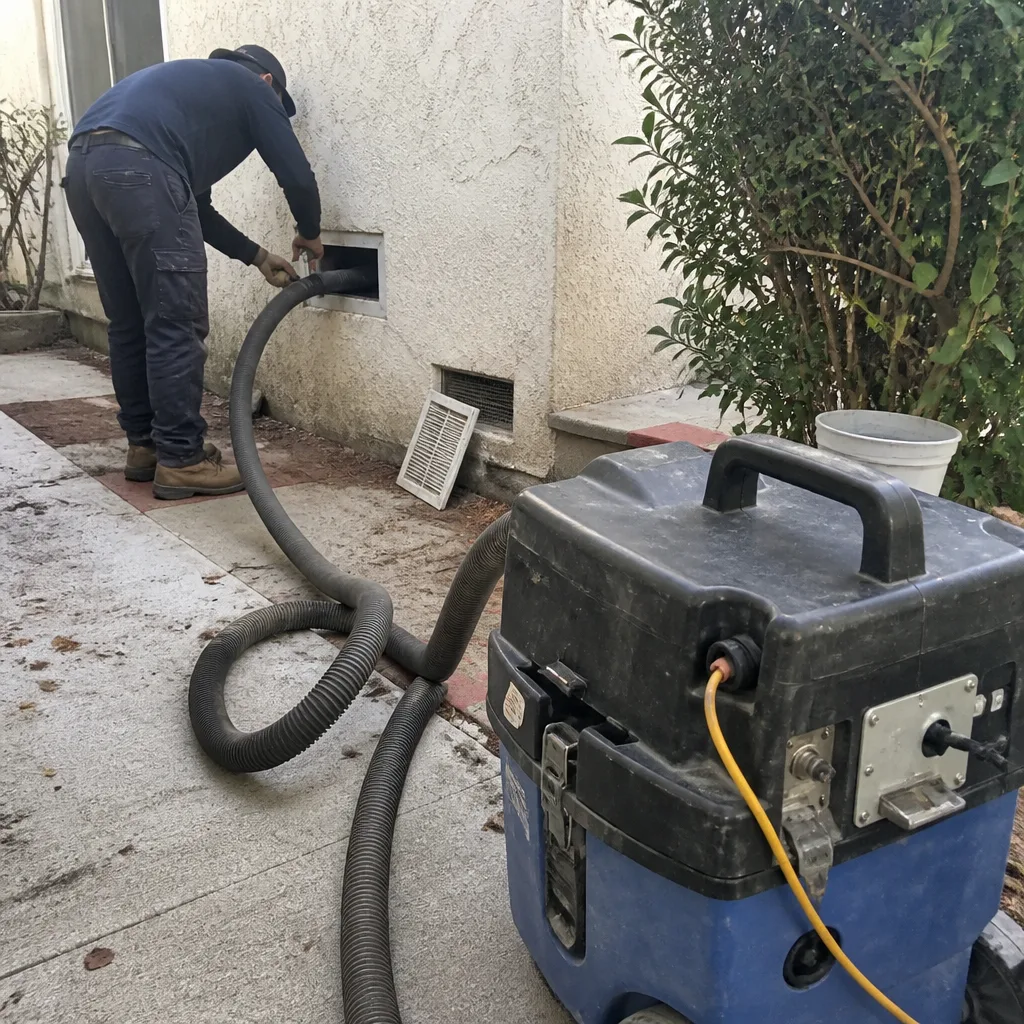 Before
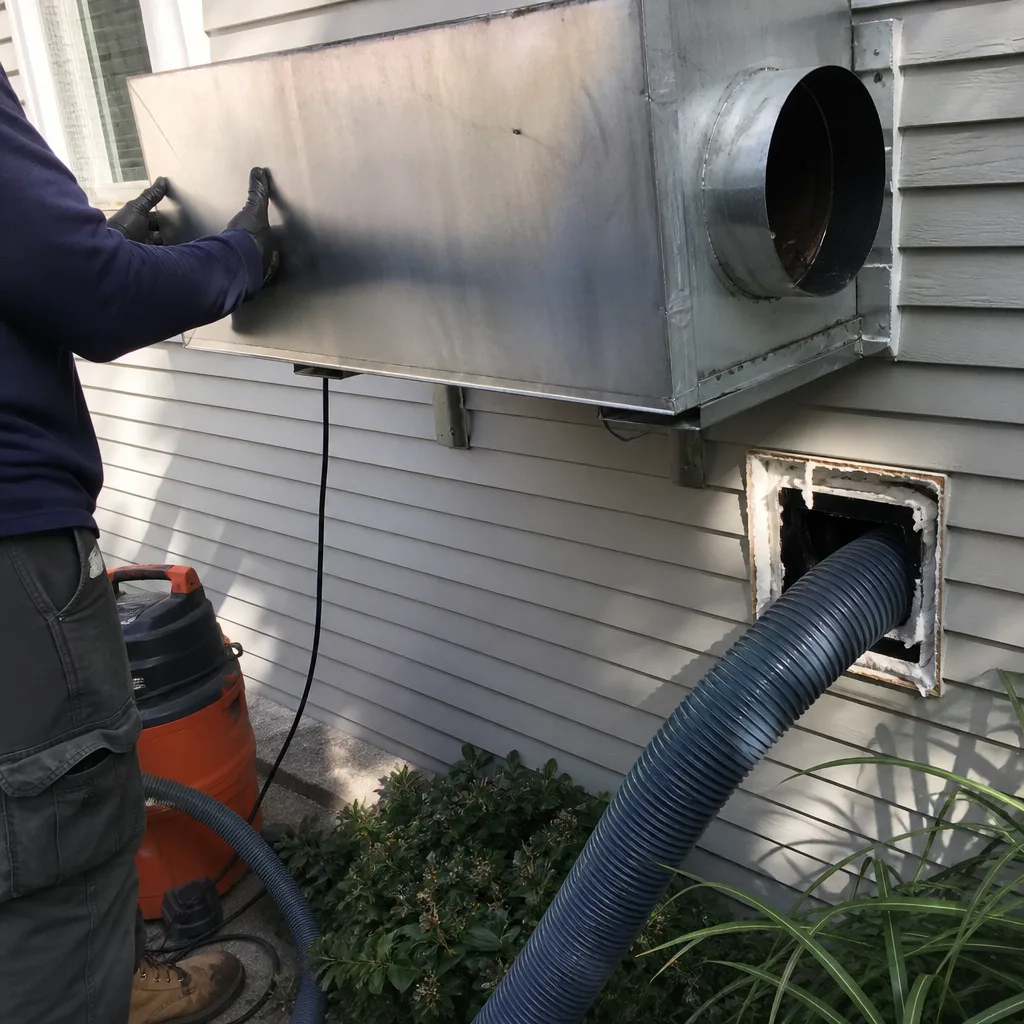 After
After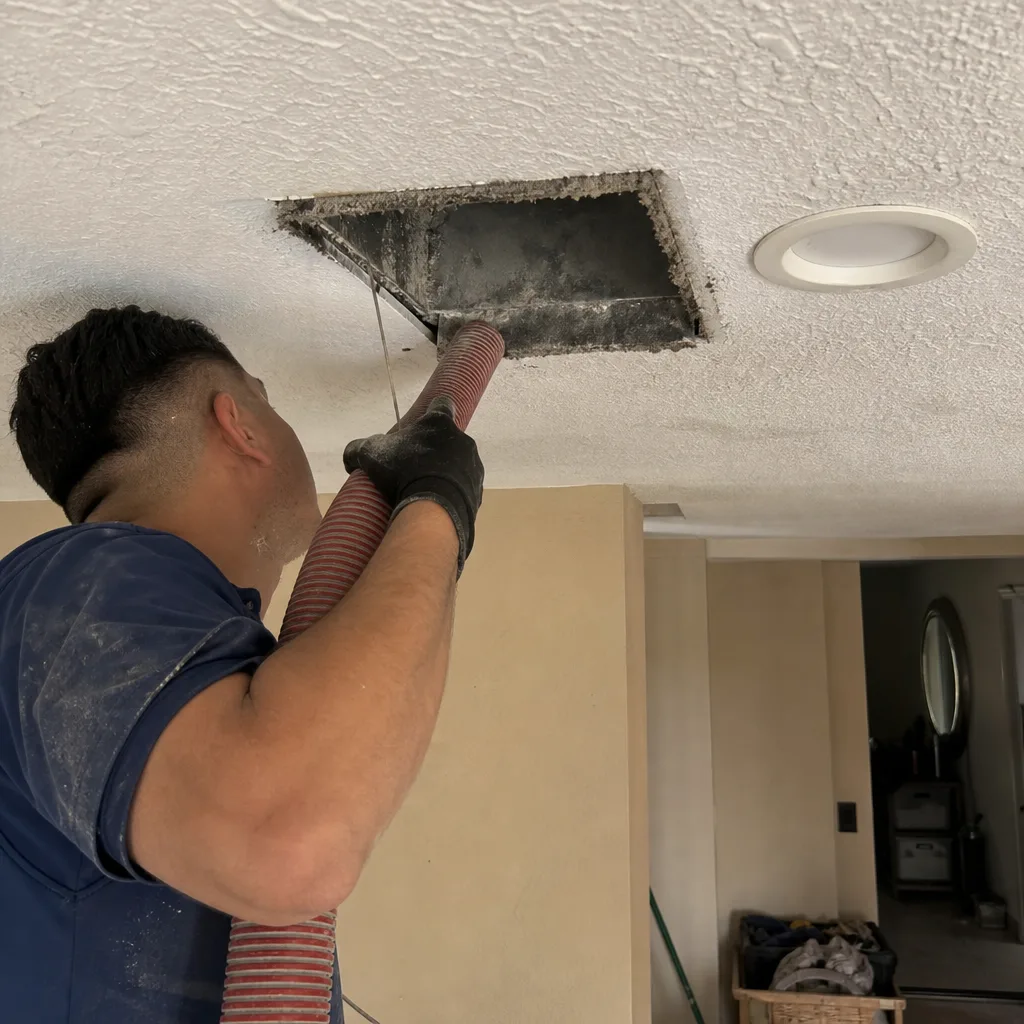 Before
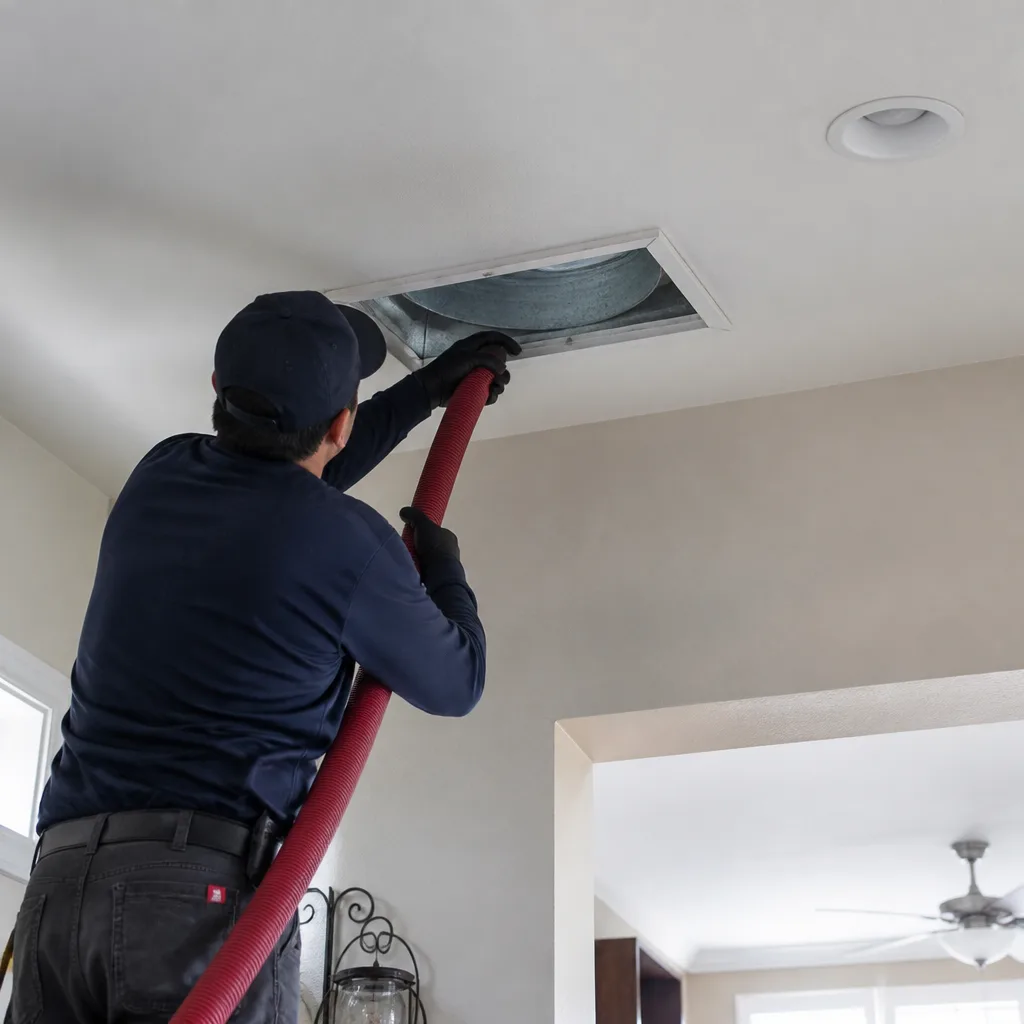 After
After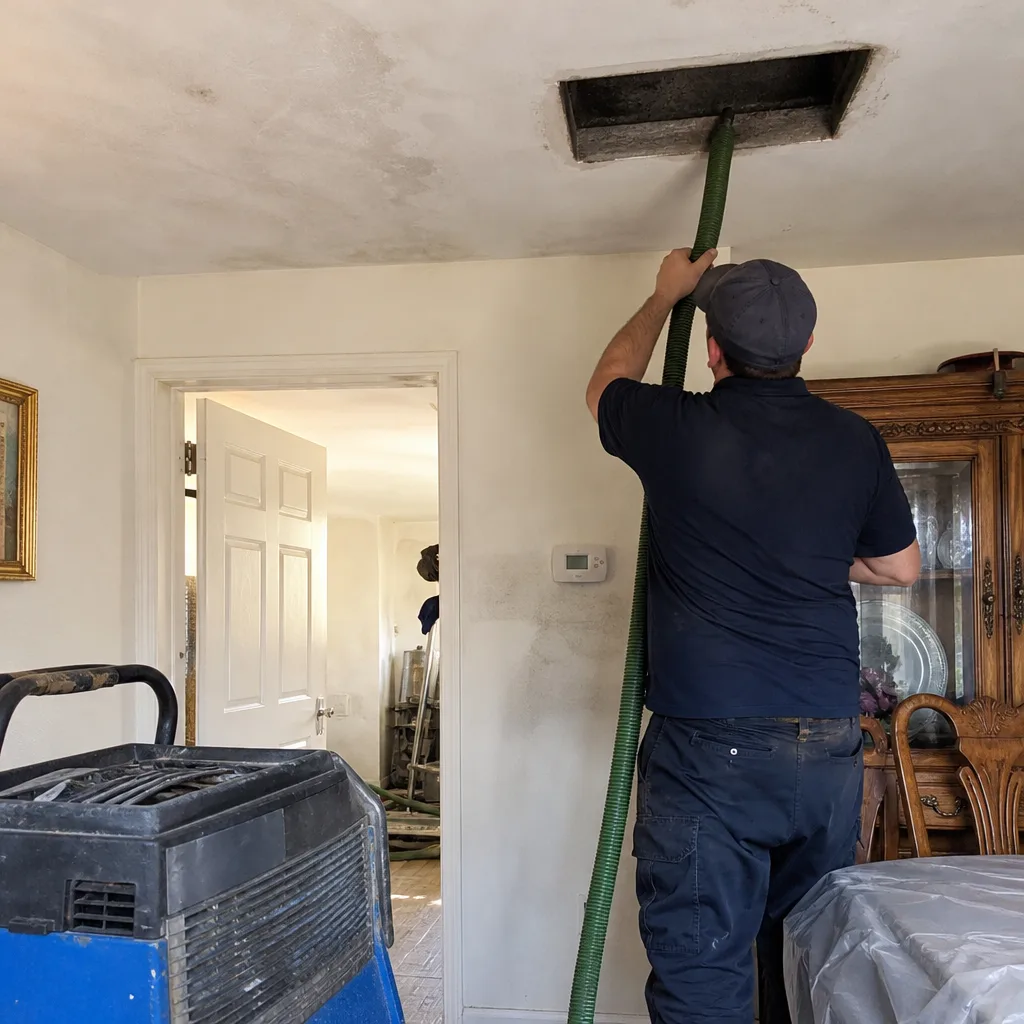 Before
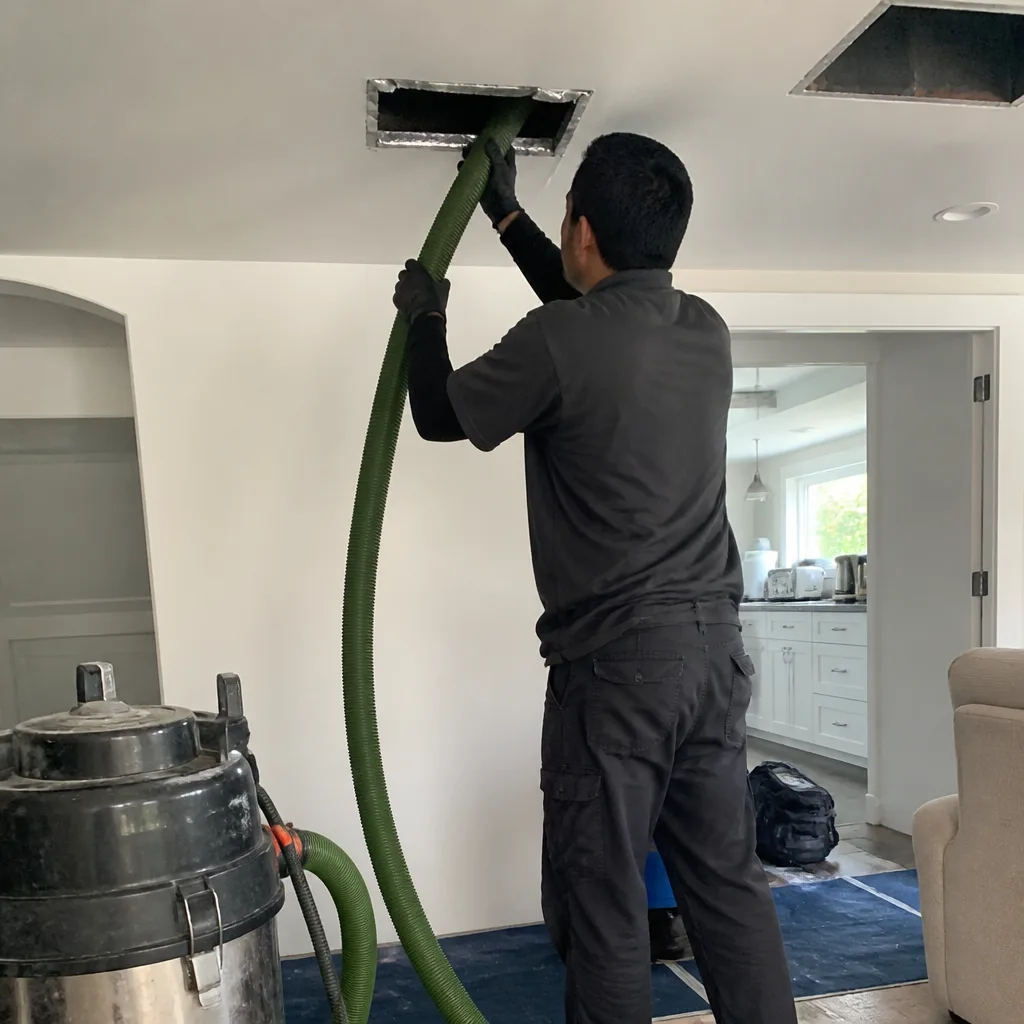 After
AfterHow Long Does Air Duct Cleaning Take? Timelines and What to Expect
Here’s a number most Los Angeles homeowners never hear: a legitimate, by-the-book air duct cleaning of a 2,000-square-foot home takes 3 to 5 hours, not the 45 minutes the “$49 special” crews advertise on flyers and radio spots. The reason is simple arithmetic. If two technicians finish an entire house in under 90 minutes, they are running a vacuum at the air handler, not cleaning ducts. This Air Duct Cleaning guide breaks down exactly where those 3 to 5 hours go, room by room and phase by phase, so you can judge any quote you receive in Los Angeles against a real standard instead of a marketing pitch. By the time you finish reading, you will know what a proper job looks like, how long each step should take, and the specific questions to ask before anyone steps foot in your home.
Quick Answer
Air duct cleaning for a standard single-family home in Los Angeles takes 3 to 5 hours when performed correctly by a two-person crew using NADCA-standard methods. A single-story 1,500-square-foot home with 10 to 12 vents runs closer to 3 hours; a two-story 3,000-square-foot home with 20 or more vents runs 5 to 6 hours. Any company promising a complete cleaning in under 90 minutes is skipping the air handler compartment, the return side, or both.
Table of Contents
- Why Job Duration Is the Most Honest Quality Indicator
- The Full Room-by-Room Breakdown for a Standard LA Home
- What the Technician Should Be Doing During Each Phase
- Variables That Change the Clock: Square Footage, Vents, and Duct Material
- What Rushed Jobs Skip: The Air Handler, Coil, and Blower Compartment
- How to Use Job Duration as a Screening Question When Getting Quotes
- Common Mistakes to Avoid
- When to Call a Professional
- Frequently Asked Questions
- The Bottom Line
Why Job Duration Is the Most Honest Quality Indicator
Time is the one variable in air duct cleaning that a contractor cannot fake with a certificate or a flashy website. Equipment can be photographed. Technicians can wear uniforms. But the clock does not lie. When a Los Angeles company quotes you a price, they are also implicitly quoting you a time commitment, and that number tells you more about their process than any sales script ever will.
Here’s the field reality. The National Air Duct Cleaners Association (NADCA) standard requires cleaning every portion of the HVAC system: supply ducts, return ducts, registers, grilles, the air handler, the blower motor, the evaporator coil, and the drain pan. That is not a menu of optional add-ons. It is the definition of the job. A two-person crew doing all of that on a 2,000-square-foot Los Angeles home needs roughly 3 to 5 hours, depending on access and duct condition. Period.
Compare that to the 45-minute operations common in parts of Los Angeles and the San Fernando Valley. Those crews connect a large vacuum to one return register, maybe poke a brush into a few supply runs, and call it done. The math works out to about two minutes per vent. A proper cleaning runs six to eight minutes per vent minimum, plus another 45 to 60 minutes on the air handler alone. The difference is what ends up in your lungs.
In our experience serving Los Angeles since 2004, the fastest way to separate a real cleaning from a vacuum-and-go is to ask one question before booking: “How long will the job take, and why?” A disciplined shop will give you a specific range and explain what accounts for the time. A rushed shop will dodge the question or quote a suspiciously short number. Write down their answer. Compare it against the timelines below.
The Full Room-by-Room Breakdown for a Standard LA Home
Let’s walk through a real job. The reference house is a 1,800-square-foot, single-story Los Angeles home with three bedrooms, two bathrooms, a living room, a kitchen, and 14 supply vents plus 2 returns. This describes a large share of the housing stock in neighborhoods like Silver Lake, Westchester, Encino, and Long Beach. Here is where the 3 to 4 hours goes.
Phase 1: Setup and Equipment Staging (20 to 30 minutes)
Before any cleaning starts, the crew needs to position the negative-air machine, run a 10 to 12-inch vacuum hose to the duct trunk line, seal the connection, and protect the floors around each register. In Los Angeles, this step also includes confirming the system is off and checking for asbestos-containing materials in homes built before 1980, which are common in parts of the city. A crew that skips setup and starts vacuuming immediately is not pressurizing the system properly.
Phase 2: Supply Side Cleaning (60 to 90 minutes)
The supply side includes every duct run that pushes conditioned air out to the rooms. A proper job uses a rotary brush system to agitate the interior walls of each run while negative pressure pulls loosened debris back to the vacuum. At 14 supply vents, figure 6 to 7 minutes per register on average. Some runs in older Los Angeles homes are longer than average, especially ranch-style houses where ducts stretch 40 feet or more from the air handler to the far bedroom. Longer runs take longer to brush.
Phase 3: Return Side Cleaning (30 to 45 minutes)
The return ducts draw air back to the air handler and typically collect more dust than the supply side, because they carry unfiltered air. In many Los Angeles homes, return ducts are shared across multiple wall cavities, which means the technician is cleaning a larger surface area than the visible return grille suggests. This phase is slower per linear foot than the supply side, and it is the phase most often skipped by fast crews because return ducts are harder to access.
Phase 4: Air Handler Compartment, Coil, and Blower (45 to 60 minutes)
This is the phase that separates a cleaning from a vacuum job. The air handler sits at the heart of the system, often in a closet, attic, or garage in Los Angeles homes. Depending on access, the technician must open the panel, remove the blower assembly, clean the evaporator coil fins with a soft brush and approved coil cleaner, vacuum the drain pan, and reassemble the unit. In attics with tight clearance, this phase takes the full hour. In a garage closet with easy access, it can be done in 35 to 40 minutes. It should never be skipped entirely.
Phase 5: Final Inspection and Site Cleanup (20 to 30 minutes)
After reassembly, the system is run for several minutes to confirm proper airflow and check for loose connections. The crew should walk the home to inspect each register for remaining debris and ensure floors are clean and furniture is back in place. This includes replacing any access panels and confirming the system is on at the thermostat before leaving. A crew that rushes out the door without this step is leaving you to discover problems on your own.
What the Technician Should Be Doing During Each Phase
Understanding what is happening behind the scenes makes it easier to spot shortcuts. Here is a numbered walkthrough of a standard cleaning, in order, as a technician from a disciplined shop would perform it.
- Arrive and inspect. The technician confirms the system type, duct material, number of vents, and access points. They should check for pests, mold signs, and disconnected ducts before touching anything.
- Protect the work area. Corner guards on walls, drop cloths under the vacuum hose, and shoe covers at the door. In Los Angeles homes with original hardwood floors, this step matters more than most companies admit.
- Connect the negative-air machine. The vacuum unit is attached at the air handler or main trunk, with all other registers sealed. This creates a contained vacuum environment so debris does not blow into living spaces.
- Agitate and clean each supply run. Using a rotary brush or compressed air whip, the technician works vent by vent, advancing tools through the full length of each duct run.
- Clean each return run. The same process is applied to the return side, which often takes longer due to larger cavities and heavier buildup.
- Clean the air handler, evaporator coil, and blower. The system core is opened, cleaned, and inspected. This is the most detailed phase and the one most likely to be skipped.
- Replace or clean the filter. A proper job ends with a clean filter in place. If the technician does not mention the filter, ask about it.
- Run the system and verify. Airflow is checked at multiple registers. The technician should measure temperature differentials at a few vents to confirm the system is operating correctly.
- Walk the home with the homeowner. Each register is inspected together, and any remaining questions are answered before the crew leaves.
Equipment matters here because it directly affects time and result. Rotary brush systems from Rotobrush and negative-air machines from Nikro and Abatement Technologies work faster and more thoroughly than the portable shop vacuums used by budget operators. Filtration brands like Honeywell and Aprilaire come into play when the system’s existing filter media is evaluated during inspection. A professional-grade negative-air machine moves 2,000 to 4,000 cubic feet per minute. A shop vac moves about 150. That is not a subtle difference.
Variables That Change the Clock: Square Footage, Vents, and Duct Material
No two Los Angeles homes are identical, and honest time estimates account for that. Here are the variables that move the needle, with realistic time adjustments.
Square Footage and Vent Count
- Under 1,000 square feet, 6 to 8 vents: 90 minutes to 2.5 hours. These are typically condos and small bungalows, common in Koreatown, Highland Park, and the older parts of Pasadena.
- 1,000 to 2,000 square feet, 10 to 14 vents: 2.5 to 4 hours. The standard Los Angeles single-family home falls here.
- 2,000 to 3,500 square feet, 15 to 22 vents: 4 to 6 hours. These larger homes, common in the Valley and the Westside, often have two systems or zoned ducting that extends the job.
- 3,500 square feet and above, 23+ vents: 6 to 8 hours, sometimes split across two visits. Multi-zone systems with multiple air handlers should not be rushed into a single morning.
Duct Material: Flex vs. Sheet Metal
Flex ducts, the insulated, wire-coil tubing used in most Southern California homes built after 1980, clean faster because a rotary brush moves through them easily. Sheet metal ducts, common in homes built between 1940 and 1980 across Los Angeles, take longer because each seam collects debris and must be worked more carefully. Sheet metal also amplifies tool noise, which some crews use as an excuse to hurry. In our experience, a sheet metal system in a mid-century Los Angeles home adds 30 to 45 minutes to the total time compared to flex duct of the same size.
Access Difficulty
An air handler in a garage or hallway closet is easy to access and keeps the job moving. An air handler in a low-clearance attic, common in older Los Angeles bungalows, adds 30 to 60 minutes because the technician is working on their knees or back. Crawlspace duct systems, found in some beach communities like Playa del Rey and Manhattan Beach, add even more time due to limited mobility and confined access. Any honest quote should ask where your air handler lives.
Interior Condition
Homes with pets, heavy dust buildup, active construction nearby, or a history of smoking require more aggressive agitation and more passes per duct. Post-renovation cleanings after kitchen remodels or room additions in Los Angeles frequently take 50% longer because drywall dust embeds into duct walls and coats the blower assembly.
What Rushed Jobs Skip: The Air Handler, Coil, and Blower Compartment
If a crew tells you they will be done in 90 minutes, here is precisely what they are leaving behind. In many Los Angeles homes, the evaporator coil and blower compartment hold more debris than every duct combined. Why? Because the coil is wet during cooling season, and wet metal captures dust like a magnet. Add a standard 1-inch fiberglass filter that most homeowners run far too long, and you have a recipe for a coil that looks like a felt blanket.
A legitimate cleaning includes opening the air handler cabinet, removing the blower wheel, brushing each blower blade, and cleaning both sides of the coil with an approved non-corrosive cleaner. This phase alone takes 45 to 60 minutes. Skipping it means the system starts moving dirty air through clean ducts within hours of the crew leaving. That is not a small oversight. It is the difference between a cleaning and a visual touch-up.
We have followed crews that claimed a full cleaning in under two hours. In one case in the San Fernando Valley, the blower compartment had a half-inch of caked dust and pet hair on the blower wheel. The ducts looked fine from the register side. The homeowner had paid $199 for what was essentially a register vacuuming. When the system kicked on, it circulated the remaining debris through every room. The work had to be redone properly, at a total cost higher than doing it right the first time.
This is also why Air Duct Cleaning in Los Angeles done by the book always includes the air handler. It is not an add-on. It is the core of the system. If a quote does not explicitly mention the coil and blower, it does not include them, and the job will not be complete.
How to Use Job Duration as a Screening Question When Getting Quotes
The single most useful screening question in your entire buying process is this: “How long will the job take, and what accounts for that time?” Ask it before you share any details about your home. Let the estimator lead with their own assumptions. Then compare answers.
Here is what to listen for.
- A specific range, not a vague promise. “Three to four hours” is a real estimate. “It depends” with no follow-up is a dodge. “Ninety minutes, max” is a red flag.
- An itemized breakdown. A disciplined estimator will reference supply runs, return runs, the air handler, and cleanup. A rushed operator will mumble something about “the whole system.”
- A question about your air handler location. This tells you they know access affects time. If they do not ask, they are not planning to open it.
- A mention of inspection before and after. A legitimate cleaning starts with looking at the ducts and ends with showing you what was removed. Both take time. Both get skipped by fast crews.
- An explanation of any deviation. If one company says 2 hours and another says 4, ask the faster one what they are skipping. The answer, if they give one, will be revealing.
You can also ask about equipment. A company using a portable vacuum attached to the register cannot physically achieve the airflow required for full duct cleaning. A professional negative-air machine from a brand like Abatement Technologies or Nikro is a sign that the crew is equipped for the job’s actual length. The Hollis Air Duct Cleaning home team uses this class of equipment on every job, and the written quote includes the estimated time before you ever agree to anything.
What to Expect: The Homeowner’s Checklist During the Job
If you have a crew in your home for the right amount of time, here is what you should observe at each stage. You do not need to hover. You do not need to supervise. But you should know enough to recognize a disciplined process when you see one.
- Setup takes at least 15 minutes. If the vacuum is running within five minutes of arrival, the crew skipped containment or is not using a negative-air machine.
- You should hear tools moving inside the ducts. A rotary brush or air whip makes a distinct sound as it travels through the run. If the crew is standing at the register holding a vacuum hose for two minutes and moving on, that is not duct cleaning.
- The air handler gets opened. You should see a panel come off, tools go in, and time pass. Thirty minutes on the air handler is a minimum.
- The system gets run at the end. A proper job ends with a confirmation that everything works before the technician leaves.
- You get a walkthrough. The technician should show you what was removed, confirm each register is clean, and answer questions before the van pulls away.
This level of thoroughness is rare in the Los Angeles market. It is also exactly what the Garrison Standard requires from every Hollis Air Duct Cleaning job: arrive inside the quoted window, price in writing before work starts, complete the job by the book, and leave the site clean. Those are operational commitments, not adjectives. They mean the crew stays until the job is done, not until the next appointment is waiting.
Common Mistakes to Avoid
- Booking based on price alone. A $49 cleaning in Los Angeles is not a cleaning; it is a vacuuming. The math does not work, and the price exists to get a technician in the door so the real invoice can grow.
- Accepting a sub-90-minute time estimate. No crew can clean a full system in that window. When you hear that number, the air handler is not included, and likely neither is the return side.
- Not asking if the coil and blower are included. Many quotes cover supply ducts only. Without the evaporator coil and blower compartment, the system recontaminates itself within days.
- Ignoring duct material differences. If your Los Angeles home has sheet metal ducts from the 1950s or 1960s, expect a longer job. A fast quote on old metal ducts means the crew is not actually cleaning the seams.
- Assuming longer is always better. A 6-hour job on a 1,200-square-foot condo is not “thorough”; it is inefficient. A disciplined crew should be able to explain why the time matches the house.
- Skipping the filter replacement. A freshly cleaned system with a clogged filter is undone within weeks. Ask the technician to confirm the filter is new before they leave.
- Trusting before-and-after photos from the company’s website. Ask to see your own ducts during the job. A legitimate crew can show you the difference in real time, from the inside of your own system.
When to Call a Professional
Air duct cleaning is not a DIY project. The tools required to agitate and extract debris from the interior walls of ductwork are professional-grade, and the air handler itself contains electrical components and sharp coil fins that can cause injury or damage if handled incorrectly. Additionally, older Los Angeles homes may have ducts wrapped in materials that require testing before any disturbance. If you have never had your ducts cleaned and you are in a home older than ten years, or if you have recently completed a remodel, or if you notice visible dust blowing from registers when the system cycles on, the time to call is now. Duct Sealing in Los Angeles is a related service that often pairs well with cleaning, especially when ducts show signs of leakage. Hollis Air Duct Cleaning offers free estimates in Los Angeles – call (361) 326-5060 and you’ll get a written price for your exact system before any work begins.
Frequently Asked Questions
Air duct cleaning for a standard single-family home in Los Angeles takes 3 to 5 hours with a two-person crew using negative-air equipment and rotary brush agitation. Smaller condos take 90 minutes to 2.5 hours; larger two-story homes take 5 to 8 hours. Any estimate under 90 minutes means the air handler and return side are being skipped. Call (361) 326-5060 for a time estimate specific to your system.
The time is divided across five phases: equipment setup and containment (20 to 30 minutes), supply duct cleaning (60 to 90 minutes), return duct cleaning (30 to 45 minutes), air handler and coil cleaning (45 to 60 minutes), and final inspection with cleanup (20 to 30 minutes). Each phase involves specific tools and techniques, and skipping any phase compromises the entire job.
Companies that finish in under an hour are running a vacuum at the register or the air handler without cleaning the interior walls of the duct runs, the return side, or the blower assembly. The low price gets a technician in the door, and the job’s real cost often appears as add-on charges once the system is “discovered” to need more work. A legitimate cleaning physically cannot be done in that time.
Not always, but usually. Square footage matters less than vent count, duct length, and system configuration. A 1,500-square-foot Los Angeles home with 14 short runs can clean faster than a 1,200-square-foot home with 8 runs that stretch 50 feet across an attic. The variables are vents, duct material, air handler location, and interior condition, not just the size of the house.
Yes, and in fact you should plan to be present at the end for the walkthrough. The cleaning itself is contained, and the negative-air machine keeps debris from circulating into living spaces. Expect the system to be off for the duration of the job, which means your HVAC will not be running for those 3 to 5 hours. A disciplined crew will keep you informed as phases progress.
Ask to see your own ducts during and after the process, not stock photos from a website. A legitimate technician can show you the interior of a supply run before and after cleaning, and will open the air handler panel so you can see the coil. If your air handler has never been opened, the coil has never been cleaned. The Dryer Vent Cleaning in Los Angeles side of the trade follows the same logic: real work is verifiable work. Hollis technicians walk every homeowner through the completed job before leaving.
The Bottom Line
Air duct cleaning in Los Angeles takes 3 to 5 hours when it is done correctly. Any estimate shorter than 90 minutes is a promise to skip work, not a promise to work faster. The time goes into five phases: setup, supply side, return side, air handler and coil, and final inspection. Each phase matters, and each phase takes time. When you are comparing quotes, ask the duration question first and listen carefully to the answer. For more guides & resources on maintaining your HVAC system, explore our blog. A company that explains their timeline in specific terms is a company that knows what the job involves. A company that cannot is selling a vacuum visit, not a cleaning. Call (361) 326-5060 for a written estimate on your exact system, and you will know precisely how long your job will take before you commit to anything.
Written by Roy Castellanos, Owner at Hollis Air Duct Cleaning, serving Los Angeles since 2004.