
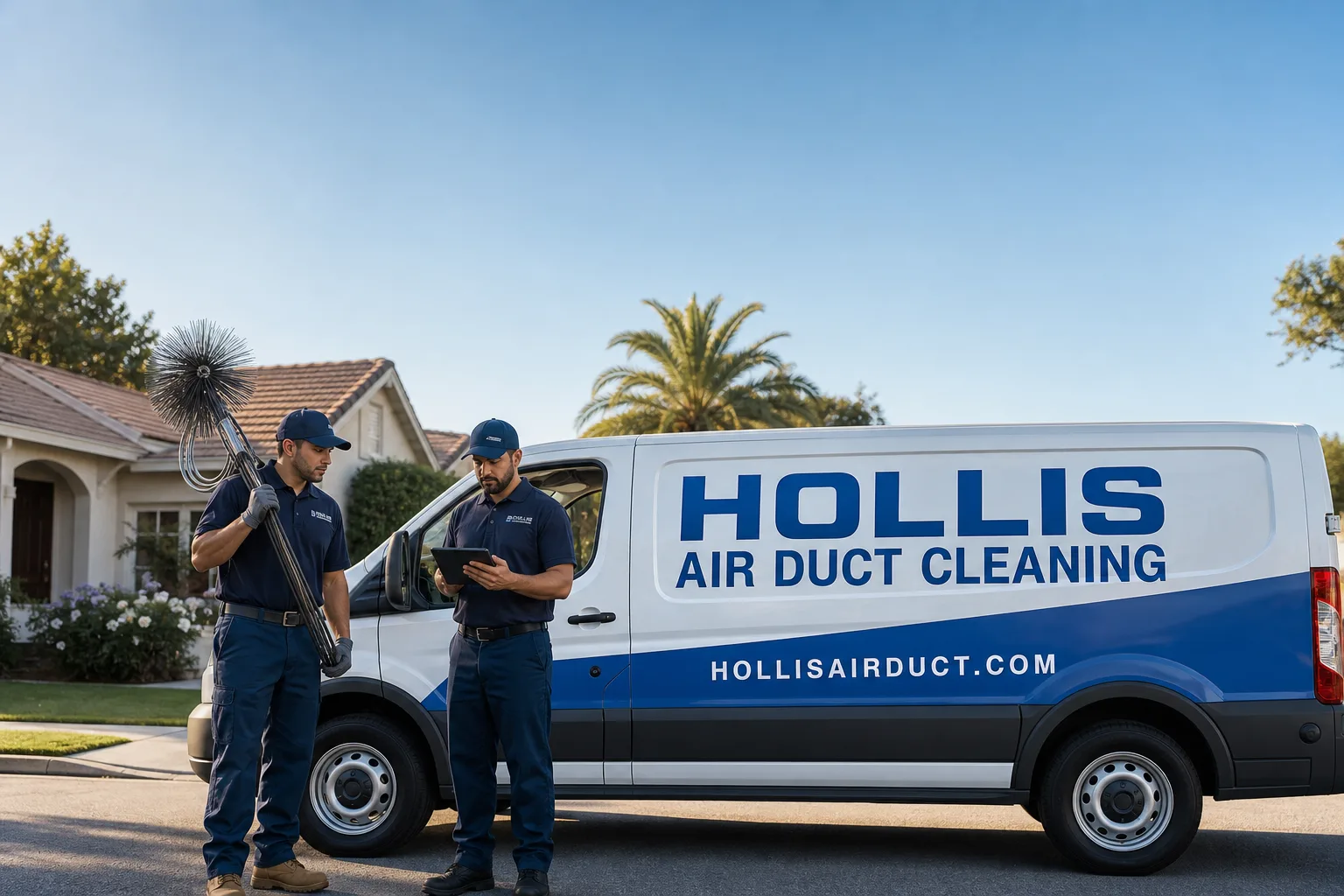
Whole-system duct and dryer vent check with before-and-after photos - you see exactly what came out of your vents
That "$99 whole-house special" is a bait ad - the real number appears once they are in your hallway, or the "clean" is a shop-vac at the register. We photograph the inside of your ducts before and after instead.
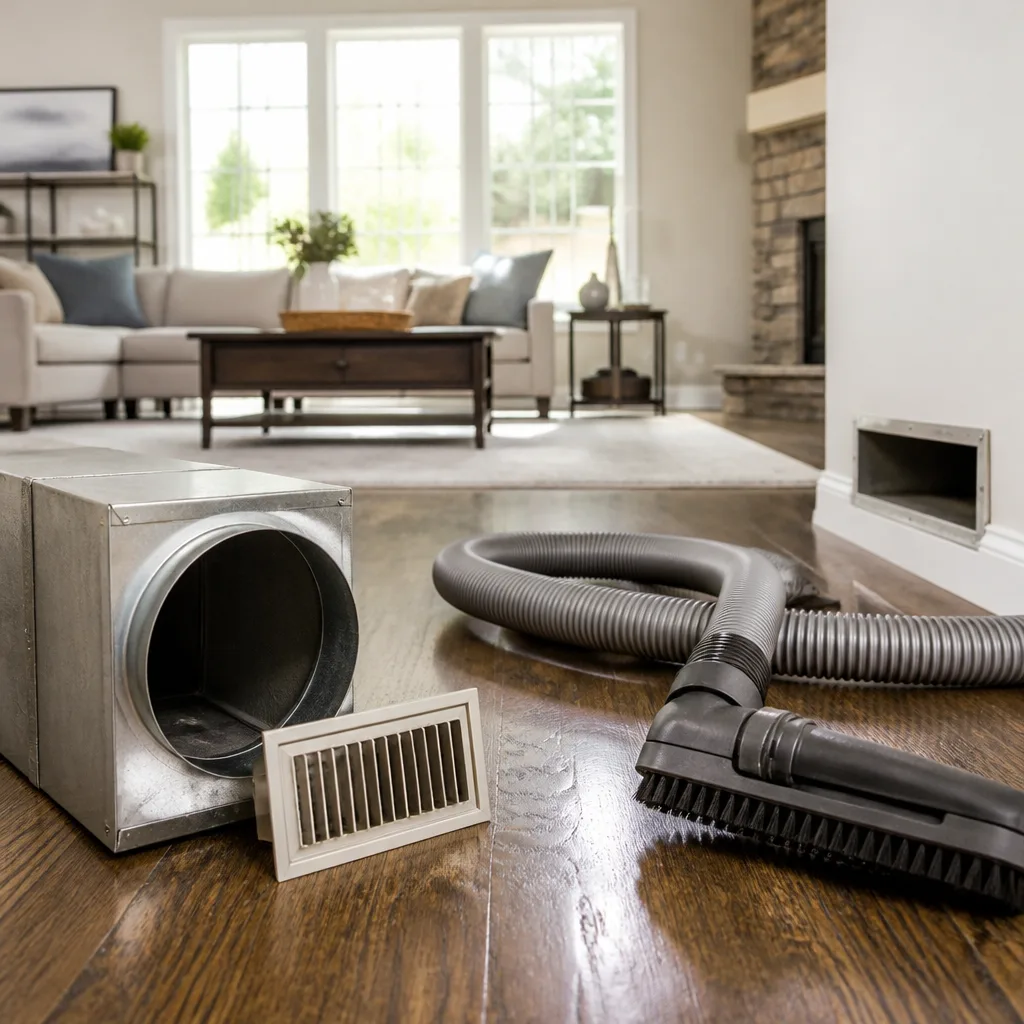
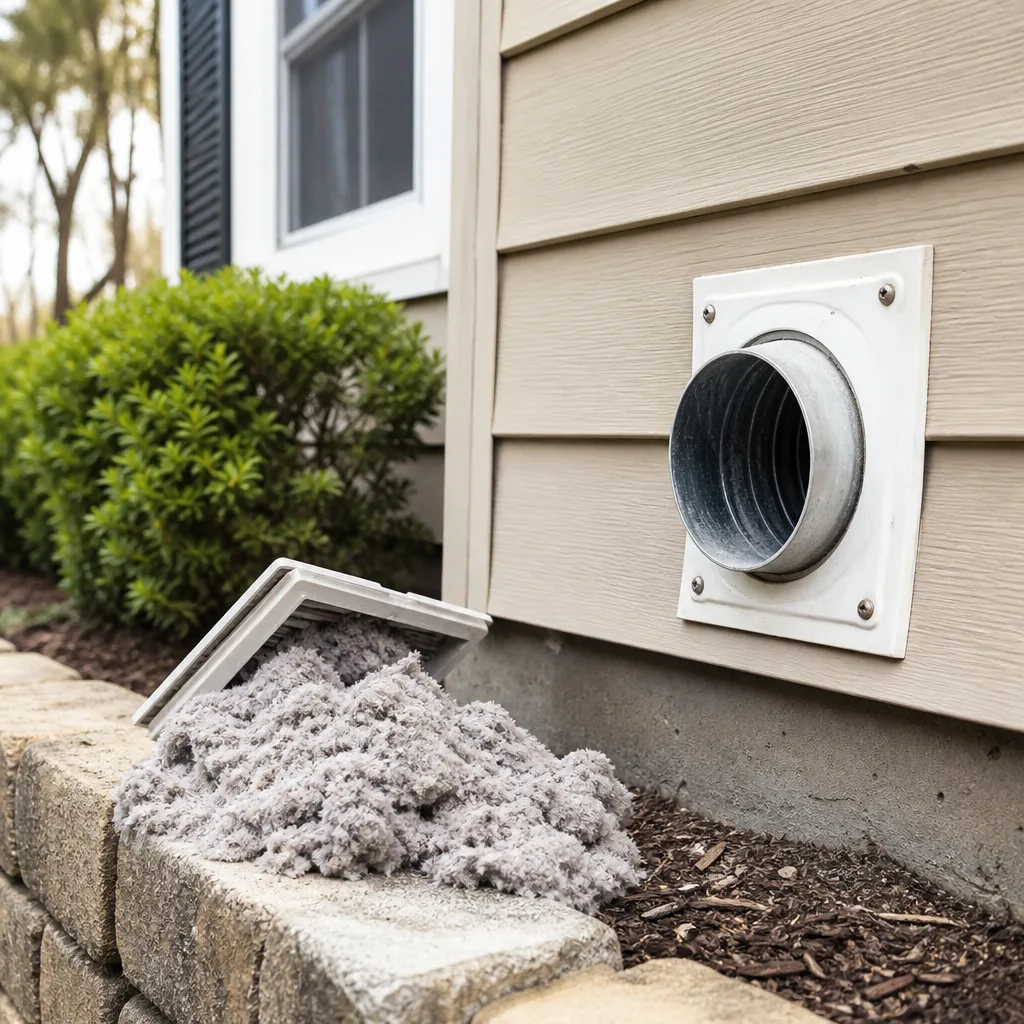
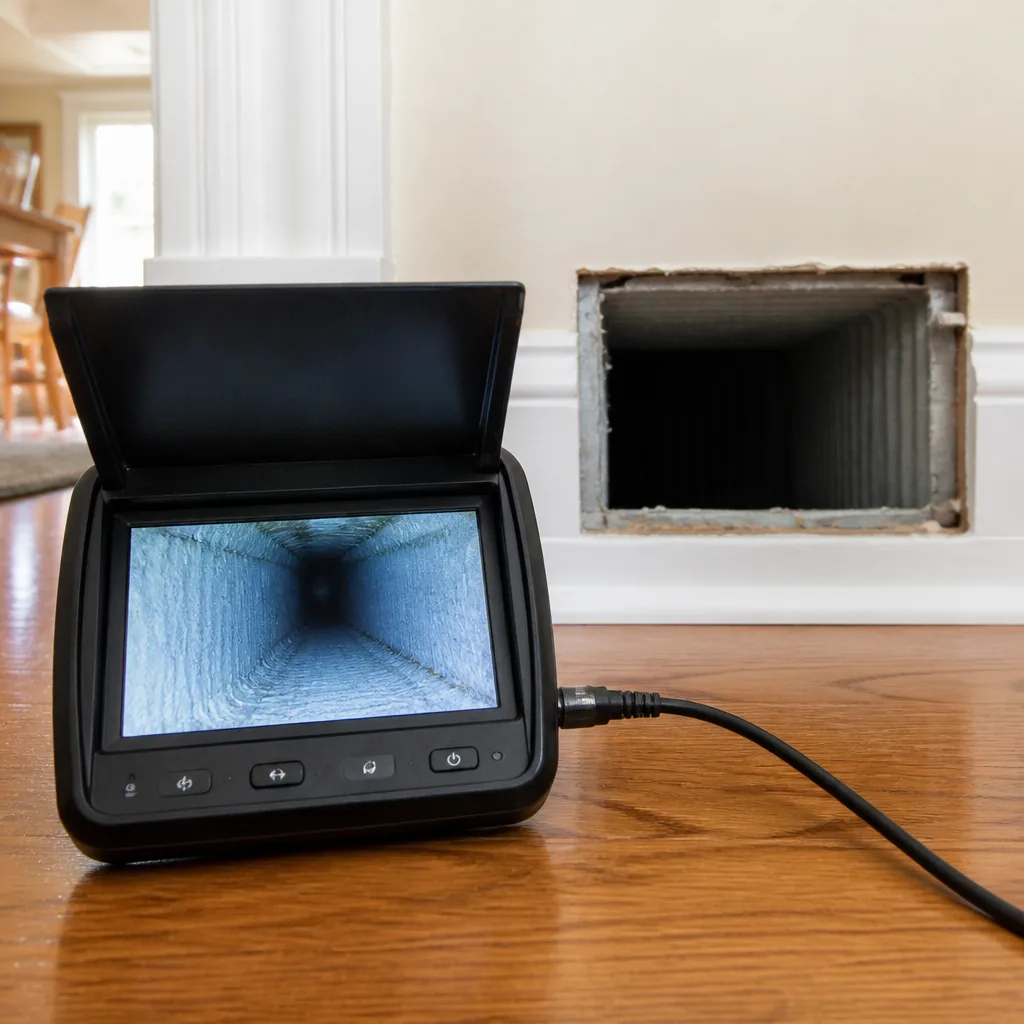

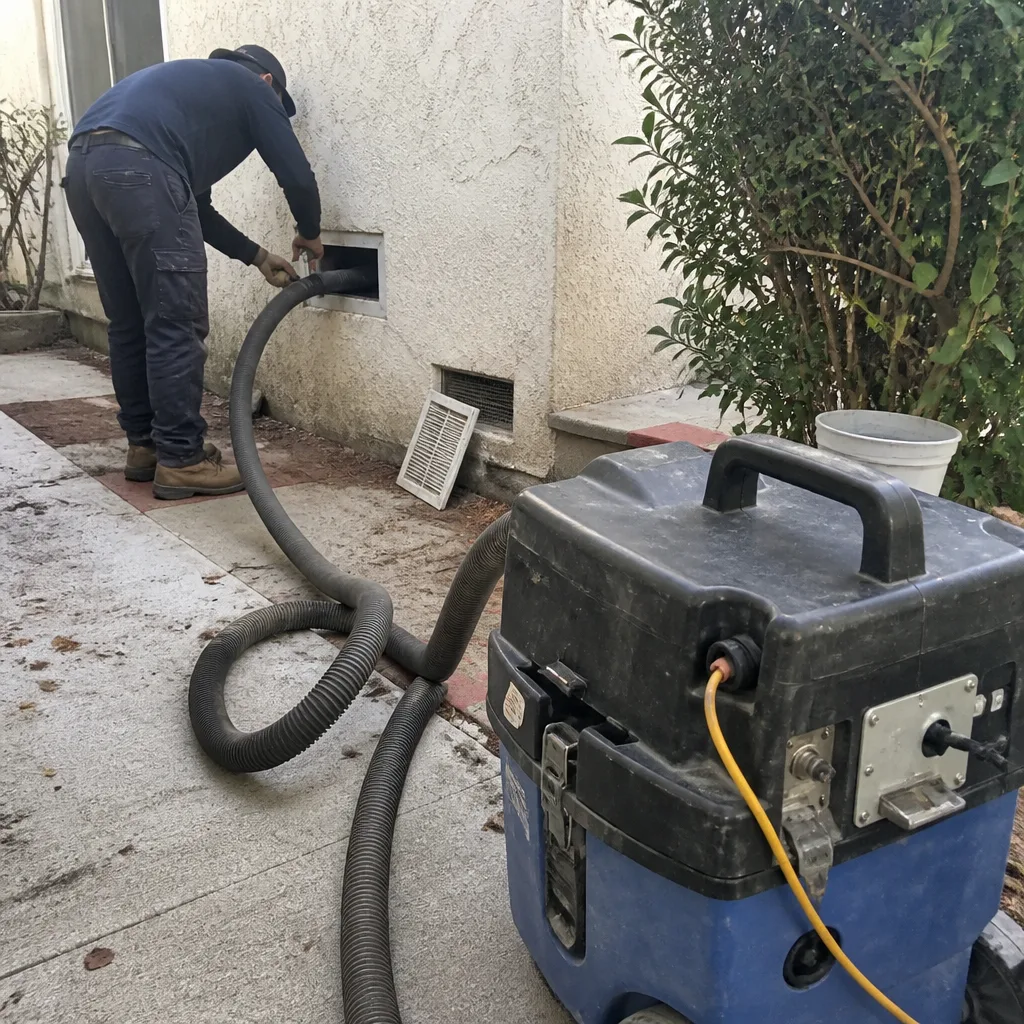 Before
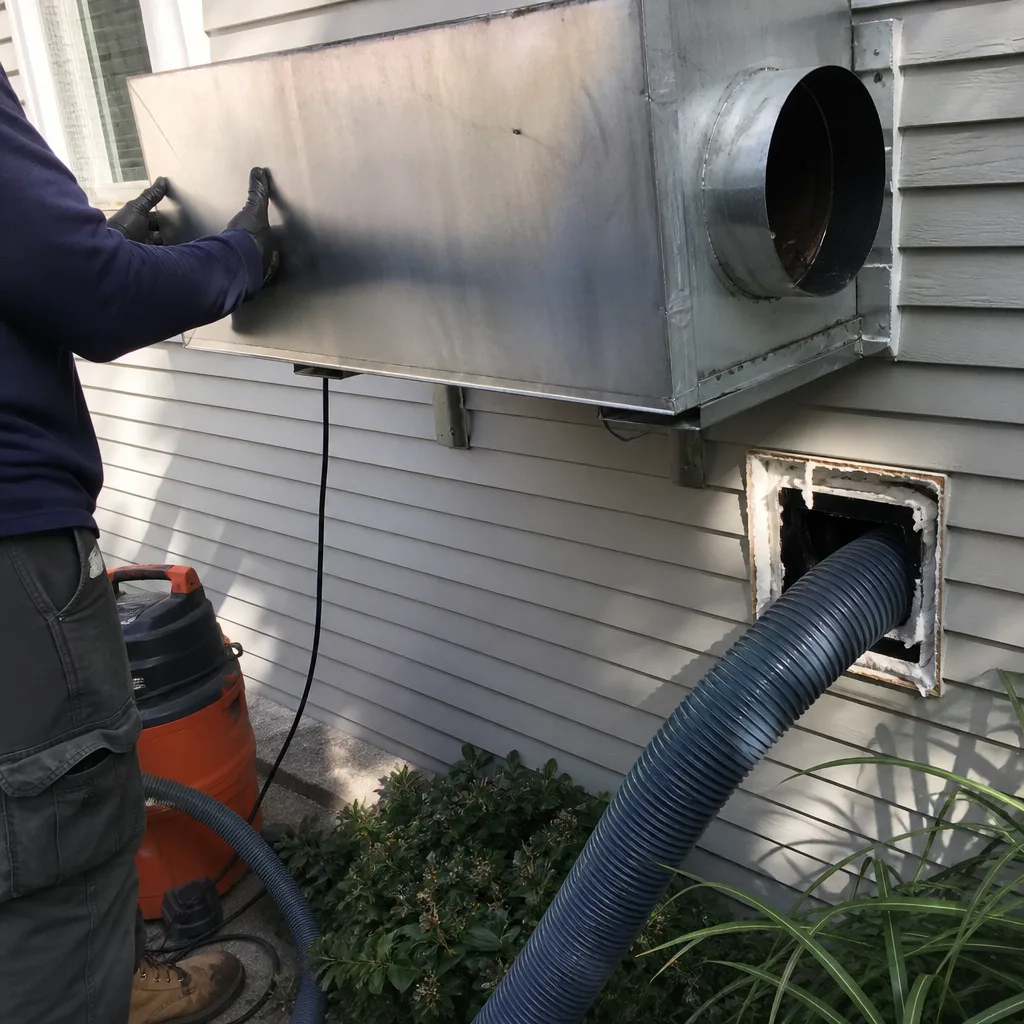 After
After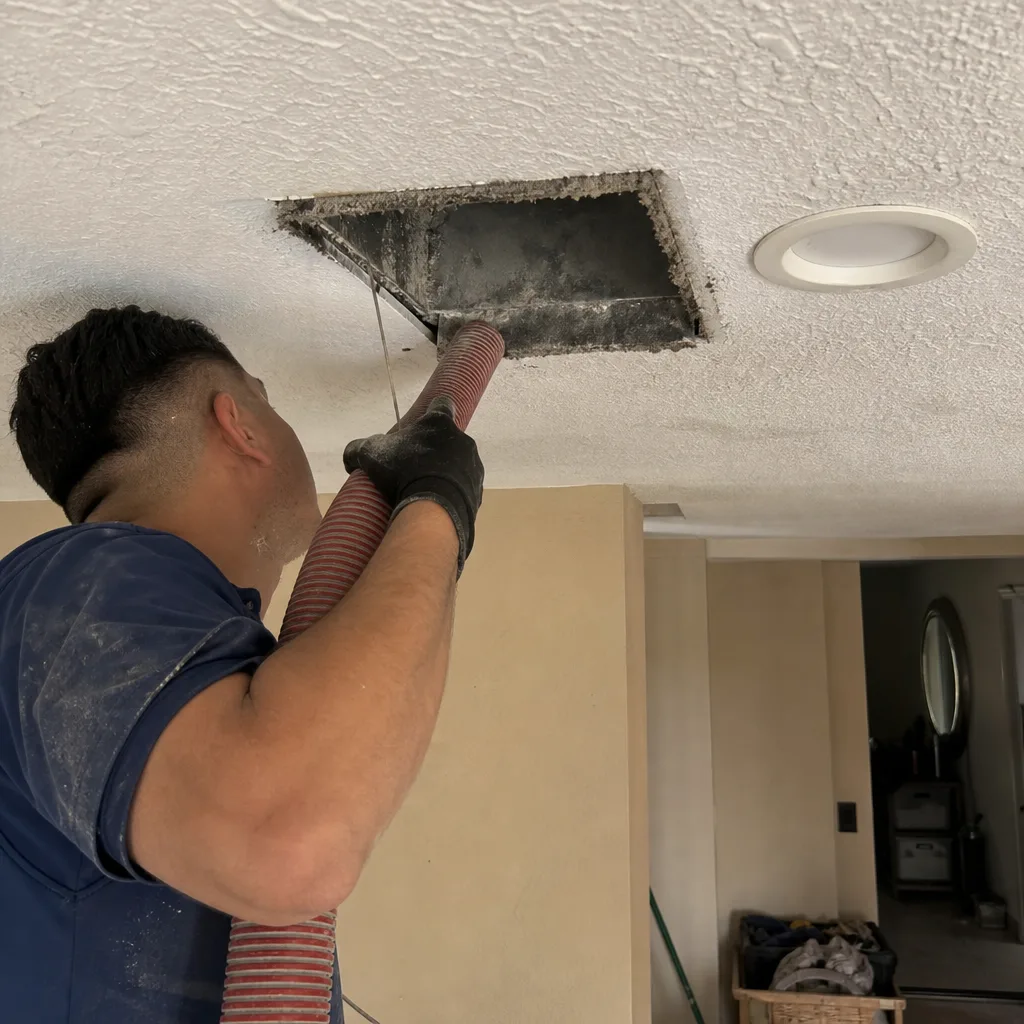 Before
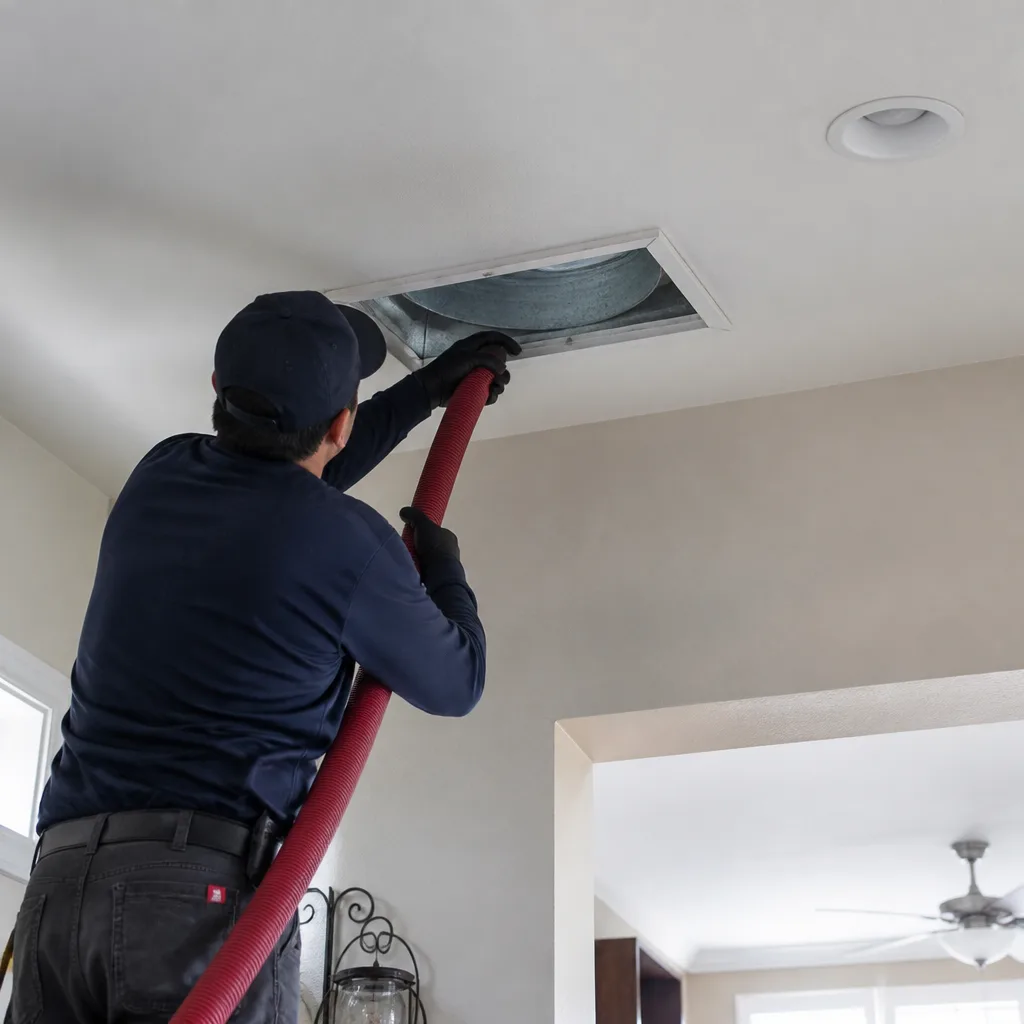 After
After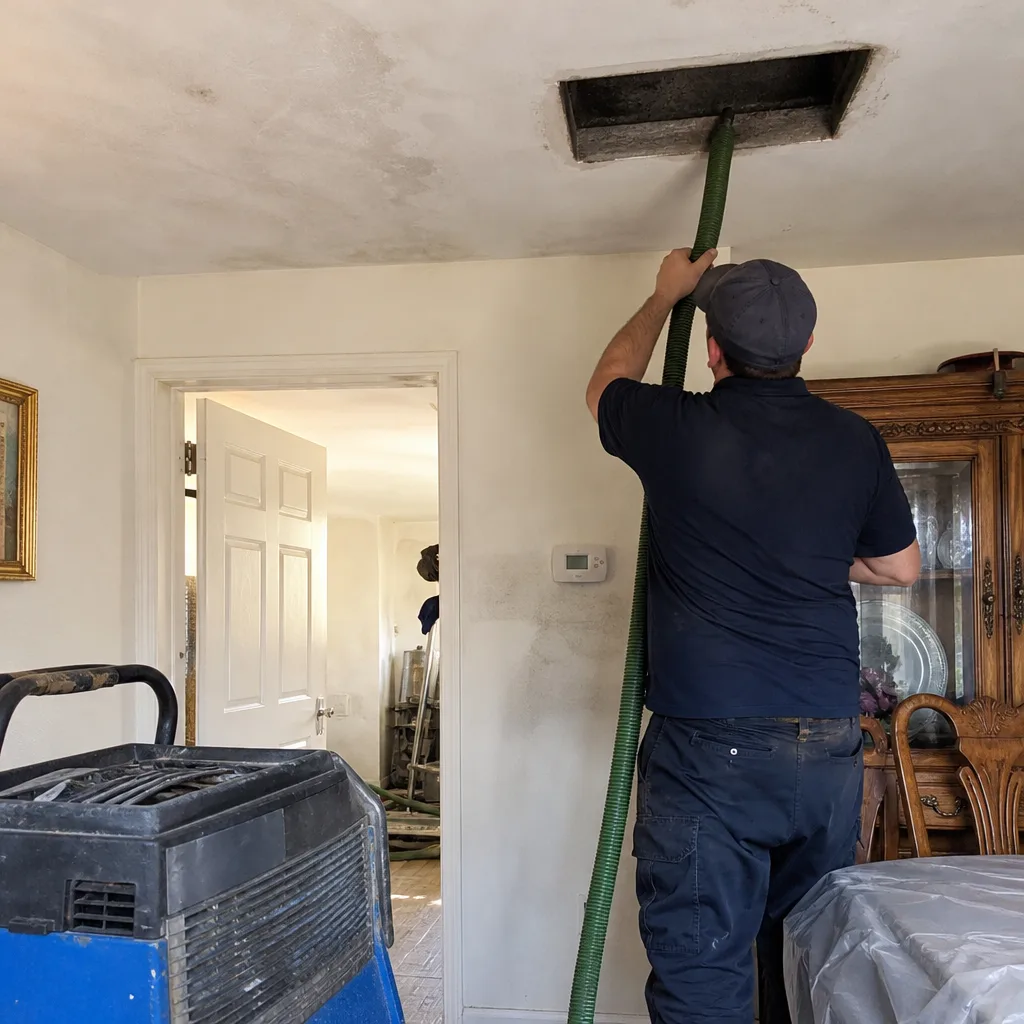 Before
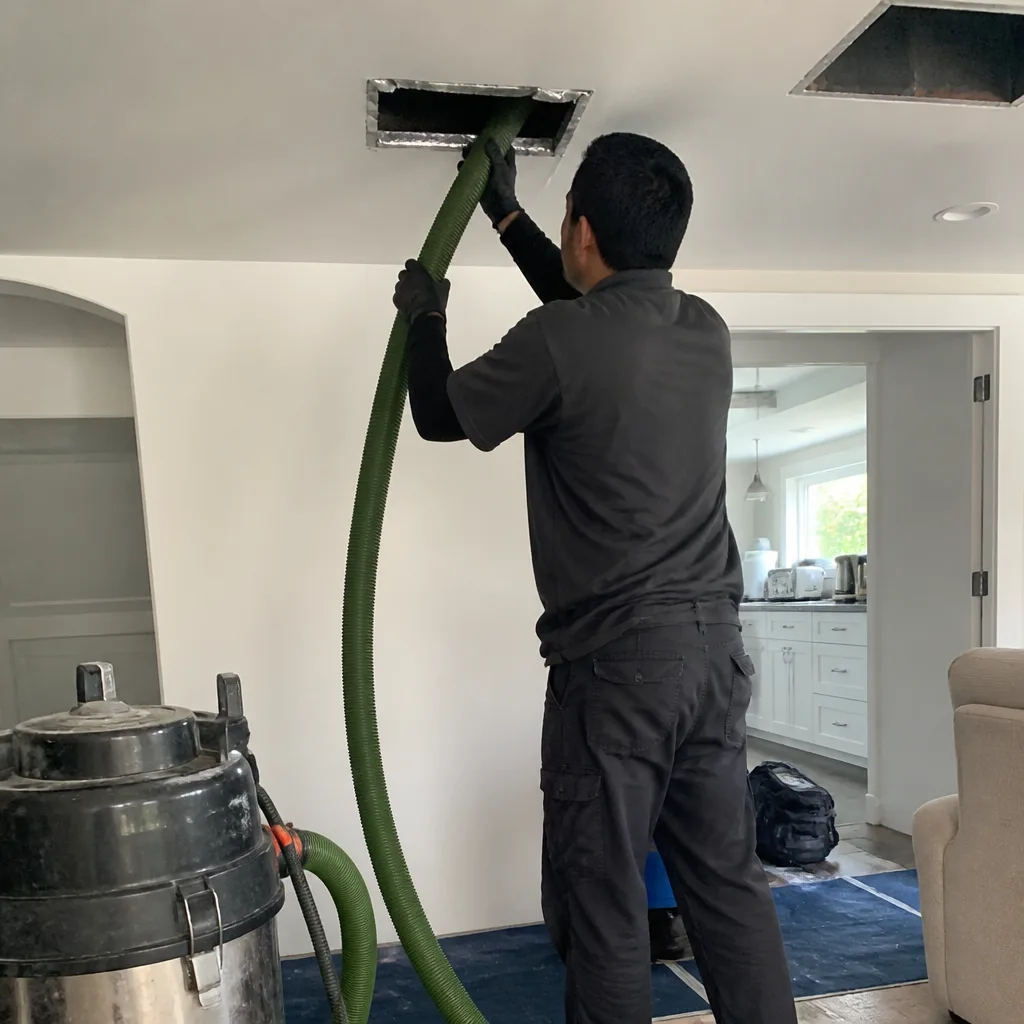 After
AfterMusty Smell from the Vents
What’s Happening
A musty smell coming from your vents almost always means mold, mildew, or stagnant moisture has found its way into your duct system. The air handler pulls in warm, humid air, and when that air meets a cold duct surface or a clogged drain pan, condensation builds up – and biology takes over fast.
That smell is not just unpleasant. It is the odor of airborne particles – mold spores, bacteria, and decomposing organic debris – being pushed through every room in the house every time your system runs. The longer the system keeps cycling, the wider the problem spreads. Most homeowners describe it as damp towel, old basement, or wet dog. If any of those ring a bell, you’re in the right place.
Why It Happens
Mold or Mildew Inside the Duct Lining
Flexible duct sections and older sheet-metal runs often trap dust along the inner wall. When humidity is high enough, that dust layer becomes a growing medium. You’ll usually notice the smell is strongest when the system first kicks on – that’s the first rush of air blowing through the contaminated section. If the odor fades after five or ten minutes, it’s a strong indicator the source is near the air handler or in the supply ducts closest to it.
A Dirty or Overflowing Condensate Drain Pan
Your air conditioner’s evaporator coil produces condensation as it cools the air. That water drips into a drain pan and exits through a condensate line. When the line clogs with algae or debris, the pan overflows – or just sits with standing water long enough to grow mold. You can often see this yourself by opening the access panel near the indoor unit. A dark ring in the pan, or visible water that shouldn’t be there, points directly to this cause.
A Dirty Evaporator Coil
The evaporator coil sits in a cold, dark, damp environment – which is exactly where mold likes to grow if the coil surface gets coated in dust. A clogged air filter is usually the reason the coil gets dirty in the first place; once the filter fails, everything downstream collects what the filter should have caught. If you check your filter and it’s visibly dark and packed, the coil behind it may be in similar shape.
Moisture Getting Into the Return Ducts
Return ducts pull air back to the system from living spaces. If a return is located near a bathroom exhaust, a crawlspace, or an exterior wall that leaks air, it can draw in humid outside air or moisture from unconditioned spaces. Over time, that moisture saturates the duct lining. You’ll notice this most in humid seasons, and the smell tends to be more pronounced in rooms near the affected return register.
What to Do Right Now
- Check and replace your air filter. Pull the filter out and look at it. If it’s dark, matted, or has visible mold on the surface, replace it before running the system again. A restricted filter drives moisture problems deeper into the system.
- Turn the fan setting from “ON” to “AUTO”. Running the fan continuously without cooling cycles means warm, humid air moves through the ducts even when no dehumidification is happening – which accelerates moisture buildup. Switch to AUTO on your thermostat so the fan only runs during a cooling or heating cycle.
- Photograph the registers and any visible duct sections. Take photos now – before anything is cleaned or moved. Dark streaks around the register face, visible discoloration on the duct lining, or standing water in the drain pan are all useful diagnostics your technician will want to see.
- Look at the drain pan through the access panel, but do not attempt to service the evaporator coil yourself. The coil carries refrigerant under pressure and sits in an electrical system. If you see standing water or obvious mold inside the air handler cabinet, note it and stop. That is work for a trained technician – not a cleaning job for a homeowner with a spray bottle.
- Stop running the system if the smell is sharp or chemical, not just musty. A musty odor points to biological growth. A sharp or acrid smell could indicate something else entirely – burning dust, an electrical issue, or a refrigerant leak. If the smell is anything other than damp or earthy, shut the system off and call (361) 326-5060 before running it again.
How We Fix It
When your local Hollis Air Duct Cleaning team arrives, the first thing they do is a walkthrough: registers, visible duct sections, the filter slot, and – if accessible – the air handler cabinet. That inspection tells the technician where the contamination is concentrated and what the source most likely is.
For most musty-smell jobs, the core service is air duct cleaning using Rotobrush rotary brush equipment and Nikro negative-air machines. The Rotobrush system dislodges debris from the duct wall while the Nikro machine keeps the system under negative pressure, pulling everything into a contained collection unit rather than back into the living space. If the inspection turns up leaking duct joints that have been pulling in humid air, duct sealing addresses that at the same time.
A standard residential job runs a few hours. Before any of that starts, you’ll have a written price in hand – one number, no variables added at the door. The finished job is covered by the 365-Day Done Right Promise: if the problem comes back within a year because of how the work was done, we come back and make it right at no charge.
Frequently Asked Questions
Mold spores circulating through a forced-air system are a genuine air quality concern, particularly for anyone in the home with asthma, allergies, or a compromised immune system. It is not a crisis that requires evacuating the house, but it is not something to run the system through for another few months either. The longer active mold sits in a duct system, the more surface area it colonizes. Call (361) 326-5060 and get it looked at – waiting makes the cleaning more involved, not less.
Air duct cleaning is a scheduled appointment, not an emergency call. Contact your local Hollis Air Duct Cleaning team at (361) 326-5060 and they’ll tell you what the current schedule looks like and get you on the calendar. In the meantime, switching the thermostat fan to AUTO and replacing a clogged filter will slow the spread while you wait.
Per-vent pricing and low coupon offers are common in this industry, and they almost never reflect the final invoice. A quote that starts at a low flat rate and then adds charges per vent, per square foot, or for “additional contamination found on arrival” is a bait-and-switch – the van on your driveway is the leverage. At Hollis, the price is written down before any work starts and it does not move once the technician is inside. One price, for the whole job, agreed in advance.
Your technician can show you before-and-after photos of the duct sections that were cleaned – you can see what came out and what the interior looks like afterward. Beyond that, the 365-Day Done Right Promise is in writing: if the musty smell returns because the cleaning was incomplete or done incorrectly, Hollis comes back at no charge. That guarantee is printed on your job paperwork, not just mentioned verbally.
Get It Fixed
If you’re smelling mold or mildew every time your system runs, the fix starts with a call. Your local Hollis Air Duct Cleaning team will give you a written price before anything starts and backs the work for a full year. Call (361) 326-5060 or book online – and get back to breathing air that actually smells clean.
Written by Roy Castellanos, Owner at Hollis Air Duct Cleaning, part of the Garrison Partners family since 2004.
What Our Customers Say
"Duct sealing along with the cleaning cut our summer bill. Straight talk and fair price."
- Gwen O."Sealed some leaking duct joints in the crawl space with mastic. Rooms that were always cold now get air."
- Ronald W."Dryer vent was packed with lint and took two hours to dry a load. Cleaned it out from the roof cap down. One cycle again."
- Paula Q.