

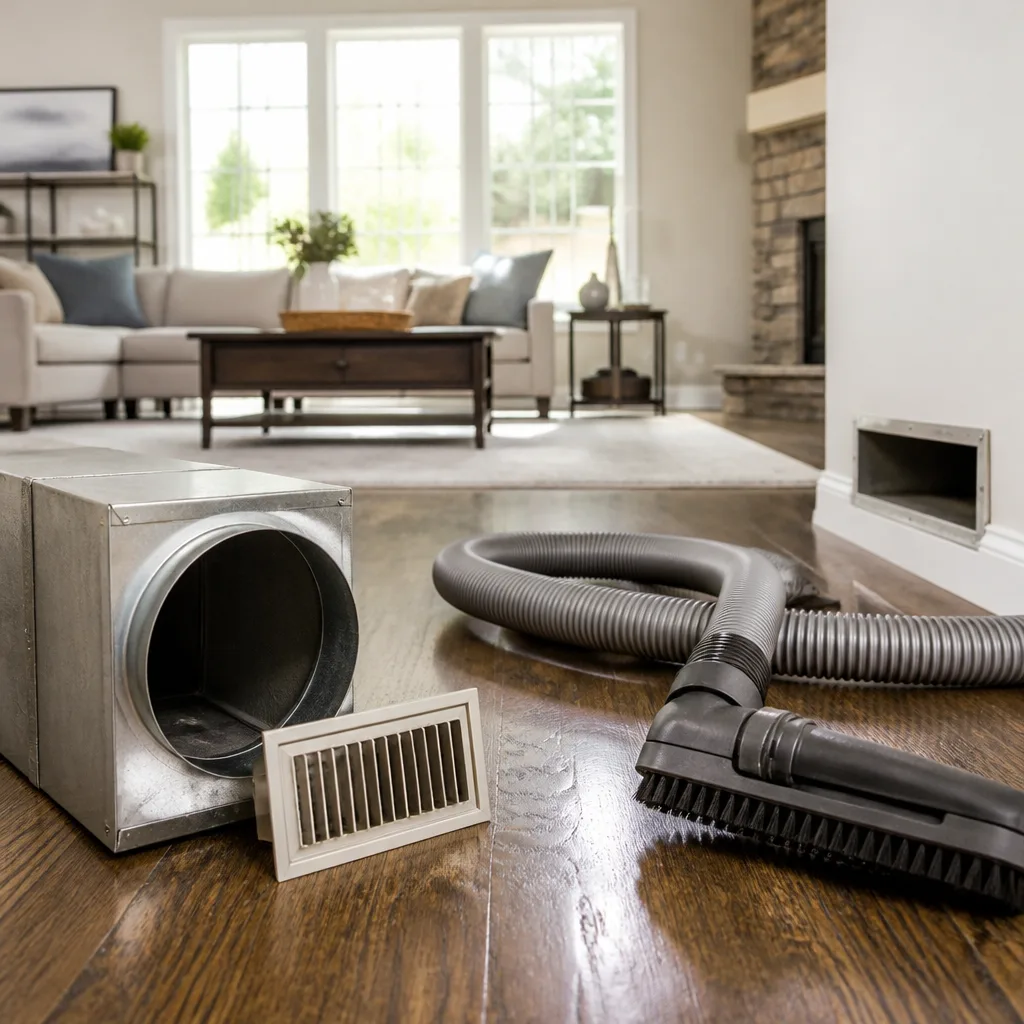
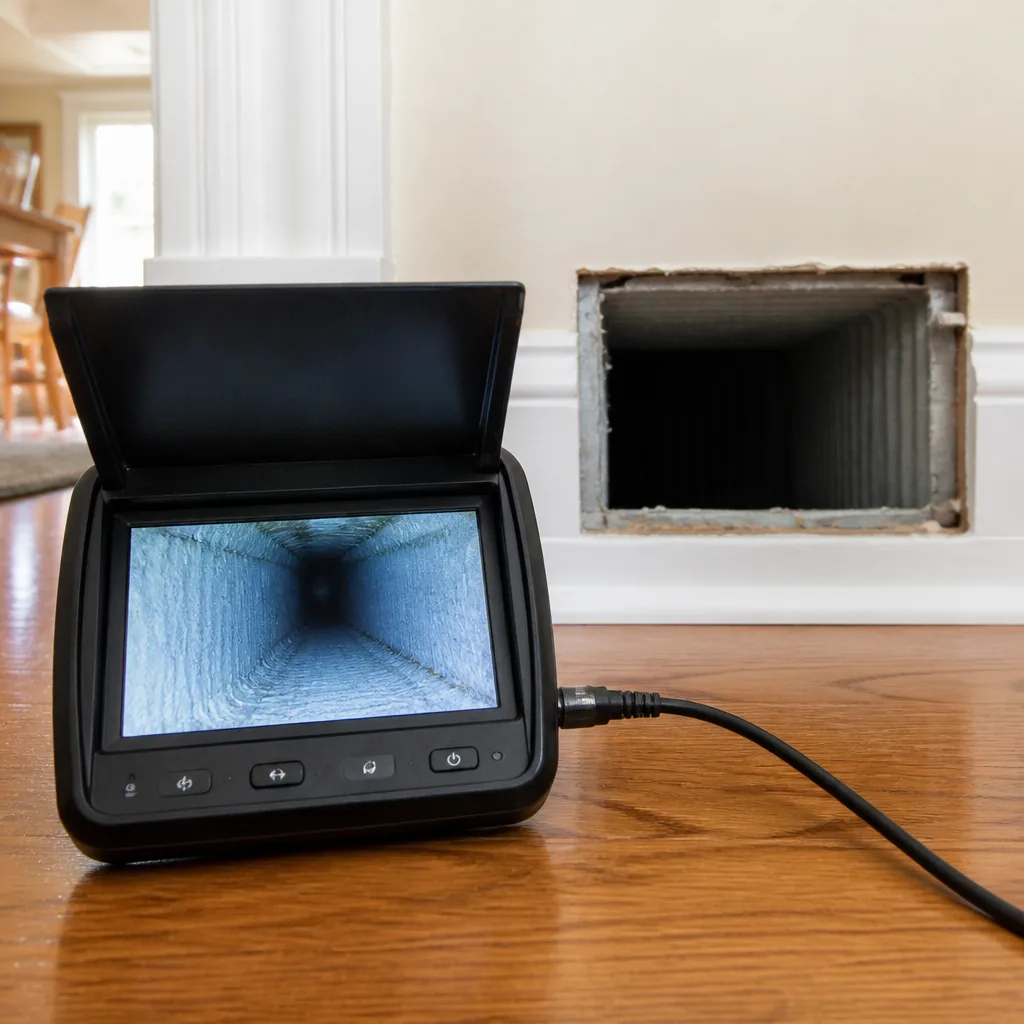
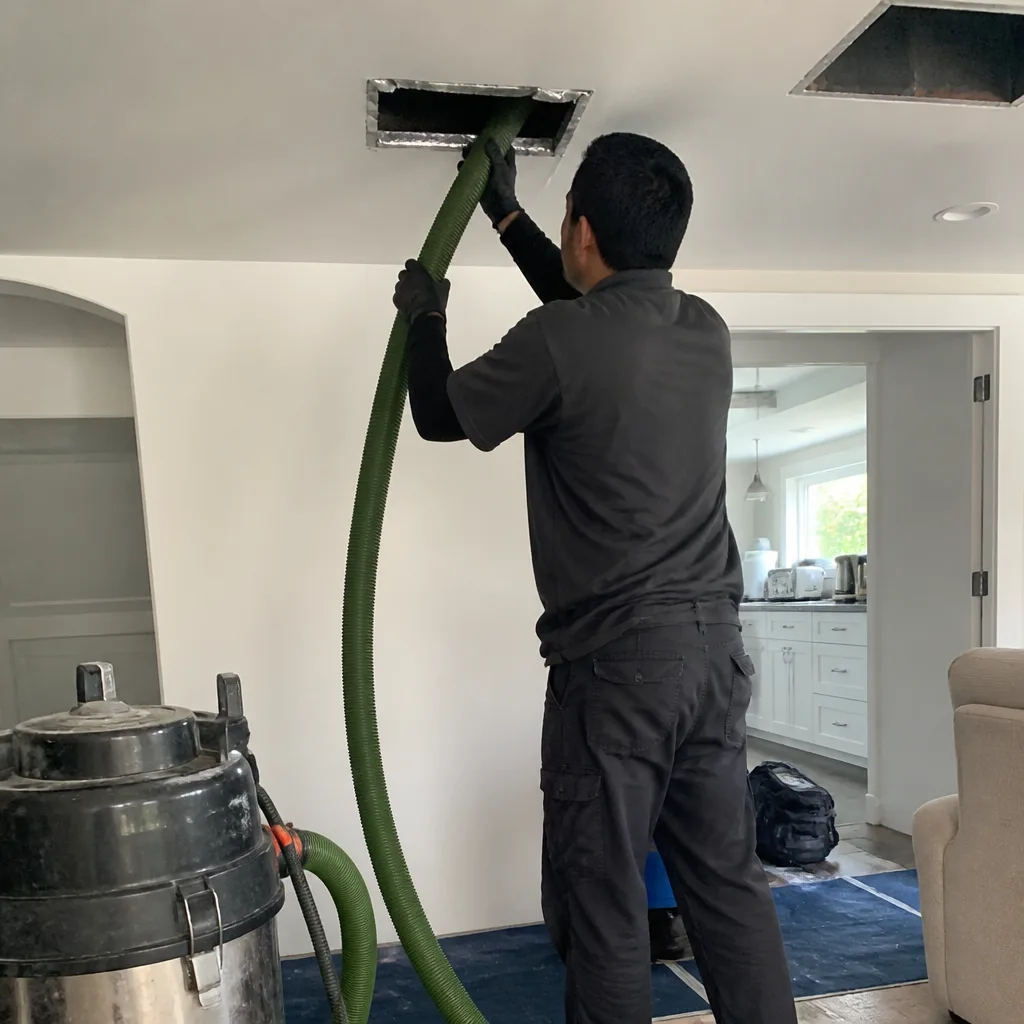
Whole-system duct and dryer vent check with before-and-after photos - you see exactly what came out of your vents
That "$99 whole-house special" is a bait ad - the real number appears once they are in your hallway, or the "clean" is a shop-vac at the register. We photograph the inside of your ducts before and after instead.

 Before
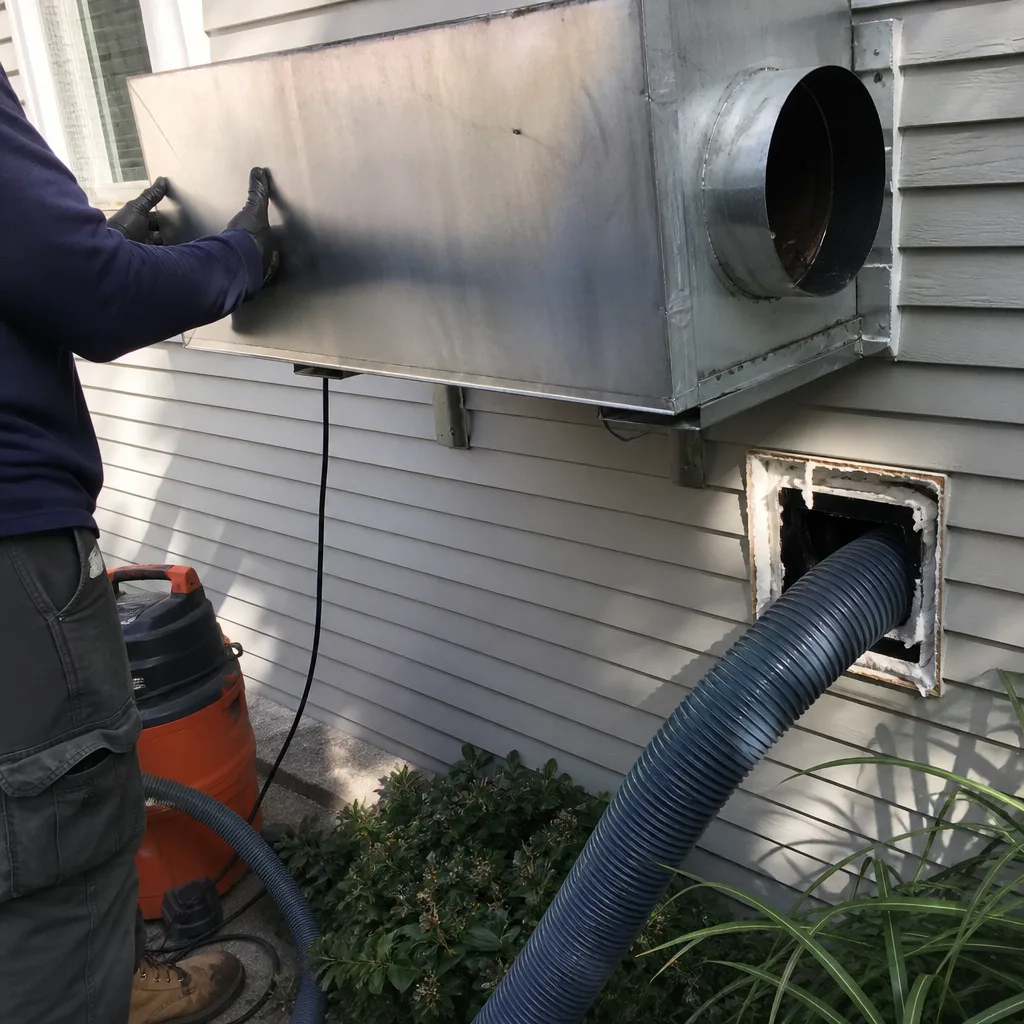 After
After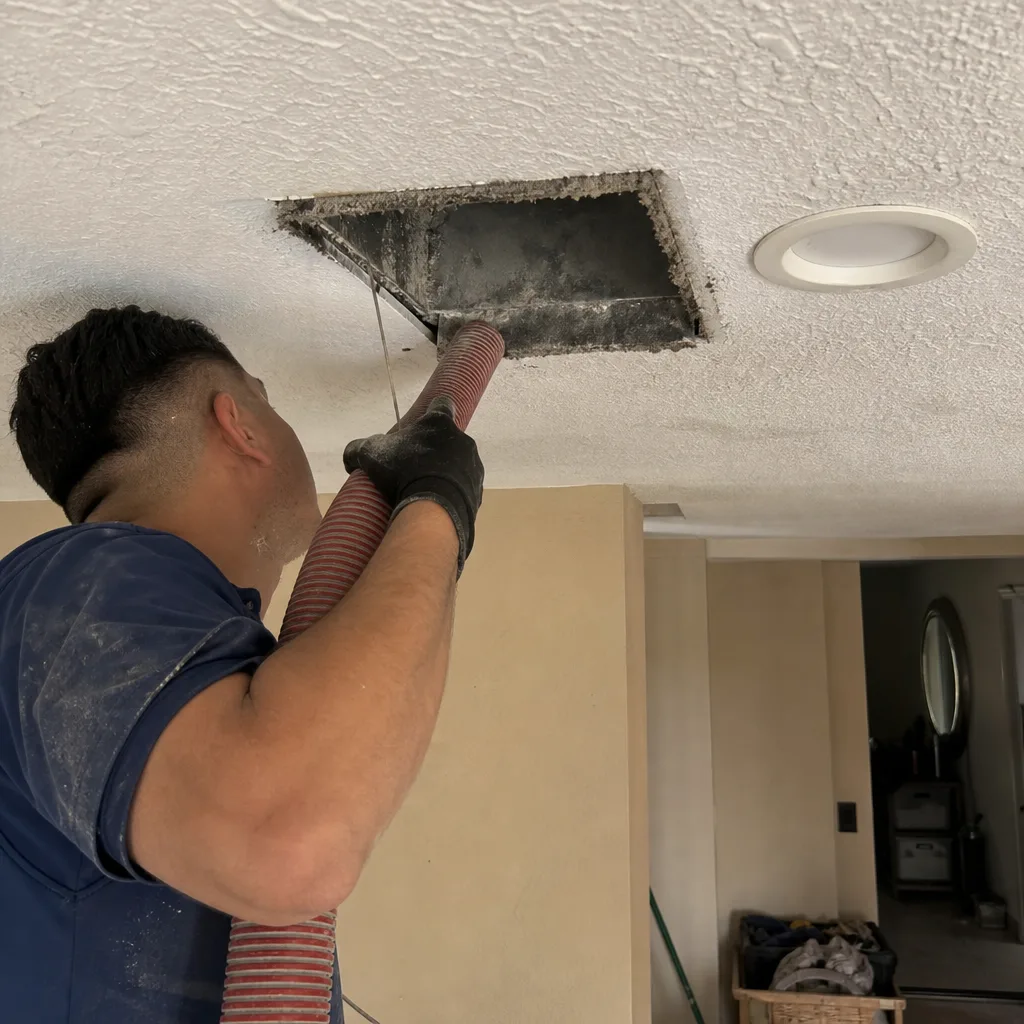 Before
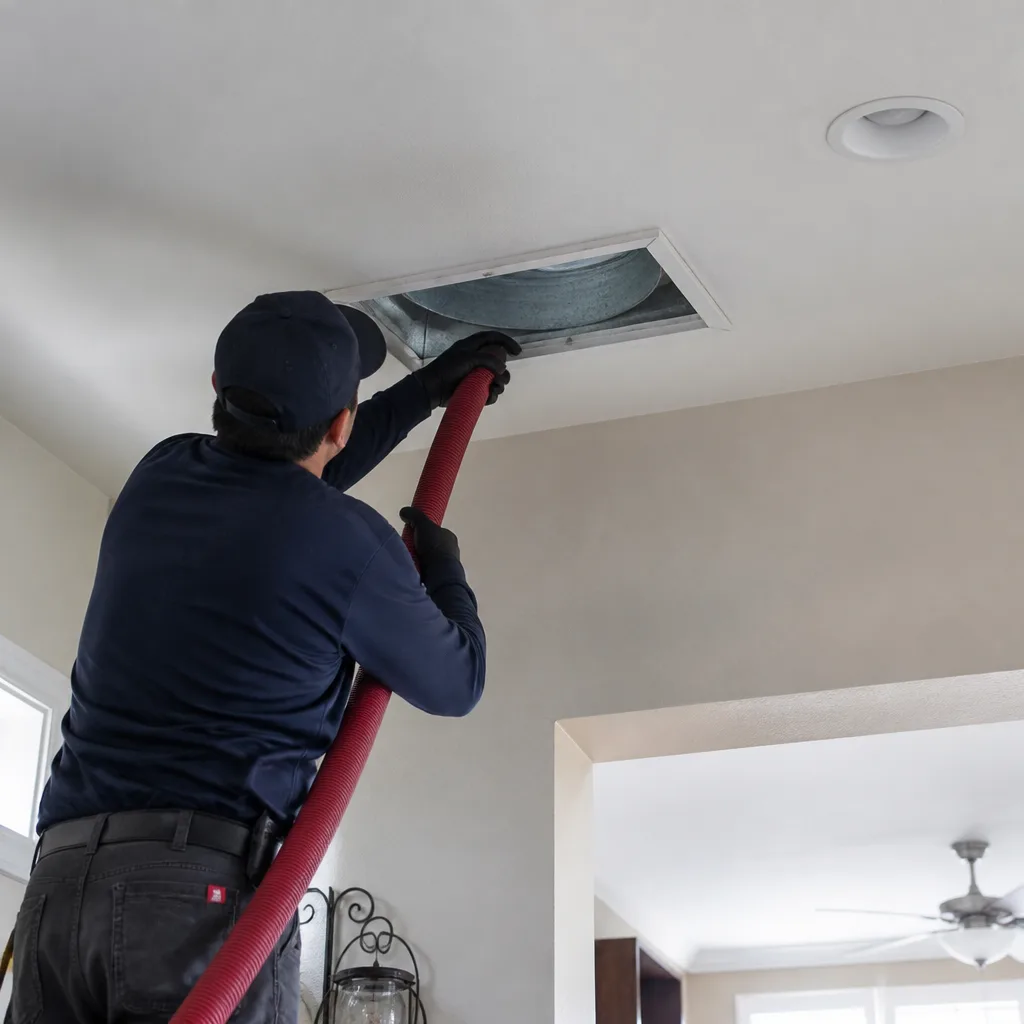 After
After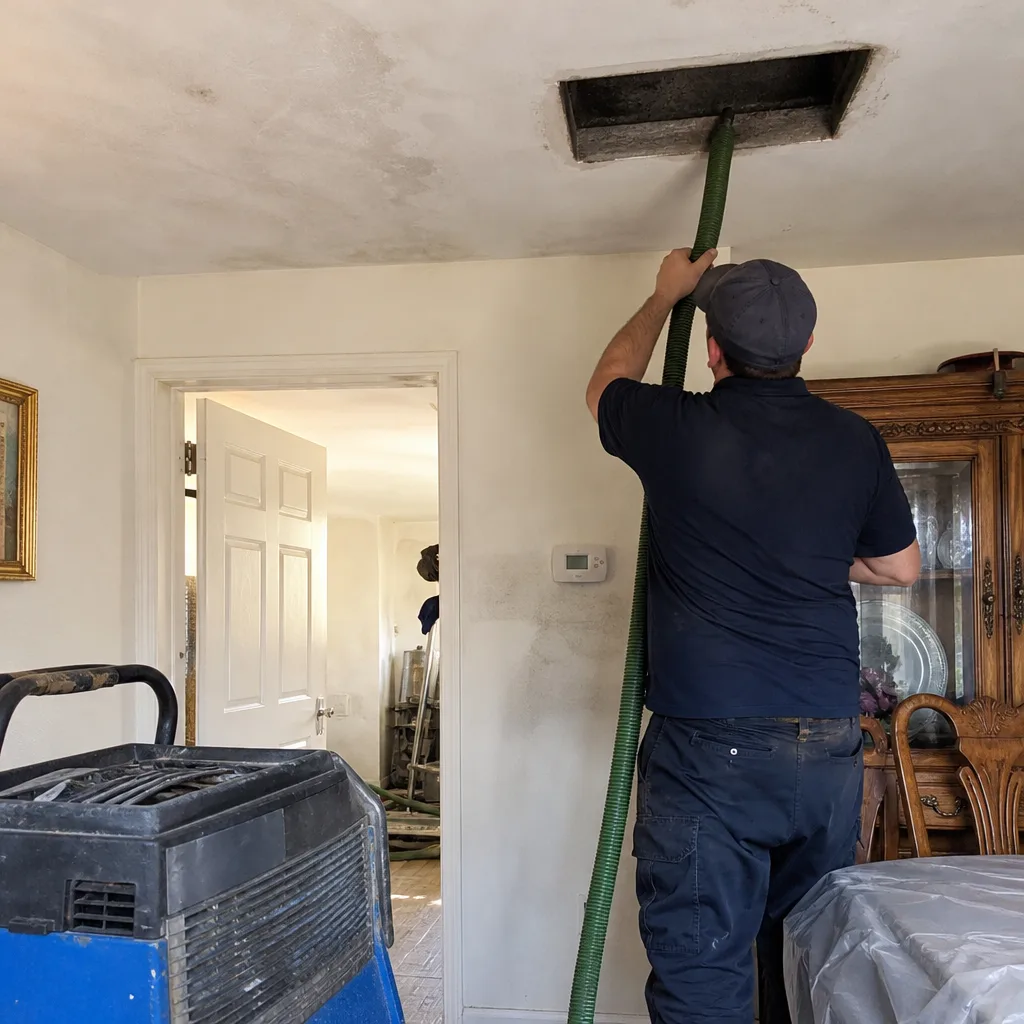 Before
 After
AfterBurning smell when the dryer runs
What’s Happening
A burning smell from a running dryer is almost always a clogged or restricted dryer vent. Lint that can’t escape builds up inside the duct, gets hot, and produces a sharp, scorched odor – sometimes described as a hot, dusty smell, sometimes closer to burning plastic or singed fabric. This is not a “run it a few more cycles and see” situation. Stop the dryer, move the load somewhere safe, and get the vent inspected before you use the machine again.
The dryer exhaust duct carries hot, moist air from the drum to the outside of your home. When lint accumulates along that path – especially at bends, kinks, or the exterior cap – airflow drops. The dryer runs hotter trying to compensate, the lint itself gets hot enough to smell, and you’re one bad cycle away from an actual fire. Dryer fires are not rare. A restricted vent is the leading reason they happen.
Why It Happens
1. Lint blockage in the vent duct
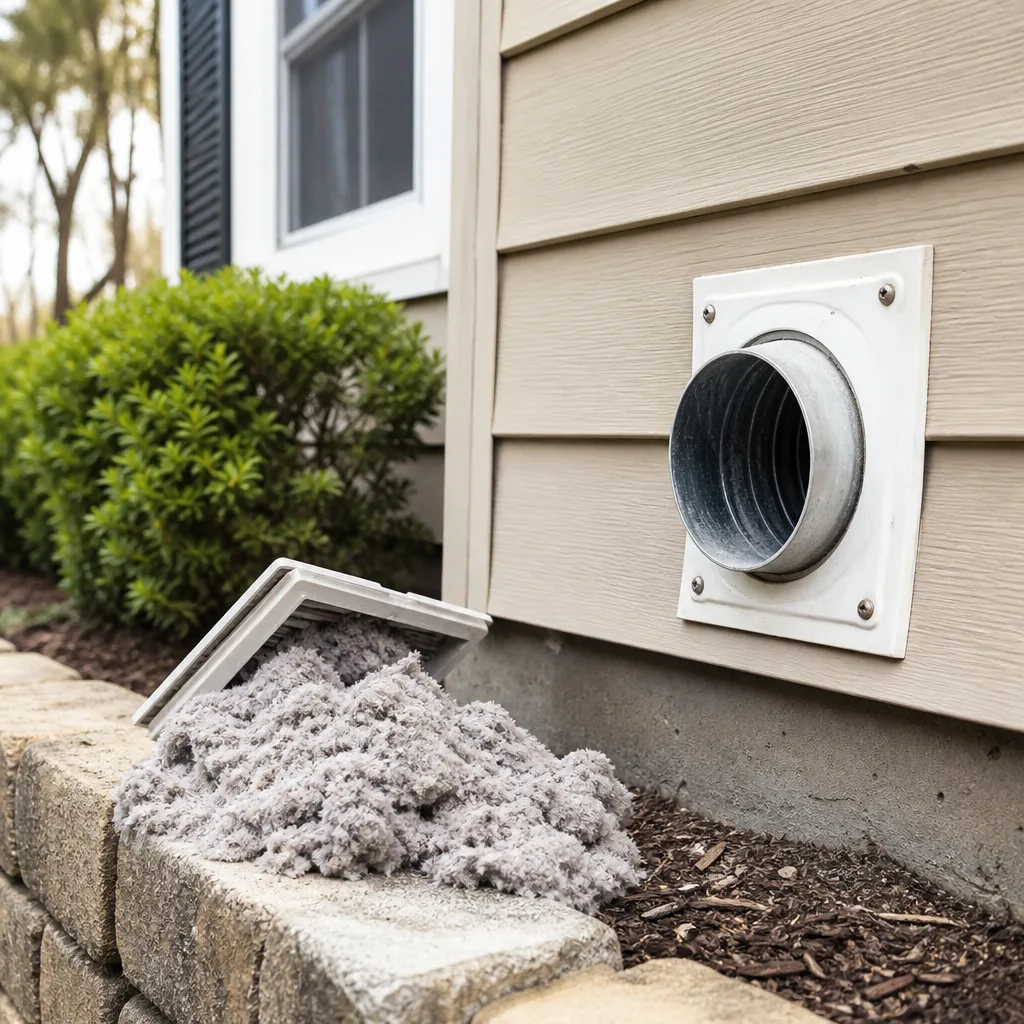
This is the most common cause by a significant margin. Every load of laundry sends fine fibers through the exhaust duct, and the lint trap only catches part of them. Over time, the rest coat the inside of the duct walls, narrowing the passage. You can often confirm this before anyone arrives: check the exterior exhaust cap on the outside of your home while the dryer is running. The flap should open and you should feel a strong, steady rush of warm air. Weak airflow or a flap that barely moves points directly to a blockage.
2. A kinked, crushed, or too-long flexible duct
Many dryers are connected to the wall duct with a flexible foil or plastic accordion hose. These kink easily when the dryer gets pushed back against the wall, and each kink traps lint and restricts airflow almost as badly as a full blockage. Pull the dryer a few inches away from the wall and look at the hose behind it. If it’s collapsed, kinked at a sharp angle, or made from the white plastic ribbed type, that’s a contributing factor your technician will address.
3. A faulty or worn heating element or thermostat
If the vent duct is clear and the exterior cap is blowing strong, the smell may be coming from inside the machine itself. A heating element that’s failing can arc or overheat, producing a metallic or burning-rubber odor rather than the dusty scorched smell of lint. This is an appliance repair, not a duct cleaning – but it’s worth ruling out after the vent has been cleared and inspected, because restricted airflow can accelerate heating element wear in the first place.
4. A foreign object or accumulated debris at the exterior cap
Birds nest in dryer vent caps. Wasps build nests in them too. Small animals occasionally get into longer duct runs. Any of these block exhaust airflow just as effectively as lint, and they can produce their own burnt smell when the dryer runs. Look at the exterior cap from the outside of the home. If the flap looks sealed, if you can see nesting material, or if you hear an unusual sound from the duct while the dryer runs, that’s likely the problem.
What to Do Right Now
- Stop using the dryer immediately. Don’t run another cycle until the vent has been inspected. A hot, restricted duct is a fire hazard, not an inconvenience to push through.
- Check the exterior exhaust cap. Go outside while the dryer is off and look at the vent cap on the wall or roof. Note whether the flap is clear, whether there’s nesting material visible, and whether lint is packed around the opening. Take a photo – it helps the technician understand the situation before they start.
- Look at the flexible hose behind the dryer. Gently pull the machine forward a few inches and inspect the hose connecting the dryer to the wall duct. Look for kinks, tears, or compression. Do not attempt to disconnect or reattach the duct yourself if it vents through the roof or through a long run – that work requires the right tools and a clear view of the full duct path.
- Clean or replace the lint trap. Pull the screen, rinse it under water if fabric softener residue has coated it, and let it dry before replacing it. A coated lint trap reduces airflow even when the duct itself is clear.
- Do not try to clear the duct with a household vacuum or a rod kit purchased from a hardware store. These tools can dislodge a partial blockage further into the duct, compact lint around a bend, or puncture a flexible section. A professional dryer vent cleaning uses the right brushes, the right diameter heads, and negative-air equipment to extract the debris rather than redistribute it.
How We Fix It
When your local Hollis Air Duct Cleaning team arrives, the technician starts at the exterior cap and works backward through the entire duct run. The price for your specific job is written down and handed to you before any work starts – that number does not move once the technician is inside.
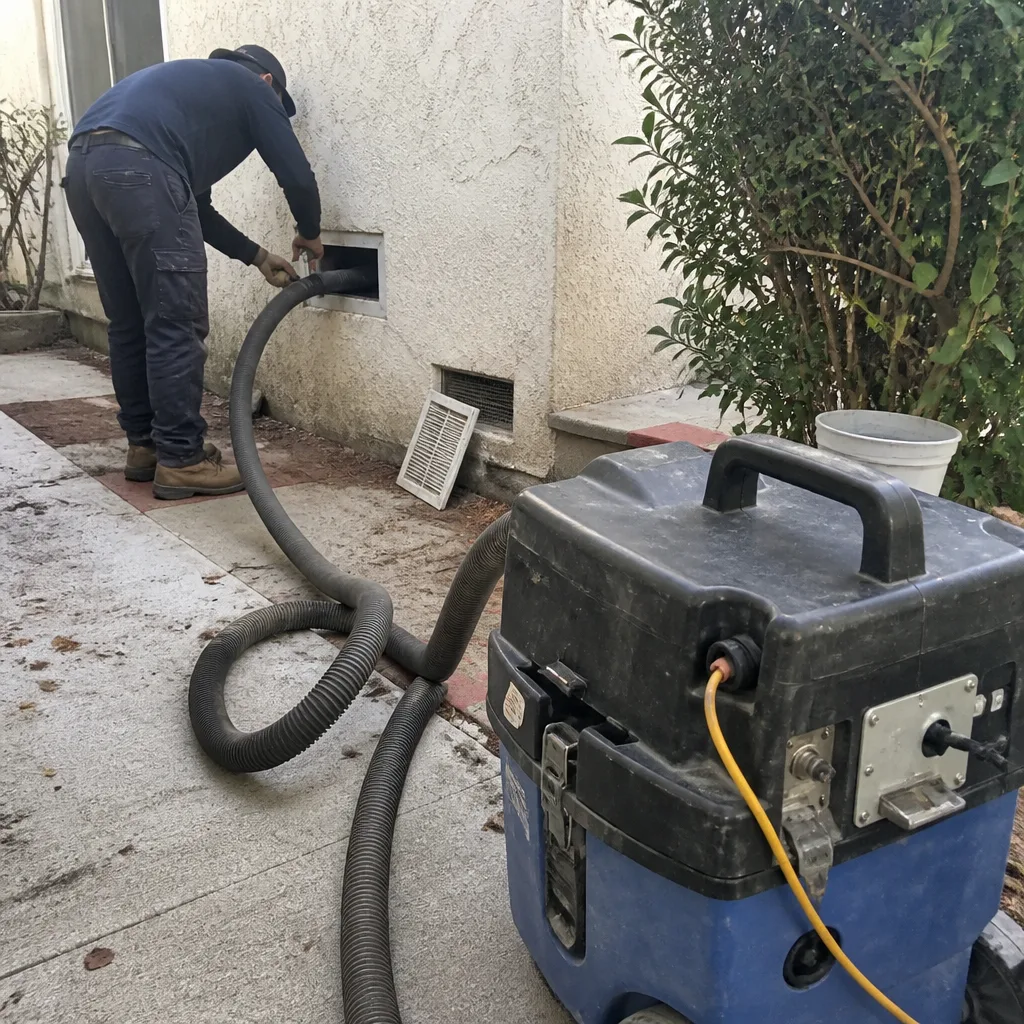
The cleaning itself uses professional rotary brush equipment from Rotobrush and Nikro negative-air machines. The brush agitates compacted lint from the duct walls; the negative-air machine draws it out in a controlled direction, toward the exterior, rather than back into the home. The technician clears the exterior cap, checks the flexible connector behind the dryer, and confirms the duct diameter and run length are within manufacturer spec for your machine.
From arrival to completion, most dryer vent cleanings take between 45 minutes and an hour and a half, depending on duct length and access. The work is covered by the 365-Day Done Right Promise: if the cleaning fails within a year, we come back and make it right at no charge. That’s in writing on every job, every time.
Frequently Asked Questions
It is dangerous, and it should not wait. A restricted dryer vent is the primary cause of dryer fires, and the burning smell you’re noticing is the system telling you it’s already overheating. Stop using the dryer now, and get the vent cleaned before you run another load. Call (361) 326-5060 and a live person will pick up – no voicemail, no callback queue.
Call (361) 326-5060 and tell us what you’re dealing with. Phones are answered by a live person 24 hours a day, 7 days a week, and your local Hollis team will find the earliest available time that works. We won’t promise a specific window we haven’t confirmed – but we will give you a real appointment time and show up inside it, because that’s part of The Garrison Standard on every job.
Your technician checks airflow at the exterior cap before and after the cleaning so you can see the difference yourself. Before-and-after photos are part of the job. The written price you receive upfront covers the complete cleaning of your duct run – not a partial pass. If there’s any question about whether the job was done fully, the 365-Day Done Right Promise means we come back and make it right at no charge.
Hollis doesn’t publish a flat national rate because the price depends on duct length, access, and what we find when we look at your specific setup. What we can tell you is that the written estimate is free, the price in that estimate is the price you pay, and it doesn’t change once the technician is inside your home. Call (361) 326-5060 and we’ll talk through your situation and get you a written number before any work starts.
Get It Fixed
A burning smell from the dryer is a fire hazard – not a “watch it for a week” situation. Call (361) 326-5060 now and a live person will answer. Your local Hollis Air Duct Cleaning team will give you a written price before any work starts and get your dryer vent cleaned right the first time, backed by the 365-Day Done Right Promise.
Written by Roy Castellanos, Owner at Hollis Air Duct Cleaning, part of the Garrison Partners family since 2004.
What Our Customers Say
"They checked each section with a camera and showed me the dust before and after. Thorough and honest."
- Nicole H."Duct sealing along with the cleaning cut our summer bill. Straight talk and fair price."
- Gwen O."Sealed some leaking duct joints in the crawl space with mastic. Rooms that were always cold now get air."
- Ronald W.