
Rotobrush Air Duct Cleaning in Los Angeles: A Homeowner’s Guide
Rotobrush is the brand name most Los Angeles homeowners recognize when they start researching duct cleaning, and for good reason. It’s been around for decades and shows up on trucks all over the San Fernando Valley, the Westside, and South Bay. But here’s what nobody tells you: the machine is only as good as the operator, and in LA’s mix of 1920s bungalows, 1980s flex-duct condos, and 2000s spec homes, operator skill matters more than brand recognition. This guide explains what Rotobrush actually does, what can go wrong, and how to make sure you’re paying for cleaner air instead of a brand-name show.
What Is a Rotobrush System and How Does It Actually Work?
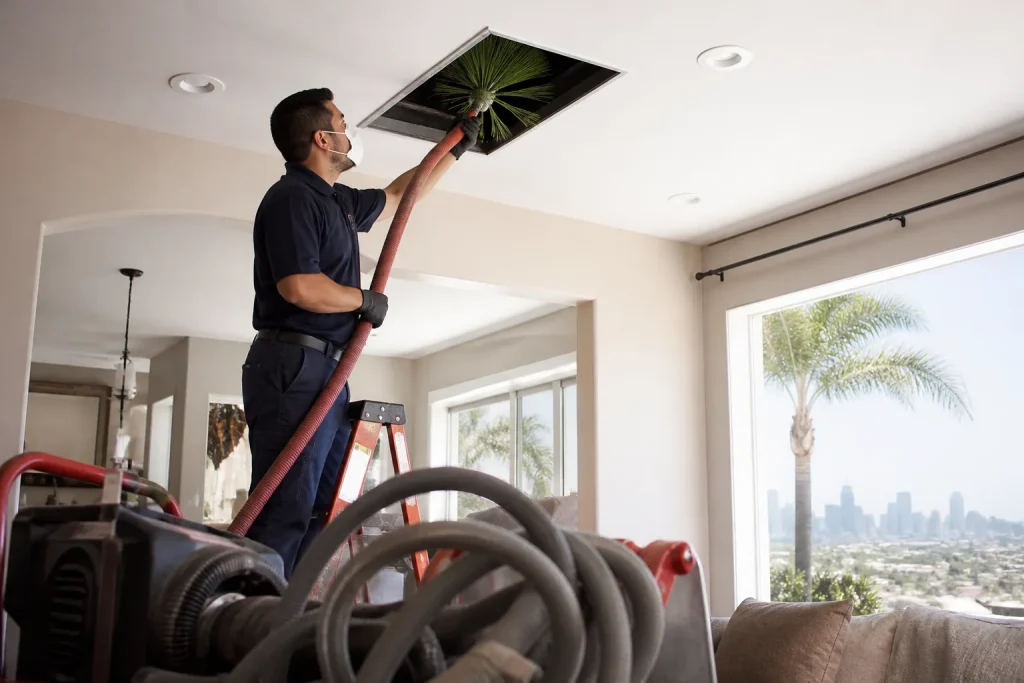
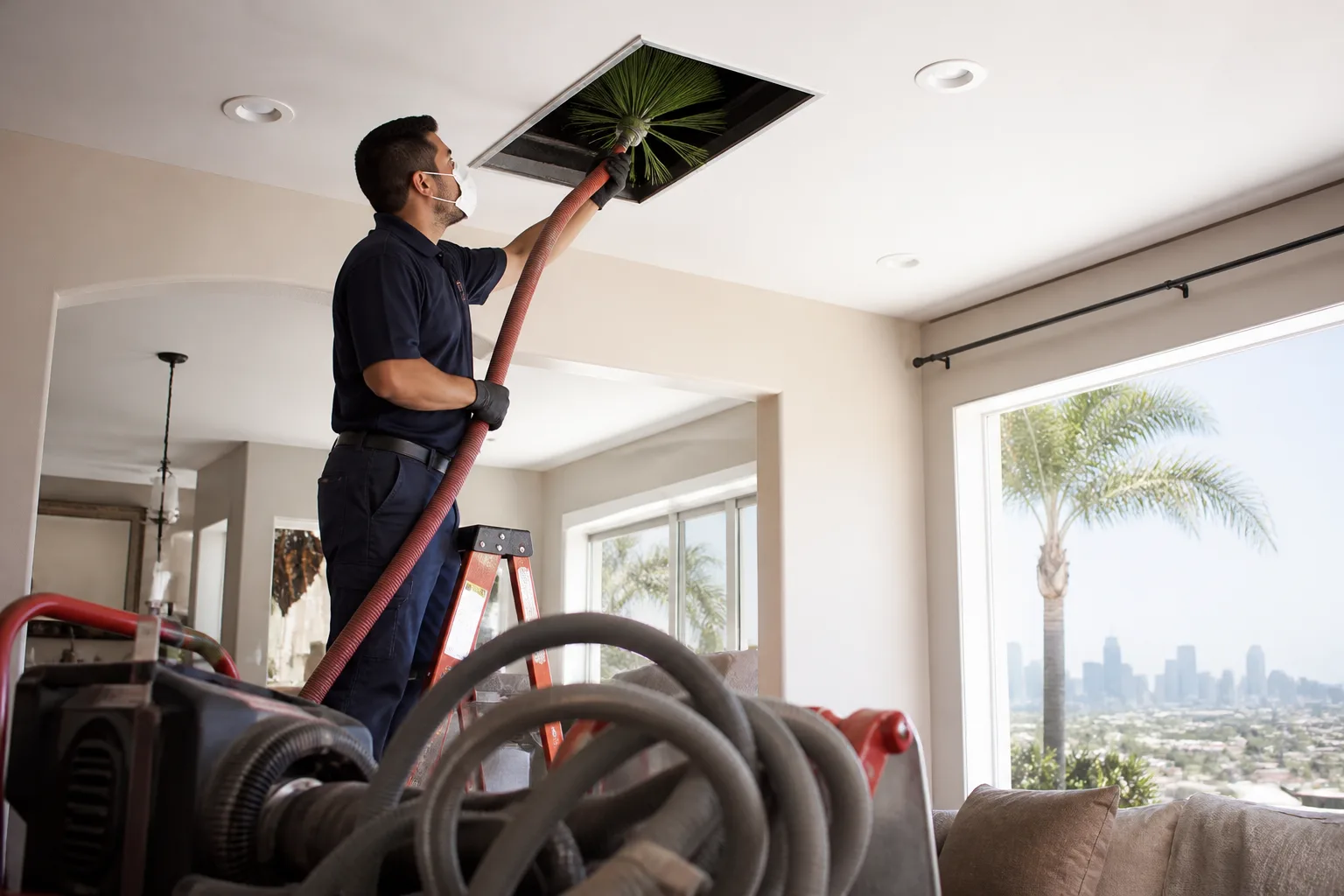
A Rotobrush machine does two jobs at the same time. A spinning brush head travels through the duct and physically scrubs the interior walls, while a vacuum built into the same unit pulls the dislodged debris out. The technical term is simultaneous contact and capture, and when it’s done right, it’s effective. The brush loosens dust, pet hair, and construction debris; the vacuum removes it before it can settle somewhere else in the system.
Here’s the part most ads skip: that vacuum has limits. In a typical Rotobrush setup, the machine connects to the duct at one access point while the rest of the system stays connected to the air handler and return plenum. If the technician doesn’t seal off the rest of the ductwork or run a separate negative-air machine, the brush can push dislodged dust deeper into branches the vacuum never reaches. In older Los Angeles homes with long horizontal runs common in crawlspace construction, that dust can resettle in the exact spots you paid to clean. The tool works. The setup determines whether it works for you.
Los Angeles Duct Types: Where Rotobrush Needs a Lighter Touch
Los Angeles housing stock runs the full spectrum, and duct material changes how a rotary brush should be handled. Pre-1980 homes in neighborhoods like Hancock Park, Silver Lake, and parts of Pasadena often have rigid galvanized steel ductwork. Steel handles a brush well, and a Rotobrush unit at moderate speed does a thorough job on the buildup those systems accumulate over decades.
Post-1980 construction is a different story. Many single-family homes and nearly all condos built after that era use fiberglass flex duct: a wire coil wrapped in insulation and a thin inner liner. That liner is not built for aggressive brushing. Run a rotary brush head at high speed through flex duct, especially older flex that’s been baking in a Los Angeles attic for twenty years, and the liner can tear. Once it tears, conditioned air leaks into the attic, dust gets pulled in from outside, and you’ve traded dirty ducts for damaged ones. We’ve had to repair liner damage from previous cleanings more times than we care to count. A Rotobrush in the right hands works fine on flex duct; the operator has to slow down where the material demands it.
What Proper Setup Looks Like Before the Brush Ever Spins
You should not see a technician arrive, cut one hole, jam in a Rotobrush, and start scrubbing. That’s the single biggest tell of an outfit that’s going to charge you for redistribution, not cleaning. Before any brush touches ductwork, the system needs negative pressure: a separate vacuum pulling air out of the ductwork so that when the brush runs, airborne dust moves toward the collection point instead of floating around inside the system and settling back down later.
A proper setup in a Los Angeles home typically includes:
- Sealing the supply registers and return grilles not being worked at that moment
- Running a negative-air machine at the air handler or a main access point
- Creating brush access points sized for the specific duct layout, not whatever hole is easiest
- Inspecting for existing damage before cleaning begins so the homeowner knows what was already there
- Photographing the interior before and after, which is the only real proof work happened
Skipping negative pressure turns Rotobrush from a cleaning tool into a dust redistribution machine. The visual before-and-after on the walls you can see looks better, but the air quality outcome is worse. That’s the exact situation several Los Angeles homeowners have described to us after a cheap groupon-style cleaning: their registers looked clean for two weeks, then dust started blowing out again because the debris never actually left the system.
Realistic Costs for Rotobrush Cleaning in Los Angeles
Here’s an honest number range in Los Angeles right now. A full system cleaning on a 1,200 square foot condo in a place like Koreatown or Culver City runs roughly $400 to $650. Homes in the 2,000 to 2,500 square foot range, common in the Valley and parts of the Westside, typically fall between $550 and $850. A 3,500 square foot or larger single-family home with multiple systems or long access-limited runs can run $800 to $1,400.
What changes those numbers isn’t square footage alone. Access matters. Older Los Angeles homes with tight crawlspaces or ducts buried in slab foundations (a real headache in some mid-century construction) take longer and cost more. So do systems that haven’t been cleaned in a decade, or that have mold or pest debris that requires extra remediation steps. If a price seems dramatically lower than the ranges above, ask one question before you book: “What exactly are you excluding at that price?” The answer is usually registers, returns, the plenum, or the main trunk line. All of which are, unfortunately, where most of the dust lives.
Any company you hire should give you a written price before the technician shows up, and the price shouldn’t move once the technician walks through your door. At Hollis Air Duct Cleaning, the number is written down before work begins, and it doesn’t change. No “you have a bigger system than we estimated” conversations. No per-vent add-ons. We use Rotobrush equipment alongside Nikro negative-air machines and inspect everything so the quote matches the actual job. That’s the way it should work, and if a contractor won’t put numbers in writing, you should hang up and call someone who will.
Post-Job Checklist: How to Verify the Work Was Actually Done
After any duct cleaning, you should be able to confirm the result. Not with anecdotes, but with evidence and observation. Here’s what to verify before you sign off or pay the final invoice:
- Ask for before-and-after photos. Not stock images of someone else’s ducts. Actual photos of your ductwork, taken on the job, showing the same access points before and after. If the company can’t provide them, assume the work wasn’t documented.
- Check the registers. Remove two or three register covers yourself. The visible section of duct should be clean to the touch. Run a damp white paper towel along the interior wall. Some dust is normal; a heavy gray smear means the cleaning didn’t reach that section.
- Check the air handler and filter. The filter is where the loose dust goes during cleaning. It will be dirty. If it looks squeaky clean, that’s not a good sign. It likely means no real airflow moved through the system.
- Smell the air for the first 48 hours. A short, faint cleaning-solution odor from sanitizing treatments is normal and dissipates. A musty or sour smell that persists means moisture may have been introduced or an existing issue wasn’t addressed.
- Get the guarantee in writing. Ask what happens if dust returns in three months, or if a register cover won’t stay in place, or if the tech missed a section. A real company answers that question in specifics. A vague “we’ll come back” with no written terms isn’t a guarantee.
One more Los Angeles-specific note: if your home has never had its ducts cleaned and it’s been a dry, windy year in Southern California, expect a noticeable amount of fine silt. Santa Ana winds push dust through windows, door gaps, and into mechanical systems. That’s normal, and it’s exactly what the cleaning should remove. If your ducts still smell like a windstorm two days later, call the company back. And if it’s us, the Done Right Promise covers exactly that scenario in writing: we come back and make it right at no charge. That includes a free second visit if the repair fails. Most outfits in Los Angeles don’t put that in writing because they don’t want to be held to it. We do.
Rotobrush vs. Other Cleaning Methods: What Los Angeles Homeowners Should Know
Rotobrush isn’t the only way to clean ducts, and it’s not always the best choice for every Los Angeles home. Negative-air cleaning, the method used by Nikro and Abatement Technologies systems, uses high-powered vacuum and compressed air agitation to pull debris out instead of scrubbing it loose. It’s the preferred method for homes with extensive flex duct, since it doesn’t contact the liner with a spinning head. It’s also the standard for older systems where the risk of damage outweighs the benefit of aggressive brushing.
Rotobrush’s advantage is in the contact: it physically removes stubborn buildup that compressed air alone won’t dislodge. Greasy kitchen exhaust residue, years of pet dander caked onto steel duct walls, and fine construction dust packed into corners all respond better to a brush. In steel duct systems common in older Los Angeles neighborhoods, a Rotobrush run at the right speed does an excellent job. In flex duct systems, the same brush run too fast does damage. The method matters, but the operator’s judgment matters more.
This is why we run Rotobrush equipment alongside Nikro negative-air machines. The brush does what brushes do best; the negative-air machine provides the capture that keeps dislodged debris from redistributing. Nobody at Hollis Air Duct Cleaning is going to sell you on one brand name over another. We’re going to sell you on the setup, because that’s what determines whether the air coming out of your registers is actually cleaner.
When to Call a Pro, and When Not To
There’s a DIY temptation with duct cleaning, especially once you see what a basic Rotobrush rental costs at a home improvement store. Resist it. Duct cleaning isn’t dangerous like electrical work, but it’s easy to do wrong, and the consequences aren’t visible until weeks later when the dust settles back down and blows through your house again. You also can’t verify your own work. You have no way to photograph deep inside your own ducts, and when you’re guessing, you’ll always give yourself the benefit of the doubt. The whole point of paying for a cleaning is independent verification that the system is actually clean.
Call a professional if you’ve never had the ducts cleaned, you’ve renovated (Los Angeles remodels kick up an enormous amount of drywall dust), you have pets that shed heavily, or you’re moving into a home with unknown maintenance history. Call if you’ve noticed dust accumulating on surfaces within days of cleaning, or if your registers are visibly coated. And if you’re in Los Angeles and want to know what duct cleaning should cost, call (361) 326-5060 for a free estimate. Nobody on our team will upsell you. We’ll tell you what the system needs and write the price down before any work starts.
Related services in Los Angeles: air duct cleaning, dryer vent cleaning, and duct sealing. We also handle filtration products from Honeywell, Aprilaire, and Guardsman, so if the cleaning reveals deeper air quality issues, we can discuss the right filter for your system instead of pointing you back to a hardware store shelf.
One story from South Pasadena: a homeowner called us after a “Rotobrush cleaning” from another company left her vents blowing gray dust within a month. We opened the access panel and found a layer of debris packed along the bottom of the main trunk. The previous tech had brushed it loose but never run negative pressure. We ran a Nikro unit at the air handler, reran the Rotobrush through the accessible sections, and pulled out a full vacuum canister of what should have left the first time. The fix was straightforward. The original cleaning just wasn’t finished.
The Bottom Line
Rotobrush is a legitimate, effective air duct cleaning tool. It’s also a brand name, and brand names market themselves. The thing that actually determines whether your Los Angeles home gets cleaner air is the setup, the method, and the technician’s familiarity with your duct type. Steel ducts handle a brush well. Flex ducts need a lighter touch. Every system needs negative pressure before the brush runs. If your contractor can’t explain these things in plain language, find one who can. If you’re in Los Angeles and need help, Hollis Air Duct Cleaning offers free estimates. Call (361) 326-5060 and we’ll tell you exactly what your system needs, in writing, before any brush ever spins.
Frequently Asked Questions
Yes. Rotobrush is a professional-grade rotary brush system widely used in residential duct cleaning. It’s effective when paired with proper negative pressure and operated by a technician who understands the duct material. The brand doesn’t guarantee results; the setup and the operator do.
Expect to pay $400 to $650 for a condo or small home, $550 to $850 for a 2,000 to 2,500 square foot home, and $800 to $1,400 for a large single-family home with multiple systems or difficult access. Written pricing before work starts is the standard you should insist on. Call (361) 326-5060 for an exact quote.
Yes, if the operator runs the brush too fast through fiberglass flex duct. The inner liner of flex duct can tear under aggressive brushing. A skilled technician slows the brush for flex duct and runs at full speed only on rigid steel. Ask your contractor how they’ll handle your specific duct material before work begins.
Ask for before-and-after photos of your actual ductwork, check several registers yourself with a damp paper towel, and confirm the filter is dirty from the cleaning process. A clean filter after a full cleaning usually means the dust never moved. Get any guarantee in writing. If the company can’t provide these, call someone else.
Written by the team at Hollis Air Duct Cleaning.
Need Air Duct Cleaning Help?
Call Hollis Air Duct Cleaning - licensed & insured, here with fast after-hours help in Los Angeles.
(361) 326-5060