
Nikro Air Duct Cleaning in Los Angeles: A Homeowner’s Guide
Nikro is a brand of professional air duct cleaning equipment, not a service standard. The name shows up in a lot of Los Angeles marketing because Nikro builds legitimate negative-air machines and HEPA vacuum systems that real duct cleaning crews use. But the machine is only half the job. What matters more is the technician running it, the scope of work they actually complete, and whether anything is guaranteed in writing when they leave.
If you’re comparing duct cleaning companies in Los Angeles and want to skip the research, call Hollis Air Duct Cleaning at (361) 326-5060 for a free estimate. We’ll walk you through exactly what we do, what it costs, and what happens if it isn’t done right.
What Nikro Equipment Actually Is (and What It Does)
Nikro Industries has been manufacturing air duct cleaning equipment since the 1970s. When a Los Angeles company says they use Nikro, they’re typically referring to one of three pieces of equipment. Knowing what each one does helps you understand what you’re actually paying for.
First, the negative air machine. This is the core of any legitimate duct cleaning setup. It connects to the duct system and creates negative pressure, which means it pulls air and loosened debris out of the ductwork instead of letting it blow back into your living room. A Nikro negative air machine is a serious piece of commercial-grade equipment. In our experience cleaning homes across Los Angeles, from Sherman Oaks to Woodland Hills, the size and power of this machine matter more than most homeowners realize.
Second, the HEPA vacuum system. This captures the fine particles that the negative air machine pulls out, including dust, pet dander, and allergens that have been cycling through your home’s air. In Los Angeles, where windows stay open during spring and fall and wildfire smoke drifts through on bad years, the filtration side of the work is non-negotiable.
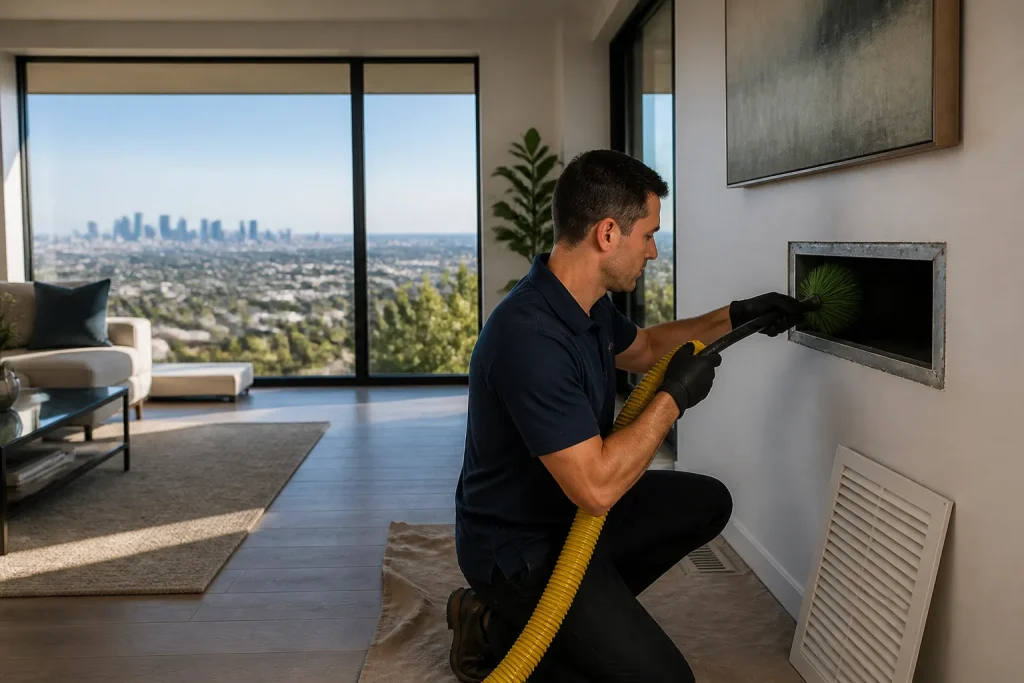
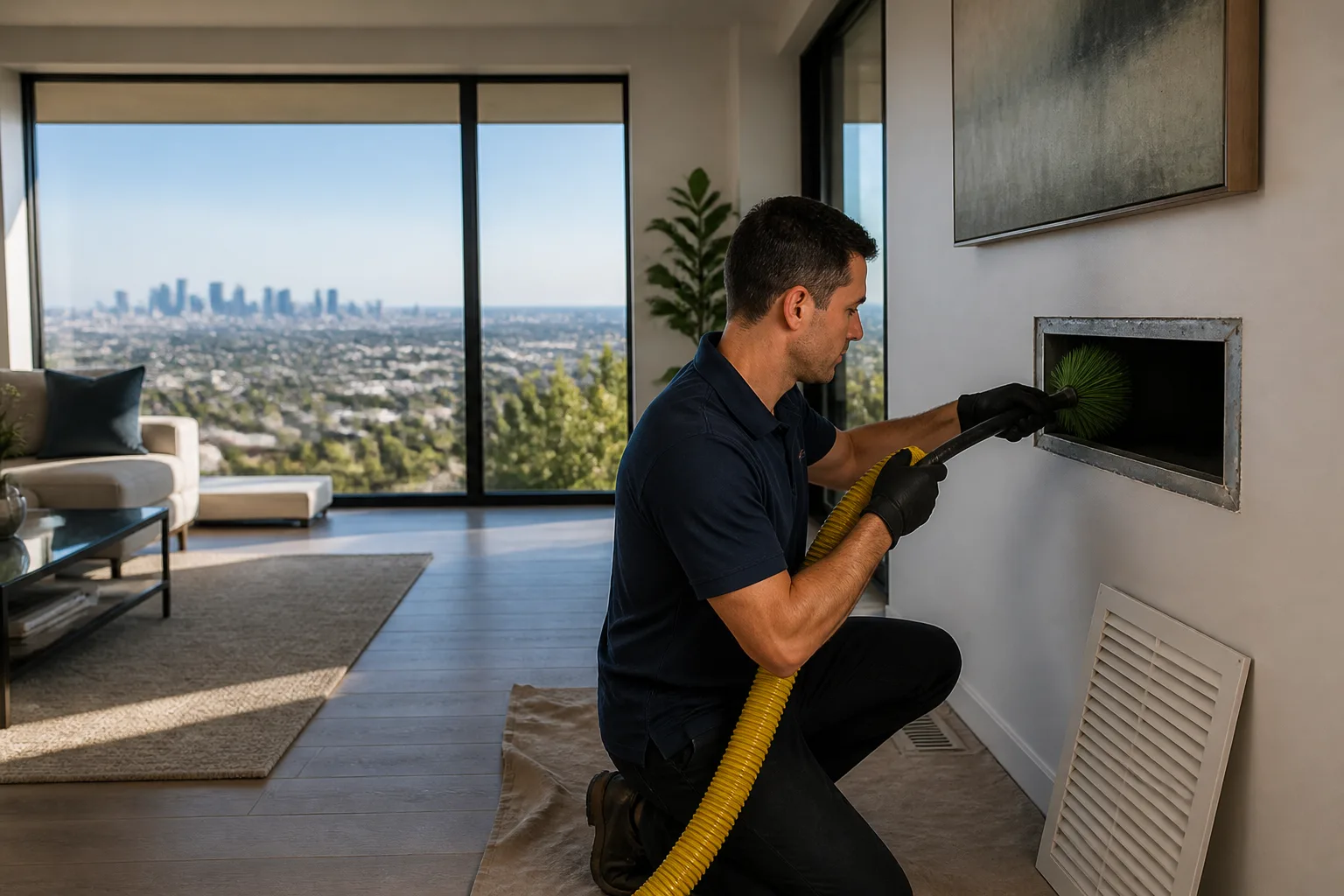
Third, compressed air whips and rotary brush systems. These are the agitation tools that knock debris loose from duct walls. Without proper agitation, a vacuum alone leaves a film of dust bonded to the metal. We use Rotobrush rotary brush systems alongside Nikro negative-air machines, which gives us both agitation and extraction working together.
Here’s the key point about equipment: it sets the floor, not the ceiling. A company running Nikro gear still has to follow a defined process, inspect every branch, and stand behind the result. The equipment doesn’t guarantee that.
Why Brand Alone Doesn’t Tell You Much
NADCA, the National Air Duct Cleaners Association, publishes the ACR standard that defines what a proper duct cleaning actually involves. That standard covers source removal, meaning debris is dislodged and extracted, not just vacuumed from the registers. It covers cleaning all components: supply ducts, return ducts, plenums, coils, and blower motors. And it covers inspection and documentation.
What the NADCA standard does not do is specify a brand. Nikro equipment can absolutely meet the standard when used correctly. So can equipment from Abatement Technologies and other manufacturers. But a company can own Nikro machines and still cut corners: skip branch lines, clean only what’s visible from the register, rush through a system in an hour, or leave the blower motor untouched. The brand on the machine doesn’t prevent any of that.
This is a big deal in Los Angeles, where duct cleaning pricing runs from under $100 for what amounts to a glorified vacuum job to over $1,000 for a full system cleaning. The low end often comes from companies that lead with equipment brand names without explaining what they’ll actually do. The equipment sounds impressive, so the scope of work never gets questioned.
We compete on the opposite end of that. Every Hollis job starts with a written price, a defined scope of work, and a pre-job inspection. The equipment we use, including Nikro negative-air machines and professional air duct cleaning equipment, gets the job done. But the process and the written guarantee are what protect you after the truck leaves.
Three Questions to Ask Any Company That Leads with Equipment Branding
If a Los Angeles duct cleaning company’s pitch starts and ends with “we use Nikro,” that’s your cue to dig deeper. Here are three questions that cut through the marketing and reveal whether you’re dealing with a disciplined operation or a brand name on a brochure.
1. What exactly is included in the scope of work?
Ask for a written list. Are they cleaning every branch line, or just the main trunk lines? Does the price include the return side, the supply side, the blower motor, and the coils? A legitimate answer will be specific. A vague answer like “we clean the whole system” without itemization is a red flag. In Los Angeles homes with 15 to 25 branch lines, skipping even a few changes the result.
2. How are individual branch lines cleaned?
Trunk lines are easy to clean. Branch lines, the smaller ducts running from the trunk to each register, require agitation tools like air whips or rotary brushes fed through each opening. If a company can’t explain how they reach each branch, they probably aren’t reaching them. We clean every branch, every time, and we can show you the process before we start.
3. Is there a written pre-job inspection and a written guarantee?
A pre-job inspection documents what your ducts look like before cleaning. That’s your baseline. If a company doesn’t do one, you have no way to verify the work afterward. And a guarantee should be in writing, not a verbal “we’ll take care of you.” Our 365-Day Done Right Promise is written on every job: if the work fails within a year, we return and make it right at no charge, including a free second visit.
The Los Angeles Factor: Why Equipment Power Actually Matters Here
Los Angeles is not a uniform housing market. A 900-square-foot condo in Culver City has a very different duct system from a 4,500-square-foot house in Encino or Brentwood with long runs, multiple zones, and 25 years of accumulated dust. Equipment power matters more on the bigger systems.
Here’s what happens when an undersized negative air machine is used on a large Los Angeles home. Negative pressure drops, air velocity through the ducts slows, and debris that should be pulled to the collection point settles back into the duct. The technician cleans what they can reach, but the contamination load in the farthest branches stays put. The homeowner paid for a cleaning and got a partial job.
We pulled a Nikro unit out of a garage over in Studio City once and the homeowner told us the last company finished two stories and 22 branch lines in under 90 minutes. That math doesn’t work. A proper cleaning on a system that size takes three to five hours. Speed is not a selling point in this trade. Thorough is a selling point.
The Los Angeles climate also adds a layer here. Coastal moisture from Santa Monica and Marina del Rey can turn dust into a film that bonds to duct surfaces. Inland heat from the Valley bakes debris onto metal. Those conditions require agitation tools doing real work, not a quick pass with a vacuum hose.
How We Do It at Hollis Air Duct Cleaning
We’ve been cleaning ducts in Los Angeles since 2004, and our standard hasn’t changed because it works. Every job gets a written price before anything starts. No estimate that balloons at the door, no per-vent pricing games, no coupon that transforms into a much larger invoice once the technician is inside.
The process itself follows the Garrison Code, which is the operational standard for every independently owned and operated location in the Garrison Partners family. It means four things: arrive inside the quoted window, price the job in writing before work begins, complete the job by the book, and leave the site clean. That last one matters more than most people expect. A proper duct cleaning creates a mess at the collection point, and a disciplined crew contains it.
Our equipment roster includes Nikro negative-air machines, Rotobrush rotary brush systems, and filtration products from Honeywell, Aprilaire, and Guardsman. We use the same tools commercial crews use because residential ducts in Los Angeles carry the same contamination types: construction debris from remodels, pet dander, dust from open windows, and on bad years, wildfire smoke residue.
When to call a pro: if you’ve never had your ducts cleaned and you’ve lived in the home more than four years, if you just finished a remodel and didn’t seal the registers, or if you see dust puffing from the vents when the system kicks on, you’re past the point of filter changes doing the job. A professional cleaning with real negative pressure and proper agitation resets the system.
Related services in Los Angeles: we also handle dryer vent cleaning and duct sealing throughout the city, and both jobs follow the same written-price, written-promise standard.
What Does Nikro Air Duct Cleaning Cost in Los Angeles?
Ballpark pricing for a full-system air duct cleaning in Los Angeles runs from roughly $450 to $1,100 depending on home size, number of branch lines, accessibility, and contamination level. Smaller condos or single-story homes with 8 to 12 vents land at the lower end. Larger two-story homes with 20-plus branch lines and older debris loads land at the higher end.
If a quote comes in well below $300 for a whole system, ask what’s included. It’s almost certainly a partial job: main trunk lines only, no branch cleaning, no blower motor, no return plenum. In Los Angeles, that lower price usually means the far ends of your system stay dirty.
Our pricing is simple: one flat price per system, agreed in writing before work starts. No per-vent charges, no upselling on equipment you don’t need. You’ll know the number before we touch a register. Call (361) 326-5060 and we’ll give you a straight answer.
The Bottom Line
Nikro builds professional-grade equipment that belongs in a legitimate duct cleaning operation. But the brand on the machine doesn’t clean your ducts. The technician does. In Los Angeles, where duct systems range from compact single-story ranches to sprawling multi-zone estates, the process, the scope of work, and the written guarantee matter far more than the equipment logo on the van.
If you’re evaluating companies and want a straight answer on what the job should include and what it should cost, call us. Hollis Air Duct Cleaning offers free estimates throughout Los Angeles at (361) 326-5060. You’ll get a written price, a defined scope, and a one-year written promise. That’s the standard.
Learn more about Hollis Air Duct Cleaning and how we approach every job in this city.
Frequently Asked Questions
Nikro equipment is professional-grade and works well when paired with a thorough process, but the brand itself doesn’t determine quality. The NADCA ACR standard defines what a proper cleaning includes, and any competent technician using appropriate negative-air equipment can meet it. What separates good jobs from bad ones in Los Angeles is scope of work and written accountability, not the logo on the machine.
Full-system air duct cleaning in Los Angeles typically runs $450 to $1,100 depending on home size and contamination level. Quotes below $300 for a whole system almost always mean partial cleaning. Hollis offers one flat written price per system before work starts. Call (361) 326-5060 for a free estimate.
A proper full-system cleaning on an average Los Angeles home takes three to five hours. Smaller condos may take less; larger two-story homes with 20-plus branch lines may take longer. If a company finishes a full system in under two hours, ask which branches they skipped. Thorough work takes time.
Ask for a written pre-job inspection and before-and-after documentation of your own ducts. At Hollis, we document the condition before we start and show you what came out when we finish. The 365-Day Done Right Promise backs the work in writing for a full year. If it fails, we return at no charge.
Written by Roy Castellanos, Owner at Hollis Air Duct Cleaning, serving Los Angeles since 2004.
Need Air Duct Cleaning Help?
Call Hollis Air Duct Cleaning - licensed & insured, here with fast after-hours help in Los Angeles.
(361) 326-5060