
Duct Sealing: Repair or Replace? How Los Angeles Homeowners Decide
Here’s the straight answer: most ductwork in Los Angeles can be sealed rather than replaced if the duct material itself is still intact, the leakage is at connection points, and the system is under roughly 20 years old. Replacement makes sense when flexible duct has turned brittle from attic heat, when metal ducts show rust or separation at seams, or when the measured leakage rate exceeds 30%. If you’d rather not sort through CFM25 numbers and material science, call (361) 326-5060 and we’ll tell you what you’re actually working with.
Sealing a duct that’s already failing from UV degradation or heat fatigue is like caulking a cracked foundation. It looks done, but the underlying problem continues on its own schedule. Los Angeles attics routinely hit 140°F in July and August. That heat doesn’t just make your air conditioner work harder. It cooks the materials your ducts are made from. The repair-or-replace question isn’t really about how much air is leaking today. It’s about what that ductwork will look like two summers from now after another 180 days of attic heat doing what attic heat does.
The decision comes down to three things: the age of your system, the material your ducts are made from, and whether the failure points are at connections or along the body of the duct. A duct blaster test answers the “how much” question with actual numbers. A visual inspection answers the “where” question. Together, they give you a repair-or-replace answer you can trust instead of a guess from someone who hasn’t opened your attic access panel.
Key Takeaways
- Flexible duct in Los Angeles attics typically lasts 15-20 years; sheet metal ducts often outlast the house if connections are maintained.
- If leakage is at joints, collars, or register boxes, sealing usually fixes it for $400-$1,200.
- If the duct body itself is torn, brittle, or collapsing, sealing is throwing money at a material that has already failed.
- A duct blaster test should precede any repair-or-replace recommendation. If a contractor skips it, ask why.
- The written scope of work matters as much as the price. Both sealing and replacement quotes should list exactly what’s included and what’s excluded.
What Duct Sealing Actually Fixes (And What It Can’t)
Duct sealing addresses air leaking at the places where duct sections connect: the collar where flexible duct meets a metal trunk line, the joint where two sheet metal sections come together, the seam where a register boot attaches to the drywall. In Los Angeles homes, we consistently find the same pattern. The ducts themselves are often in fine shape. It’s the connections that were taped with cheap cloth duct tape twenty years ago and have since dried out and let go. Duct tape, despite the name, is about the worst thing ever used on actual ducts. It hardens, cracks, and falls off. Then conditioned air pours into the attic, and attic dust gets pulled into the return side.
What sealing does is restore those connection points using mastic, a thick paste that goes on wet and cures to a flexible, permanent seal, or an aerosol-based approach that coats the inside of the duct system. Properly applied mastic at a connection point should outlast the duct material around it. That’s the repair path, and when the failure points are at connections, it’s genuinely the right call.
What sealing cannot do is restore structural integrity to a duct that has already degraded. If flexible duct has turned brittle enough that you can crack the liner with thumb pressure, no amount of mastic at the joints changes that. If sheet metal has rusted through in sections, sealing the seams doesn’t put metal back where rust removed it. In our experience pulling ducts from attics across Los Angeles, from the Valley to the Westside, the most common reason a sealing job turns into a replacement is finding material that simply gave up after too many summers at 140°F.
Material Matters: Flexible Duct vs. Sheet Metal in LA Heat
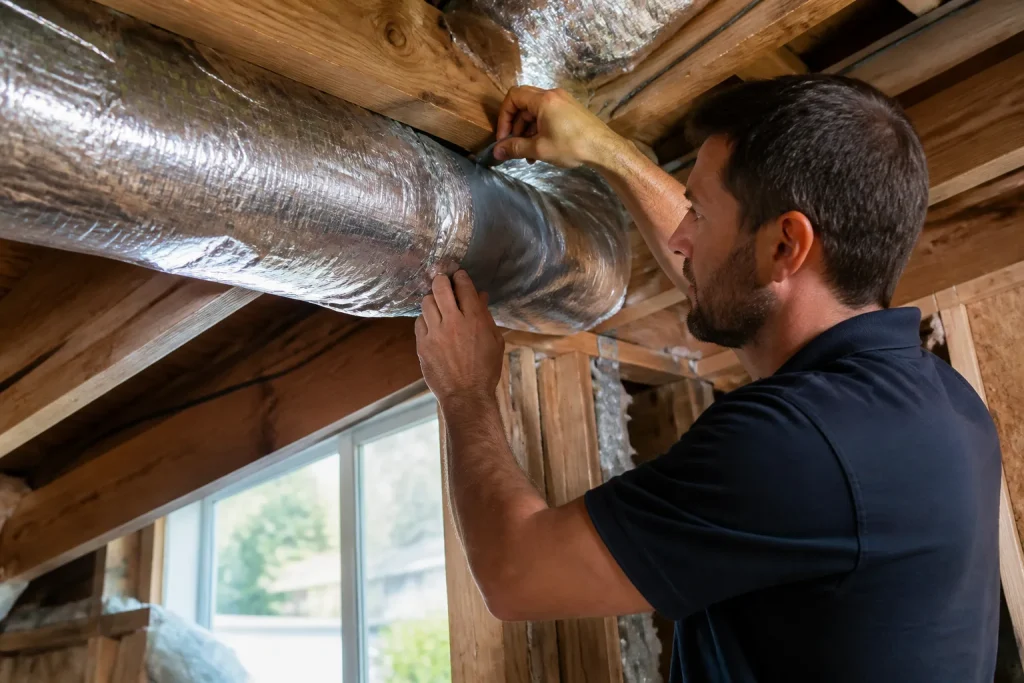
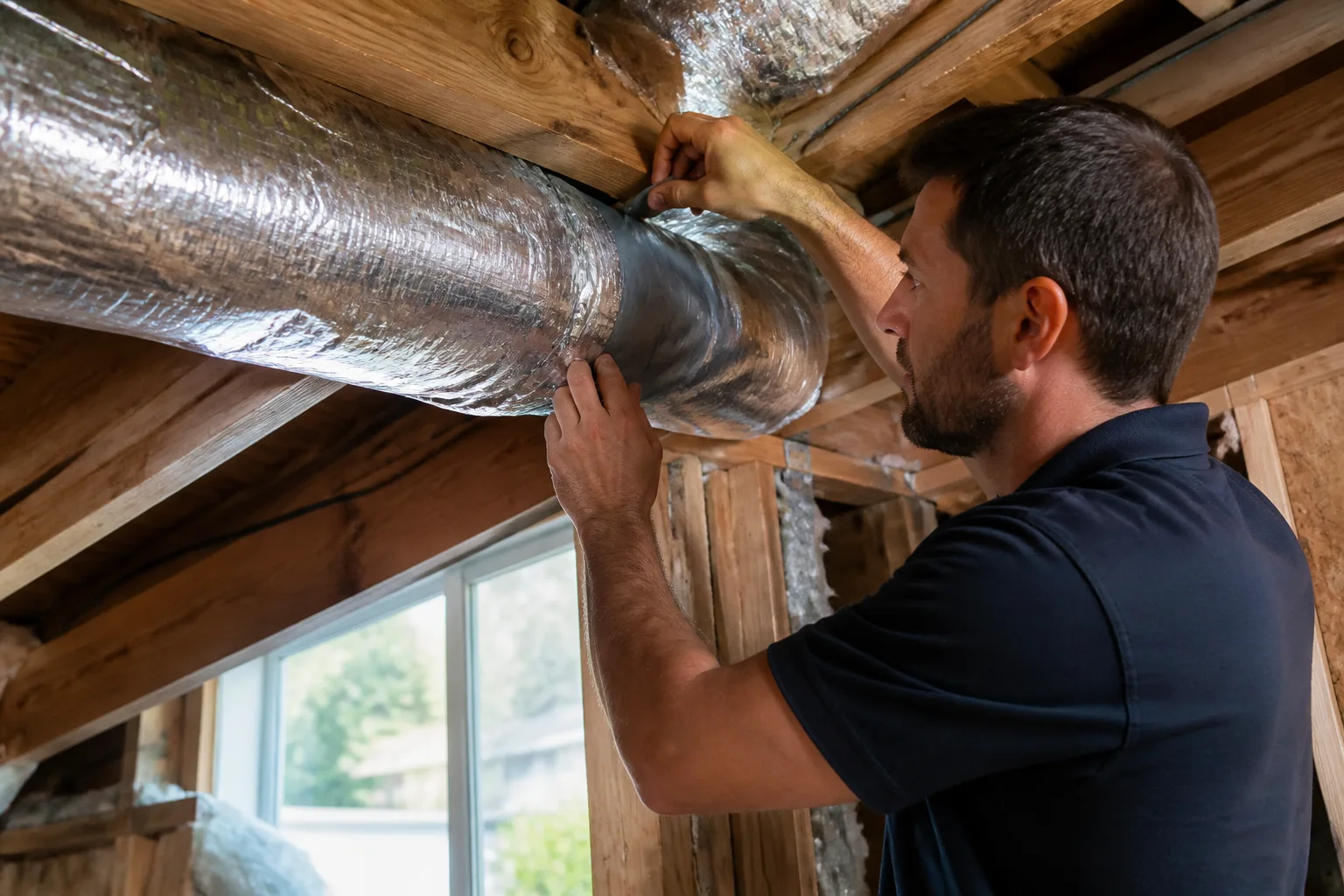
Los Angeles has a climate problem that most duct advice on the internet ignores entirely. Flexible duct, the insulated silver tube with a wire coil running through it, has a useful life of about 15 to 20 years in a Southern California attic. The plastic liner inside degrades from heat. The insulation compressed by installers who zip-tied it too tightly loses its R-value. The outer jacket splits open. We’ve pulled flex duct out of attics in Echo Park that crumbled in our hands like dried leaves.
Sheet metal duct is a different animal. The metal itself doesn’t wear out from heat. What fails on sheet metal systems is usually the sealant at the seams and the connections at the register boots. We’ve seen galvanized duct in Los Angeles homes from the 1960s that is still structurally sound and just needs the connections re-sealed. That’s a repair job, not a replacement job, and a good duct sealing contractor should tell you so rather than selling you new metal you don’t need.
The key question to ask yourself: what is your duct made of, and how long has it been sitting in a hot attic? If you have flex duct installed in 2005, you’re near the end of the realistic lifespan regardless of how much it’s leaking. Sealing might buy you a year or two. Replacement buys you another two decades. Sometimes the honest answer is that sealing a 19-year-old flex-duct system in Los Angeles is paying for a stopgap when the budget would be smarter spent on replacement. A contractor who gives you that answer is doing right by you. One who pushes sealing because it’s a lower-ticket job to close today is not.
Diagnostics First: What a Duct Blaster Test Tells You
The repair-or-replace decision shouldn’t be made on a hunch. A duct blaster test measures how much air your duct system leaks using a calibrated fan and pressure gauge. It produces a number called CFM25, which means cubic feet per minute of leakage at 25 pascals of pressure. That sounds like engineer talk, but here’s what it means in plain terms: if your system moves 1,200 cubic feet of air per minute when running, and the duct blaster shows 300 CFM25, roughly a quarter of your conditioned air is escaping into the attic before it reaches your rooms. You’re paying to cool your attic.
As a rule of thumb, leakage under 10% of total system airflow is within acceptable range for most Los Angeles homes. Between 10% and 30%, sealing at connection points usually brings it back under control. Above 30%, you’re likely looking at failed duct bodies, not just failed connections, and replacement enters the conversation seriously.
The second diagnostic step is visual. A technician should go into the attic with a flashlight and look at every accessible connection: each collar, each takeoff, each register boot. They should photograph the problem areas. You should see those photos. At Hollis Air Duct Cleaning, we walk our Los Angeles customers through what we’re seeing before recommending anything. If a company quotes you sealing or replacement without climbing into the attic and putting eyes on the ductwork, that’s a red flag. A duct blaster number without a visual inspection doesn’t tell the whole story.
Real Costs in Los Angeles: Sealing vs. Replacement
Let’s put numbers on this, because vague pricing is how homeowners get surprised. In the Los Angeles market, sealing a typical single-family home’s duct system at all accessible connections runs roughly $400 to $1,200 depending on system size, attic accessibility, and how many connections need work. This assumes mastic application at connection points, not an aerosol sealing approach, which runs higher because it requires specialized equipment and setup.
Full duct replacement, by contrast, runs $3,500 to $8,000 or more for a typical Los Angeles house. The range depends on square footage, number of registers, attic access (crawl spaces and low-slope attics add labor hours), and whether you’re replacing with flex duct or sheet metal. Homes on slab foundations in Los Angeles, which means most houses built between the 1950s and 1980s in the Valley and the basin, often have ducts in the attic because there’s no basement or crawl space to run them through. That means attic access difficulty directly affects labor cost. Tight attics with blown-in insulation and limited headroom simply take longer to work in.
Here’s the honest comparison: if your leakage is at connections and your duct is under 15 years old, sealing at $600-$900 is the smarter financial move. If your flex duct is over 18 years old and leaking at 25% or more, spending $1,000 to seal it when replacement would cost $5,000 means you’ll probably be spending the $5,000 in two or three years anyway. The question is whether you want to pay for it twice. Sometimes the lower-ticket job is the right call. Sometimes it’s just the cheaper call at the moment. A contractor who walks you through the math is the one you want doing either job.
What the Written Scope Should Include, Either Path
Whatever direction you go, get the scope in writing before work starts. The Garrison Standard, which is how we run our Los Angeles duct jobs, requires a written price before anything gets touched. That price doesn’t move at the door. Here’s what a sealing scope should spell out:
- Specific locations being sealed (which connections, how many, where in the attic).
- The sealing method (mastic type or aerosol) and what the material is rated for.
- Whether the price includes accessing the attic and replacing insulation disturbed during the work.
- Whether a post-seal duct blaster test is included to verify the improvement.
- What’s excluded: sections not accessible without cutting drywall, ducts outside the attic, etc.
A replacement scope should list the material type (R-6 vs R-8 flex, gauge of sheet metal), the count of registers and connections, how the old duct is disposed of, and whether new register boots are included. If the quote says “replace ducts” but doesn’t say how many runs, how many connections, or what material, you’re looking at a scope-creep invoice waiting to happen. Los Angeles has plenty of older homes with non-standard duct layouts, and the contractor who doesn’t pin down the details in writing is the one who “discovers” an extra $1,800 of work once the attic ladder is down.
When to call a pro: If you can hear air whistling in the attic when the system runs, if some rooms are consistently 5-7 degrees warmer than others, or if your utility bill keeps climbing while your thermostat setting doesn’t change, you probably have a duct leakage problem. That’s the time to get a duct blaster test and a visual inspection. This is not a DIY job. Attic work in a Los Angeles summer is brutal, and working around fiberglass insulation, electrical wiring, and gas appliance flues without proper training is how people get hurt. The diagnostic alone is worth a professional visit.
Related services in Los Angeles: if you’re already thinking about your air system, see our air duct cleaning in Los Angeles service page or look at duct sealing in Los Angeles for what’s involved per system.
The Bottom Line
Repair-or-replace on Los Angeles ductwork isn’t a philosophy question. It’s a material and measurement question. If a duct blaster test shows leakage primarily at connection points, and visual inspection confirms the duct bodies are intact, sealing with mastic gives you the most years per dollar. If the flex duct is approaching 20 years old or shows visible degradation from attic heat, replacement is the durable answer, and paying for sealing first is just prepaying for a job you’ll do twice.
The contractor you choose matters more than the method. Get the diagnostic numbers. Get the scope in writing. Get the guarantee in writing too. We’ve been doing duct work in Los Angeles since 2004, which matters only insofar as it means we’ve seen what 20-year-old attic duct looks like after two decades of Southern California summers. That experience beats a guess every time.
If you’re in Los Angeles and need help deciding, Hollis Air Duct Cleaning offers free estimates. Call (361) 326-5060 and we’ll give you the numbers and the photos so you can make the call yourself.
Frequently Asked Questions
A duct blaster test answers this. If measured leakage is under 30% of total system airflow and a visual inspection shows failure at connections rather than duct bodies, sealing is the right call. Above 30% leakage or visible duct degradation means replacement likely makes more sense. Call (361) 326-5060 to schedule a test in Los Angeles.
Most Los Angeles homes range from $400 to $1,200 for connection-point sealing, depending on system size and attic access. Aerosol sealing runs higher due to specialized equipment. We provide a written price before any work starts, and that number doesn’t change once we’re in the attic. Call (361) 326-5060 for an exact quote.
Realistically, 15 to 20 years. Attic temperatures above 140°F degrade the plastic liner and the insulation. If your flex duct was installed in the mid-2000s, it’s approaching the end of its serviceable life regardless of how it currently performs. Replacement with R-8 flex or sheet metal gives you another two decades of service.
The specific connections being sealed, the sealing material being used, whether a post-seal duct blaster test is included, what portions of the system are excluded, and how attic access and insulation disturbance are handled. If a quote doesn’t list these line items, ask for them before signing. We’ve seen too many Los Angeles homeowners surprised by scope creep that a detailed written scope would have prevented.
Written by Roy Castellanos, Owner at Hollis Air Duct Cleaning, serving Los Angeles since 2004. See our home page or dryer vent cleaning in Los Angeles for more on how we work.
Need Air Duct Cleaning Help?
Call Hollis Air Duct Cleaning - licensed & insured, here with fast after-hours help in Los Angeles.
(361) 326-5060