

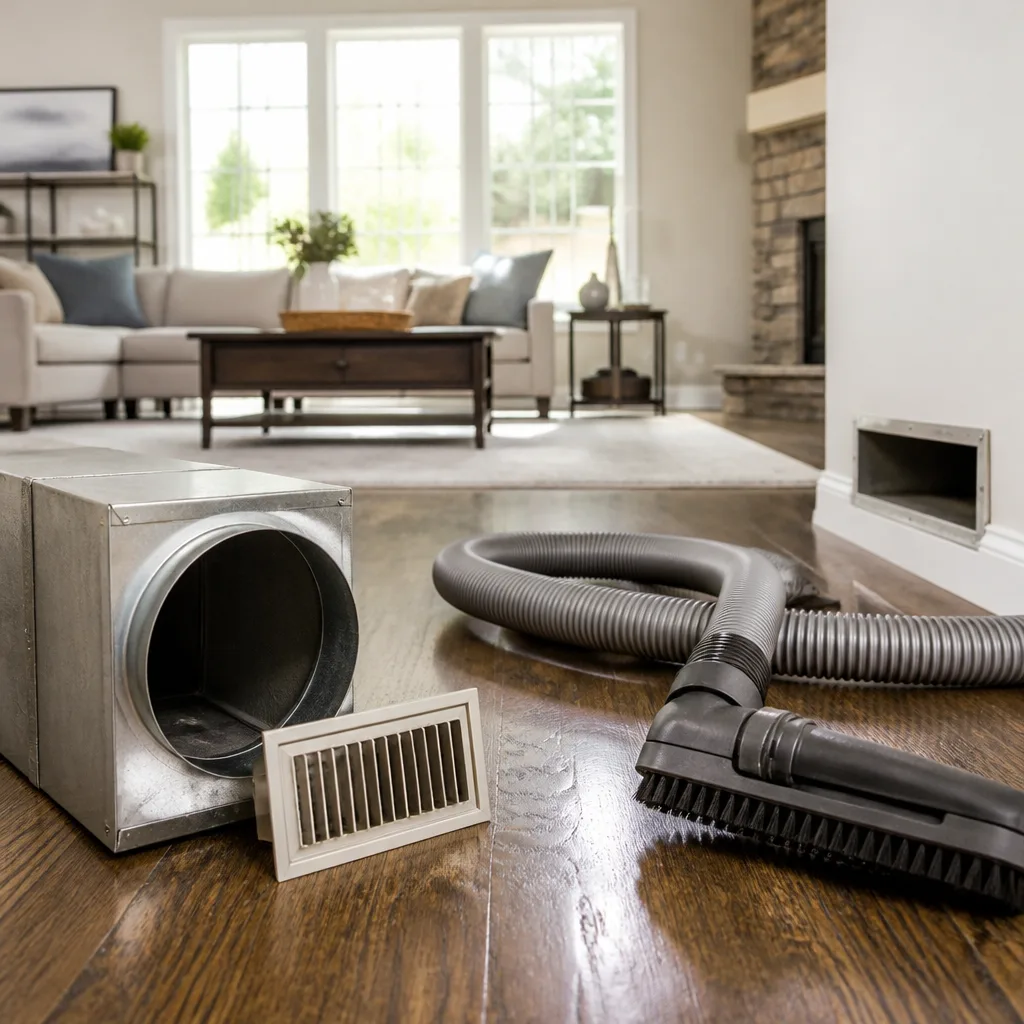
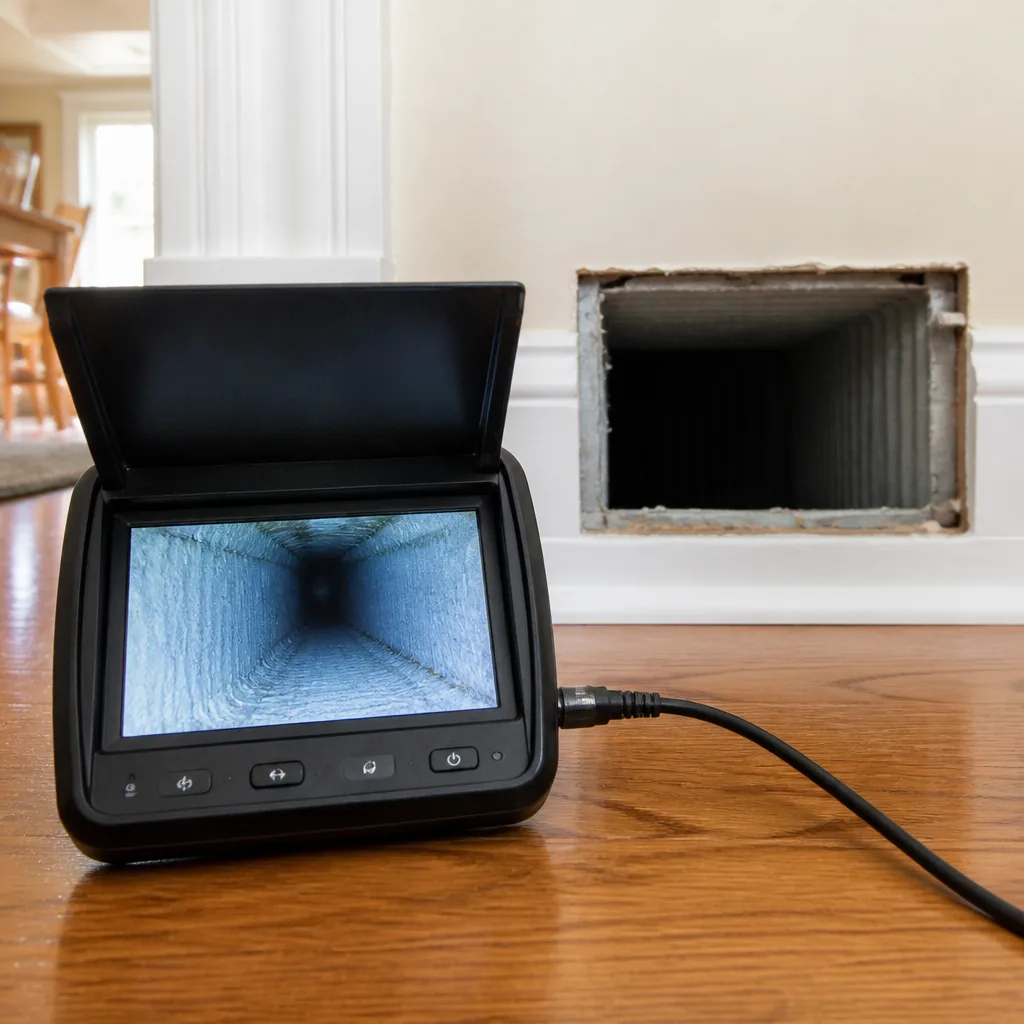
Whole-system duct and dryer vent check with before-and-after photos - you see exactly what came out of your vents
That "$99 whole-house special" is a bait ad - the real number appears once they are in your hallway, or the "clean" is a shop-vac at the register. We photograph the inside of your ducts before and after instead.


 Before
 After
After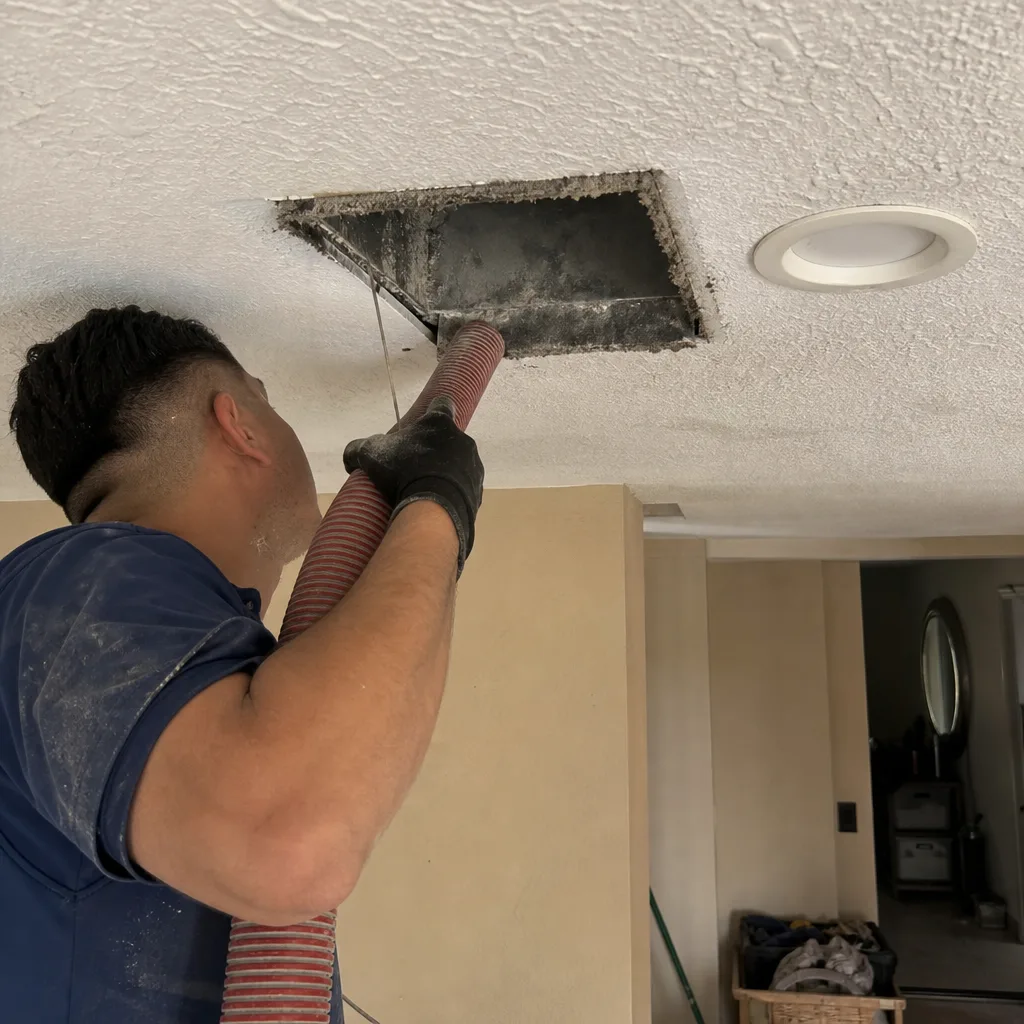 Before
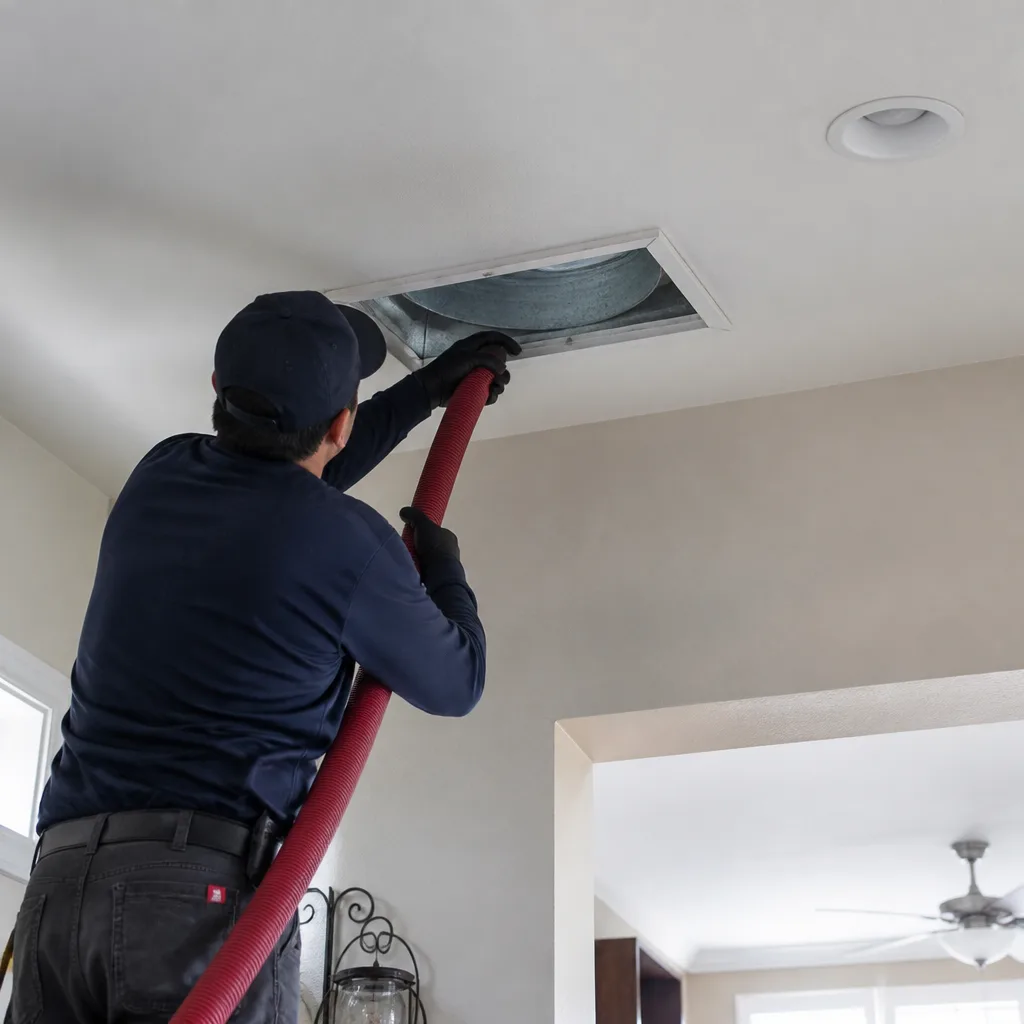 After
After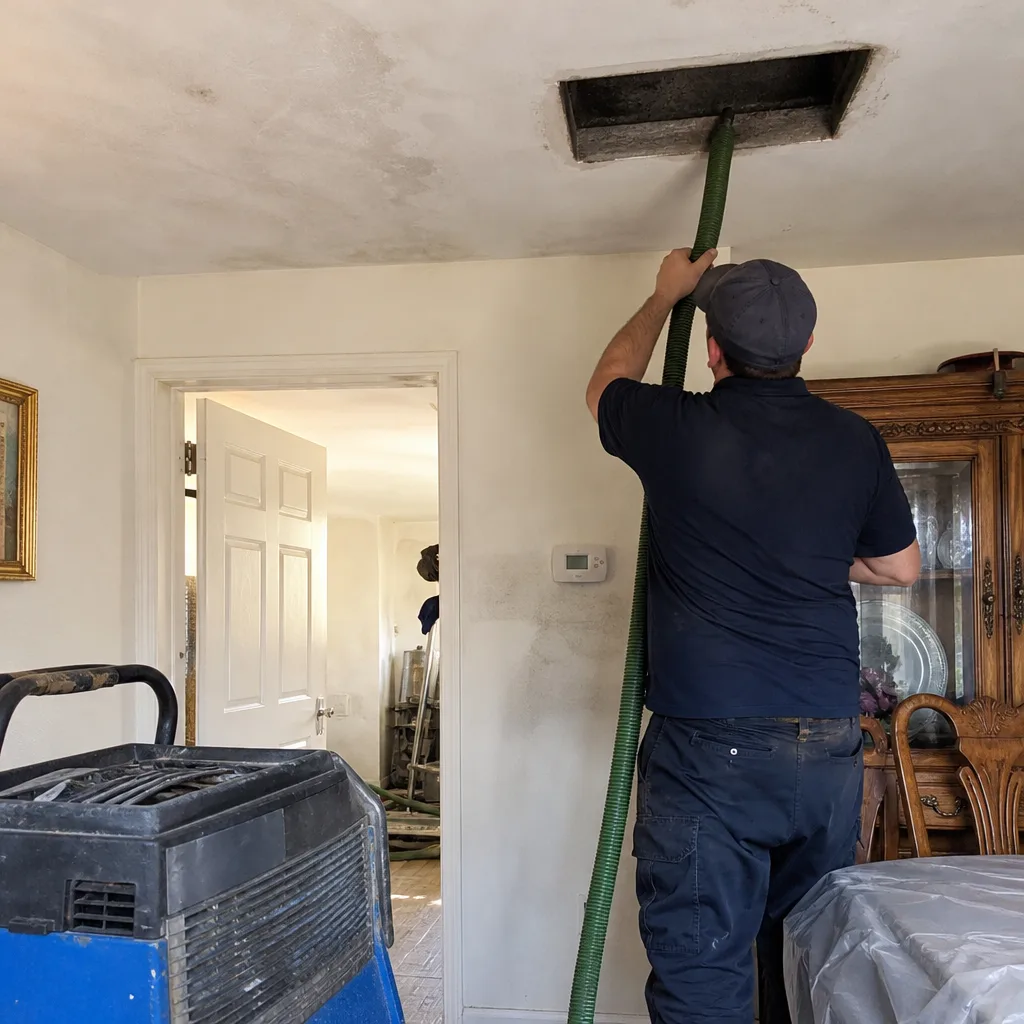 Before
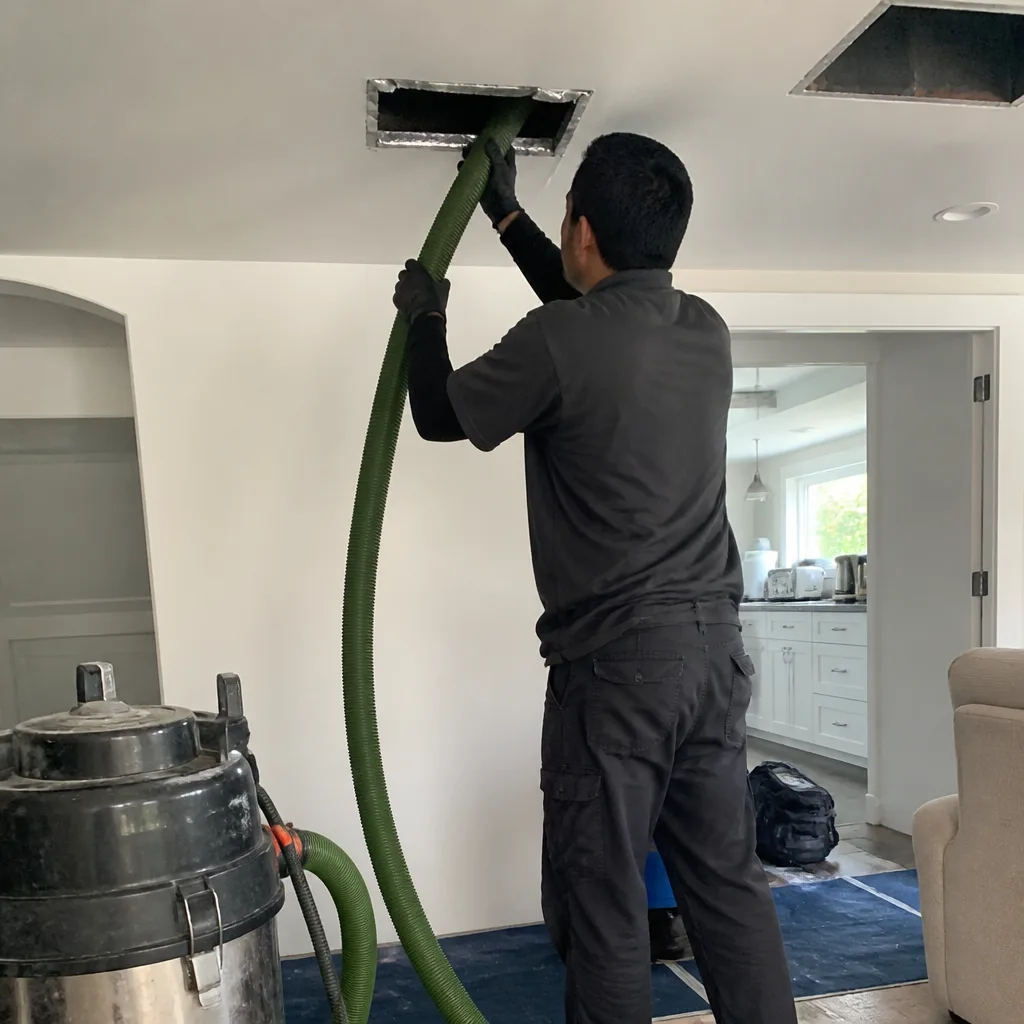 After
AfterSigns of a Clogged Dryer Vent: What’s Happening
A clogged dryer vent almost always means lint has built up inside the duct to the point where hot, moist air can’t escape the way it’s supposed to. Your dryer keeps running, the clothes stay damp, and the appliance works harder than it should to finish a load it would normally handle in 45 minutes.
That restriction is doing more than slowing laundry day. Dryers are one of the leading causes of house fires, and the culprit in most of those cases is lint that couldn’t go anywhere. When air can’t move through the vent, heat builds up inside the duct and around the appliance itself. The warning signs below are worth taking seriously the moment you notice them – not next weekend.
Why It Happens
Lint accumulation over time
Every load pushes a small amount of lint past the lint trap and into the duct. Over months and years, that material sticks to the duct walls, narrows the passage, and eventually blocks airflow almost entirely. If your dryer is finishing cycles but clothes still feel warm and damp, this is the most likely cause. A vent that hasn’t been cleaned in more than a year is a strong candidate.
A kinked or crushed flex duct behind the dryer
Most dryers connect to the wall with a short run of flexible metal or foil duct. When the dryer gets pushed too close to the wall – during a move, a cleaning, or just normal nudging over time – that flex section can kink sharply and choke airflow before lint even becomes an issue. Pull the dryer out a few inches and look at the duct connection. If it bends at a hard angle rather than a gentle curve, that’s your problem staring back at you.
Bird or pest nesting at the exterior cap
The vent cap on the outside of your home is a warm, sheltered opening, and birds in particular will pack nesting material into it in spring and early summer. A dryer that worked fine through winter and suddenly struggles after warm weather arrives is often dealing with a blocked exterior cap rather than an internal lint buildup. Check the outside of your home where the vent exits – if the flap doesn’t open when the dryer runs or you can see debris packed into the opening, you’ve found it.
Long or improperly routed ductwork
Duct runs with too many turns or too much total length lose the airflow velocity needed to push lint all the way out. The lint settles and packs at every bend. If your laundry room is far from an exterior wall, or the duct makes several 90-degree turns to get there, the system was working against itself from the start. You’ll notice this as a persistent problem that comes back within months of any cleaning, rather than a sudden change in performance.
What to Do Right Now
- Stop using the dryer until the vent is cleared. A dryer running against a blocked vent generates heat that has nowhere to go. This is not a “finish this one load” situation.
- Check the lint trap. Pull it out and clean it if there’s buildup. This won’t fix a duct blockage, but a packed trap on top of a clogged duct makes airflow even worse and confirms the system is overloaded with lint.
- Go outside and look at the vent cap. With the dryer off, look at the exterior opening. If the flap is stuck shut, jammed with debris, or you can see a nest packed inside, photograph it. That image will help your technician understand the job before they arrive.
- Pull the dryer away from the wall and look at the flex duct. You’re checking for obvious kinks, tears, or disconnected sections. Do not attempt to reach into the wall duct or work on any electrical connections behind the appliance – just look at what’s visible and leave the rest to a technician.
- Note how long cycles are taking and when the problem started. A sudden change points to a blockage or cap problem. A gradual slowdown over months points to lint buildup. Either way, write it down – that detail helps the technician arrive with the right equipment.
How We Fix It
When your local Hollis Air Duct Cleaning team arrives, the first thing they do is give you the price in writing before any tools come off the truck. That number doesn’t move.
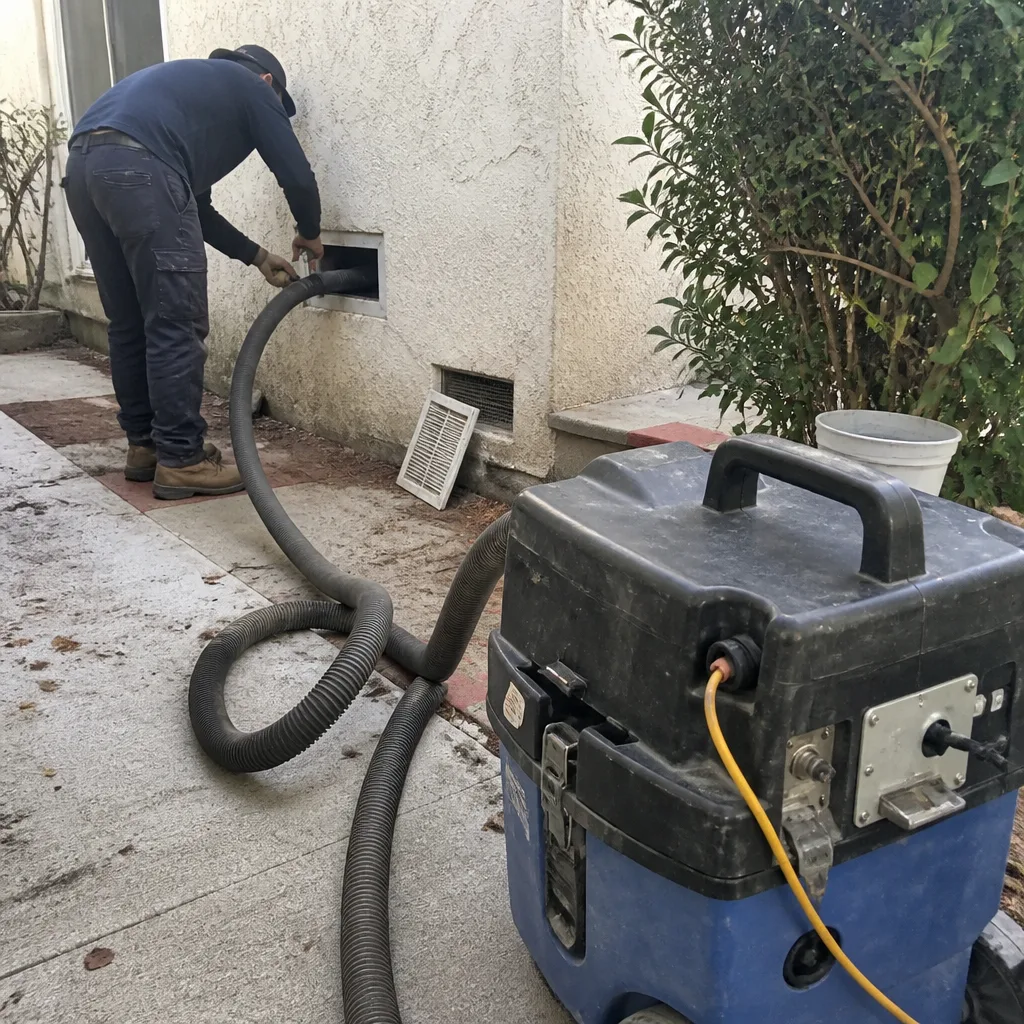
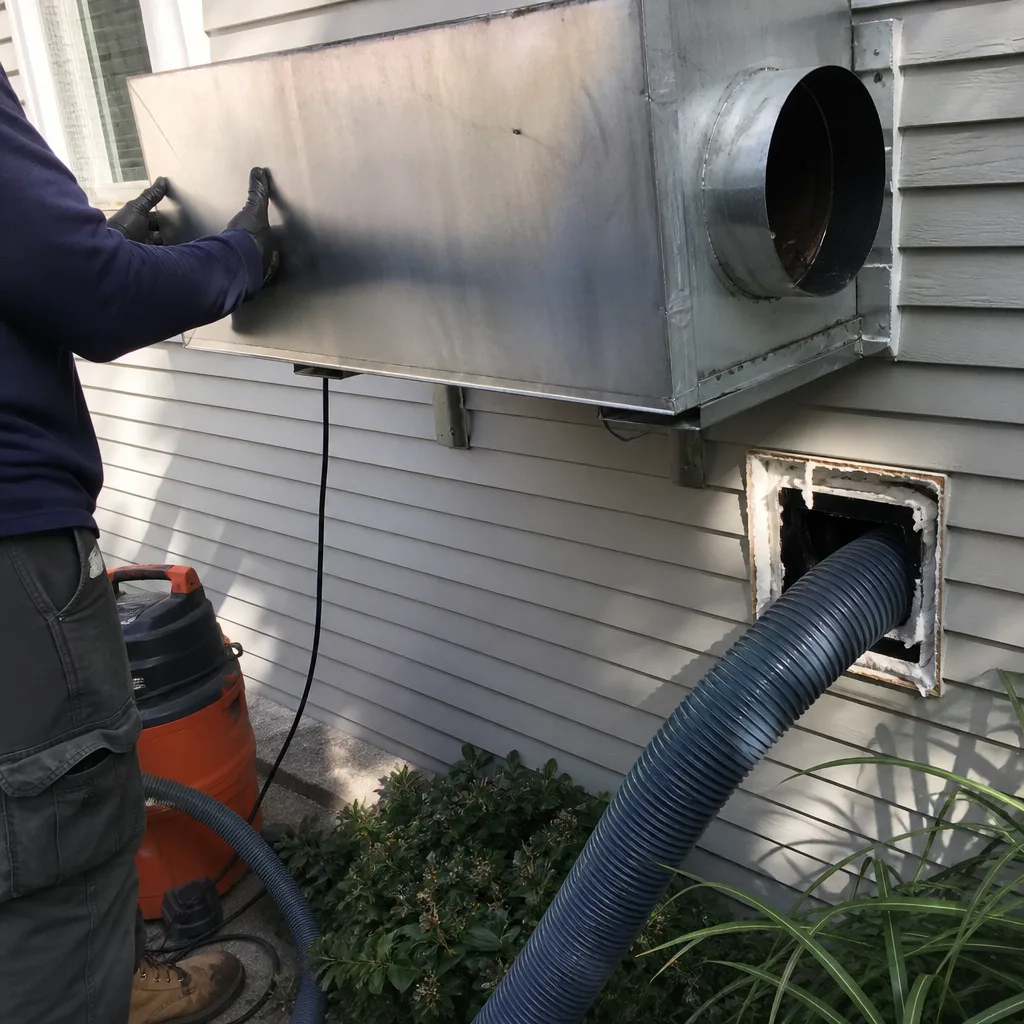
The technician starts at the exterior cap, checks the condition and airflow, then works through the duct from both ends using a Rotobrush rotary brush system to break up compacted lint and a Nikro negative-air machine to pull it out cleanly. The entire duct run gets inspected for kinks, damaged sections, or improper connections. If the ductwork itself needs sealing – a separate service we offer – that gets noted and quoted separately, not bundled in quietly.
Most dryer vent cleanings are completed in under an hour. The work is covered by our 365-Day Done Right Promise: if something fails within a year of the job, we come back and make it right at no charge. That’s in writing on every job, not something you have to ask for.
Frequently Asked Questions
A clogged dryer vent is a genuine fire hazard, not just an annoyance. Lint is highly flammable, and when it builds up inside a duct that can’t exhaust heat properly, the conditions for ignition are real. If your dryer is running hot to the touch, shutting itself off mid-cycle, or the laundry room smells musty or burnt, stop using the dryer and call (361) 326-5060.
It depends on how blocked the vent is, but we’d rather you err on the side of not running the dryer until it’s cleared. A partial restriction can wait a day or two if needed; a vent that’s nearly or completely blocked should not be used at all. Call (361) 326-5060 and describe what you’re seeing – a live person will pick up and help you figure out how urgent it is.
Your local Hollis team works on a scheduled basis – dryer vent cleaning isn’t an emergency dispatch service, and we’re not going to tell you otherwise just to get the call. What we can tell you is that phones are answered by a live person around the clock, so you won’t hit voicemail when you call (361) 326-5060. We’ll get you on the schedule as quickly as the local team’s calendar allows.
For most households, once a year is the right interval – more often if you do heavy laundry volume, have a large family, or own pets whose hair adds to lint load. If your duct run is long or has multiple bends, the buildup happens faster. A technician can tell you after the first cleaning what your specific setup warrants.
Get It Fixed
Call (361) 326-5060 – a live person picks up, gets your details, and connects you with your local Hollis Air Duct Cleaning team. Or book online and we’ll reach out to confirm. The price is written before any work starts, and the job is backed by our 365-Day Done Right Promise.
Written by Roy Castellanos, Owner at Hollis Air Duct Cleaning, part of the Garrison Partners family since 2004.
What Our Customers Say
"Dryer vent was packed with lint and took two hours to dry a load. Cleaned it out from the roof cap down. One cycle again."
- Paula Q."No sales pitch. Told me which parts of the system were fine and only cleaned what needed it."
- Ted L."They checked each section with a camera and showed me the dust before and after. Thorough and honest."
- Nicole H.