

Whole-system duct and dryer vent check with before-and-after photos - you see exactly what came out of your vents
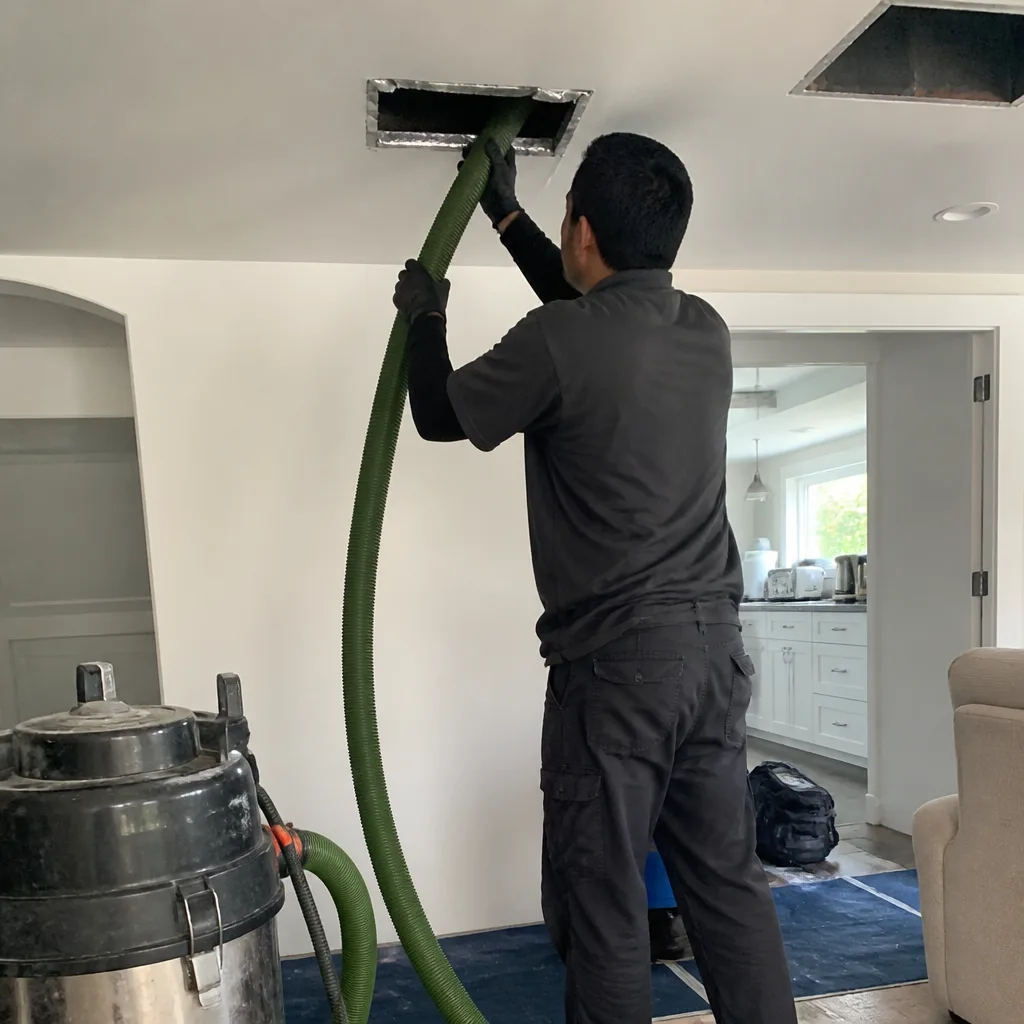
That "$99 whole-house special" is a bait ad - the real number appears once they are in your hallway, or the "clean" is a shop-vac at the register. We photograph the inside of your ducts before and after instead.
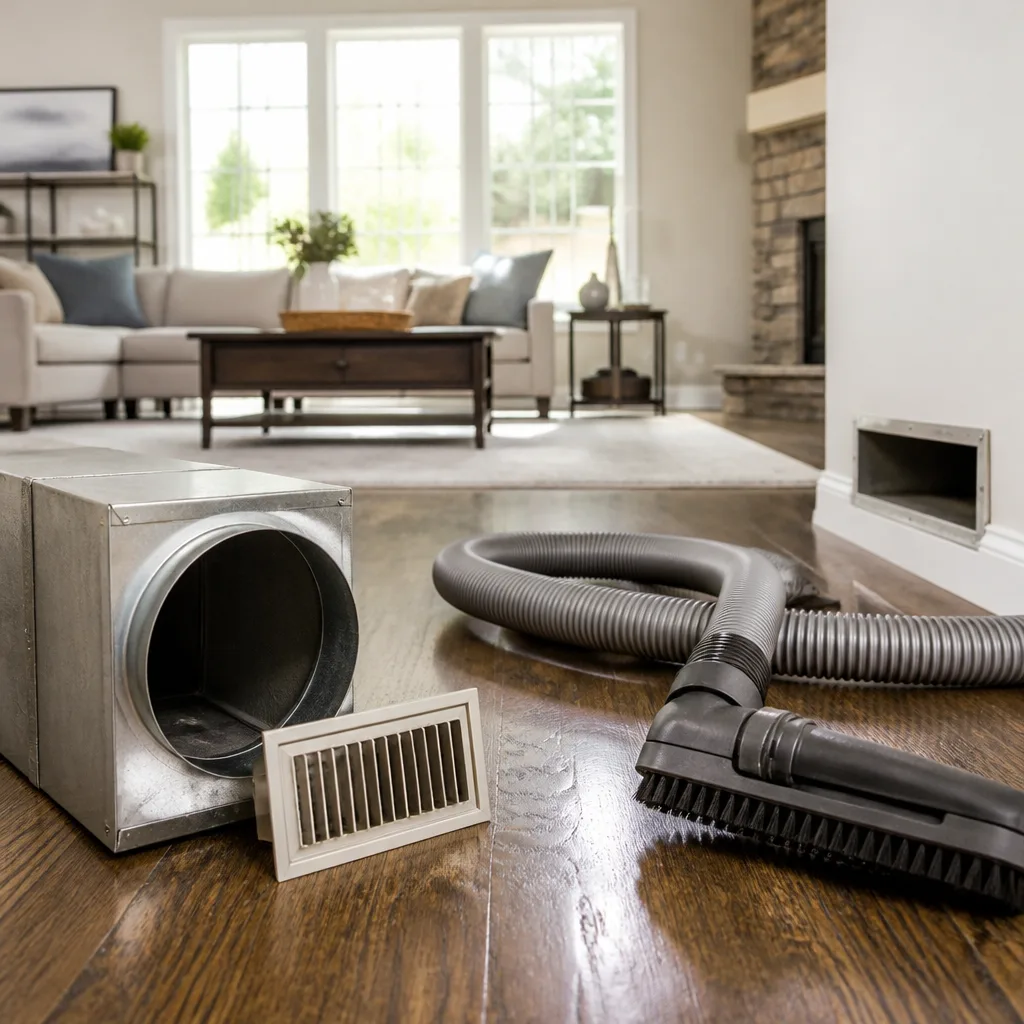
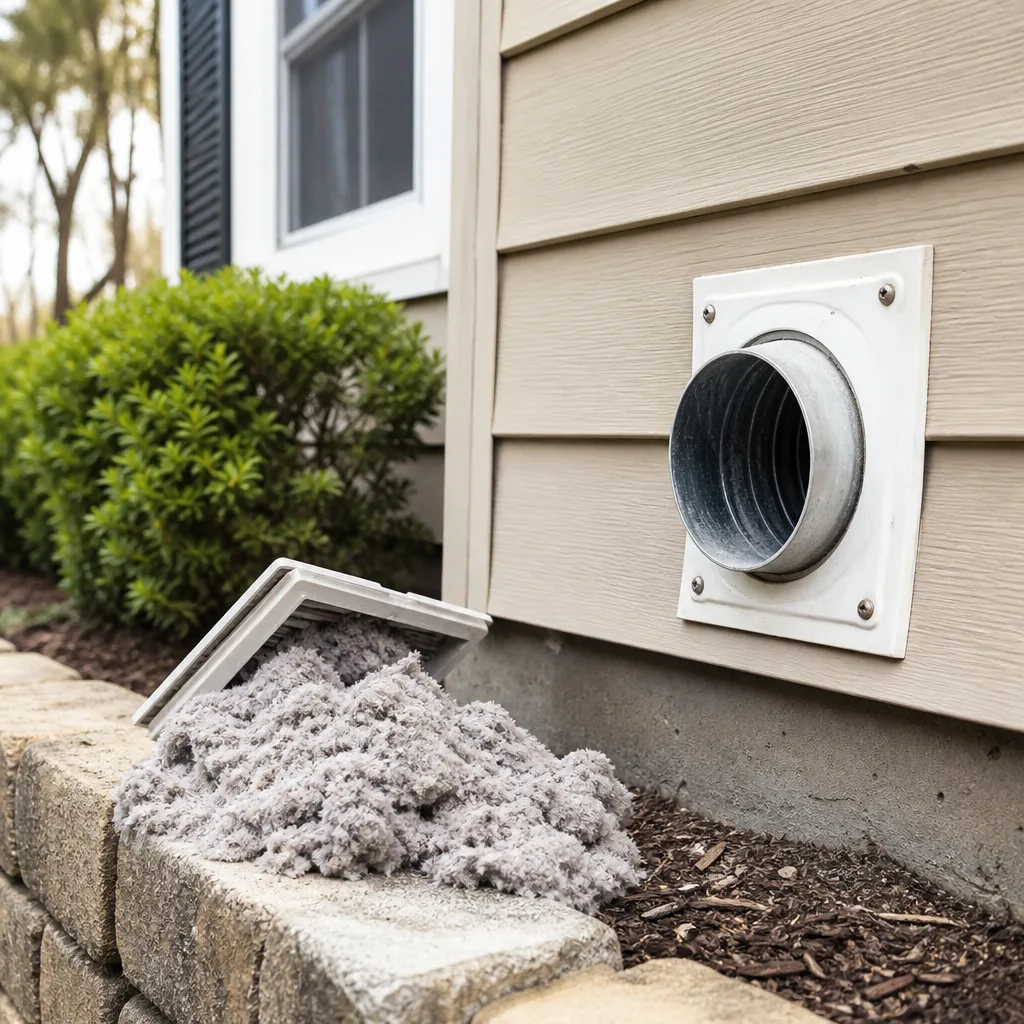
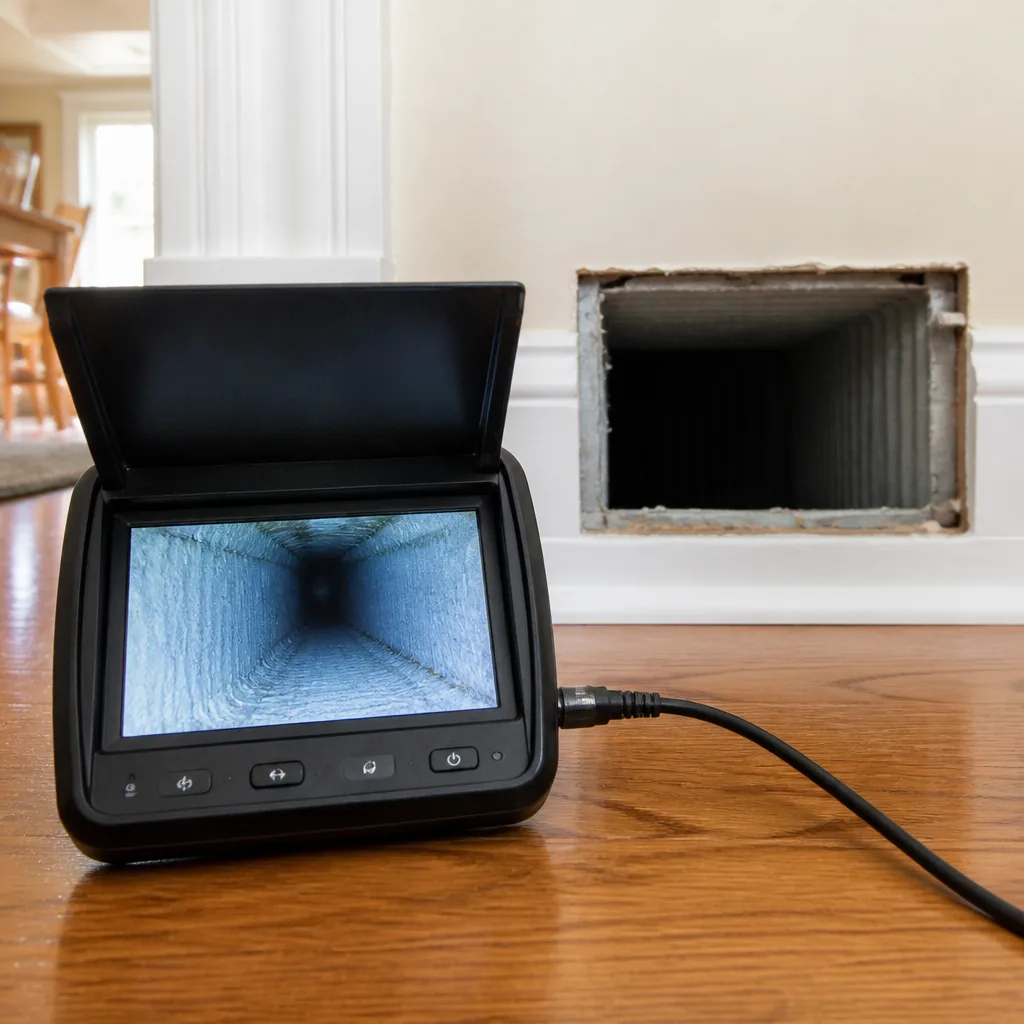

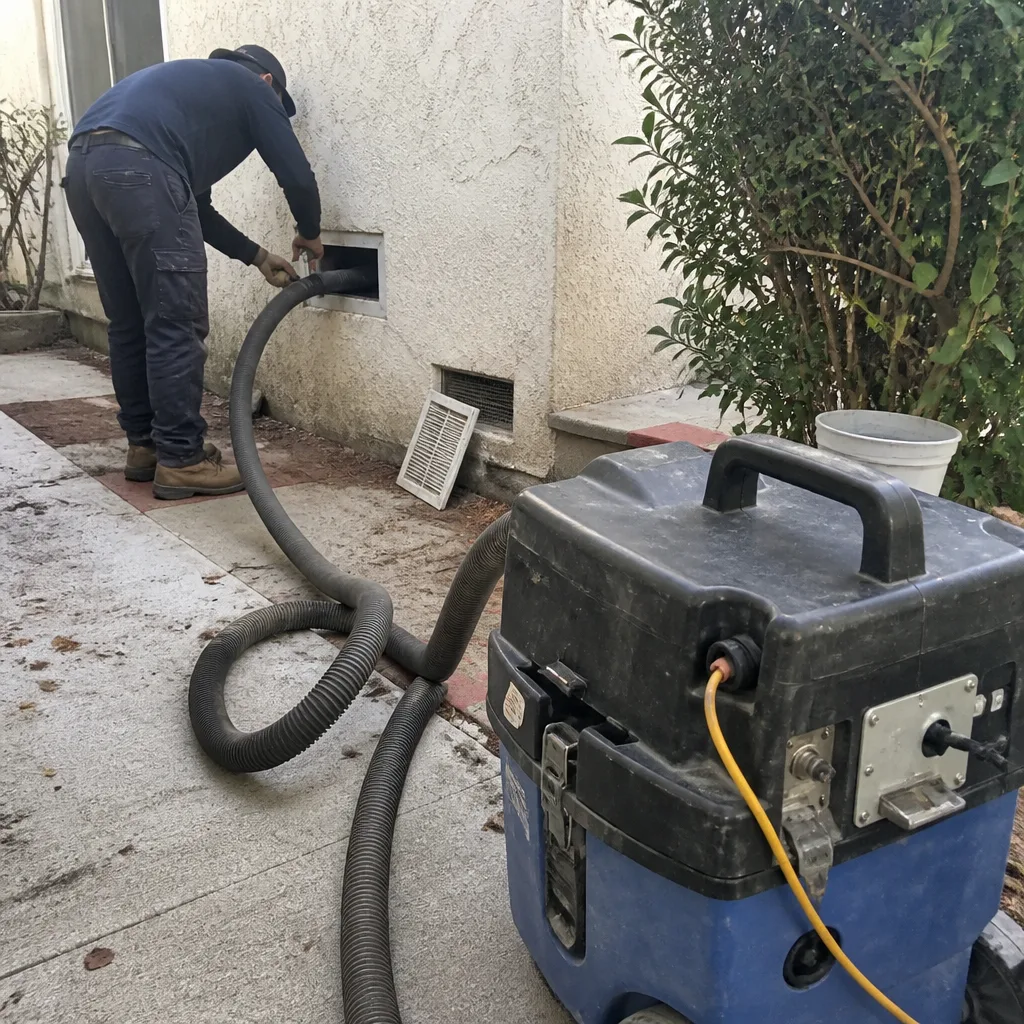 Before
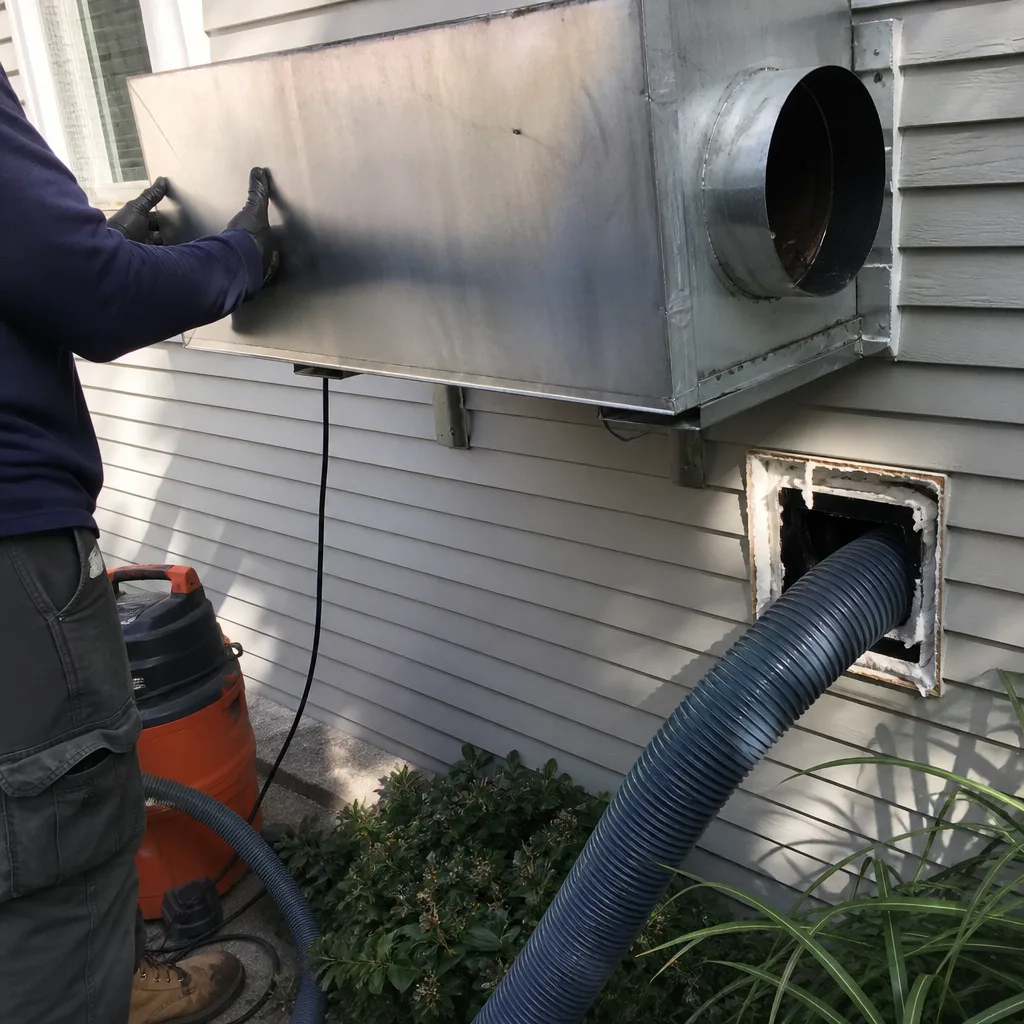 After
After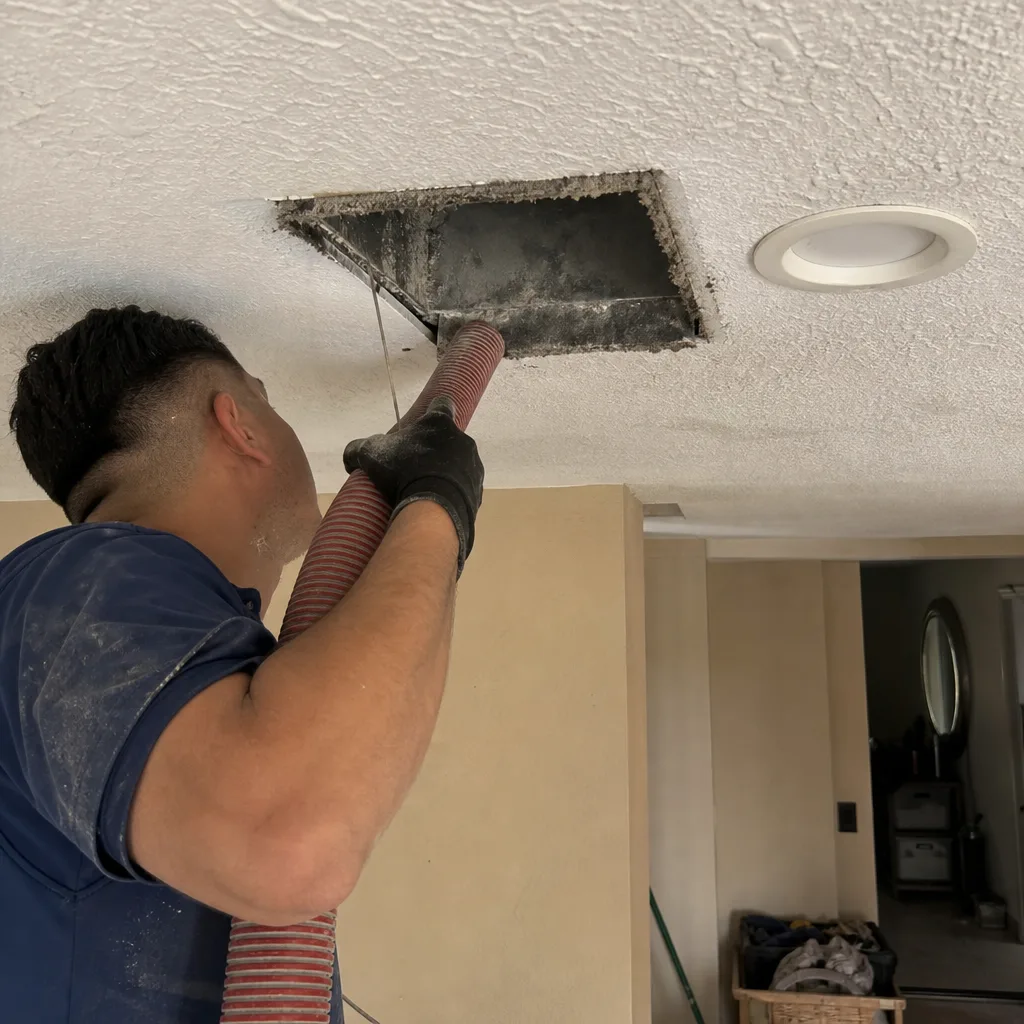 Before
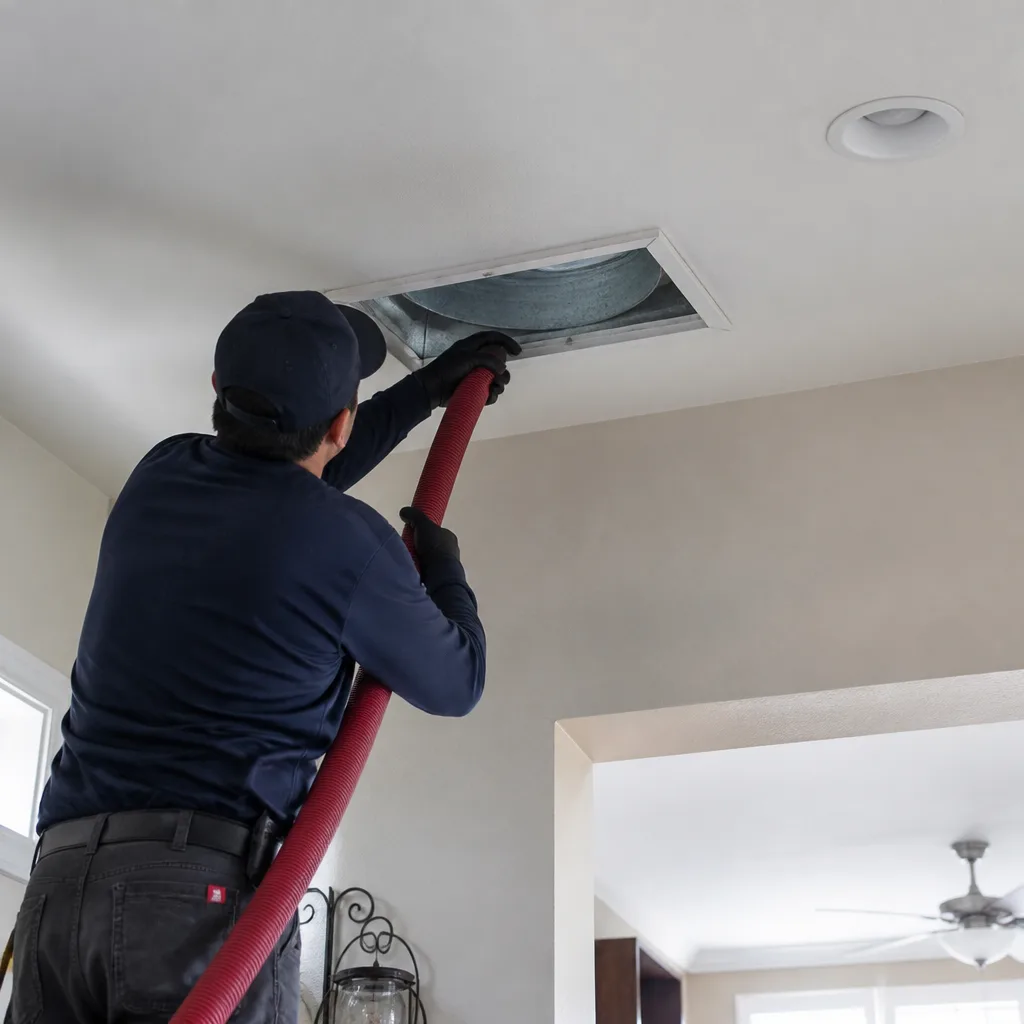 After
After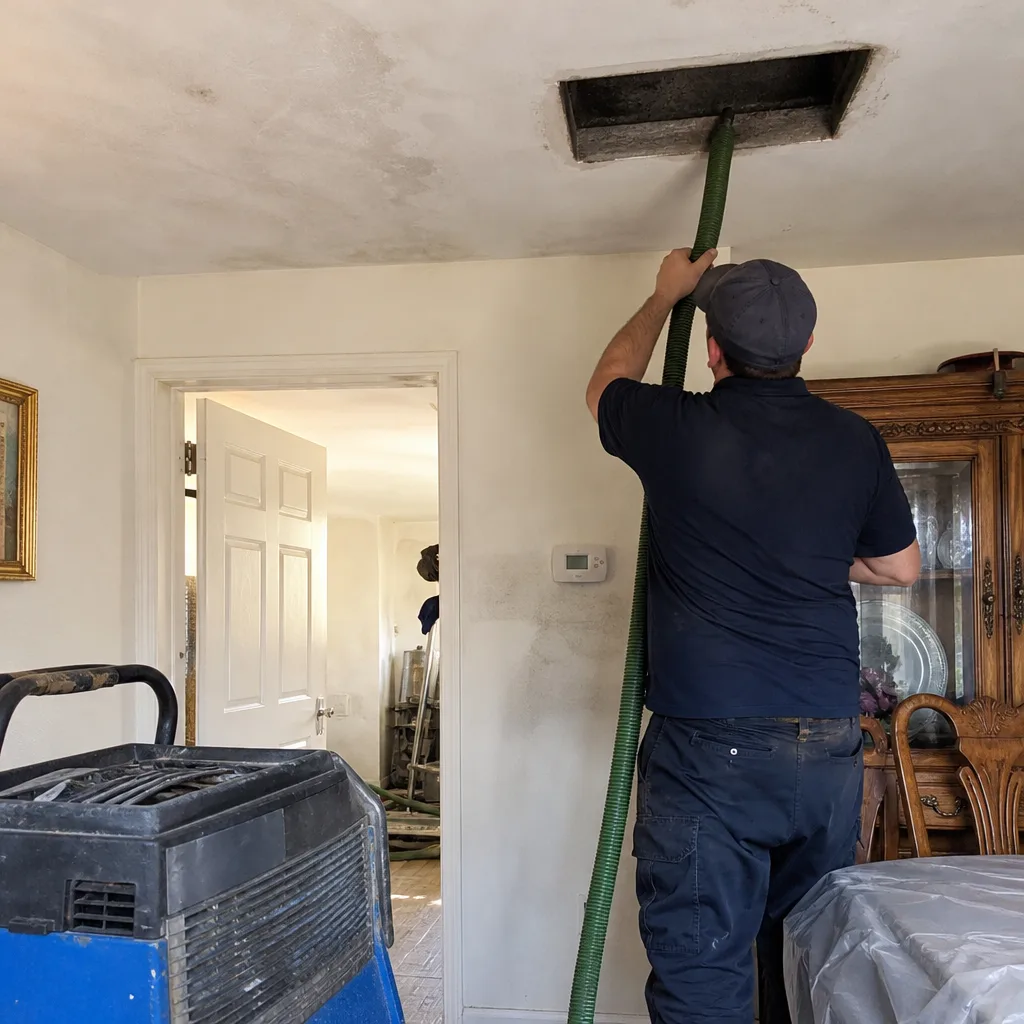 Before
 After
AfterUneven Airflow Room to Room
Uneven airflow between rooms almost always points to one of three things: blocked or collapsed ductwork, a buildup of debris inside the system restricting air movement, or an imbalance in how the ducts were designed or adjusted. In most homes, the fix is a professional air duct cleaning combined with a duct inspection – and the problem is usually resolved in a single visit.
When one room gets a firehose of air and the room next to it barely feels a breath, your HVAC system is working against itself. The blower is moving the same volume of air it always has, but something between the equipment and the vents is diverting it, choking it, or letting it leak before it arrives. That costs you money in wasted energy and comfort at the same time. Leaving it alone rarely makes it better – the underlying cause tends to get worse with every season.
Why It Happens
Debris Buildup Inside the Ducts
Years of dust, pet dander, and construction debris compress into a layer along the bottom of the ductwork. It doesn’t seal the duct completely, but it acts like a partial dam – slowing airflow on longer duct runs more than shorter ones, which is why the rooms farthest from the air handler are often the coldest or warmest. If the rooms closest to your furnace or air handler feel fine and the ones at the far end of the house don’t, this is the most likely cause.
Collapsed, Kinked, or Disconnected Flex Duct
Flexible ductwork is installed in most homes built after the 1980s. It bends easily, which is useful during installation, but it also kinks, sags, or pulls apart at the joints over time. A collapsed section can cut airflow to an entire room down to almost nothing. You can sometimes spot this in an unfinished basement or attic: look for flex duct that has drooped in a sharp curve, is visibly crushed, or has separated at a connector.
Closed, Stuck, or Damaged Dampers
Inside most duct systems there are manual dampers – small adjustable plates that control how much air flows to different zones. They’re supposed to be set once during commissioning and left alone. In practice, they get bumped during HVAC service calls, pest control visits, or attic work, and nobody notices until one room stops getting air. Check the handles on any ductwork you can see: if one is turned perpendicular to the duct, it’s fully closed.
Duct Leakage at Seams and Joints
Every foot of ductwork has seams, and those seams age. Sheet metal sections separate slightly, mastic sealant cracks, and foil tape dries out. When conditioned air bleeds into an unconditioned attic or crawlspace before it reaches the vent, the rooms at the end of that run go short. A simple test: hold your hand near any duct connection you can access while the system is running. If you feel air moving where there isn’t a vent, you’ve found a leak.
What to Do Right Now
- Walk the house and note which rooms are short on air. Write down the room name, which vent it has, and roughly how far that room is from the furnace or air handler. This map will help a technician narrow down the cause before they open a single panel.
- Check every supply and return vent for obstructions. Furniture, rugs, and drapes can block vents completely. Move anything within a foot of a vent and see if airflow changes – this takes five minutes and occasionally solves the whole problem.
- Look at any ductwork that’s visible. In an unfinished basement, attic, or utility room, check for flex duct that looks crushed, kinked, or disconnected at a joint. Photograph what you find – the photo saves time on the technician’s inspection.
- Check the air filter. A badly clogged filter starves the whole system of air. If yours is grey and matted, swap it for a fresh one and run the system for 20 minutes. If airflow improves everywhere, the filter was the culprit. If some rooms still get more air than others, there’s a duct-side problem worth investigating.
- Do not attempt to adjust, cut, or reconnect any ductwork yourself. If you find a disconnected duct in an attic or crawlspace, photograph it and call a professional. Working around ductwork in tight, poorly lit spaces carries real injury risk, and a reconnection done wrong can leak carbon monoxide from a nearby flue or disrupt the system’s pressure balance in ways that are hard to undo.
How We Fix It
When your local Hollis Air Duct Cleaning team arrives, the first thing the technician does is walk the system: every supply vent, every return, and every accessible duct run. Before any equipment comes off the truck, you get a written price – that number doesn’t move once the work starts. That’s how Hollis has operated since 2004, and it’s written into The Garrison Standard that every location follows.
The cleaning itself uses Rotobrush rotary brush systems to break loose compacted debris and Nikro negative-air machines to extract it. For most uneven-airflow problems, air duct cleaning resolves the restriction. If leaking seams are contributing to the imbalance, duct sealing addresses those gaps using professional-grade products from Abatement Technologies and Guardsman – not hardware-store tape.
Most residential jobs take two to four hours depending on system size. When the work is done, the technician walks you through what was found and leaves the site clean. Every job is covered by the 365-Day Done Right Promise: if the work fails within a year, Hollis comes back and makes it right at no charge.
Frequently Asked Questions
Uneven airflow by itself isn’t an immediate safety hazard, but it can signal a disconnected duct near a furnace flue – and that is a situation worth checking promptly. A disconnected or improperly routed duct near combustion equipment can allow exhaust gases to enter living spaces. If you smell something odd, notice soot near a vent, or anyone in the house is getting unexplained headaches, don’t wait. Call (361) 326-5060 and describe what you’re seeing.
Scheduling depends on your area and time of year, but your local Hollis team works to get you on the calendar as soon as possible – and our phones are answered by a live person around the clock, every day of the week, so you’re not leaving a message and hoping someone calls back. Call (361) 326-5060 to find out what’s available near you.
Cleaning fixes the problem when debris buildup or a partial blockage is choking a duct run, which is the most common cause. If the issue is a collapsed flex duct, a stuck damper, or leaking seams, those need separate attention – and your technician will tell you exactly what they find before any work starts. You won’t get a cleaning bill for a problem that needed sealing, or vice versa.
Your technician will show you before-and-after conditions in the ducts and walk you through what was extracted. Every job is covered by the 365-Day Done Right Promise – in writing, not just a handshake. If airflow is still uneven after we’ve done the work, call us back. That return visit costs you nothing.
Get It Fixed
Your local Hollis Air Duct Cleaning team will inspect your system, give you a written price before any work starts, and back the job for a full year. Call (361) 326-5060 to speak with a live person now, or book online. Cleaner air, from the vents on out.
Written by Roy Castellanos, Owner at Hollis Air Duct Cleaning, serving communities nationwide since 2004.
What Our Customers Say
"They checked each section with a camera and showed me the dust before and after. Thorough and honest."
- Nicole H."Duct sealing along with the cleaning cut our summer bill. Straight talk and fair price."
- Gwen O."Sealed some leaking duct joints in the crawl space with mastic. Rooms that were always cold now get air."
- Ronald W.